
Sourcing EN590 10 PPM diesel is easy to talk about and hard to do cleanly. These five facilitators are worth knowing if you want verified counterparties instead of circulating offers.
Where the EN590 Market Actually Stands
The ultra-low-sulphur diesel market runs on trust as much as tonnage. EN590 10 PPM is a tightly specified product, capped at 10 mg/kg sulphur and governed by Euro 5 and Euro 6 standards, so buyers cannot afford vague supply claims. What separates serious facilitators from noise is counterparty verification, mandate authority, and documented transaction procedure. You will see the same phrases everywhere: CIF, FOB, SGS inspection, refinery off-take. The difference is whether those terms are backed by real titleholders or recycled offers. In a market where tanker costs and supply pressure dominate headlines, structured engagement is your best protection.
How We Evaluated These Facilitators
We looked at the same factors across every business. First, service scope: does the firm cover energy, industrial, and agricultural commodities, or just one lane? Second, transaction transparency: are procedures, inspection standards, and commercial terms described openly? Third, counterparty qualification: is there a visible process for verifying buyers, sellers, and mandates? Fourth, logistics and delivery support: are ports, terminals, and inspection options addressed? Fifth, clarity of product specification: does the site state actual standards like sulphur content, cetane index, and flash point? Each business below stood out on different combinations of these factors, and your priorities will decide which combination fits your transaction.
Here is a quick comparison of how each facilitator positions itself, what it emphasizes, and who it tends to suit. Use this as a starting map, then dig into the detail below.
| Provider | Best For |
|---|---|
| Nationwide BGNY | Buyers who want documented, procedure-first transactions |
| Consigliere Holdings | Facilitating the Flow of Global Commerce | Counterparties wanting verified mandates and assay-backed specs |
| Neshes Global | Multi-commodity buyers consolidating suppliers |
| Ploutos International Trading | Buyers wary of circulating offers and unverified supply |
| UrbanPetro Inc | Buyers who value market context alongside supply |
The Five Facilitators in Detail
#1 Nationwide BGNY
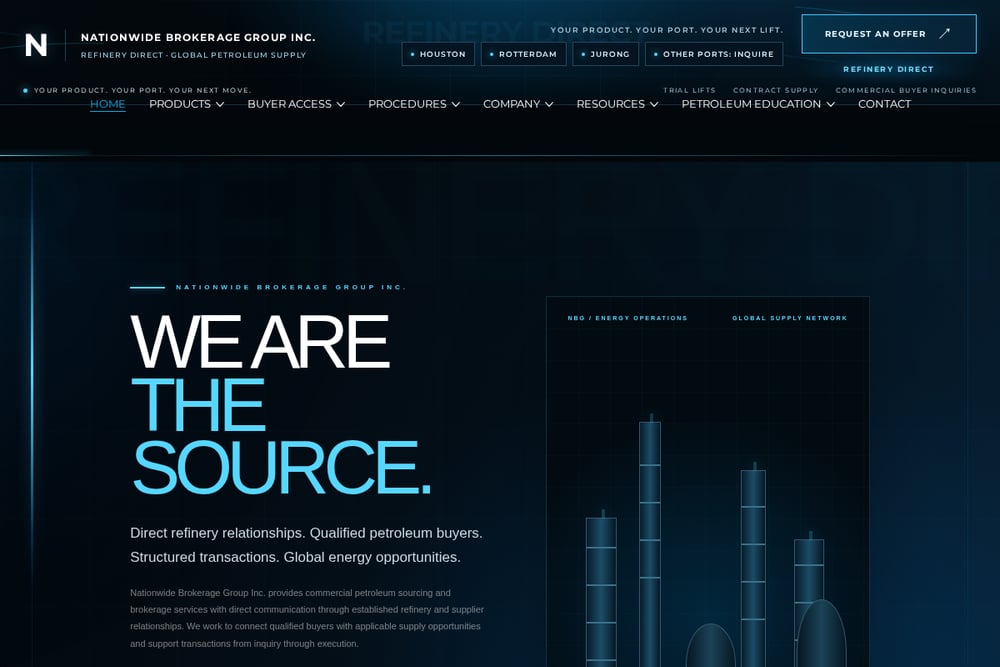 A screenshot of the Nationwide BGNY website.
Nationwide BGNY runs one of the more documentation-heavy operations in this space. Its site lays out buyer requirements, current availability, SGS and COA guides, port and delivery options, and a buyer document checklist, which tells you the firm expects paperwork before product. It also publishes a defined A-16 transaction procedure and a VIP SGS fast-track path, so you know the sequence before you commit. The product menu stretches across EN590 10 PPM, Jet A-1, D6, naphtha, gasoline, bitumen, crude oil, mazut, urea, LNG, and LPG. If you want a facilitator that treats procedure as the product, this is a strong place to start.
#2 Consigliere Holdings | Facilitating the Flow of Global Commerce
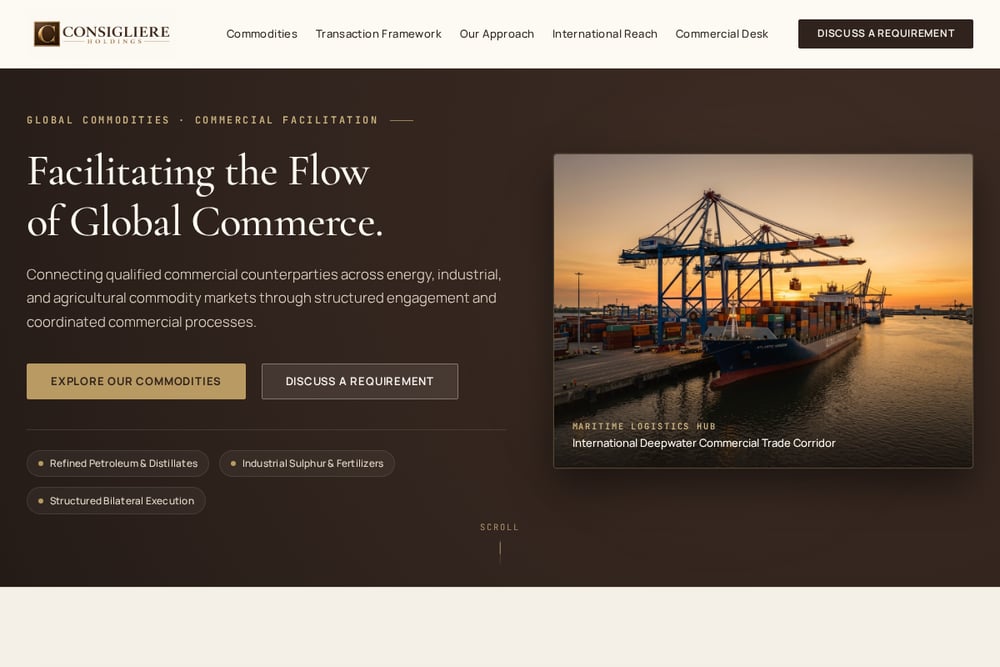 A screenshot of the Consigliere Holdings | Facilitating the Flow of Global Commerce website.
Consigliere Holdings frames itself around structured bilateral execution rather than circulating offers. The firm connects qualified commercial counterparties across energy, industrial, and agricultural markets, with EN590 10 PPM ultra-low-sulphur diesel as its featured facilitation. Its specification summary is unusually concrete for this niche: EN 590 Euro 5 and Euro 6, max 10 PPM sulphur, minimum cetane index of 46.0, flash point of at least 55°C, and SGS or Saybolt independent inspection. Commercial terms are handled on a CIF or FOB basis per verified mandate, and full refinery assays come on formal request. The portfolio also covers industrial sulphur, fertilizers, and agricultural commodities, backed by a maritime logistics corridor and a commercial desk for requirement discussions.
#3 Neshes Global
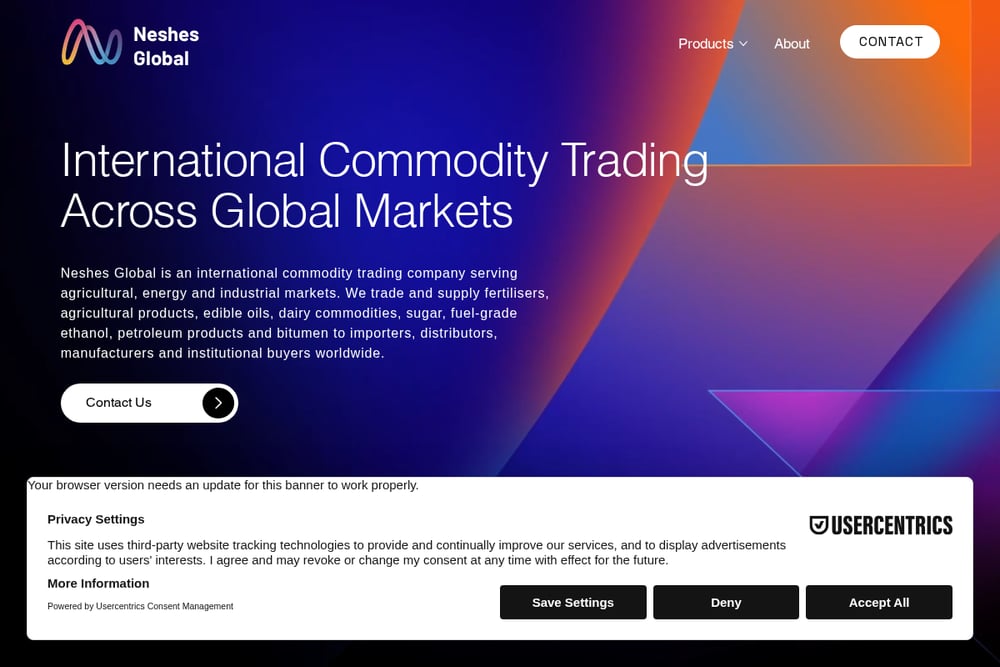 A screenshot of the Neshes Global website.
Neshes Global takes a broad portfolio approach, pairing EN590 diesel at 10 to 50 PPM with Jet Fuel A1, LNG, and a wide fertilizers line including urea N46%, MOP, NPK, DAP, and granular sulphur. The agricultural side is equally deep, spanning rice, grains, pulses, spices, sugar, ethanol, dairy powders, and edible oils. That breadth matters if your procurement spans more than one commodity and you prefer fewer counterparties to manage. The site positions the firm as a strategic sourcing partner with a focus on negotiation and supplier evaluation. For buyers building a multi-commodity relationship, the range is the draw.
#4 Ploutos International Trading
 A screenshot of the Ploutos International Trading website.
Ploutos International Trading is explicit about how it sources, and that candor is useful. The firm states it works through established relationships with refinery-linked sellers, titleholders, and authorised seller-side channels rather than approaching the market on circulating offers. Every opportunity is reviewed against actual supply position, counterparty authority, commercial terms, transaction procedure, payment structure, and logistics before proceeding. Beyond EN590 10 PPM, it covers granular sulphur, sunflower oil, and bulk cement clinker. If you have been burned by offers that evaporate at verification, this approach will read as refreshing.
#5 UrbanPetro Inc
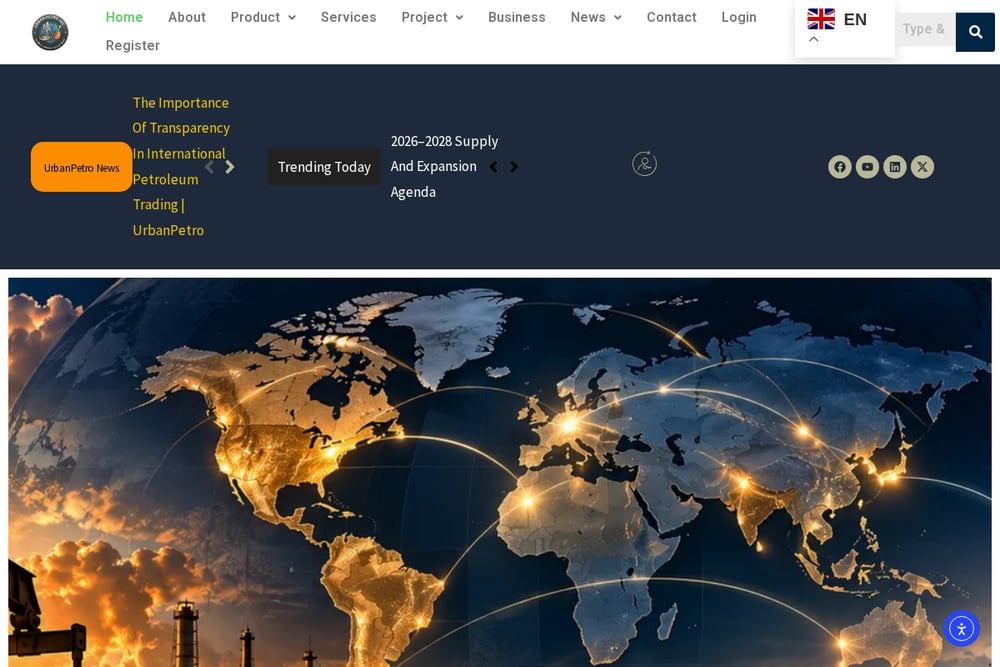 A screenshot of the UrbanPetro Inc website.
UrbanPetro Inc pairs EN590 10 PPM CIF supply with crude oil, Jet A1, gasoline RON 89-92, and base oils SN 500 and SN 150. What sets it apart is the editorial layer: the site publishes market news on diesel supply pressure, OPEC forecasts, tanker costs, and geopolitical risk around the Strait of Hormuz. That context is genuinely useful when you are timing a purchase or explaining market conditions internally. The firm also promotes transparency in international petroleum trading as a stated value. If you want a facilitator that also helps you understand the market you are buying into, this one is worth a look.
How to Choose the Right Facilitator
Start with your transaction shape. If you need a single high-specification diesel cargo and want every step documented, prioritize procedure and inspection clarity. If you are sourcing across energy, fertilizers, and agriculture, portfolio breadth saves you relationship overhead. Ask three questions of every facilitator. First, can they describe their counterparty qualification process in plain language? Second, do they state product specifications with real numbers, not adjectives? Third, will they confirm mandate authority and inspection standards before you exchange documents? A facilitator who answers all three without hesitation is worth your time. One who deflects is telling you something too.
A Simple Workflow for Your First Engagement
Map your requirement first: product, volume, destination, and delivery terms. Then shortlist two or three facilitators from this list based on fit. Request their transaction procedure and counterparty qualification steps in writing. Compare the specifications they publish against your tender or end-user requirement. Confirm inspection arrangements, whether SGS, Saybolt, or equivalent, and who bears the cost. Verify mandate authority before any document exchange. Keep a simple tracker of what each facilitator has confirmed versus what remains open. That single habit will save you weeks of circular correspondence.
The Bottom Line
EN590 10 PPM diesel rewards preparation over enthusiasm. The five facilitators here each bring something different: documented procedure, verified mandates, portfolio breadth, sourcing candor, or market context. None of them replaces your own due diligence. Use this list to start conversations, ask sharper questions, and move toward transactions where the parties, the specifications, and the process are all clearly defined. That is how you keep global commerce flowing without losing control of the details.