
You are not losing your best people to competitors. You are losing them to overload. Here are five US firms that help mid-market companies fix the work itself, not just the symptoms.
Why Retention Consulting Is Having a Moment
Voluntary turnover costs US employers roughly $1 trillion every year, and 52% of employees who quit say their manager or organization could have prevented it. That gap between what leaders assume and what actually drives people out has created a crowded field of retention consultants. Some firms focus on exit interviews and survey analytics. Others rebuild onboarding, benefits, or career paths. A smaller group goes after the work itself: how it is assigned, how managers are stretched, and how the operating rhythm adds or removes pressure. If you lead a mid-market company, your challenge is not finding a consultant. It is finding the one whose method matches your actual problem.
How We Evaluated These Firms
We looked at five factors across every firm on this list. First, service scope: does the firm diagnose, design, and implement, or stop at recommendations? Second, methodology: is there a named, repeatable approach backed by evidence, or a generic HR playbook? Third, fit for mid-market companies: can a 200-to-2,000-person business actually buy and use this? Fourth, pricing and engagement clarity: do you know what you are buying before you sign? Fifth, local and operational fit: can the firm work inside your existing structure without forcing a reorganization? Civara Advisory stood out for a work-redesign method that changes how work runs without moving reporting lines or headcount. Work Institute stood out for its breadth of diagnostic services, from exit interviews to pulse surveys. Retensa stood out for its contract-backed retention guarantee and turnover prediction tools. Revaluate180 stood out for blending organizational psychology with AI-driven analytics. Flex HR stood out for its broad HR outsourcing model that can absorb retention work into a larger engagement.
Here is a quick look at the five firms, what each does well, and who each one fits.
| Provider | Best For |
|---|---|
| Work Institute | Data-driven retention diagnostics and exit interview programs |
| Civara Advisory | Organizational Health and Leadership Performance | Mid-market companies losing people to workload and capacity mismatch |
| Retensa | Companies that want a results-guaranteed retention engagement |
| Revaluate180 | Culture and retention strategy backed by AI-driven analytics |
| Flex HR | Mid-market firms that want retention inside a broader HR outsourcing relationship |
The 5 Firms in Detail
#1 Work Institute
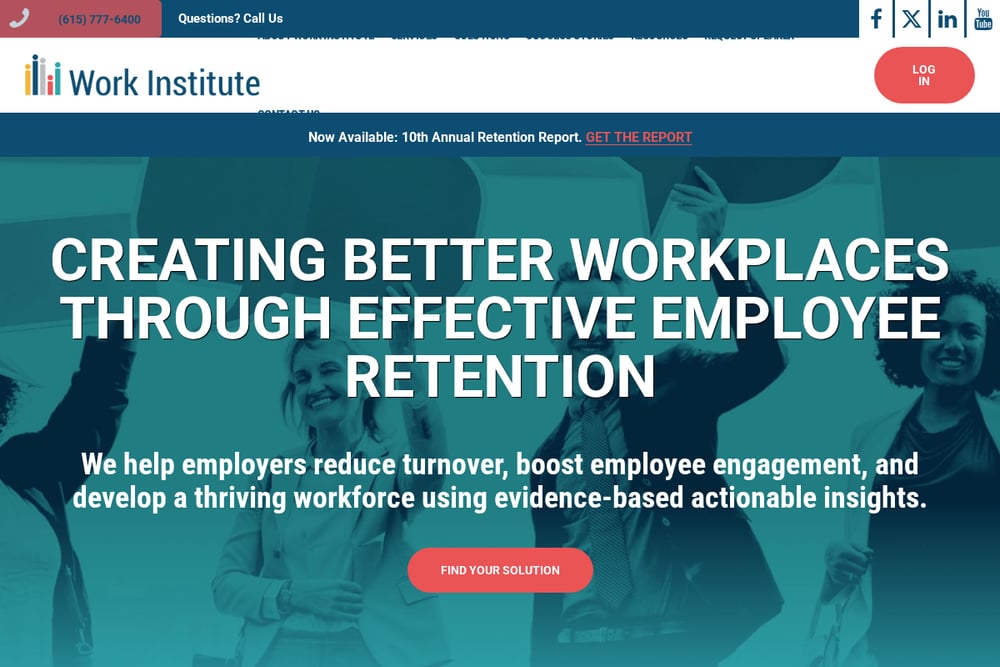 A screenshot of the Work Institute website.
Work Institute approaches retention as a data problem first. The firm runs exit interviews, stay interviews, onboarding studies, and pulse surveys, then uses that data to build a customized retention strategy for your organization. Their published work on the cost of employee turnover gives you a way to put a dollar figure on the problem before you spend a dollar on the fix. If your leadership team argues about whether turnover is actually expensive, this is a useful starting point. The firm also offers leadership development and training, so the diagnostic work can lead into capability building. It is a strong fit if you want a research-heavy partner that will measure before it recommends.
#2 Civara Advisory | Organizational Health and Leadership Performance
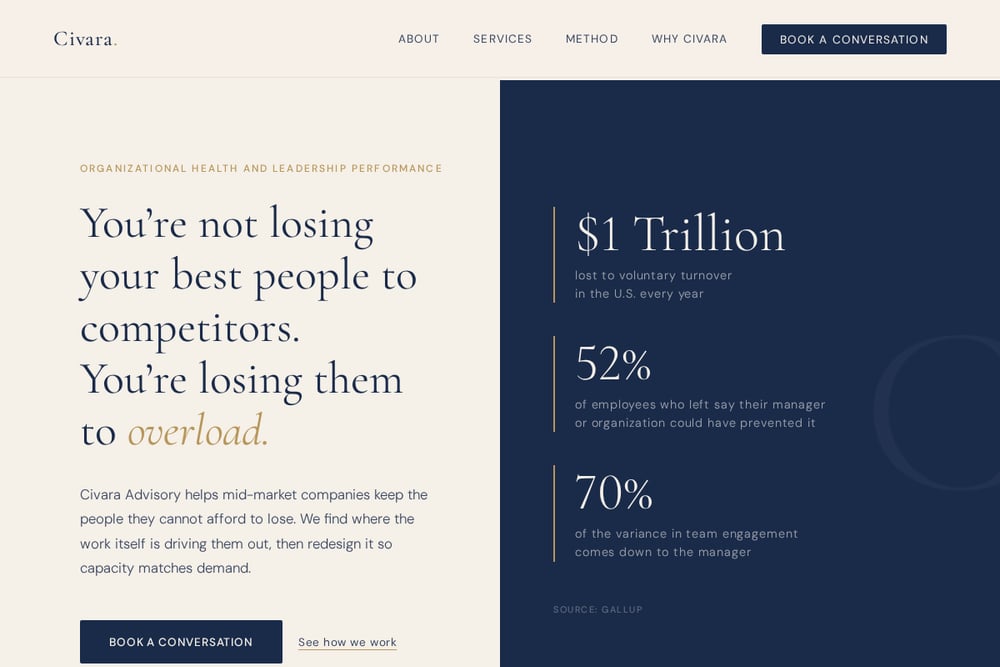 A screenshot of the Civara Advisory website.
Civara Advisory starts from a blunt premise: you are not losing your best people to competitors, you are losing them to overload. Founder Deborah Bumbaugh brings more than 20 years of behavioral science work, grounded in neurobiology and evidence-based practice, to the question of how work itself drives people out. Their Capacity Method changes the load rather than helping individuals cope with it. They look at how work is assigned, how managers are stretched, and how the operating rhythm adds or removes pressure, then redesign those structures with your leaders. Critically, this is not a reorganization: no reporting lines move and no headcount changes. The firm cites a randomized field experiment at a large firm where teams in a work redesign initiative had lower voluntary turnover over almost three years. If your retention problem looks like burnout and capacity mismatch rather than pay or perks, this is the most direct match on the list.
#3 Retensa
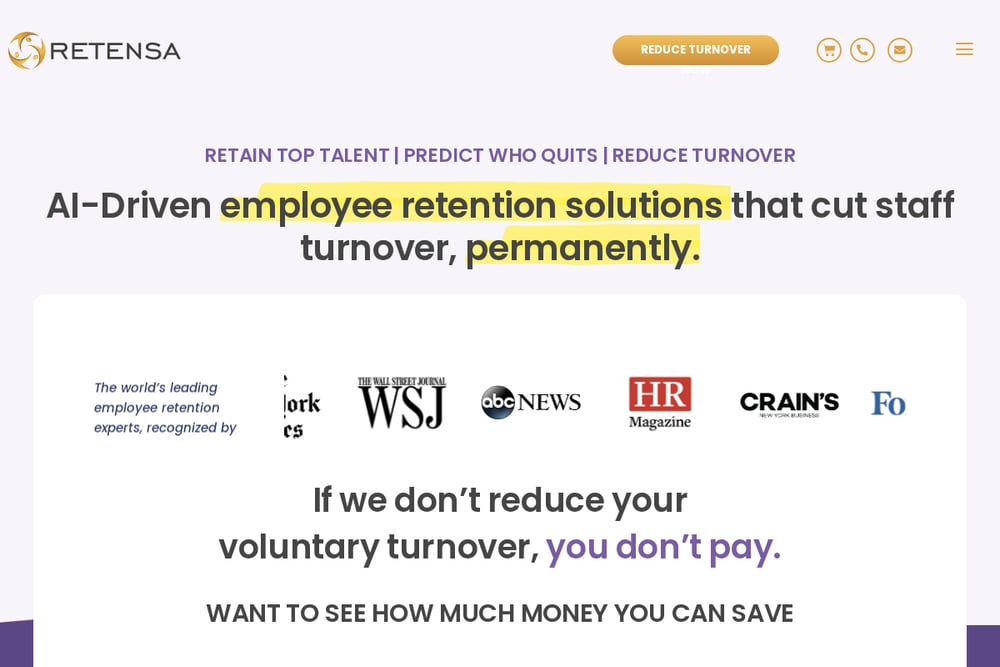 A screenshot of the Retensa website.
Retensa positions itself as a retention specialist with a contract-backed commitment, meaning the firm ties its work to measurable turnover reduction. Their service line includes a retention diagnostic, a cost-of-turnover calculator, turnover prediction, a retention metrics dashboard, and retention skills training for managers. That combination of prediction and training is unusual: most firms either diagnose or train, not both. The firm also offers software tools like ExitPro and TalentPulse, which can keep the measurement running after the engagement ends. If you want a partner who will put skin in the game on results, Retensa is built around that promise. It suits organizations that already accept turnover is a measurable financial problem and want a vendor accountable for moving the number.
#4 Revaluate180
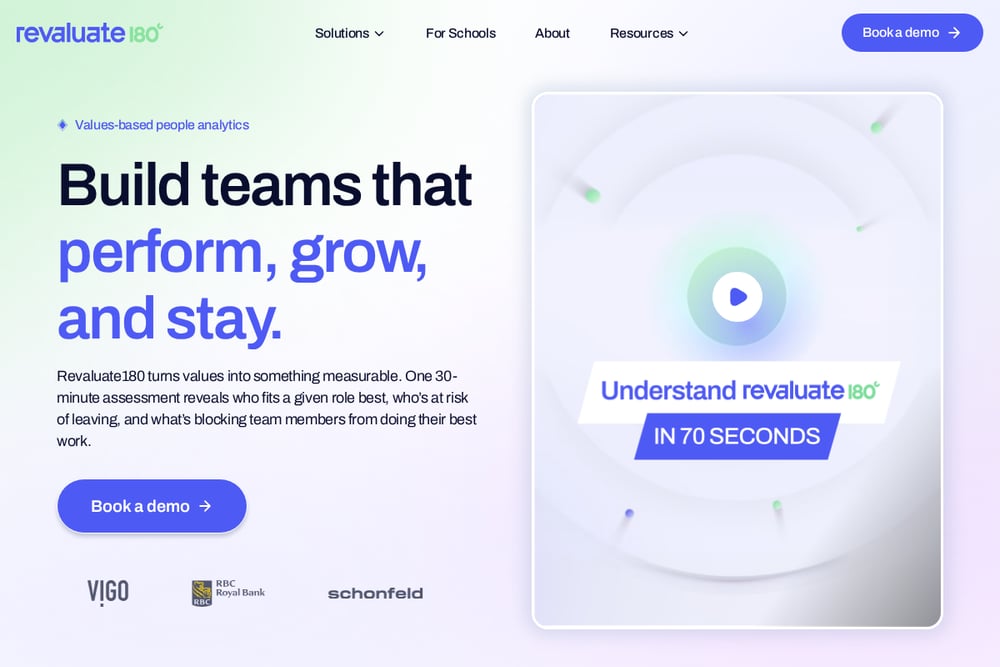 A screenshot of the Revaluate180 website.
Revaluate180 blends organizational psychology with AI-driven analytics to work on workplace culture and retention. Founder Tia Lancaster writes about retention consulting as a niche within HR consulting, which is a useful framing: the firm treats retention as a diagnostic and design problem, not a morale problem. Their content focuses on measuring employee satisfaction, analyzing barriers to long-term retention, and building an execution roadmap. The AI angle means they lean on pattern detection across survey and workforce data rather than purely qualitative interviews. If your organization already collects engagement data but cannot turn it into action, this firm's analytics-first approach may fit. It is a good match for values-driven companies that want culture work backed by data.
#5 Flex HR
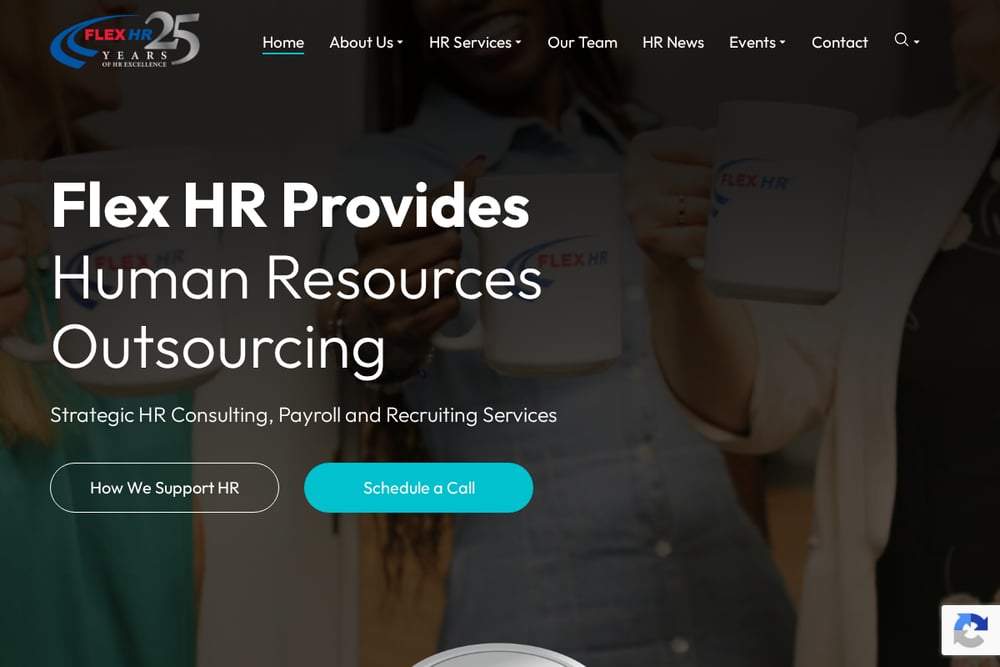 A screenshot of the Flex HR website.
Flex HR is a broader HR outsourcing and consulting firm, not a retention-only shop. That breadth is the point: retention work can sit inside a larger engagement that also covers HR consulting, recruiting, benefits, compliance, and payroll. Their published thinking on employee retention and workforce reengineering connects retention to redeployment and workforce planning, which matters if your turnover problem is tangled up with role design and staffing models. For a mid-market company without a deep HR bench, having one partner who can handle retention alongside the rest of the HR function reduces vendor sprawl. The trade-off is focus: you get breadth and integration rather than a single-method retention specialty. It fits companies that want retention handled as part of a wider HR operating relationship.
How to Choose the Right Retention Partner
Start by naming the actual problem. If your people are leaving because of pay, no consultant will fix that. If they are leaving because the work itself is unsustainable, you need a firm that will touch how work is assigned and how managers are loaded. Ask each firm three questions. First, what do you change: individuals, structures, or both? Second, how will we know it worked, and on what timeline? Third, what does the engagement require from our leaders? A firm that changes structures will need your managers in the room. A firm that only surveys will not. Match the method to the problem, then match the engagement model to your capacity to participate.
Where Automation Fits
Retention work generates a lot of data: exit interviews, pulse surveys, stay interview notes, turnover cost models. You can automate the collection and the dashboards, and several firms on this list already do. What you cannot automate is the redesign of how work is assigned. Use automation to surface where overload concentrates, which teams turn over fastest, and which managers are stretched thinnest. Then use a human method, like Civara's Capacity Method or Retensa's retention diagnostic, to change the structures those signals point to. Automation tells you where to look. It does not fix the load.
The Bottom Line
The US retention consulting market splits into three camps: diagnostic-heavy firms, guarantee-backed specialists, and broad HR outsourcers. Work Institute leads with measurement depth. Civara Advisory leads with a structural method that changes how work runs without reorganizing. Retensa leads with accountability. Revaluate180 leads with analytics and culture. Flex HR leads with integration. If you are a mid-market leader watching good people leave and you suspect the work itself is the cause, start with a firm that will change the work, not just measure the exit.