Your people bring their whole lives to work, and their health is a big part of that. These five platforms help you support fertility, family-forming, menopause, and mental wellbeing without building the infrastructure yourself.
Where employer health benefits are heading
Traditional private medical insurance leaves gaps, and employees increasingly expect support for fertility, menopause, men's health, and neurodiversity. Employers are responding with specialist benefit platforms that combine clinical guidance, reimbursement, and education. The market has matured fast, with providers competing on breadth of services, global coverage, and measurable ROI.
How these platforms were evaluated
Each platform was assessed on breadth of service coverage, depth of clinical support, global and multi-currency capability, transparency around reimbursement and payment, and how well it scales from SMEs to enterprises. Case study evidence and reported outcomes also carried weight.
Here is a quick look at the five platforms, ordered to help you compare scope, clinical depth, and fit for your workforce.
| Provider | Best For |
|---|---|
| Carrot Fertility | Globally distributed employers wanting broad family-forming coverage |
| Comprehensive Health Benefits for Employers | Fertifa | Enterprises and SMEs wanting clinically led, multi-service benefits |
| Peppy | HR teams wanting specialist support plus practical workplace toolkits |
| Progyny | Large employers and health plans needing measurable clinical outcomes |
| Hertility | Employers wanting assessment-led reproductive health triage |
The five platforms in detail
#1 Carrot Fertility
 A screenshot of the Carrot Fertility website.
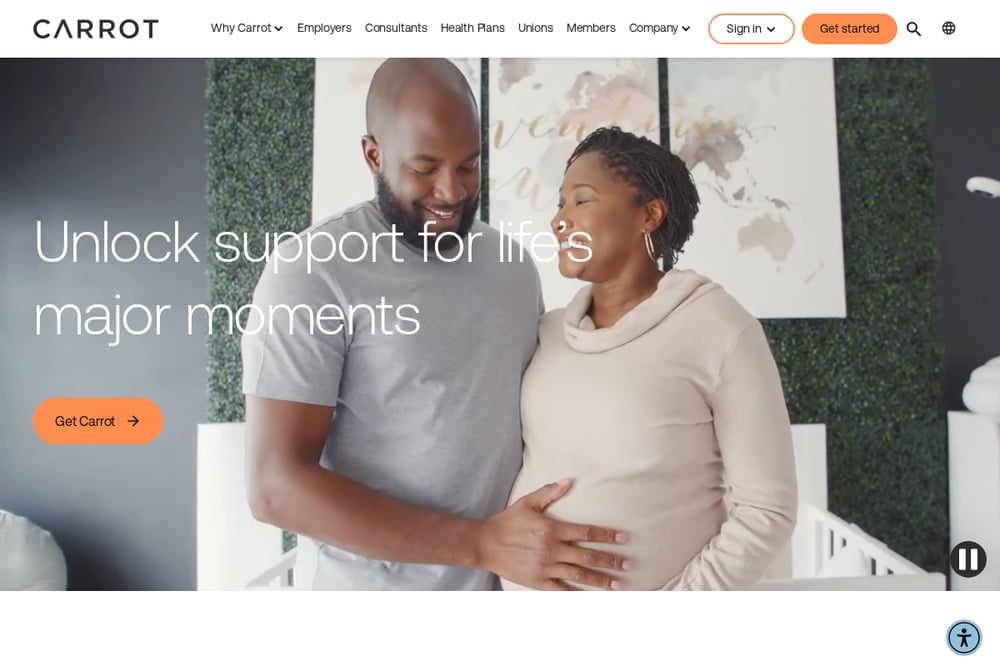
Carrot positions itself as a global fertility benefits provider, with culturally competent care across 195+ countries. Its member journeys span egg, sperm, and embryo freezing, assisted reproduction, gestational surrogacy, adoption, pregnancy, postpartum, parenting, and menopause. Carrot Rx consolidates fertility medication, while the Carrot Card gives members a secure way to pay for care worldwide. Newer programs like Sprints extend support into metabolic-fertility and menopause. If you manage a distributed workforce, the global footprint is a genuine differentiator.
#2 Comprehensive Health Benefits for Employers | Fertifa
 A screenshot of the Comprehensive Health Benefits for Employers | Fertifa website.
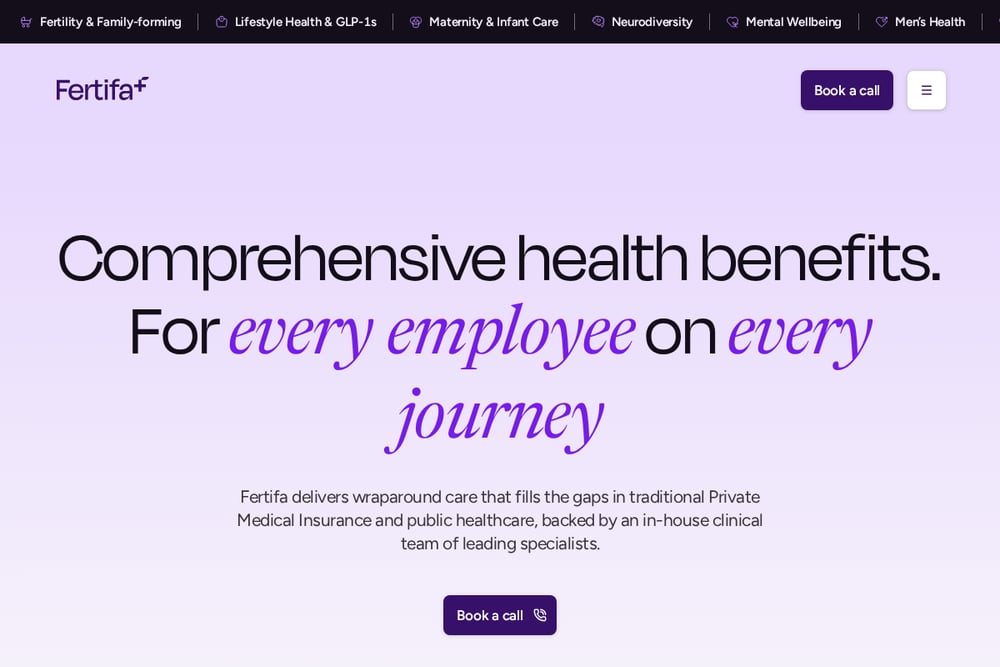
Fertifa delivers wraparound care designed to fill the gaps in private medical insurance and public healthcare. Its service lines cover fertility and family-forming, lifestyle health and GLP-1s, maternity and infant care, neurodiversity, mental wellbeing, men's health, and women's health and menopause. An in-house clinical team brings 60+ years of combined expertise, and the platform reports a 97.9% patient satisfaction score post-consultation alongside £10M+ in treatment and testing costs covered. Reimbursements, payment plans, multi-currency support, and quarterly reporting make it workable for complex organisations. It serves both enterprises and SMEs, with dedicated account management and case studies from Monzo, ClearScore, Kraft Heinz, and Cadent.
#3 Peppy
 A screenshot of the Peppy website.
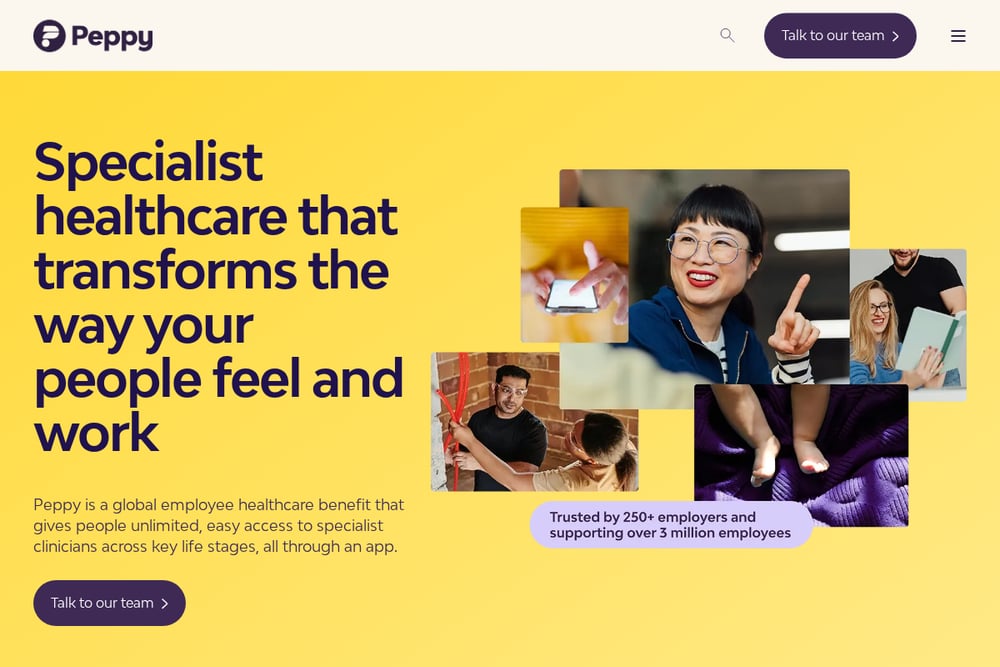
Peppy focuses on specialist healthcare that changes how your people feel and work. Its services span women's health, men's health, fertility, pregnancy and parenthood, menopause, and neurodiversity. The platform publishes practical resources for HR and benefits leaders, including comparisons against private medical insurance and EAPs. It also tracks regulatory shifts, such as guidance on the Employment Rights Act 2025 and what HR teams should do in 2026. If you want a partner that pairs practitioner support with ready-made workplace toolkits, Peppy is worth a close look.
#4 Progyny
 A screenshot of the Progyny website.
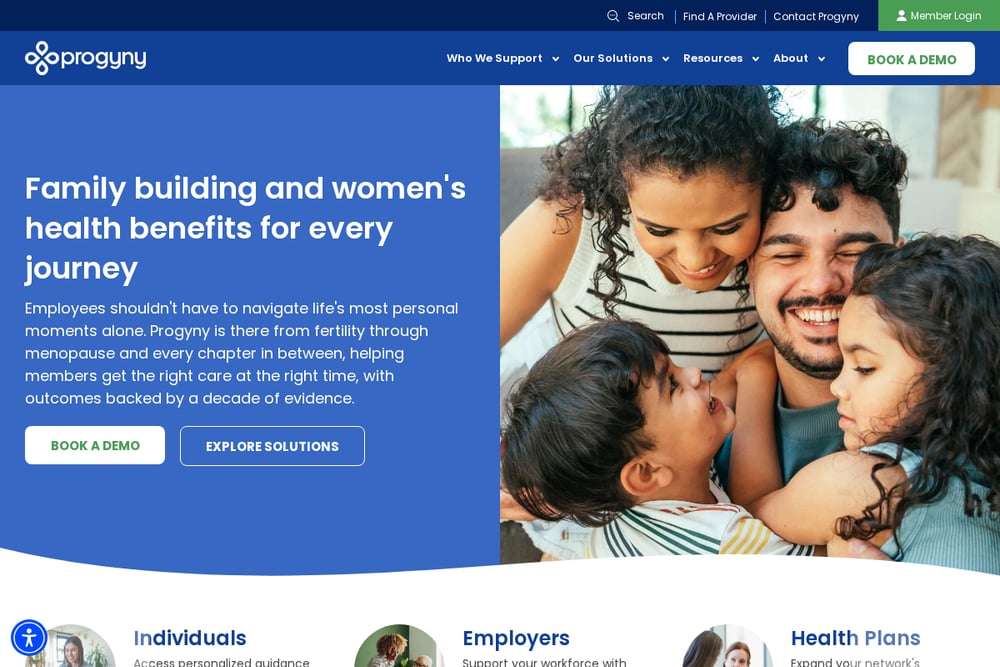
Progyny supports the full spectrum of family building and women's health, from preconception through midlife. Its solutions include fertility and family building, pregnancy and postpartum care, and menopause and midlife care. The company partners with employers, health plans, consultants, labor unions, public entities, PEOs, and general agents, so it fits a range of benefit structures. Clinical expertise and measurable outcomes are central to its positioning, with evidence-based benefit design aimed at shortening time to pregnancy and reducing total costs. Larger, multi-stakeholder organisations will find the partner ecosystem especially useful.
#5 Hertility
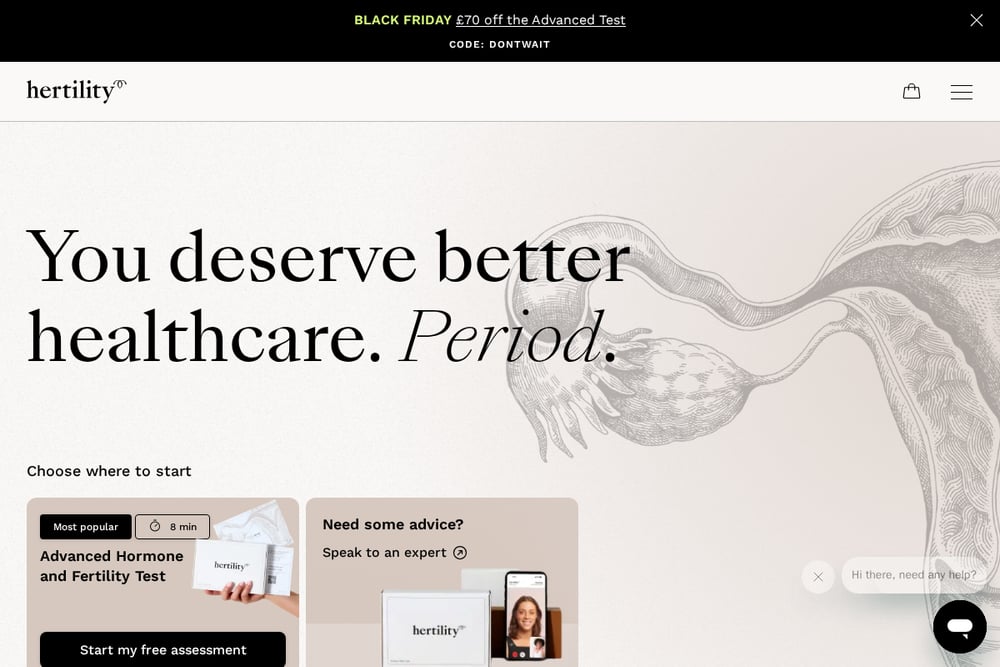 A screenshot of the Hertility website.
Hertility blends science with workplace strategy, offering reproductive health support backed by data. Employees start with an eight-minute hormone and fertility assessment, then access advisors, consultations, scans, counselling, and nutrition support. Treatment pathways cover IVF support, egg freezing, and same-sex fertility, with a network of trusted clinics. For HR leaders, insurers, and brokers, Hertility provides an ROI calculator, case studies, and guides such as its menopause in the workplace resource. It is a strong fit if you want assessment-led triage before committing to broader benefits.
How to choose the right partner
Start with your workforce data. Which life stages and health needs are most prevalent among your people? If fertility and family-forming dominate, prioritise depth there. If menopause and midlife care matter more, weight that accordingly. Next, check the operational fit: does the platform support multi-currency reimbursement, global coverage, and quarterly reporting? Ask for case studies in your sector and size band. Finally, confirm how the platform integrates with your existing private medical insurance and EAP rather than duplicating them.
Building a repeatable benefits workflow
Map your employee journey from awareness to reimbursement. Publish clear policy templates and education resources so employees self-serve. Route clinical questions to the provider's in-house team, and keep reimbursement approvals on a defined cadence. Use quarterly reporting to spot utilisation gaps and adjust communications. Review outcomes annually against retention, satisfaction, and cost data, then refine the mix of services your workforce actually uses.
The bottom line
There is no single winner here, only the right fit for your organisation. Carrot Fertility leads on global reach, Fertifa combines clinical depth with broad service lines and reimbursement flexibility, Peppy pairs specialist care with HR-ready toolkits, Progyny suits complex multi-stakeholder structures, and Hertility offers assessment-led triage. Match the platform to your workforce data and operational reality, and the ROI will follow.