Your technical skills got you here. What moves you forward now is how well you read the room, including the one inside your own head. These five emotional intelligence coaching services each take a different path to that same destination.
Where EQ coaching stands right now
Emotional intelligence has moved from a soft-skills footnote to a core leadership competency. Coaching practices now blend validated assessments, structured reflection, and workplace casework to help people manage triggers, communicate with awareness, and lead under pressure. The field is crowded, though, and the offerings range from certification-driven corporate programs to therapy-informed practices to quiet, story-led content platforms. Knowing what kind of help you actually want is half the decision.
How these five were evaluated
Each service was weighed on the same factors: depth of service scope, clarity of the coaching process, credentials and assessment tools, how approachable the entry point is, and how well the format fits individual professionals versus organizations. Some lean corporate, some lean clinical, and one leans on everyday stories. The right pick depends on which of those you need.
Here is the short version before the detail. Each entry below takes a different angle on building emotional intelligence, so scan for the one that matches how you like to learn.
| Provider | Best For |
|---|---|
| The Emotional Intelligence Training Company | Leaders and teams wanting assessment-driven, certification-backed coaching |
| Home - Understand Your Emotions. Transform Your Responses. | Individuals who want a reflective, story-led entry into EQ work |
| InMotion Consulting & Coaching | Professionals blending career growth with EQ development |
| The Pursuit Counseling | High performers who may need therapy-informed support |
| Growing Self Counseling & Coaching | People whose EQ goals overlap with relationships or life transitions |
The five, in detail
#1 The Emotional Intelligence Training Company
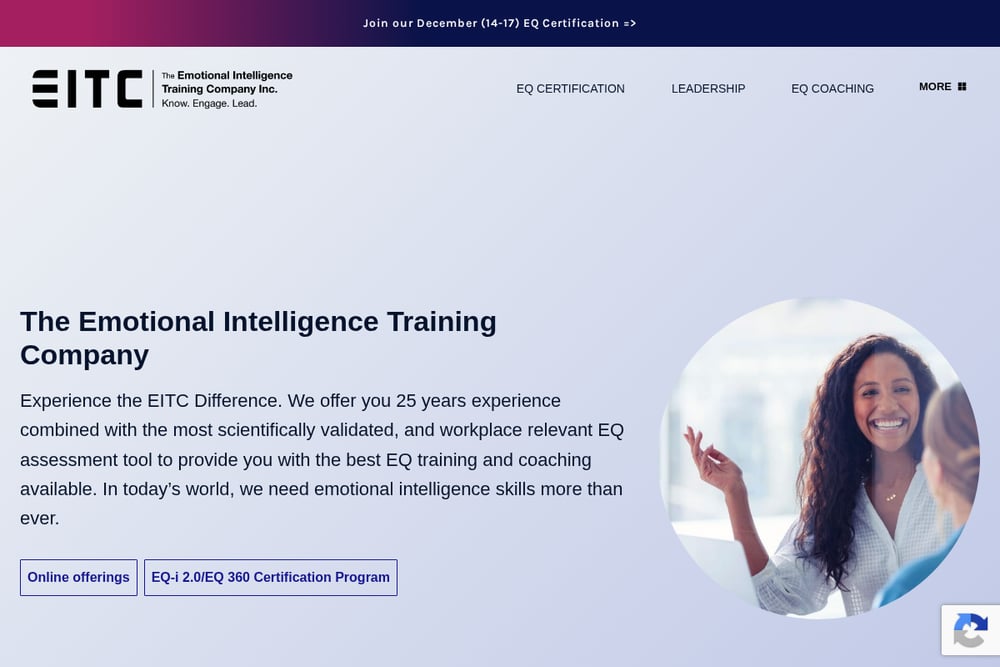 A screenshot of the The Emotional Intelligence Training Company website.
This is the heavyweight of the group, built around ICF and EQ-i certified coaches and a structured assessment-first process. You start with an EQ-i 2.0 self-assessment, then work with a coach to unpack your 15 competencies and build a development plan. Coaching is woven into their broader training programs rather than sold as a standalone extra, which suits organizations that want a system. If you want measurable benchmarks and a formal framework, this is the most rigorous option on the list.
#2 Home - Understand Your Emotions. Transform Your Responses.
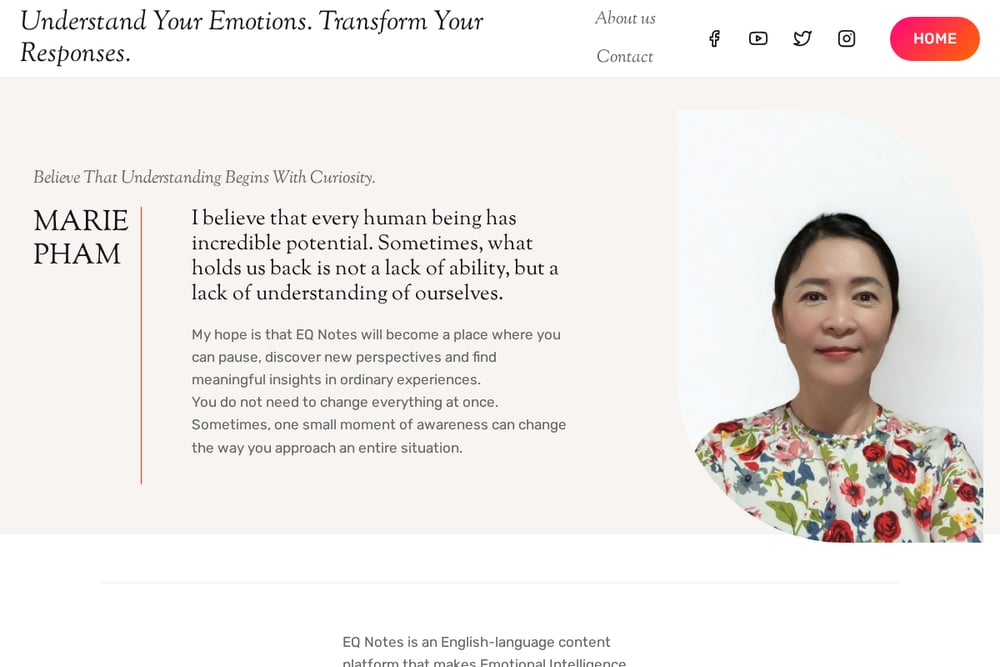 A screenshot of the Home - Understand Your Emotions. Transform Your Responses. website.
EQ Notes, run by Marie Pham, takes the opposite approach to the big training firms: it starts with stories. The platform makes emotional intelligence practical through everyday situations, workplace experiences, and personal reflections, following a simple arc of real-life situation, emotional insight, practical reflection, better response. You can read case studies, like one on an experienced manager learning to handle stress through a few coaching sessions, or explore practices for recognizing triggers and questioning automatic reactions. Coaching sessions are available alongside the content, so you can begin with reading and move to working with someone when you are ready. It is the gentlest on-ramp here, and for many people that is exactly what makes it stick.
#3 InMotion Consulting & Coaching
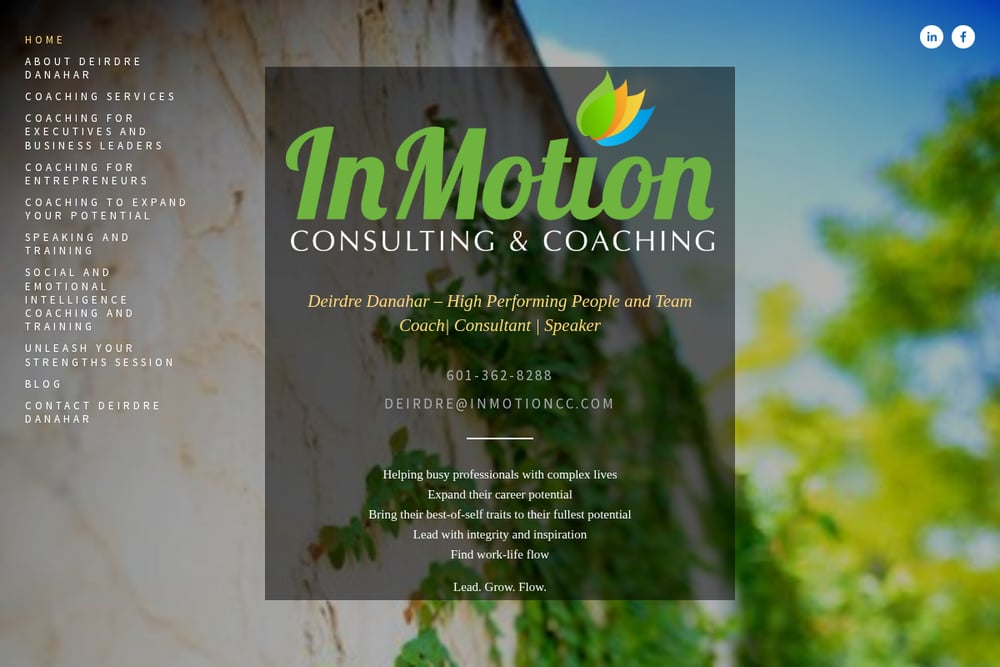 A screenshot of the InMotion Consulting & Coaching website.
Deirdre Danahar runs a practice aimed squarely at busy professionals with complex lives, offering ISEI-certified social and emotional intelligence coaching, training, and assessment. The emphasis is on bringing your best-of-self traits to full potential, leading with integrity, and finding work-life flow. Services branch out into executive coaching, entrepreneur coaching, and speaking engagements, so the EQ work sits inside a broader professional development menu. If you want a single coach who can address career and emotional growth together, this fits well.
#4 The Pursuit Counseling
 A screenshot of the The Pursuit Counseling website.
This practice comes at EQ coaching from a clinical angle, which matters if the patterns you are fighting run deeper than workplace habits. Their writing is unusually candid about the distinction between coaching and therapy, noting when unresolved trauma or persistent anxiety calls for psychotherapy alongside or before coaching. They also push you to ask prospective coaches which validated assessment they use, naming EQ-i, MSCEIT, and structured 360 feedback as the ones that count. For high performers who suspect something underneath the surface, this is a thoughtful place to start.
#5 Growing Self Counseling & Coaching
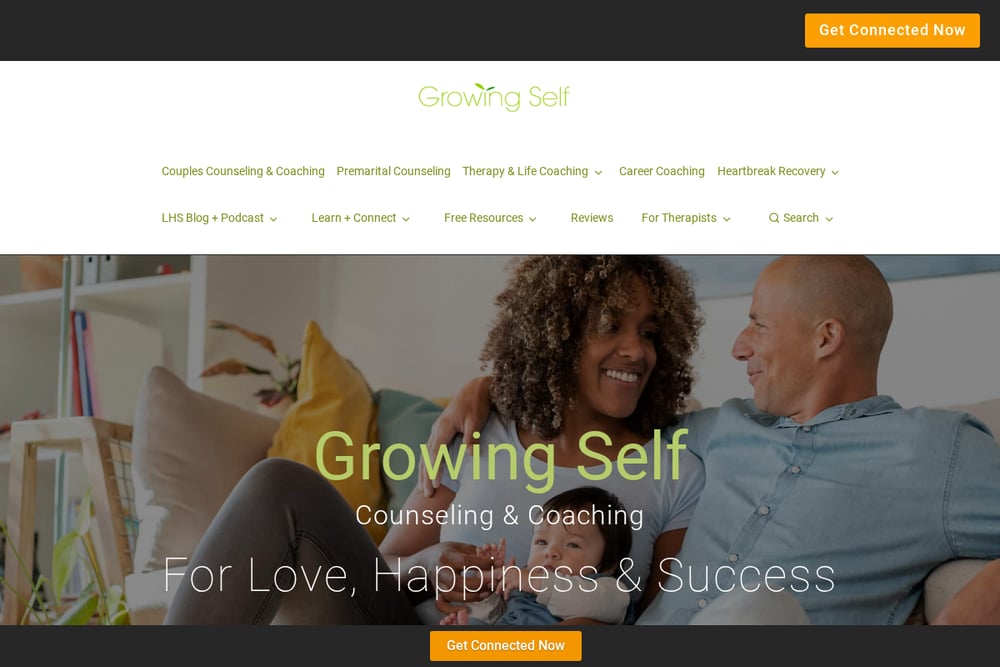 A screenshot of the Growing Self Counseling & Coaching website.
Growing Self is a broad counseling and coaching organization with a dedicated emotional intelligence offering sitting inside a much larger menu of relationship, career, and personal growth services. That breadth is the appeal: if your EQ challenges are tangled up with a relationship, a career transition, or a breakup, you can address them under one roof. They offer a free consultation session to help you find the right fit, and their podcast and blog give you plenty of free material to sample first. It is less specialized than the pure EQ shops, but more versatile.
Picking the one that fits you
Start with the question of what you actually want. If you need a formal assessment and a development plan your organization will recognize, go with a certification-driven practice. If you want to ease in through reading and reflection before committing to sessions, a content-led platform like EQ Notes lowers the barrier. If the patterns you struggle with feel clinical, choose a practice that is honest about the coaching-therapy line. And if your EQ work is tangled up with a relationship or a career shift, a broader counseling organization may serve you better than a specialist. Ask any coach which validated assessment they use, and ask what a typical engagement looks like from first session to last.
A simple reflection routine you can automate
You do not need software to build emotional awareness, but a light system helps. Set a recurring five-minute calendar block at the end of each workday. In a notes app, answer one prompt: what did I feel today, and what might it be telling me? Tag each entry with a trigger, a person, or a situation. Once a month, review the tags and look for repeats. That pattern is your curriculum, and it is the same arc EQ Notes describes: situation, insight, reflection, better response. Bring the recurring themes to a coaching session and you will walk in with material instead of a blank page.
The bottom line
Emotional intelligence is not a personality trait you either have or lack. It is a set of habits, and every service here builds them differently. The Emotional Intelligence Training Company gives you structure and measurement. EQ Notes gives you stories and a gentle place to begin. InMotion blends EQ with career coaching, The Pursuit Counseling brings clinical depth, and Growing Self offers breadth across life's tangled threads. Pick the format that matches how you actually reflect, then start with one small moment of awareness. That is where the change begins.