
Feeling stuck in the same emotional loops? These five tools help you name what you feel and act on it.
The Emotional Intelligence Boom
Emotional awareness is no longer a soft skill—it's a core life skill. In the US, demand for self-guided emotional intelligence tools has surged as people look for practical ways to manage stress, improve relationships, and make better decisions. Apps and frameworks now compete to help you identify feelings, track patterns, and turn insight into action. The space blends psychology, technology, and everyday usability. Whether you want a simple daily check-in or a structured method for tough conversations, there's a tool for you.
How We Evaluated These Tools
We looked at five factors: framework clarity, ease of use, practical application, scientific grounding, and accessibility. ANES Model stands out for its simple four-step cycle that works in real-life moments, with both app and book formats. How We Feel offers a free, research-backed journal with a nonprofit mission and Yale collaboration. The How We Feel App Store listing highlights strong user ratings and HealthKit integration. The Google Play version emphasizes broad Android availability and large download numbers. Marc Brackett's page provides deep scientific context and the Mood Meter's academic roots. Each tool serves a different need, from quick daily tracking to structured self-reflection.
Here's a quick look at five emotional awareness tools that can help you understand yourself better.
| Provider | Best For |
|---|---|
| How We Feel | Daily emotion tracking with scientific backing |
| ANES Model – From wearing masks to directing your own life. | Turning emotional insight into action |
| How We Feel App - App Store | iPhone users who want a top-rated emotional journal |
| How We Feel - Apps on Google Play | Android users seeking a free emotional wellbeing app |
| How we feel app - Marc Brackett Emotional Intelligence Tool | Understanding the science behind emotional intelligence tools |
A Closer Look at Each Tool
#1 How We Feel
 A screenshot of the How We Feel website.
How We Feel is a free emotional wellbeing journal created by scientists, designers, and therapists. It helps you find precise words for your emotions and spot patterns over time. The app integrates with HealthKit to track sleep, exercise, and health trends alongside your mood. You can also share how you feel with trusted friends in real time. Backed by Yale's Center for Emotional Intelligence, it offers step-by-step video strategies for emotional regulation. It's a nonprofit project, so your data stays private unless you opt in to research.
#2 ANES Model – From wearing masks to directing your own life.
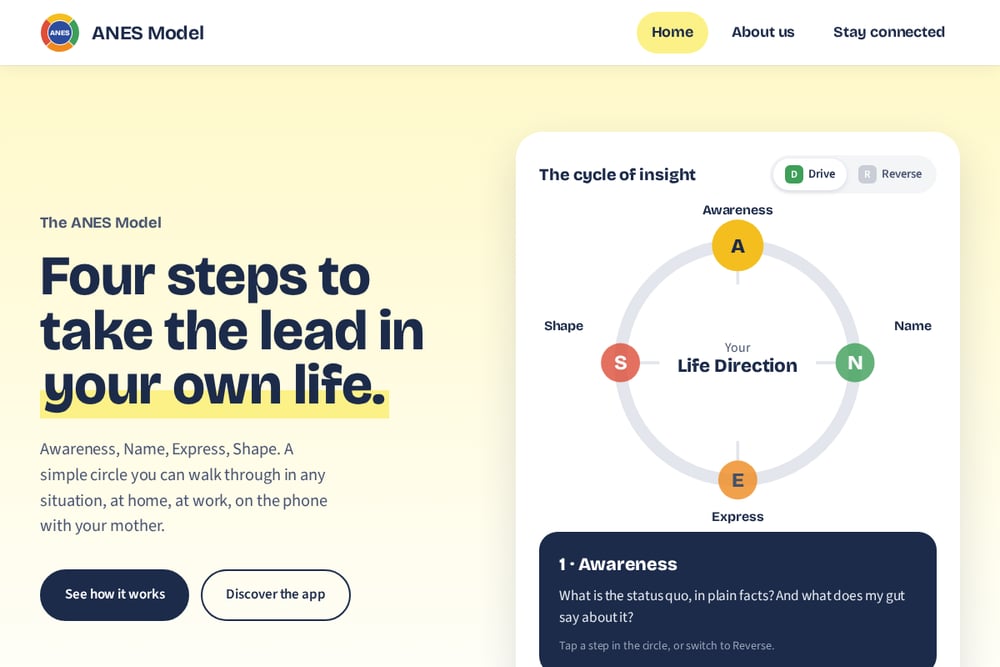 A screenshot of the ANES Model website.
ANES Model offers a four-step framework—Awareness, Name, Express, Shape—to help you take the lead in your own life. You can walk through the cycle in any situation, at home, at work, or on the phone with your mother. The app puts feelings, needs, and values at your fingertips, while the book Make Your Life Worth Living dives deeper. Unlike tools that only track emotions, ANES guides you from insight to action. It also introduces Reverse mode to show how most of us act first and understand last. The goal is honest inner clarity and behavior that aligns with what truly matters to you.
#3 How We Feel App - App Store
 A screenshot of the How We Feel App - App Store website.
The App Store listing for How We Feel showcases its strong reputation among iPhone users. With a 4.9-star rating from over 30,000 reviews, it's clearly resonating. Apple awarded it Editors' Choice, and it ranks in the top 200 Health & Fitness apps. The listing highlights its free nature and nonprofit origins. It also notes the app's focus on building better relationships and managing stress. If you're an iPhone user, this is a convenient way to access the same science-backed tool.
#4 How We Feel - Apps on Google Play
 A screenshot of the How We Feel - Apps on Google Play website.
On Google Play, How We Feel reaches a wide Android audience with over 500,000 downloads. The listing emphasizes its free access and scientific foundation. It explains how the app helps you identify patterns and find emotional regulation strategies. The friends feature lets you share feelings with trusted contacts. Data privacy is a key point: your information stays on your device unless you choose otherwise. For Android users, this is the primary way to get the app.
#5 How we feel app - Marc Brackett Emotional Intelligence Tool
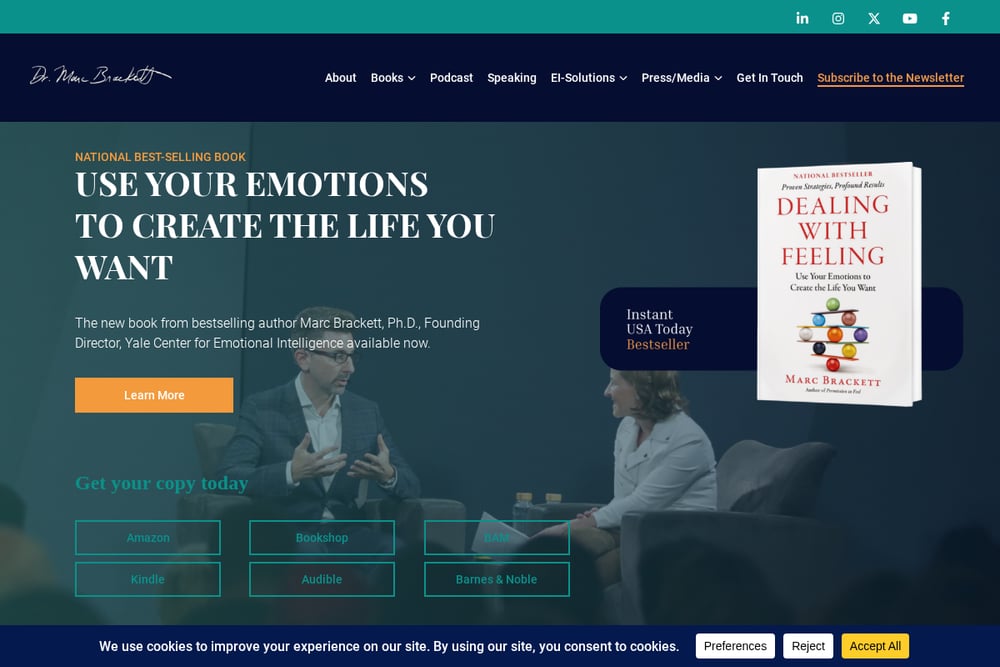 A screenshot of the How we feel app - Marc Brackett Emotional Intelligence Tool website.
Marc Brackett's page provides the academic and personal backstory of the How We Feel app. Brackett, a Yale professor, co-created the Mood Meter, which became the signature tool of the RULER approach used in over 5,000 schools. He explains how the app evolved from earlier Mood Meter versions. This page is ideal if you want to understand the research behind the tool. It also connects you to Brackett's book Permission to Feel and other resources. It's less about daily use and more about the science of emotional intelligence.
How to Choose the Right Tool for You
Start by asking what you need. If you want a simple daily check-in, How We Feel's app is a strong choice. If you prefer a structured method to guide your actions, ANES Model gives you a clear four-step cycle. Consider your platform: iPhone users can check the App Store listing, while Android users should look at Google Play. If you're curious about the research, Marc Brackett's page offers deep context. Think about whether you want just tracking or a path to behavior change. Also, decide if you value nonprofit privacy or a book-plus-app approach. Your choice should match your goal: awareness, action, or understanding.
Automating Your Emotional Awareness Practice
You can build a simple routine with these tools. Set a daily reminder to check in with How We Feel and log your emotions. Use ANES Model when you face a recurring conflict: pause, walk through Awareness, Name, Express, and Shape. Sync How We Feel with HealthKit to see how sleep and exercise affect your mood. Share your check-ins with a trusted friend for accountability. Review your patterns weekly to spot triggers. Over time, this loop turns emotional awareness into a habit. The goal is not perfection but progress.
The Bottom Line on Emotional Awareness Tools
Emotional awareness is a practice, not a destination. The five tools here offer different paths: How We Feel excels at tracking and scientific insight, while ANES Model shines at turning feelings into action. The App Store and Google Play listings make How We Feel accessible on any device. Marc Brackett's page adds the academic depth. Pick the one that fits your life and start small. Even one check-in a day can shift how you show up for yourself and others.