
You have a hardware idea, a deadline, and a stack of engineering decisions that can make or break your launch. These five US firms are built to carry that weight from architecture to production.
The State of Electronic Product Development in the US
Electronic product development has become a full-stack discipline. You are no longer just choosing a PCB layout shop. You need teams that can move between analog, digital, mixed-signal, FPGA, RF, firmware, and manufacturing transfer without dropping the thread.
That shift is driven by tighter timelines, stricter qualification requirements, and more connected products. Medical devices, defense systems, industrial automation, and consumer electronics all demand evidence-led engineering. Requirements, interfaces, and test data have to live as one baseline.
The firms in this roundup sit in different parts of that landscape. Some lean toward manufacturing integration. Some lean toward embedded and cloud-connected systems. Others bring deep FPGA, RF, and energy-system expertise. The common thread is that they help you turn product intent into production-ready hardware.
How We Evaluated These Firms
We looked at service scope first. Does the firm cover hardware, embedded software, FPGA, RF, and system architecture in one engagement? Breadth matters when your product crosses disciplines.
We also weighed production readiness. A design that cannot be manufactured, tested, and qualified is a prototype, not a product. Firms that talk openly about DFM, NPI, and production transfer stood out.
Industry fit came next. Medical, defense, industrial, and consumer electronics each carry different constraints. We noted where each firm has visible application experience.
Finally, we considered clarity of process. Requirements management, verification strategy, and evidence-led delivery are signals that a firm can handle complex programs without losing control of the baseline.
Here is a quick look at the five firms, ordered for this roundup. Each one brings a different center of gravity to electronic product development.
| Provider | Best For |
|---|---|
| EPD Electronics | Hardware teams that want design and manufacturing under one roof |
| Electronic Design Services | FPGA, RF & Embedded Engineering — Kernull Technologies | Complex products that need FPGA, RF, embedded, and energy expertise in one engagement |
| SEACOMP | Startups and SMBs that need design plus scalable manufacturing |
| Cardinal Peak | Connected products that need hardware, wireless, cloud, and app development together |
| Embien | Teams that need embedded software, IoT, and hardware engineering in one partner |
The Five Firms in Focus
#1 EPD Electronics
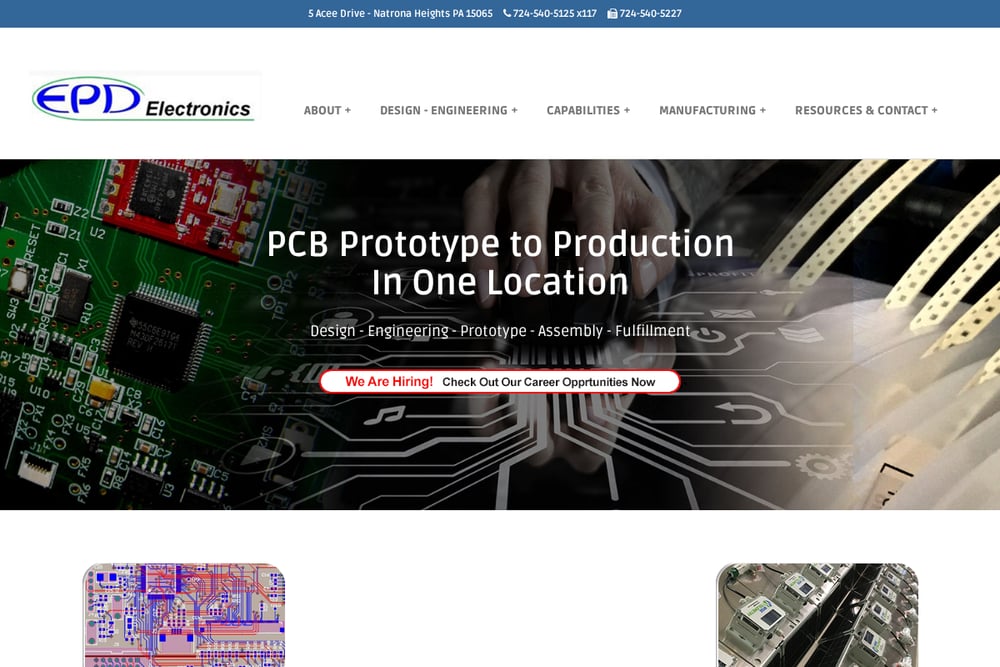 A screenshot of the EPD Electronics website.
EPD Electronics brings over 30 years of prototyping and development experience to product design. The firm pairs engineering with in-house manufacturing, which means your design is shaped by people who will actually build it. Their proficiency spans analog and digital hardware, embedded microprocessor systems, power electronics, motor controls, battery-based systems, signal processing, and wireless networks. That manufacturing feedback loop helps products transition smoothly from prototype into ramp-up production. If you already have a design or are starting from a napkin sketch, they can help you make it more cost-effective and efficient.
#2 Electronic Design Services | FPGA, RF & Embedded Engineering — Kernull Technologies
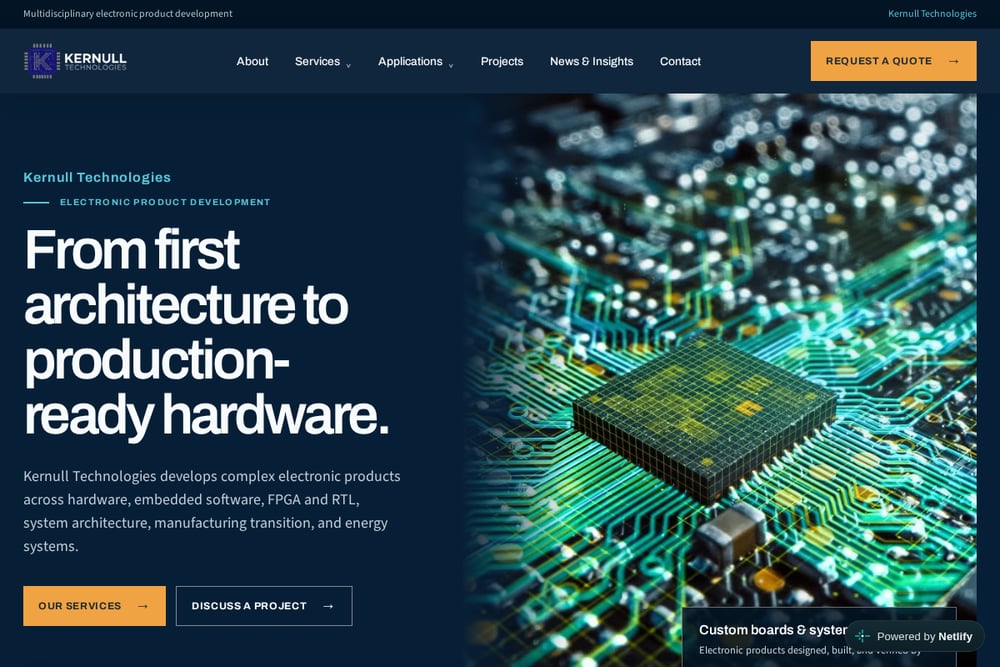 A screenshot of the Kernull Technologies website.
Kernull Technologies is a California-based electronic design consultancy built around multidisciplinary product development. The firm covers system architecture, hardware design, embedded software, FPGA and RTL, RF design, battery and energy systems, new product introduction, and standards and qualification. That range matters when your product crosses electrical, programmable logic, firmware, and mechanical boundaries. Kernull positions itself around evidence-led delivery, managing requirements, interfaces, and test evidence as one product baseline. Their application focus includes medical and life sciences, imaging and video, data acquisition, AI systems, battery management, energy storage, defense and aerospace, industrial automation, consumer electronics, and telecom. You get one integrated team from first architecture to production-ready hardware.
#3 SEACOMP
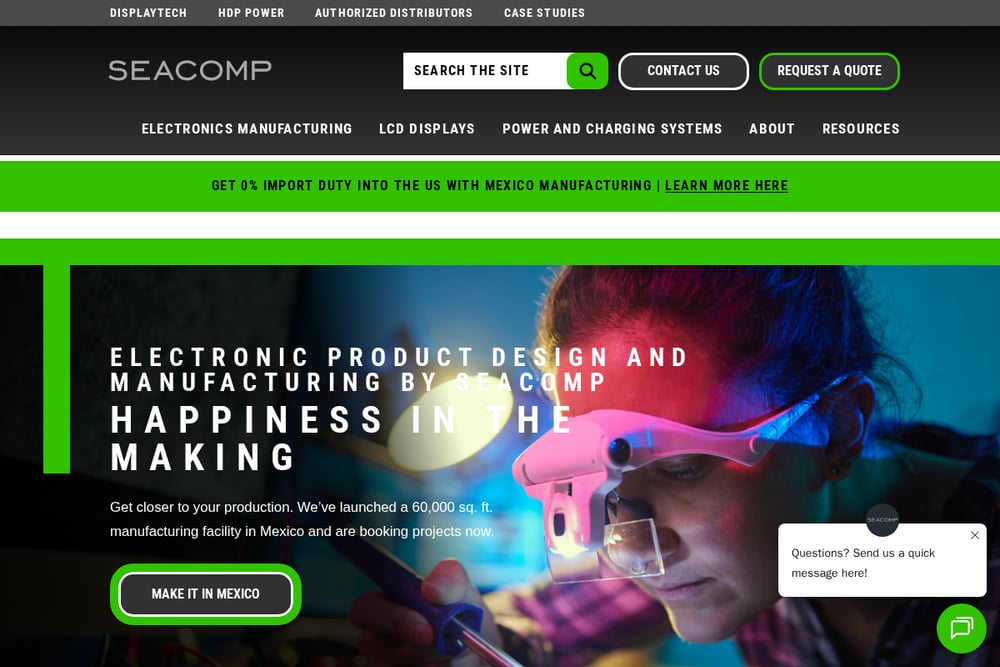 A screenshot of the SEACOMP website.
SEACOMP approaches electronic product design as part of a full product development and manufacturing solution. The firm designs with production in mind from the start, which is a meaningful difference when you are planning volume manufacturing. Their expertise covers medical devices, consumer electronics, industrial controls, environmental monitoring, wireless controls, smart home devices, and IoT hardware development. They also offer turnkey manufacturing, design for manufacturing, and new product introduction services. With facilities in China and Mexico, they give you options for tariff-free manufacturing and supply chain flexibility. If your goal is not just a working prototype but a scalable product, their engineering team is structured around that outcome.
#4 Cardinal Peak
 A screenshot of the Cardinal Peak website.
Cardinal Peak is a Colorado-based firm with a broad electronic product design practice. Their services include embedded software engineering, FPGA design, digital signal processing, Bluetooth LE and Mesh, low-power Wi-Fi, Matter, Zigbee, and Z-Wave. They also bring cloud services, mobile app development, and UX design into the same house. That combination is useful when your hardware is only one piece of a connected product. Their markets include consumer electronics, automotive audio and video, streaming, robotics, aerospace, security and access control, and healthcare IoMT. They are an AWS IoT partner and hold design center relationships with silicon vendors, which can shorten integration work.
#5 Embien
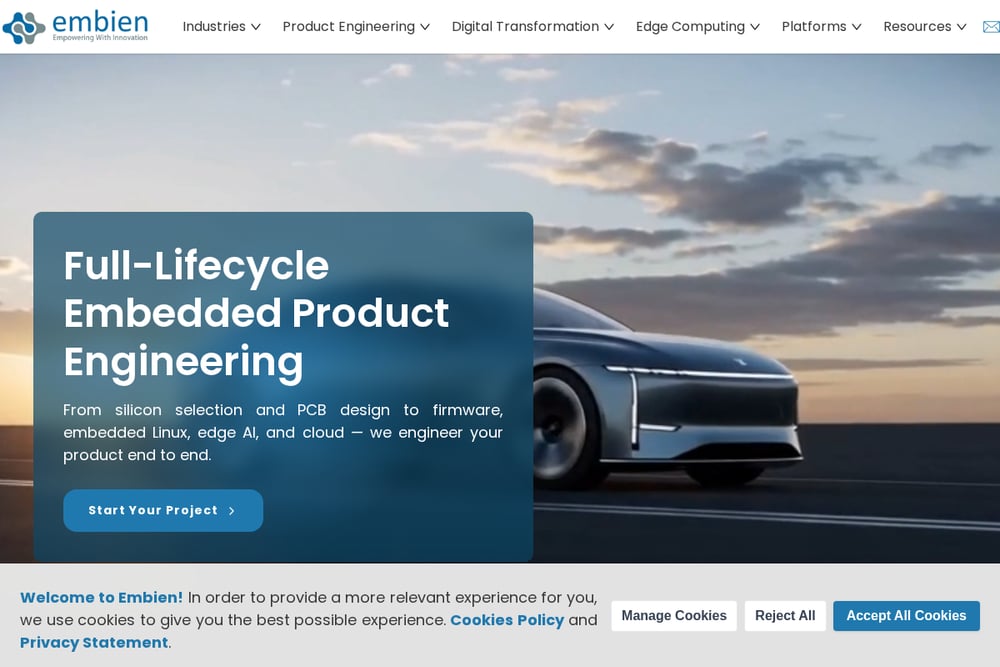 A screenshot of the Embien website.
Embien offers one-stop product engineering services that help customers convert a vision into reality. Their electronics design practice includes electronic circuit design, PCB layout, FPGA design, and electromechanical product engineering. They also cover firmware development, OS porting and BSP development, device driver development, and embedded Android. On the systems side, they bring IoT product development, edge computing, AI and ML development, and embedded system security. Their industry focus spans automotive, industrial automation, mission-critical systems, consumer electronics, medical electronics, and semiconductors. If your product needs hardware plus embedded software plus connectivity, Embien is built to cover that ground.
How to Choose the Right Electronic Product Development Partner
Start with the gap in your own team. If you have strong firmware but weak RF, look for a firm with visible RF and FPGA depth. If you have a solid design but no path to manufacturing, prioritize a partner with NPI and production transfer experience.
Next, check the qualification story. Medical, defense, and aerospace products carry standards that shape every design decision. Ask how the firm manages requirements, interfaces, and test evidence. If those live in separate documents and spreadsheets, you will feel it later.
Then look at the application list. A firm that has shipped in your industry will recognize the constraints faster. That does not replace diligence, but it shortens the learning curve.
Finally, decide how much integration you want. Some firms hand off cleanly between disciplines. Others keep hardware, FPGA, firmware, and systems engineering in one engagement. The right answer depends on how much coordination you want to own.
Where Automation Fits in Electronic Product Development
Automation is no longer a separate phase. It shows up in requirements traceability, verification scripts, test benches, and production test fixtures. Firms that treat requirements, interfaces, and test evidence as one baseline can automate more of the verification loop.
On the hardware side, design for manufacturing and design for test rules can be checked earlier when the same team owns layout and production transfer. On the embedded side, continuous integration for firmware and FPGA builds catches integration issues before they reach a board.
If you are evaluating partners, ask how they manage the product baseline. The answer tells you how much manual coordination you will absorb.
The Bottom Line
Electronic product development rewards teams that can hold hardware, FPGA, firmware, RF, and manufacturing thinking together. The five firms here each approach that challenge from a different angle.
EPD Electronics leans on manufacturing integration. Kernull Technologies brings multidisciplinary depth across FPGA, RF, embedded, and energy systems. SEACOMP pairs design with scalable production. Cardinal Peak connects hardware to wireless, cloud, and apps. Embien covers embedded software, IoT, and electronics design in one practice.
Match the firm to your gap, your industry, and your production plan. Then verify how they manage requirements and test evidence. That is where good products stay on track.