
Great learning content doesn't happen by accident. It's built by teams who understand how people actually absorb information, and the right partner can make or break your course launch.
The State of Educational Content Development
The demand for digital learning has never been higher. Organizations across K-12, higher education, and corporate training are racing to modernize their curricula, and many are turning to specialized content studios rather than building everything in-house. That shift has created a crowded field. You'll find everything from enterprise-scale learning conglomerates with hundreds of instructional designers to boutique shops that focus on one thing and do it well. The challenge isn't finding a vendor. It's finding the one whose scope, pricing model, and working style match your project. Some studios thrive on multi-year corporate rollouts. Others are built for a single focused course package. Knowing which lane you're in before you start shopping will save you weeks of back-and-forth.
How We Evaluated These Studios
We looked at the same factors for every studio on this list. First, service scope: does the studio cover curriculum design, lesson writing, microlearning, and corporate training, or just one slice? Second, pricing clarity: are packages published and fixed, or is everything a custom quote? Third, audience fit: does the studio serve K-12, higher ed, corporate L&D, or a mix? Fourth, instructional depth: do they bring subject matter experts, learning designers, and accessibility specialists to the table? Finally, engagement model: do you get a self-serve package you can request directly, or a consultative sales process? Each studio below stands out on a different combination of these factors, and the right pick depends on what your project actually needs.
Here's a quick look at how these five studios differ before we dig into each one. Use this as a starting map, then read the full profiles to see which fits your situation.
| Provider | Best For |
|---|---|
| GP Strategies | Large enterprise learning programs that need scale |
| Morsden Academy LLC | Educational Content & E-Learning Development | Focused projects with clear scope and budget |
| Magic EdTech | K-12, higher ed, and accessible curriculum work |
| AllenComm | Corporate training with measurable performance goals |
| ELM Learning | Creative, multi-format eLearning and L&D support |
The 5 Studios Worth Knowing
#1 GP Strategies
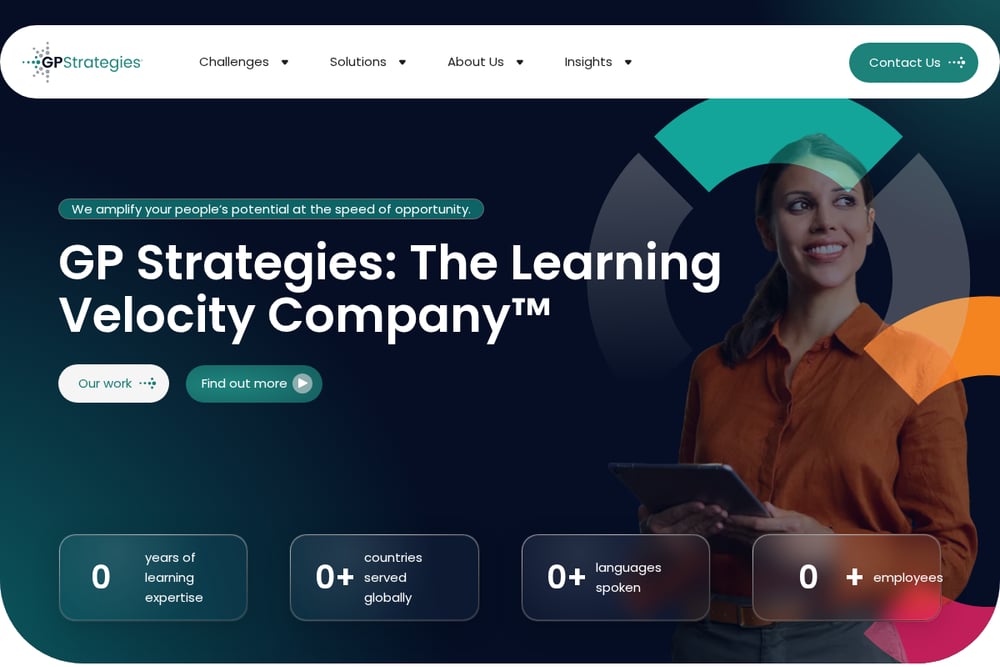 A screenshot of the GP Strategies website.
GP Strategies is the heavyweight of this group. Its GP Studio℠ brings together more than 800 learning content experts with six decades of instructional design experience across every modality and industry. If you're running a large enterprise learning program and need a partner who can scale with you, this is the kind of shop you call. The studio pairs human instructional craft with AI acceleration, which matters when you're producing content at volume. You'll find deep coverage of leadership, technical, and sales performance training. The tradeoff is that this is a consultative, enterprise-oriented engagement, so smaller projects may not get the attention a boutique would give them. Learn more about their learning content design and development work.
#2 Morsden Academy LLC | Educational Content & E-Learning Development
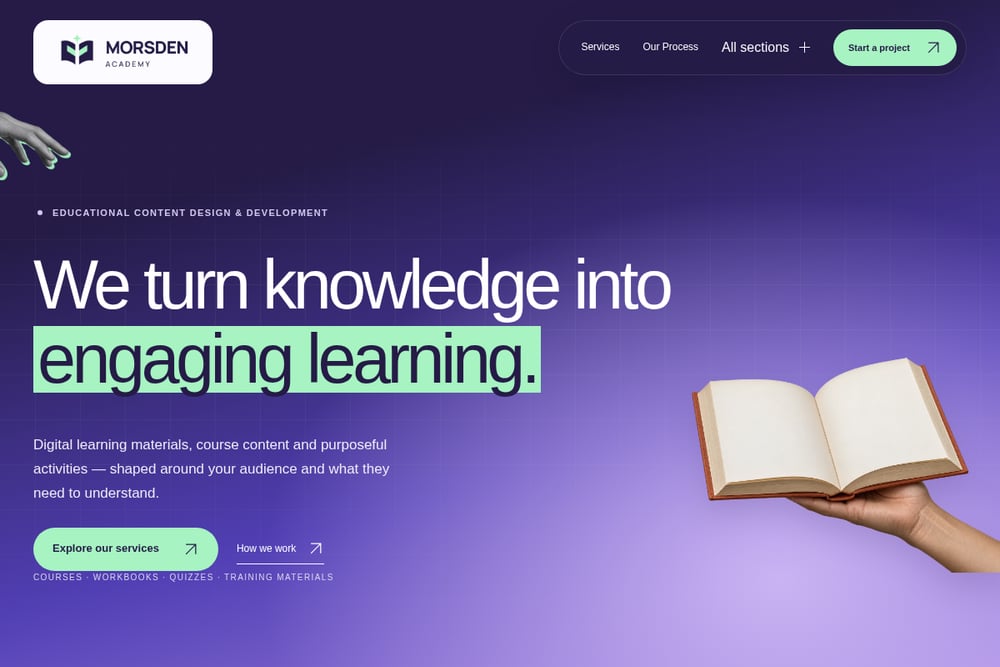 A screenshot of the Morsden Academy LLC | Educational Content & E-Learning Development website.
Morsden Academy is the studio on this list built for people who want to know exactly what they're getting and what it costs before they commit. The company designs and develops digital educational content, including course curricula, online course content, microlearning modules, and corporate training materials, all shaped around a defined learning goal. What stands out is the published fixed-price structure: a microlearning package at $300 per project, online course content creation at $600, curriculum development at $750, and a corporate training module at $1,000. Each project starts with your audience and a clear learning objective, which keeps scope honest. You can explore the full services and pricing directly on the site and request a package without a lengthy sales cycle. For a focused study guide, a compact course, or a single training module, that transparency is hard to beat.
#3 Magic EdTech
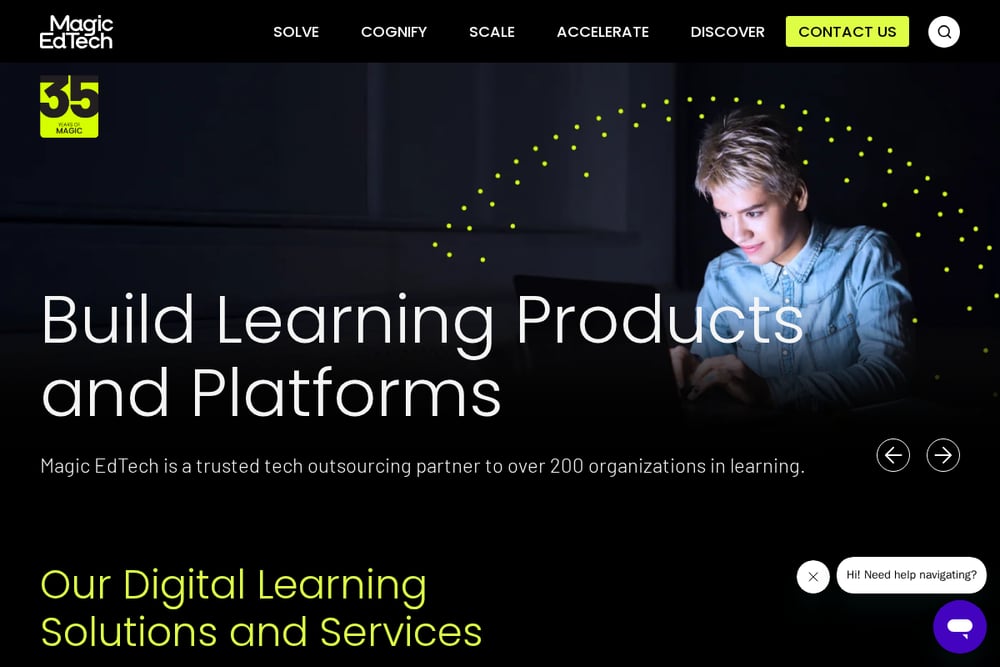 A screenshot of the Magic EdTech website.
Magic EdTech is built for the education sector specifically, and it shows. The company delivers outcome-based content development for K-12, higher education, and workforce learning, with a team that includes subject matter experts, editors, learning designers, and DEI and accessibility specialists. If your project lives in a formal education context and needs to be instructionally sound and accessible, this is a strong fit. They handle content authoring, curriculum modernization, and micro-lessons, and they're comfortable working across disciplines like healthcare, CTE, and ESL. The emphasis on efficacy and accessibility sets them apart from generalist corporate training shops. See their educational content development services for the full picture.
#4 AllenComm
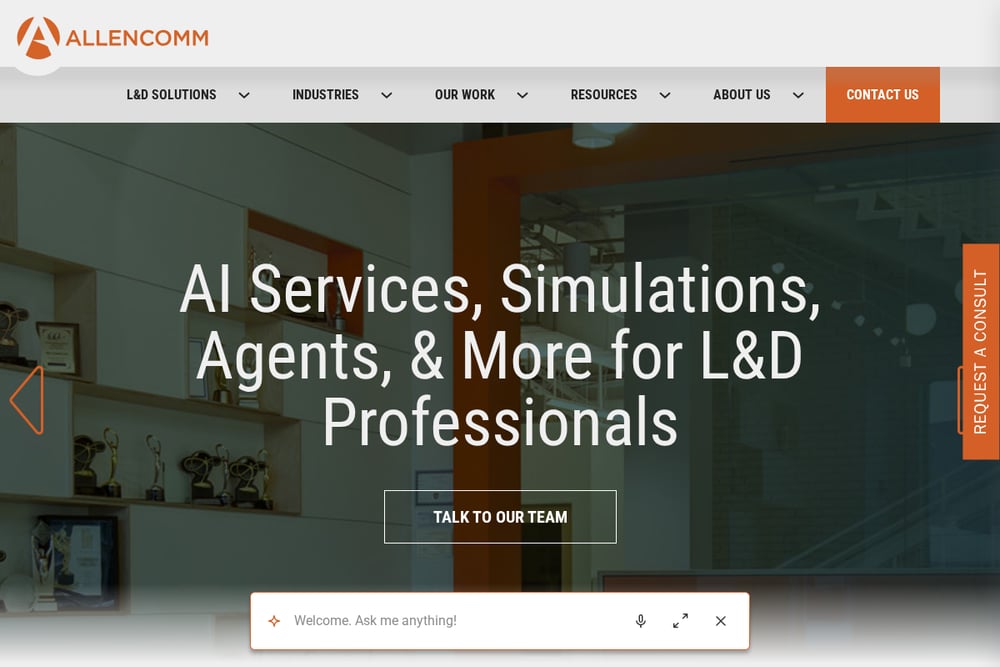 A screenshot of the AllenComm website.
AllenComm is a custom learning content shop with a strong corporate training orientation. The company builds eLearning with simulations, microlearning, and instructor-led training, and it's racked up a long list of Brandon Hall awards along the way. If your priority is measurable performance improvement in a corporate setting, AllenComm's approach of matching the right modality to each objective is worth a look. They also offer consulting, technology services, and staffing, so they can plug into an existing L&D team rather than replace it. The studio serves industries like financial services, healthcare, manufacturing, and high-tech. Their custom content practice is the place to start if you want to see how they think about learning strategy.
#5 ELM Learning
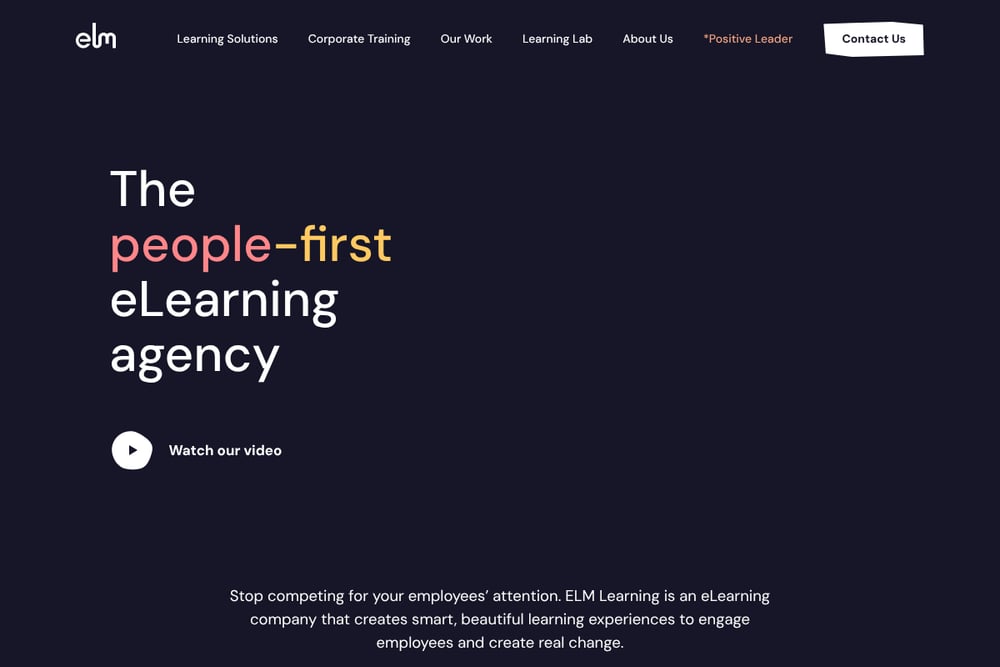 A screenshot of the ELM Learning website.
ELM Learning is a full-service eLearning development company with a broad menu of solutions. You'll find custom eLearning, mobile learning, gamified experiences, microlearning, blended learning, and animated training, plus instructor-led training and instructional design consulting. The studio also offers L&D managed services and staff augmentation, which makes it a practical option if you need extra capacity rather than a single finished course. ELM publishes a learning lab and blog with design tips, so you can get a feel for their approach before you reach out. They work with recognizable organizations and lean into creative, campaign-style learning. Explore their eLearning development work to see if the style matches your brand.
How to Choose the Right Studio
Start with your scope, not the vendor list. If you need one focused course, a study guide, or a single training module, a studio with published fixed-price packages will save you time and keep your budget predictable. If you're modernizing an entire K-12 curriculum, you need a partner with subject matter experts and accessibility depth. If you're rolling out compliance or leadership training across a large workforce, enterprise scale and measurement matter more than price transparency. Ask yourself three questions: What's the learning goal? Who's the audience? What's the budget ceiling? The answers will narrow this list fast. Also pay attention to the engagement model. Some studios let you request a package directly, while others want a discovery call before they'll quote anything. Neither is wrong, but one will fit your timeline better than the other.
Where Automation Fits Into Content Development
AI is now part of nearly every content studio's toolkit, and that's mostly good news for you. It speeds up drafting, helps with consistency across modules, and frees instructional designers to focus on structure and learning objectives. GP Strategies, for example, explicitly pairs human instructional craft with AI acceleration. But automation doesn't replace the thinking that makes content work: the audience analysis, the sequencing, the checkpoints that tell you whether learning actually happened. When you evaluate a studio, ask how they use AI and where humans stay in the loop. A good partner will be specific about that boundary. The studios that treat automation as a drafting assistant rather than a replacement for instructional design will give you better results every time.
The Bottom Line
There's no single right answer here, and that's the point. GP Strategies suits enterprise-scale programs. Morsden Academy fits focused projects where published pricing and a clear learning goal matter most. Magic EdTech is the pick for formal education and accessibility-heavy curriculum work. AllenComm shines in corporate training with measurable outcomes. ELM Learning brings creative, multi-format eLearning and flexible L&D support. Match the studio to your scope, your budget model, and your audience, and you'll end up with content people can actually follow, explore, and use.