
Environmental DNA (eDNA) is revolutionizing the way we track and protect life in our rivers, lakes, and oceans. Instead of relying on trapping, netting, or visual surveys, you can now detect species from a simple water sample. This roundup covers
Why eDNA Is the Future of Conservation Monitoring
Traditional biodiversity surveys are time-consuming, invasive, and often miss rare or elusive species. eDNA changes the game by letting you detect the genetic traces organisms leave behind in water, soil, or air. This technology is faster, safer, and more cost-effective than conventional methods. It's being used to establish baselines before dam removals, track endangered species, and monitor ecosystem health across entire watersheds. As the demand for scalable, data-driven conservation grows, eDNA services are becoming essential tools for agencies, NGOs, and private consultants.
How We Ranked These eDNA Providers
We evaluated each service on four key criteria: scientific rigor (peer-reviewed methods and partnerships), range of services (from single-species detection to full biodiversity assessments), client accessibility (ease of sampling, reporting, and support), and real-world impact (projects with measurable conservation outcomes). The featured business, James Garner eDNA, was ranked lower due to its narrower focus on research-driven partnerships rather than broad commercial scalability.
Here's a quick look at how the five providers stack up. Each excels in a different niche, from large-scale engineering firms to specialized consultancies.
| Provider | Best For |
|---|---|
| EnviroDNA | Scalable biodiversity monitoring for industry and government |
| The eDNA Consultancy | End-to-end project guidance and training |
| Stantec | Integrated eDNA within large engineering and environmental projects |
| James Garner eDNA | Environmental DNA | Applied research and conservation partnerships |
| Ocean Diagnostics | Marine and freshwater eDNA with a focus on microplastics |
Detailed Reviews of the Top 5 eDNA Services
#1 EnviroDNA
 A screenshot of the EnviroDNA website.
EnviroDNA offers end-to-end eDNA monitoring solutions that cover everything from target species detection to full biodiversity assessments. Their platform is designed for industries like water management, mining, and agriculture, making it easy to integrate eDNA into existing environmental programs. They also provide sampling kits and training, so you can collect samples yourself. Their EnviroScore tool helps you compare sites and track trends over time. This scalability and industry focus make them a top choice for large-scale projects.
#2 The eDNA Consultancy
 A screenshot of the The eDNA Consultancy website.
Based in the UK, The eDNA Consultancy positions itself as a true partner in your project, offering expertise in survey design, molecular ecology, and spatial data analysis. They guide you from initial planning through to results interpretation, using interactive apps and follow-up calls. Their services include single-species analysis, biodiversity monitoring, and community science training. This hands-on, consultative approach is ideal if you need a trusted guide through your first eDNA project.
#3 Stantec
 A screenshot of the Stantec website.
Stantec is a global engineering and environmental consulting firm that has integrated eDNA into its digital services portfolio. They offer eDNA as part of larger environmental impact assessments, waterway management, and infrastructure projects. Their strength lies in combining eDNA data with traditional survey methods and advanced analytics. For clients already working with Stantec on large-scale engineering or restoration projects, adding eDNA is a seamless extension of existing services.
#4 James Garner eDNA | Environmental DNA
 A screenshot of the James Garner eDNA | Environmental DNA website.
Dr. James Garner is an aquatic ecologist who applies eDNA methods to real-world conservation challenges, from dam removal baselines to rare species detection. He works directly with agencies like USGS and NOAA, Tribal nations, and NGOs, ensuring his research translates into immediate action. His site also features fish photography and a full list of publications. If you need a scientist who understands both the lab and the field, and who prioritizes applied conservation over commercial scale, this is your go-to.
#5 Ocean Diagnostics
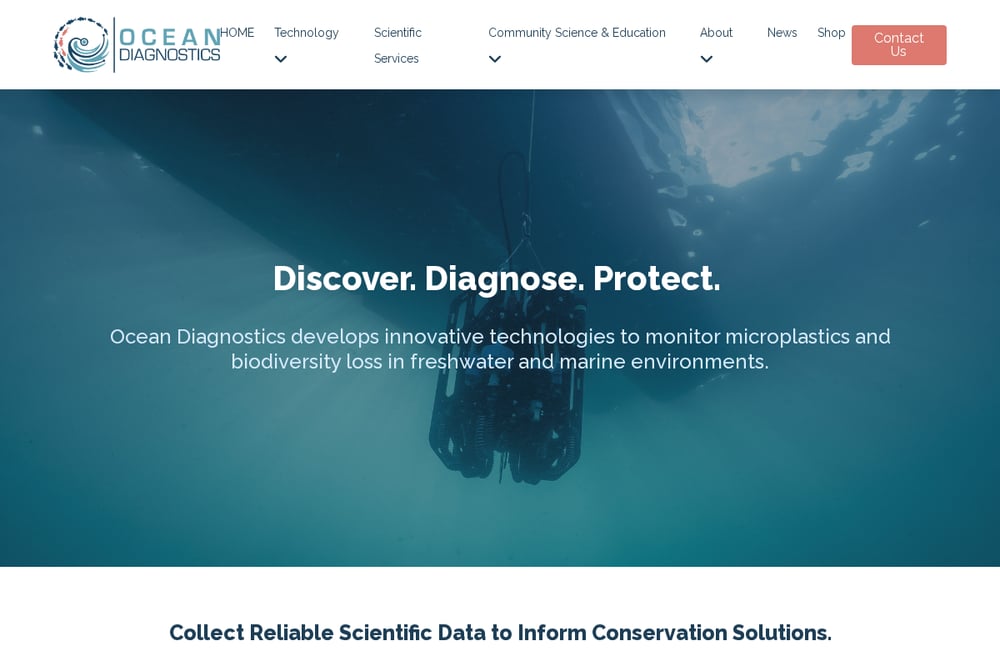 A screenshot of the Ocean Diagnostics website.
Ocean Diagnostics focuses on eDNA technology for both freshwater and marine environments, offering depth samplers and surface samplers designed for robust field collection. They also provide scientific services and community science toolkits, making eDNA accessible to educators and citizen scientists. Their emphasis on microplastics alongside eDNA gives them a unique dual focus. This makes them a strong option if you're interested in combining biodiversity monitoring with pollution assessment.
How to Pick the Right eDNA Partner for Your Project
Start by defining your project's scope. If you need a one-off species detection or a small-scale study, a specialized consultancy like The eDNA Consultancy or James Garner eDNA can give you personalized attention. For ongoing, large-scale monitoring across multiple sites, EnviroDNA's platform and industry integrations are hard to beat. If you're already working with a large engineering firm, Stantec's eDNA services can slot right into your existing workflow. And if your work involves marine environments or microplastics, Ocean Diagnostics offers niche tools you won't find elsewhere. Always check for peer-reviewed validation and direct experience with your target ecosystem.
Automating Your eDNA Workflow
You can streamline your eDNA projects by combining sampling kits from providers like EnviroDNA or The eDNA Consultancy with automated laboratory processing. Many services now offer online portals where you can track sample status, view results, and generate reports. For repeat monitoring, set up a regular sampling schedule and use standardized kits to ensure data consistency. Some providers also offer API access to integrate eDNA data directly into your environmental management software. This reduces manual data entry and speeds up decision-making.
The Bottom Line on eDNA Services
eDNA is no longer a niche research tool—it's a practical, scalable solution for anyone serious about biodiversity monitoring. The five providers here cover the full spectrum, from boutique research partnerships to industrial-scale platforms. For most conservation and restoration projects, EnviroDNA or The eDNA Consultancy will give you the best balance of rigor and ease of use. If you need deep scientific collaboration, James Garner eDNA offers unmatched expertise in applied aquatic ecology. Whichever you choose, you'll be getting data that traditional methods simply can't match.