You want links that actually move rankings, not another spreadsheet of dead-end outreach. These five platforms help you find, vet, and secure editorial placements without the guesswork.
The State of Editorial Link Partnerships
Link building has matured into a relationship business. The old spray-and-pray outreach playbook is fading, replaced by marketplaces and intermediaries that connect publishers with site owners who care about relevance and editorial quality. Buyers now expect transparency around pricing, placement type, and link attributes before they commit. At the same time, privacy and data handling have become differentiators, especially for smaller operators who do not want to be tracked across every marketplace they visit. The result is a fragmented landscape: some platforms lean into scale and filtering, others into managed service and vetting. Your job is to pick the model that matches how much control you want over the final placement.
How We Evaluated These Platforms
We looked at service scope, pricing clarity, and fit for US-based publishers and site owners. Service scope covered whether a platform handles discovery, vetting, content, and delivery, or just the introduction. Pricing clarity meant whether costs were visible before you signed up, and whether membership discounts or minimums were explained upfront. Local fit considered how well each platform serves US publishers looking for relevant, English-language placements. We also weighed privacy posture and the level of editorial control you retain. Each platform below stood out on different factors, so match the criteria to your workflow rather than assuming one size fits all.
Here is a quick comparison of the five platforms, ordered by how we would sequence them for a US publisher or site owner exploring editorial link partnerships.
| Provider | Best For |
|---|---|
| SearchRoyals | Self-service buyers who want scale and filtering |
| FederatedLinks | Privacy-conscious publishers who want human-vetted partnerships |
| Moody Media | Buyers who want guidance and managed support |
| Link Publishers | Teams that want managed execution and content |
| SERPLogic | SEOs who want a repeatable outreach system |
The Five Platforms in Detail
#1 SearchRoyals
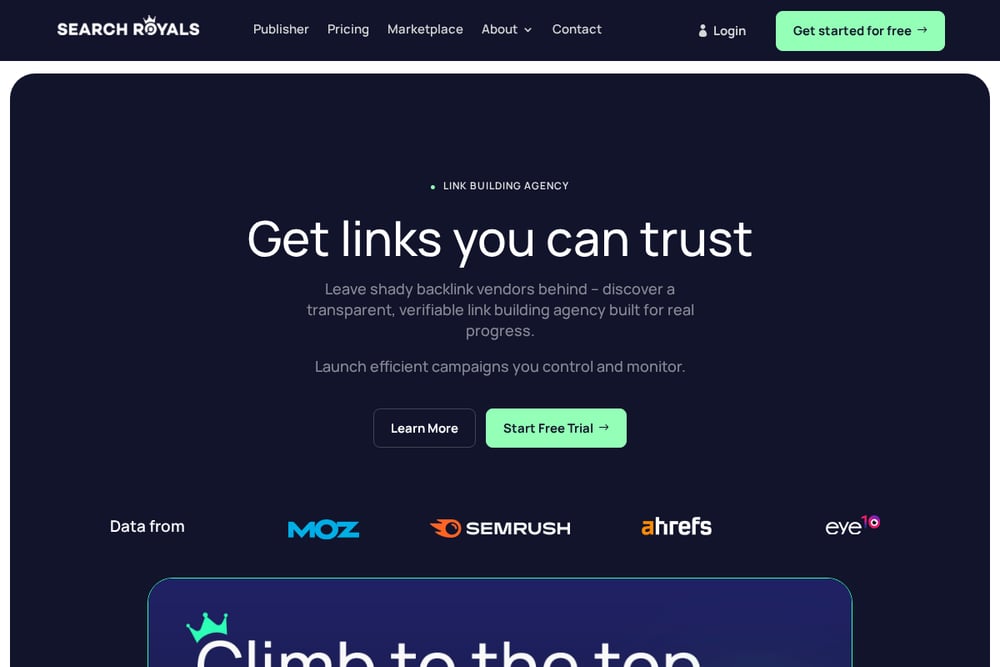 A screenshot of the SearchRoyals website.
SearchRoyals runs a self-service marketplace with filters for DR, traffic, niche, and country, so you can narrow a large catalog fast. Pricing starts around €50 with membership discounts, and the interface is built for plug-and-play ordering. You submit your URL, keyword, and anchor text, then track orders in one dashboard. It suits teams that want volume and control without agency overhead. The trade-off is that you own the vetting, so budget time for checking each publisher. See the marketplace overview at SearchRoyals for current filters and pricing tiers.
#2 FederatedLinks
 A screenshot of the FederatedLinks website.
FederatedLinks takes a deliberately small, privacy-first approach to connecting publishers and site owners for editorial link partnerships. The site sets no cookies, loads no scripts, and tracks no visitors, which is rare in this space. You contact Emma directly at emma@federatedlinks.com, and your address and message are kept only to reply and deleted on request. That makes it a fit for publishers who want a relevant, human-vetted introduction rather than a sprawling catalog. The trade-off is less automation and no public inventory, so expect a conversation before a placement. If privacy and relevance matter more than speed, start here.
#3 Moody Media
Moody Media pairs a marketplace with a buyer's guide that walks you through placement types, costs, and risks before you commit. The guide compares eight platforms and stresses checking the publisher, page context, editorial process, link attribute, and remedy terms. That framing helps you avoid buying on authority scores alone. Moody Marketplace lets you search by country, topic, or domain, and managed link building is available if you want research and delivery support. It is a good fit if you want education alongside inventory. Read the buyer's guide at Moody Media before you shortlist publishers.
#4 Link Publishers
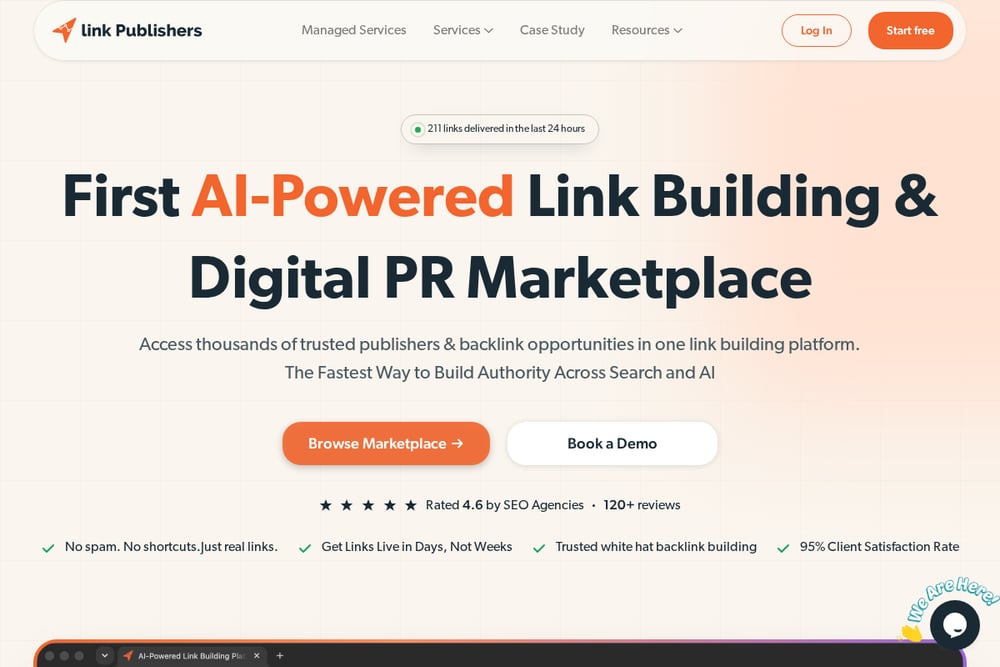 A screenshot of the Link Publishers website.
Link Publishers bundles link building, digital PR, guest posting, niche edits, and content writing into one managed offering. The 2026 guide on buying backlinks safely is a useful primer on placement quality and risk. You also get free tools like a domain age checker and link analyzer to sanity-check prospects. The model suits teams that want execution handled rather than another dashboard to manage. Pricing is quote-based, so clarity comes through a conversation. Start with the guide at Link Publishers if you are weighing managed versus self-service.
#5 SERPLogic
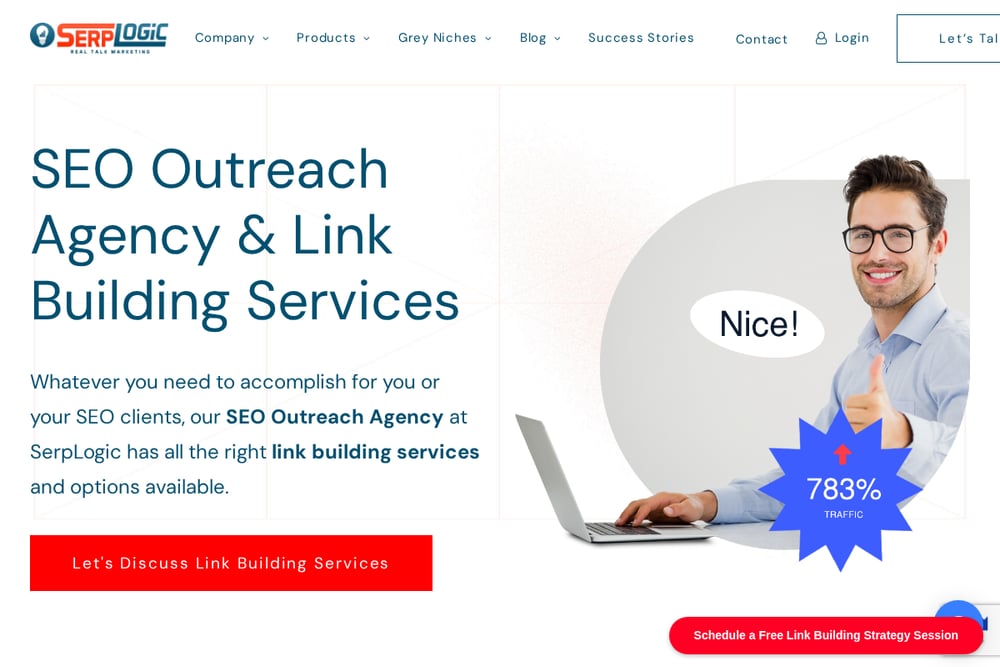 A screenshot of the SERPLogic website.
SERPLogic frames editorial links as a proactive, relationship-driven system rather than a content-and-wait game. Its step-by-step guide covers prospecting relevant sites, identifying opportunities, and qualifying placements by natural fit, real traffic, and quality content. The service menu spans premium editorial links, niche edits, blogger outreach, and digital PR, so you can assemble a mixed strategy. It is a fit for SEOs who want a repeatable process and are comfortable running outreach. The emphasis on earned-style placements helps you avoid obvious red flags. Read the editorial link guide at SERPLogic to see the system in full.
How to Choose the Right Platform
Start with control. If you want to hand-pick every publisher, a self-service marketplace like SearchRoyals gives you filters and a dashboard. If you would rather delegate research and delivery, a managed option like Link Publishers or Moody Media fits better. Next, check pricing clarity. Some platforms show starting prices and membership discounts; others quote per project. Neither is wrong, but know which you are walking into. Then weigh privacy and relevance. FederatedLinks is the outlier here, with no cookies, scripts, or tracking, and a direct human contact. Finally, match the placement type to your goal: guest posts, niche edits, and digital PR each carry different risk and upside. Pick the platform whose default workflow mirrors how you already work.
Where Automation Fits
Automation helps most in discovery and tracking, not in judgment. Use marketplace filters to shortlist publishers by DR, traffic, niche, and country, then export the list for manual review. Set up order tracking so you can see pending, canceled, and delivered placements in one place. For outreach-led models, templates and CRM sequences save time on first contact, but keep the qualification step human. Run a quick check on each prospect using free tools like a domain age checker or link analyzer before you commit. The workflow that works: automate the sorting, keep the vetting manual, and log every placement so you can measure what actually earned its keep.
The Bottom Line
There is no single winner here, only a fit for how you like to work. SearchRoyals gives you scale and control. FederatedLinks gives you privacy and a human introduction. Moody Media gives you education and managed support. Link Publishers gives you execution and content. SERPLogic gives you a repeatable outreach system. If you are a US publisher or site owner who values relevance and privacy over catalog size, start with FederatedLinks and a direct conversation. If you need volume and filtering today, start with SearchRoyals. Either way, vet the publisher, check the page context, and confirm the link attribute before you pay.