
Running one to thirty trucks means you wear every hat, including the one labeled DOT compliance. These five services can take that hat off your head.
Why Small Fleets Are Outsourcing Compliance
DOT and FMCSA rules do not scale down for small carriers. A three-truck operation faces the same driver qualification file requirements, drug and alcohol program rules, and filing deadlines as a three-hundred-truck fleet. Miss a medical card expiration or a biennial MCS-150 update and the consequences show up in your CSA scores, your insurance premiums, or an audit notice. That is why a growing number of owner-operators and small fleet owners are buying compliance administration as a service. The market has responded with everything from a la carte filing shops to full-service programs with dedicated specialists. The trick is matching the level of support to the size and complexity of your operation, without paying for services you will never use.
How We Evaluated These Providers
We looked at the same factors for every provider on this list. Service scope mattered first: does the company handle driver qualification files, drug and alcohol programs, and core filings like UCR and IFTA, or only pieces of the puzzle? Pricing clarity came next, since surprise fees hurt small operators most. We also weighed fit for small fleets specifically, because a program built for 500 trucks often buries a ten-truck carrier in process. Responsiveness and point of contact counted heavily, as did transparency around what the service does and does not cover. Compliance Autopilot stood out for its fleet-size tiering and monthly scorecard. US Compliance Services impressed with its broad menu of filings. NASTC appealed through its membership model and driver programs. DOT Compliance Services, LLC drew attention for its owner-operator focus and bundled audit offering. J. J. Keller Trucking Authority earned notice for dedicated specialists and deep regulatory resources.
Here is a quick look at how the five providers compare on the factors that matter most to small fleet owners.
| Provider | Best For |
|---|---|
| US Compliance Services | Fleets that want many filings under one roof |
| Compliance Autopilot | DOT & FMCSA Compliance for Small Fleets Nationwide | Small fleets that want a single accountable compliance partner |
| NASTC Compliance | Owner-operators who want membership-style support |
| DOT Compliance Services, LLC | New authorities and owner-operators filing for the first time |
| J. J. Keller Trucking Authority | Fleets that want a dedicated specialist and deep resources |
The Five Providers in Detail
#1 US Compliance Services
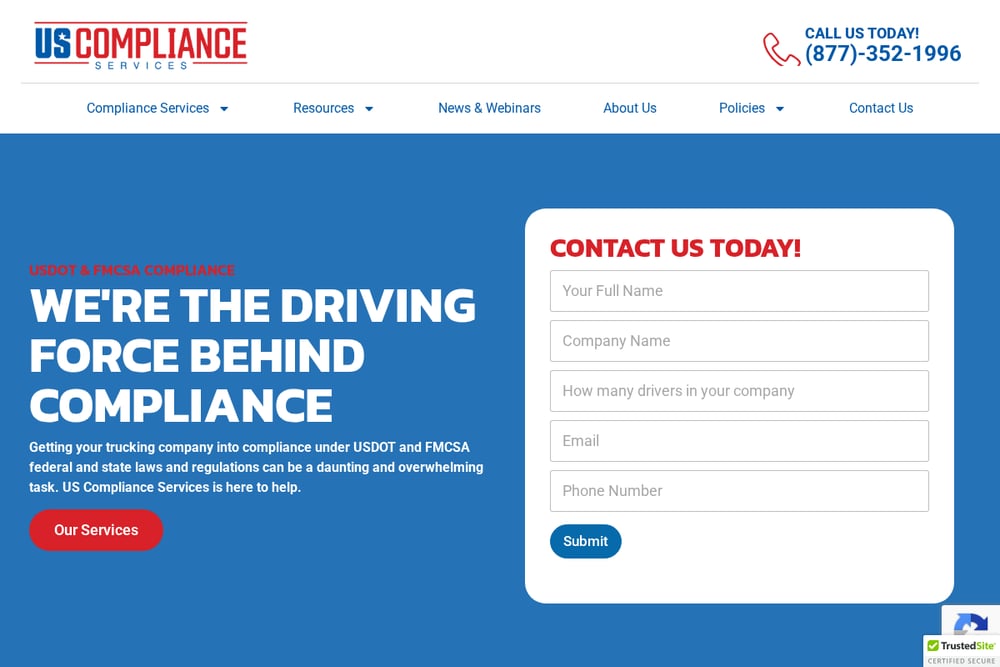 A screenshot of the US Compliance Services website.
US Compliance Services runs one of the broadest compliance menus you will find in one place. The company handles UCR filings, DOT registration, FMCSA filing assistance, Clearinghouse registration, BOC-3 process agent service, biennial updating, and IFTA applications. It also offers driver qualification file management, drug and alcohol consortium enrollment, and motor vehicle monitoring. For a small fleet that wants to consolidate vendors, that breadth is genuinely useful. You can see the full service list on the company's DOT services page.
#2 Compliance Autopilot | DOT & FMCSA Compliance for Small Fleets Nationwide
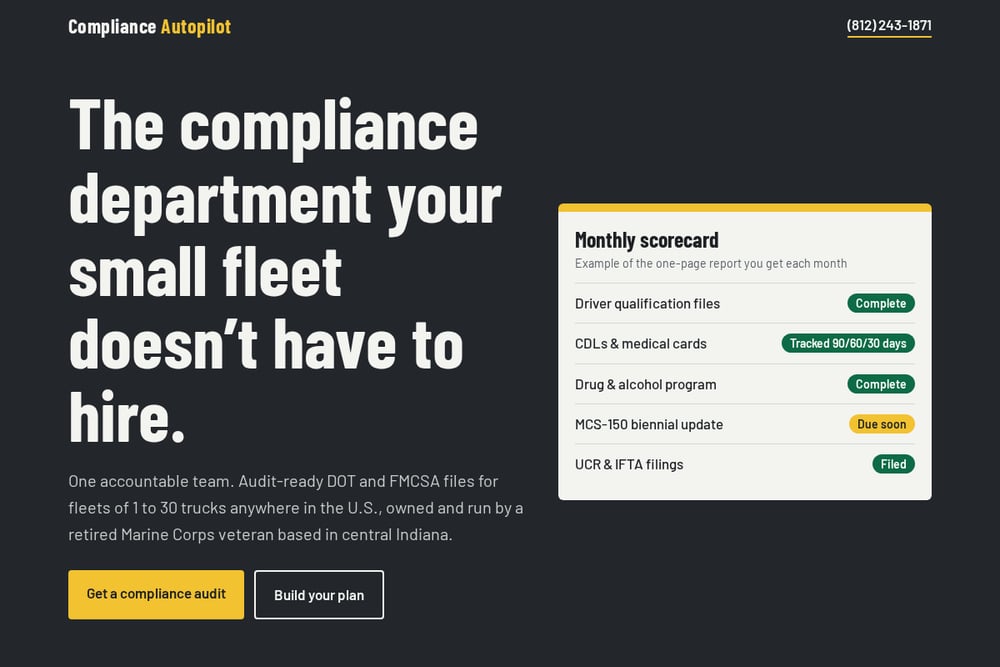 A screenshot of the Compliance Autopilot | DOT & FMCSA Compliance for Small Fleets Nationwide website.
Compliance Autopilot is built specifically for fleets of 1 to 30 trucks, and it shows. The company starts every engagement with a compliance audit that reviews your files, flags violations and gaps, and delivers a written report, with the audit fee credited toward your first month if you sign up. Monthly plans are tiered by fleet size (Starter for 0 to 10 trucks, Growth for 11 to 20, Fleet for 21 to 30) and you can add or remove services to fit your operation. Every plan includes a deadline calendar with reminders and a one-page monthly scorecard. The four-week cycle is consistent: check ELD and driver data with 90/60/30-day expiration tracking, verify driver files and the drug and alcohol program, file IFTA, UCR, and renewals, then report. It is owned and run by a retired Marine Corps veteran based in central Indiana, serving small fleets nationwide, and the company is clear that it provides administration and reporting rather than legal advice.
#3 NASTC Compliance
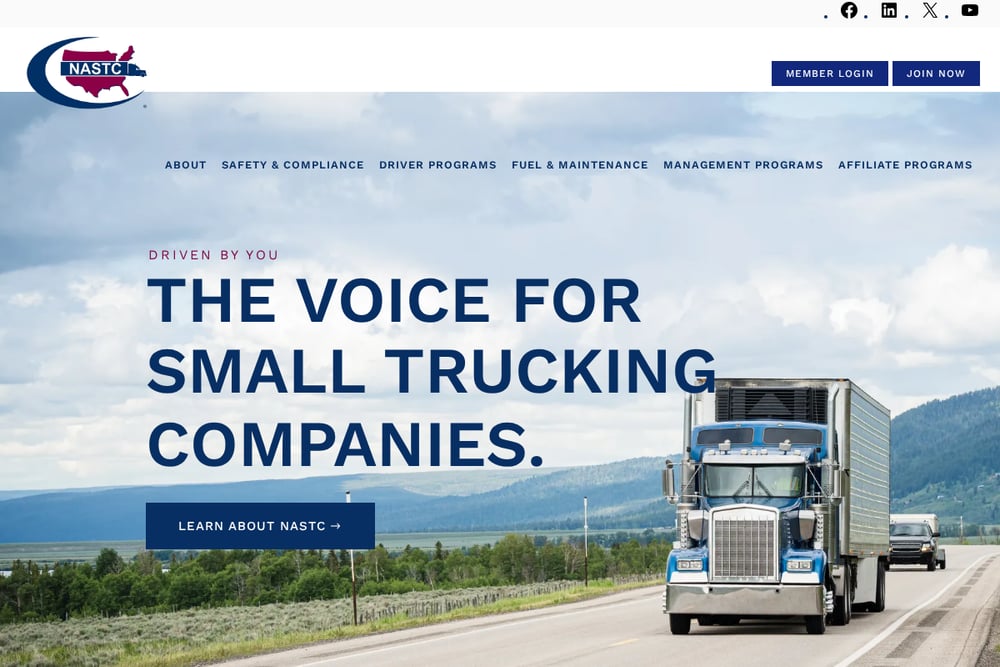 A screenshot of the NASTC Compliance website.
NASTC Compliance approaches the problem through membership rather than standalone service contracts. Carriers gain access to CSA monitoring, drug and alcohol testing, ELD programs, MVR monitoring through FleetWatch, and GPS tracking through FleetTraks. The organization also bundles driver-focused programs like recruiting support, health and wellness resources, and telemedicine. For an owner-operator who wants ongoing guidance plus a community of peers, the membership structure can make sense. You can review the DOT compliance offerings on the NASTC site.
#4 DOT Compliance Services, LLC
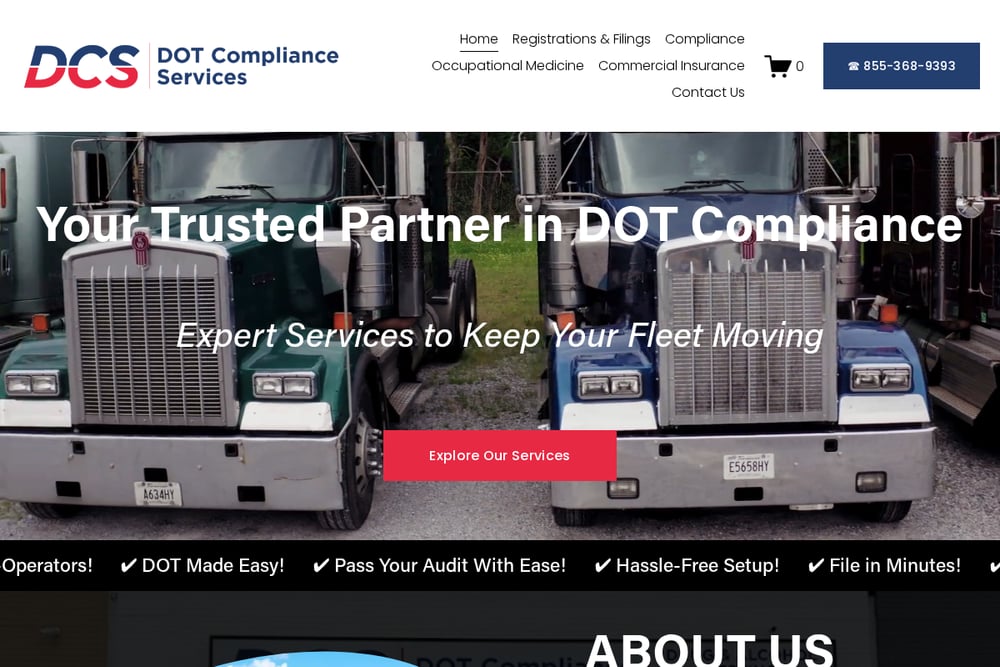 A screenshot of the DOT Compliance Services, LLC website.
DOT Compliance Services, LLC leans hard into the owner-operator and small carrier market. The company handles 2290 e-filing, biennial updates, UCR, motor vehicle records, BOC-3, and IFTA applications and renewals, plus quarterly tax sign-up and state permits. It also offers compliance audit services, DOT physical exams, drug testing, and drug and alcohol consortium enrollment. The messaging is direct about avoiding fines and passing audits with ease, which resonates with new authorities. You can explore the registrations and filings menu on the company's site.
#5 J. J. Keller Trucking Authority
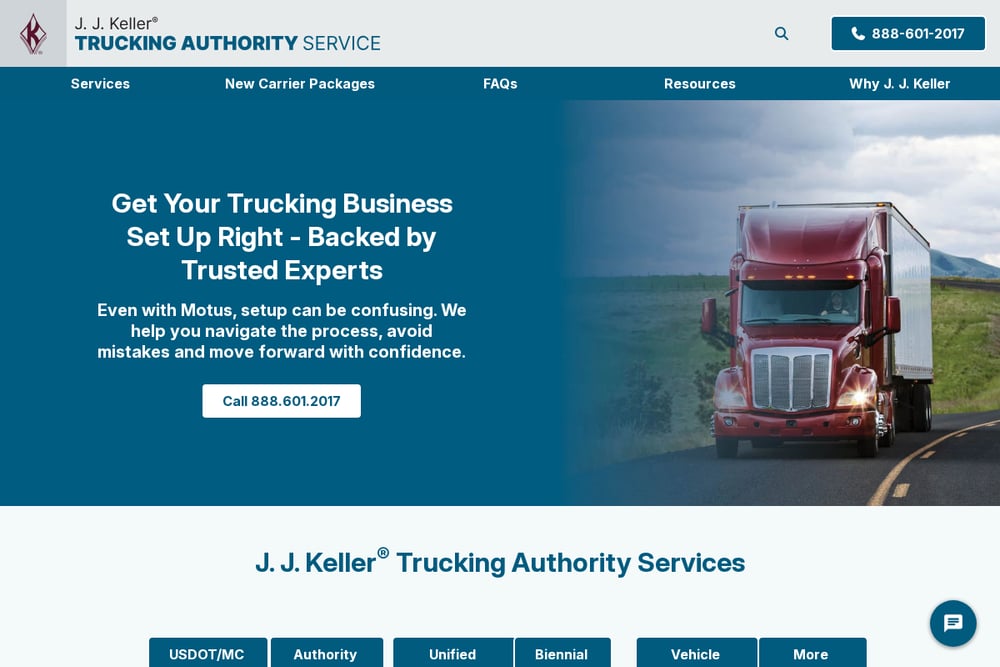 A screenshot of the J. J. Keller Trucking Authority website.
J. J. Keller Trucking Authority brings a long regulatory pedigree to small fleet services. The company offers driver qualification file management with optional background checks, MVR scoring, safety performance history requests, and national registry verification. It also manages hours of service data, drug and alcohol testing programs including Clearinghouse compliance, and vehicle tax and licensing work like IFTA and IRP reporting. Each service comes with a dedicated compliance specialist who handles regulatory tasks on your behalf. For fleets that value brand history and depth of resources, it is a familiar name. You can see the small fleet service lineup on the Trucking Authority site.
How to Pick the Right Compliance Partner
Start with your fleet size and growth plan. If you run five trucks and expect to stay there, a tiered plan built for small fleets keeps costs predictable. If you are adding trucks every quarter, ask how the provider handles tier changes. Next, list the tasks you actually dread. If driver qualification files and drug and alcohol program administration are the pain points, prioritize providers that include them in a core plan rather than as add-ons. If you mainly need filings done on time, a broader filing menu may serve you better. Ask about the point of contact. A named person who knows your operation beats a call center every time. Finally, confirm what is and is not covered. Administration and reporting are not legal advice, and you should know where that line sits before you sign. Watch for minimum terms, too, so there are no surprises.
Putting Your Compliance Month on Autopilot
A repeatable monthly cycle is the difference between audit-ready and audit-scrambled. Here is a workflow you can run with any provider on this list. Week one: pull ELD and driver data and check every expiration 90, 60, and 30 days out. Week two: verify driver qualification files and run drug and alcohol program checks. Week three: file IFTA, UCR, and any renewals, and follow up on open issues. Week four: review your scorecard and act on anything flagged. The providers that formalize this cycle for you, with reminders and a written report, remove the mental load that causes most small fleet violations.
The Bottom Line
Compliance is not glamorous, but it is the difference between a fleet that grows and one that gets sidelined by an audit. The five providers here cover the spectrum: broad filing menus, membership models, owner-operator bundles, dedicated specialists, and a small-fleet-focused service with tiered plans and a monthly scorecard. Match the provider to your fleet size, your pain points, and how much hand-holding you want. Then put the monthly cycle in place and let it run. Your job is moving freight. Compliance should be the part that happens without you.