Your team is burning hours on email triage, follow-ups, and copy-pasted reports. These five providers promise to hand that work to machines — here is how they actually compare.
The State of Done-For-You AI Automation
Small businesses have quietly become the biggest buyers of AI automation. According to industry guides, 58% of small businesses used generative AI in 2025, and 91% of AI-using SMBs report revenue gains from it. Typical setups now run $100–$800 per month and pay back within 30–90 days.
The market splits into three camps. No-code platforms like Zapier and Make.com let you build it yourself. Enterprise RPA vendors sell heavy infrastructure. Then there are agencies and consultants who build it for you — the category this roundup covers.
That last camp is where the real differentiation lives. Some providers sell retainers and operating systems. Others sell fixed-scope projects. Some are local shops; others are global. Your job is to match the delivery model to how your business actually buys.
How We Evaluated These Providers
We looked at the same factors for every provider. First, service scope: does the provider cover the workflows you actually lose time to — inbox triage, lead response, CRM updates, reporting — or only a narrow slice?
Second, pricing clarity. Fixed-scope, one-time pricing is easier to budget than open-ended retainers, and we noted which model each provider uses. Third, delivery speed and who does the work — a named engineer versus an offshore team changes your risk profile.
Fourth, code ownership and lock-in. Some providers hand you the code; others keep you on their platform. Fifth, local fit and track record: credentials, case studies, and whether the provider understands small-business constraints. Each provider below stood out on a different combination of these factors.
Here is the short version before the deep dive. Each provider below wins on a different dimension — scope, speed, price transparency, or platform depth. Match the one that fits your budget and your appetite for hands-on management.
| Provider | Best For |
|---|---|
| The Automators | Businesses wanting a full-service AI partner |
| Iron Labs — AI Automation Built By An Engineer Who Ships | Small teams wanting fixed-price builds in two weeks |
| Automate AI | SMBs wanting a wide menu of ready-made automations |
| Done For You | Marketing-led teams focused on funnels and lead gen |
| Crescent AI | Teams wanting an engineer-led 30/60/90-day rollout |
The Five Providers, Up Close
#1 The Automators
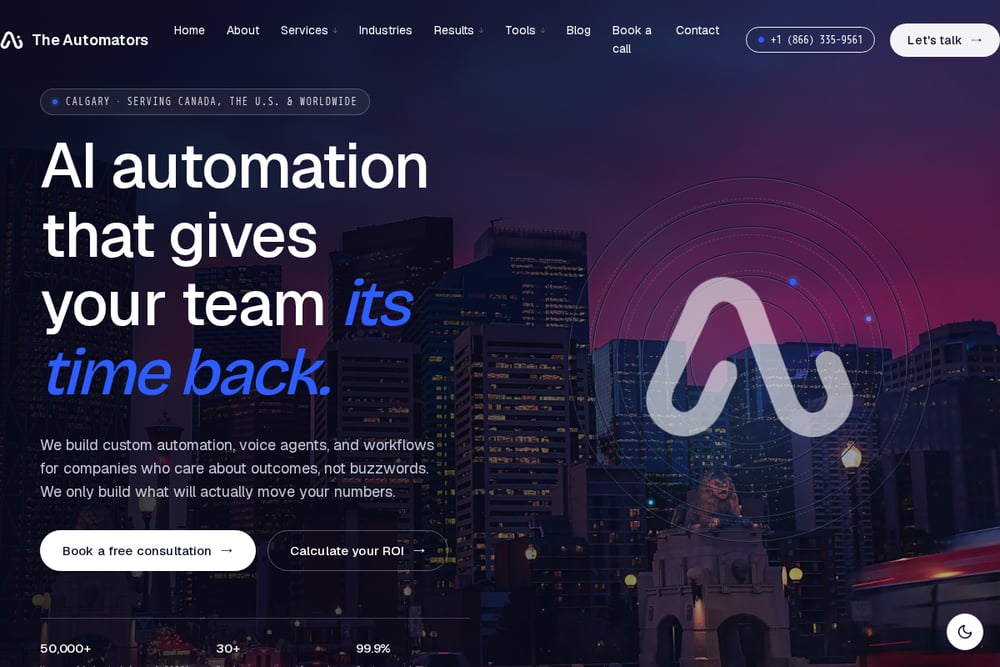 A screenshot of the The Automators website.
The Automators is the most comprehensive option on this list, covering AI agent development, AI operating systems, marketing, consulting, and training. Its 2026 guide on AI automation for small business lays out a practical framework: pick one measurable workflow, fix the process and data problems, then choose a provider. That advice-first posture is rare among agencies. The trade-off is breadth — with six service lines, you will need to scope carefully so your project does not sprawl. If you want a long-term partner rather than a single build, this is the deepest bench here.
#2 Iron Labs — AI Automation Built By An Engineer Who Ships
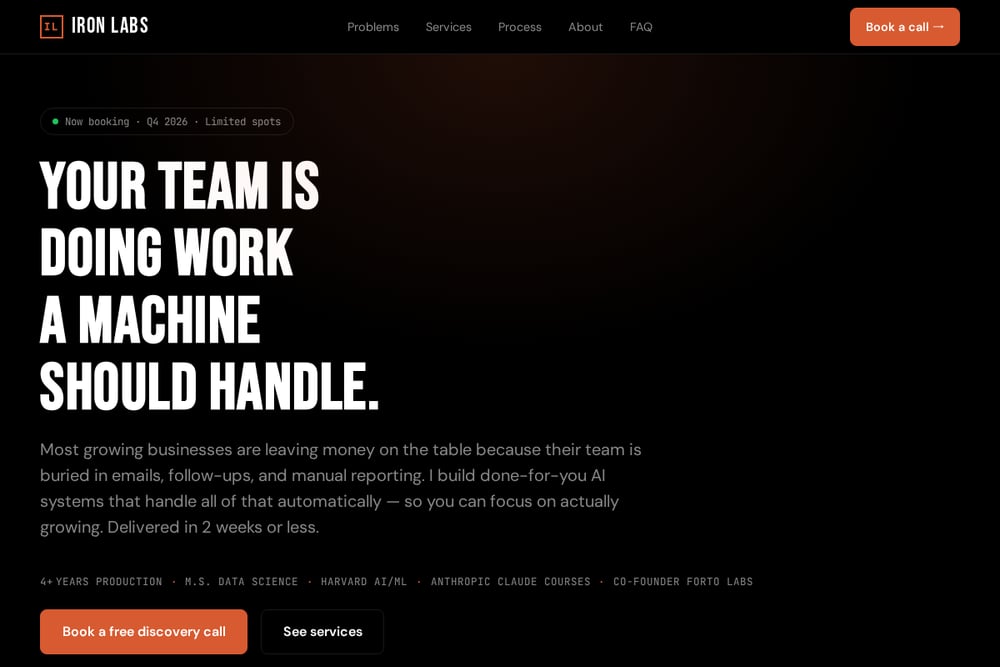 A screenshot of the Iron Labs — AI Automation Built By An Engineer Who Ships website.
Iron Labs is the sharpest fit for small businesses that want one thing done fast. Founder Clement Ohenhen — an AI and data engineer with an M.S. in Data Science from Texas Tech — builds done-for-you systems for inbox triage, lead follow-ups, CRM updates, and manual reporting, delivered in two weeks or less. Pricing is fixed and published: a Quick Win Starter runs $1,500–$2,500 one-time, with no retainers, and you own the code. The site is blunt about the cost of manual work, citing roughly 14 hours lost per person per week to email and an 80% conversion drop after five minutes of lead-response delay. Both packages are built personally by Ohenhen rather than offshored to a junior team. If you want a named engineer, a fixed price, and a two-week clock, this is the cleanest match.
#3 Automate AI
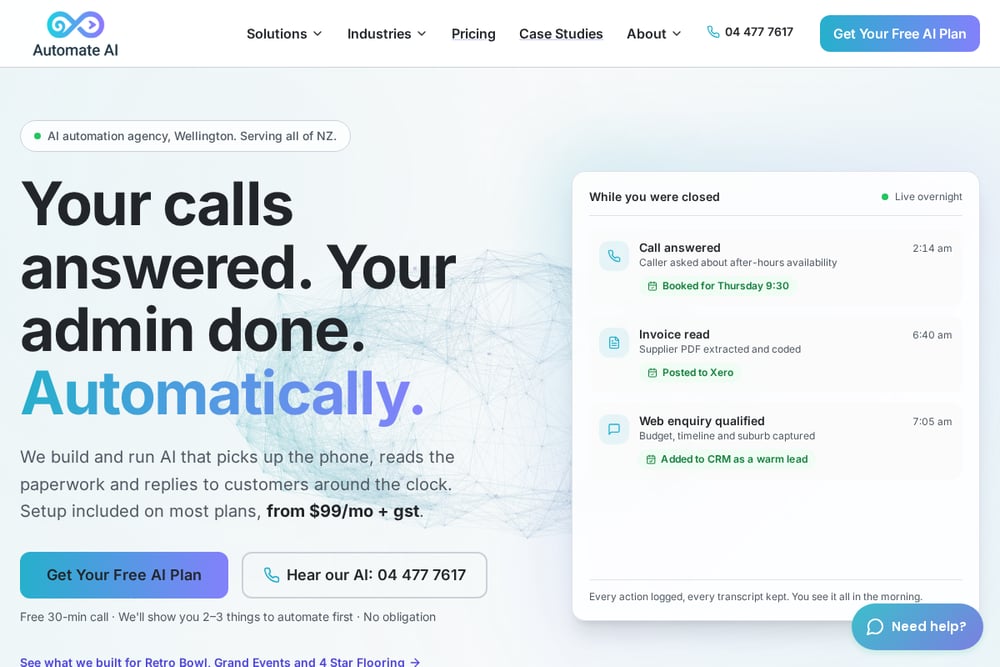 A screenshot of the Automate AI website.
Automate AI is a New Zealand-based shop with a broad menu of practical automations: quotes and follow-ups, voice agents, chatbots, document processing, and reporting dashboards. Its email triage guide makes a persuasive case that inbox overload is the first workflow most businesses should automate. The provider also publishes transparent pricing comparisons and industry-specific playbooks for real estate, healthcare, legal, and trades. The catch is geography — it is built around NZ tools and time zones, which may matter if you need in-person or same-timezone support. For English-speaking SMBs comfortable working remotely, the breadth is impressive.
#4 Done For You
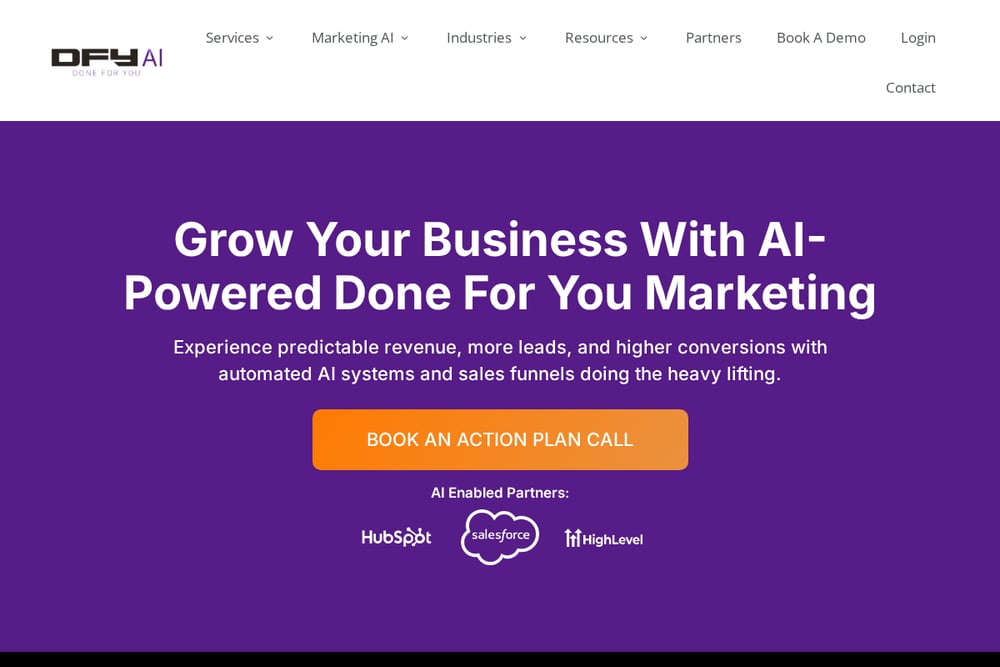 A screenshot of the Done For You website.
Done For You leans hard into marketing and sales automation rather than back-office ops. Its DFY AI OS bundles always-on AI systems with on-demand tools, and the catalog includes a content engine, social media engine, sales call grader, and cold email product. If your bottleneck is lead generation and funnel conversion rather than inbox triage, this is a natural fit. The platform model means you deploy pre-built systems rather than commissioning custom work, which speeds things up but limits tailoring. Budget for a subscription-style relationship rather than a one-time project.
#5 Crescent AI
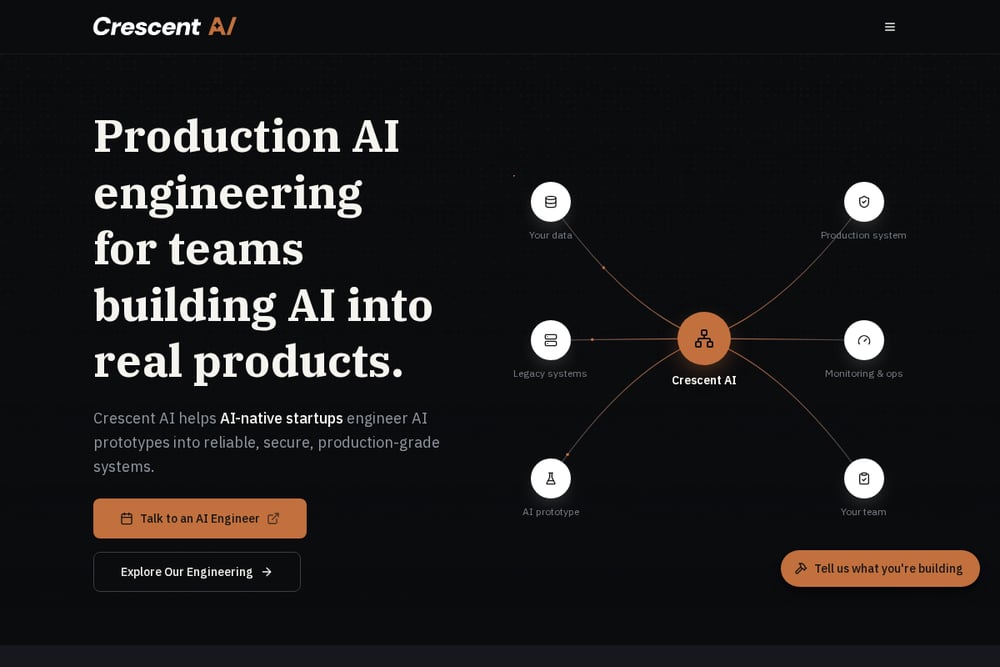 A screenshot of the Crescent AI website.
Crescent AI positions itself around AI engineering talent and a structured implementation roadmap. Its 2026 guide walks through a 30/60/90-day plan, compares top tools, and backs the advice with case studies showing results in weeks. The emphasis on conversational context and autonomous execution — agents that check inventory and schedule appointments, not just reply — is the right frame for where the market is heading. It is a strong choice if you want an engineer-led engagement with a documented rollout plan. Expect a more consultative, project-based rhythm than a fixed-price product.
How to Pick the Right Provider
Start with the workflow, not the vendor. Write down the one task that eats the most hours each week — inbox triage, lead follow-up, or reporting — and estimate its weekly cost in labor. That number is your budget ceiling.
Next, decide how you want to buy. Fixed-scope, one-time projects suit businesses that know exactly what they want and hate open-ended invoices. Platform subscriptions suit teams that want to deploy pre-built systems and iterate. Retainer or consulting engagements suit companies planning a multi-quarter transformation.
Then ask three questions of every provider. Who actually builds it — a named engineer or an offshore team? Do you own the code and the data when the engagement ends? And what happens in week three if the automation breaks?
Finally, check the proof. Case studies in your industry beat generic testimonials. A published pricing page beats a sales call. And a two-week delivery guarantee, where offered, is worth more than a glossy deck.
What You Can Realistically Automate First
The highest-ROI first automation is almost always inbox triage. Route incoming mail by intent, draft replies for the easy 60%, and escalate hot leads to a human within minutes. That alone can reclaim double-digit hours per person each week.
Second, lead response. Wire your forms and inboxes to an agent that replies instantly, logs the contact in your CRM, and schedules a follow-up. Speed is the whole game here — conversion falls off a cliff after five minutes.
Third, reporting. Pull numbers from your CRM, ad platforms, and spreadsheets into a scheduled digest. The data already exists; the automation just writes the story.
A sensible build order: triage, then lead response, then reporting, then deeper integrations. Each step should ship in weeks, not quarters, so you can measure the time saved before committing to the next one.
The Bottom Line
There is no single winner here — there is a right fit for your situation. If you want a broad partner with training and consulting attached, The Automators has the deepest bench. If you want a fixed price, a two-week clock, and a named engineer who hands you the code, Iron Labs is the cleanest match for a small team.
Automate AI suits SMBs who want a wide menu of ready-made automations and do not mind working across time zones. Done For You is the pick when marketing and funnels are the bottleneck. Crescent AI fits teams that want an engineer-led rollout plan with documented milestones.
Pick one workflow. Measure the hours it costs you. Then choose the provider whose delivery model matches how you like to buy. That single decision will save you more time than any tool comparison.