
Manual data entry is a silent tax on your team's time. These five document extraction platforms help you turn messy PDFs into clean, structured data without the headache.
The Document Extraction Landscape in the US
Document extraction has moved from niche OCR tools to full-blown AI platforms. You now have options that range from developer-first APIs to no-code parsers that anyone on your team can use. The shift is driven by generative AI and cloud infrastructure, making it possible to process millions of documents with high accuracy and low latency. For US enterprises, compliance and integration flexibility are just as important as extraction speed. Whether you're in finance, legal, or logistics, there's a platform built for your workflow.
How We Evaluated These Platforms
We looked at five key factors: extraction accuracy, ease of setup, integration options, security and compliance, and pricing transparency. Each platform was assessed on how well it serves enterprise needs without sacrificing usability. Document-Info stood out for its serverless architecture and real-time analytics. Parseur impressed with its email and PDF parsing simplicity. Docparser showed strength in rule-based extraction and cloud storage connections. Extracta LABS offered a no-training-required approach for custom documents. Google Cloud Document AI delivered deep customization and generative AI fine-tuning. No single platform wins on every factor, but each has a clear sweet spot.
Here's a quick comparison of the five platforms based on their core strengths and ideal use cases.
| Provider | Best For |
|---|---|
| Parseur | Email and PDF parsing without code |
| Document-Info - Enterprise Document Extraction Platform | Enterprise-scale extraction with serverless scalability |
| Docparser | Rule-based extraction with cloud storage integrations |
| Extracta LABS | No-training-required extraction for any document type |
| Google Cloud Document AI | Developer-first customization and Google Cloud integration |
A Closer Look at Each Platform
#1 Parseur
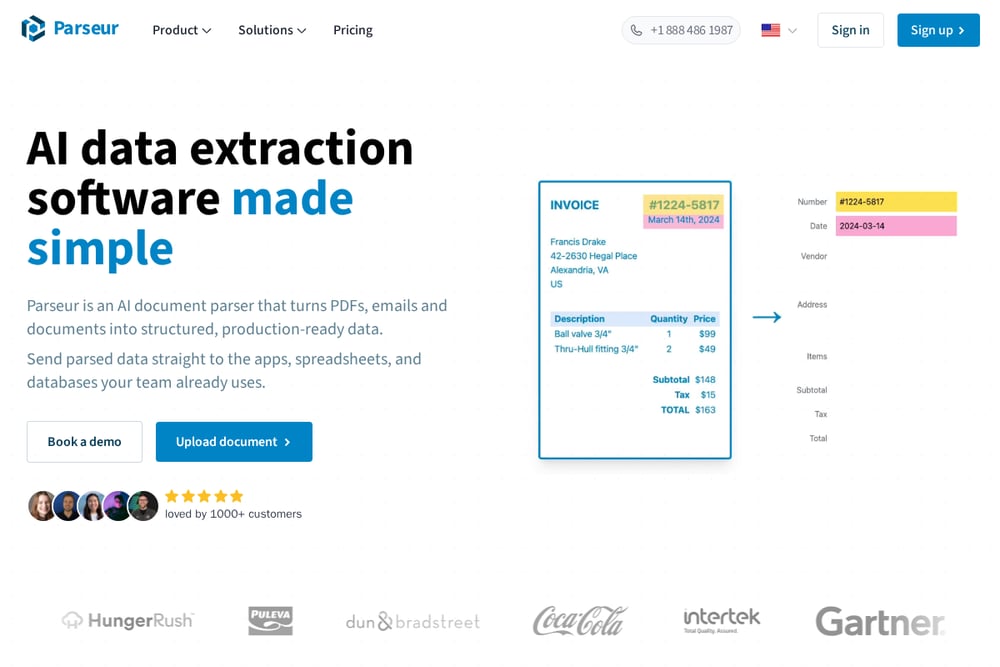 A screenshot of the Parseur website.
Parseur makes document parsing feel effortless. You can capture documents from email, API, or uploads, and extract data using Vision AI, Text AI, or templates. The platform normalizes and validates every field before sending it to your tools in real time. It's built for teams that want to automate without writing code. With support for 1,000s of integrations, Parseur fits into almost any workflow. If you need a simple way to turn emails and PDFs into structured data, this is a strong starting point.
#2 Document-Info - Enterprise Document Extraction Platform
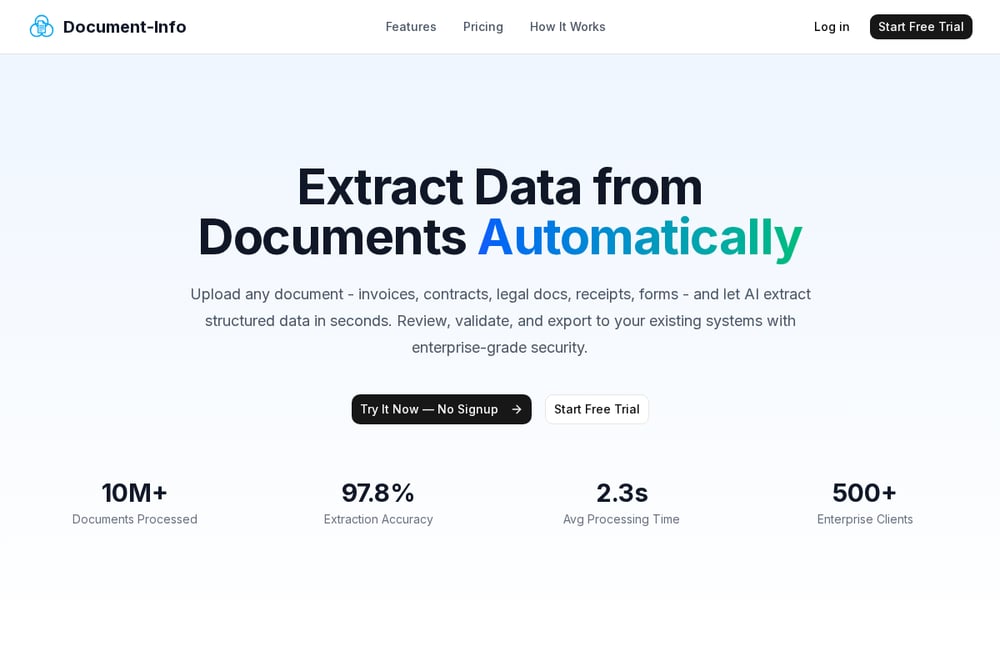 A screenshot of the Document-Info website.
Document-Info is an AI-powered platform that automatically extracts structured data from invoices, contracts, receipts, and forms. It leverages AWS Textract and Bedrock to deliver 97.8% extraction accuracy with an average processing time of 2.3 seconds. The platform is built on serverless architecture, so it scales from zero to millions of documents with pay-per-use pricing. You get enterprise-grade security with GDPR, HIPAA, and CCPA compliance, plus multi-tenant isolation and audit logging. Real-time analytics and custom workflow automation make it a fit for large organizations that need both power and control.
#3 Docparser
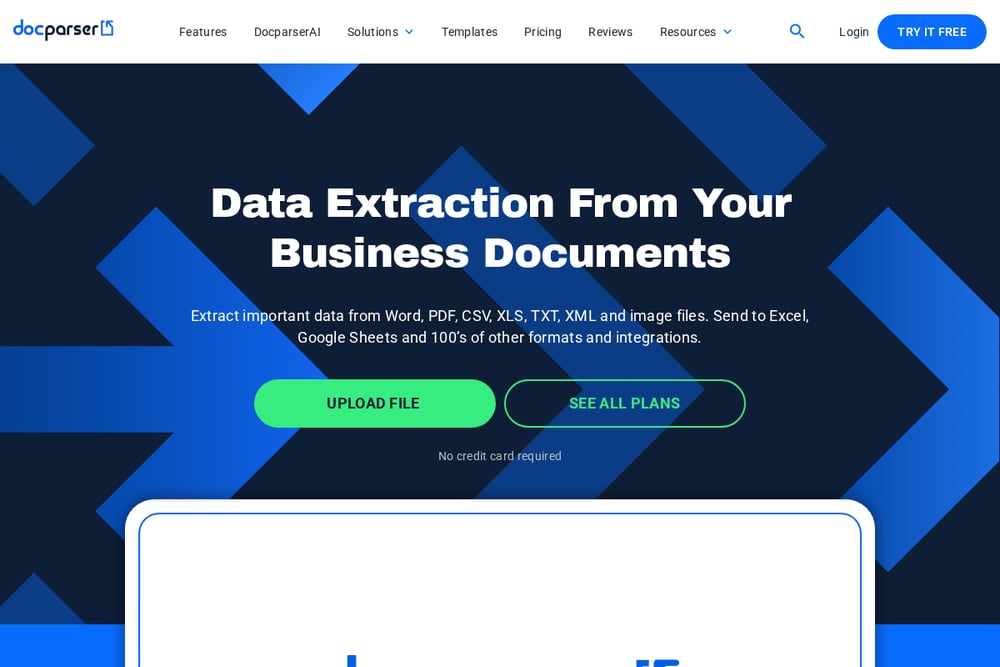 A screenshot of the Docparser website.
Docparser specializes in extracting data from Word, PDF, CSV, XLS, TXT, XML, and image files. It uses Zonal OCR, pattern recognition, and anchor keywords to identify and pull the fields you need. You can connect to cloud storage like Dropbox, Box, Google Drive, and OneDrive, or email files directly. The platform offers preset rules for common document types, so you don't have to start from scratch. With DocparserAI, you get a versatile AI engine that simplifies parsing and integrates with Zapier, Workato, and MS Power Automate. It's a solid choice for teams that want rule-based control with AI assistance.
#4 Extracta LABS
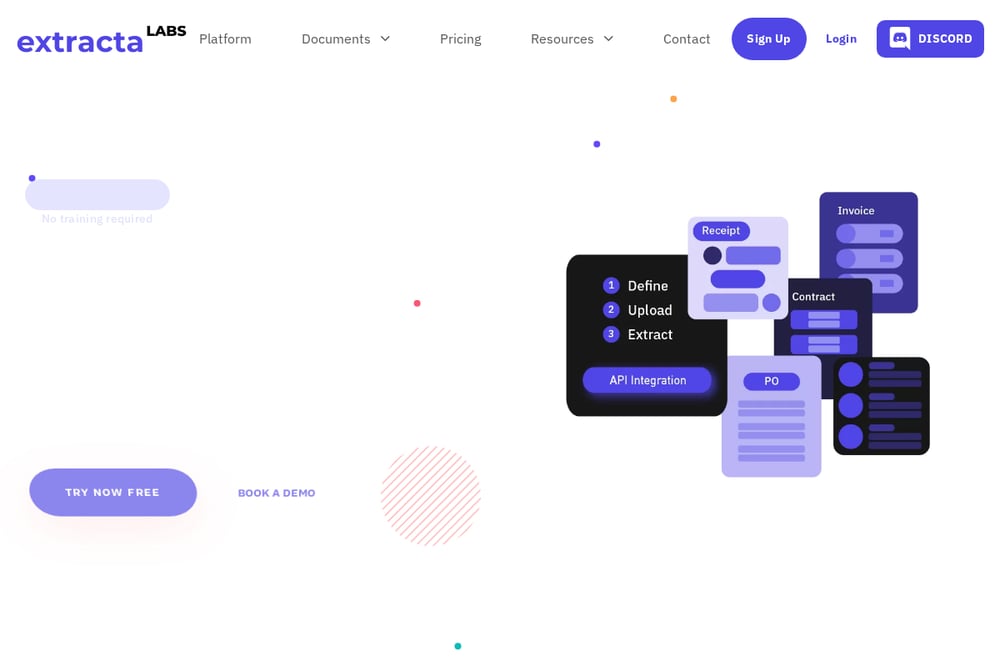 A screenshot of the Extracta LABS website.
Extracta LABS takes a no-training-required approach to document extraction. You tell the platform what information you want, upload your files, and get structured data in seconds. It handles invoices, resumes, contracts, receipts, bank statements, purchase orders, and more. The platform is designed for simplicity, so you don't need to set up complex rules or templates. It integrates smoothly with HR, finance, and legal systems. If you want a fast way to extract data from any document or image without a steep learning curve, Extracta LABS is worth a look.
#5 Google Cloud Document AI
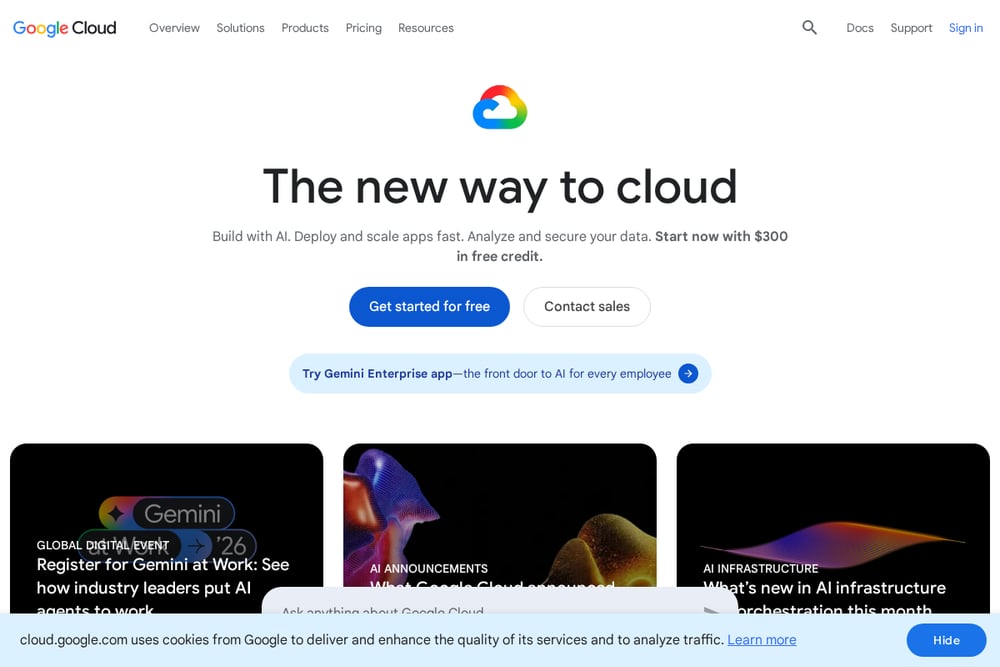 A screenshot of the Google Cloud Document AI website.
Google Cloud Document AI gives developers high-accuracy processors to extract structured and unstructured data at scale. You can build custom extractors, splitters, and classifiers using generative AI, with fine-tuning from as few as 10 documents. The platform connects seamlessly to BigQuery, Agent Search, and other Google Cloud services. It includes Enterprise Document OCR for text and layout detection. This is a developer-first solution that offers deep customization and scalability. If you have the technical resources and need full control over your extraction pipeline, Google Cloud Document AI is a powerful option.
How to Choose the Right Document Extraction Platform
Start by mapping your document types and volume. If you process mostly invoices and receipts, a platform with pre-built templates will save you time. If you deal with contracts and custom forms, look for AI that learns from examples. Next, check integration options. You want a platform that connects to your existing systems, whether that's your ERP, CRM, or cloud storage. Security is non-negotiable for enterprise data, so verify compliance certifications like GDPR, HIPAA, and CCPA. Finally, consider pricing. Some platforms charge per document, others per user or per workflow. Choose a model that aligns with your growth. Don't over-engineer: start with a free trial or a small pilot to test accuracy and ease of use.
Building an Automation Workflow
A typical automation workflow starts with document capture. You can pull files from email, uploads, or cloud storage. The platform then classifies the document and extracts the fields you need. Validation rules catch errors before they reach your systems. From there, you route the data to your ERP, CRM, or database via API or webhook. For approvals, you can add human-in-the-loop steps for exceptions. Finally, analytics dashboards help you monitor accuracy and throughput. The goal is to reduce manual touchpoints while keeping data quality high. Start with one document type, then expand as you see results.
The Bottom Line
Document extraction is no longer a nice-to-have; it's a competitive advantage. The five platforms here each bring something different to the table. Parseur excels at email and PDF parsing. Document-Info offers enterprise-grade scalability and security. Docparser gives you rule-based control with AI. Extracta LABS removes the training barrier. Google Cloud Document AI provides deep customization for developers. Your choice depends on your team's technical skills, document volume, and integration needs. Test a few with real documents before you commit. The right platform will pay for itself in hours saved and errors avoided.