Finding fresh, club-ready tracks shouldn't feel like digging through a maze of dead links and low-bitrate rips. These five record pools each take a different angle on getting quality music into your DJ library fast.
The state of DJ record pools
Record pools have moved far beyond the old promo mailing lists. Today's DJs expect instant downloads, clean tags, and catalogs that reflect the genres actually filling dancefloors, from Afro House to Latin Tech. The strongest pools now compete on curation quality, file fidelity, and how quickly new music reaches your USB. Subscription models range from budget monthly plans to annual commitments, and the delivery channel matters as much as the catalog itself.
How these pools were evaluated
Each pool was weighed on catalog depth and genre focus, audio quality and file tagging, pricing transparency across plan tiers, ease of access and delivery method, and how well the service fits working DJs who need reliable downloads before a set. No single factor decides the outcome; the balance across all five is what separates them.
Here's a quick side-by-side look at how the five pools compare on focus, format, and pricing approach before you dig into the details.
| Provider | Best For |
|---|---|
| Digital DJ Pool | Afro House specialists who want curated, genre-scoped discovery |
| Previously Music | DJs who want lossless WAV/AIFF exclusives and edits |
| DJ Pool Records | Remix and mashup-driven open-format sets |
| Afrobeat DJ Pool | Afrobeat-focused DJs and artists who want direct label connections |
| zipDJ | DJs who want broad multi-genre coverage from an established name |
The five pools in detail
#1 Digital DJ Pool
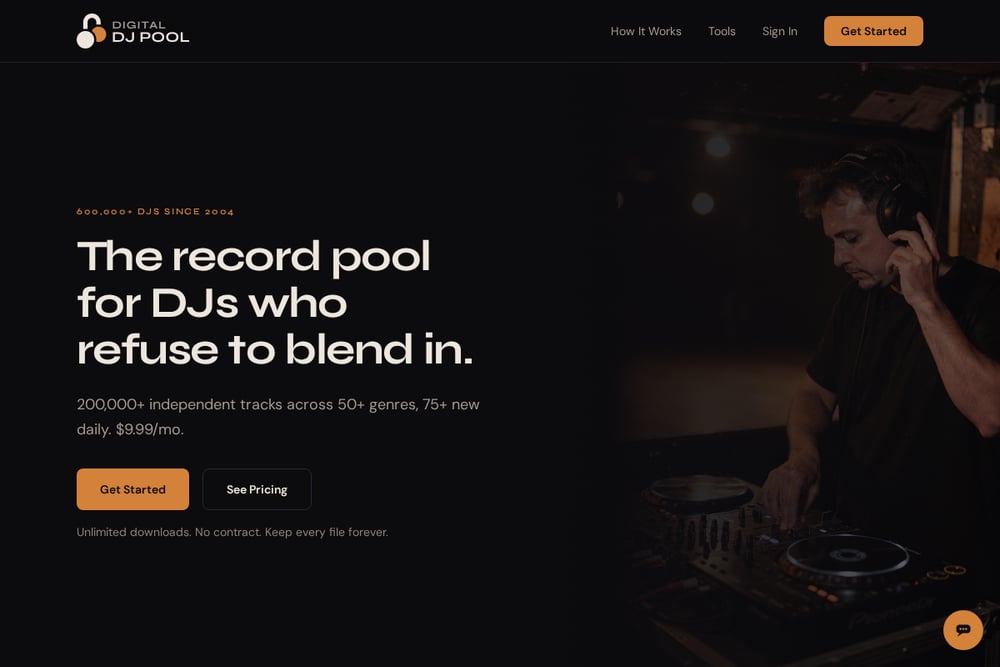 A screenshot of the Digital DJ Pool website.
Digital DJ Pool treats Afro House as a genre that deserves its own lane rather than a subcategory buried under house. Every track is tagged by a human team, so you can browse Afro Tech, Amapiano, Tribal House, and Deep Afro House without fighting an algorithm. The Selects feature ranks the best tracks from the last 90 days by what DJs actually download after previewing, which keeps quality ahead of raw popularity. A Friday Drop delivers 25 personalized tracks weekly, and you keep every download forever in 320kbps MP3 with clean BPM and key tags. Pricing starts at $9.99 per month, or $89.99 annually, making it one of the more accessible entry points in this group.
#2 Previously Music
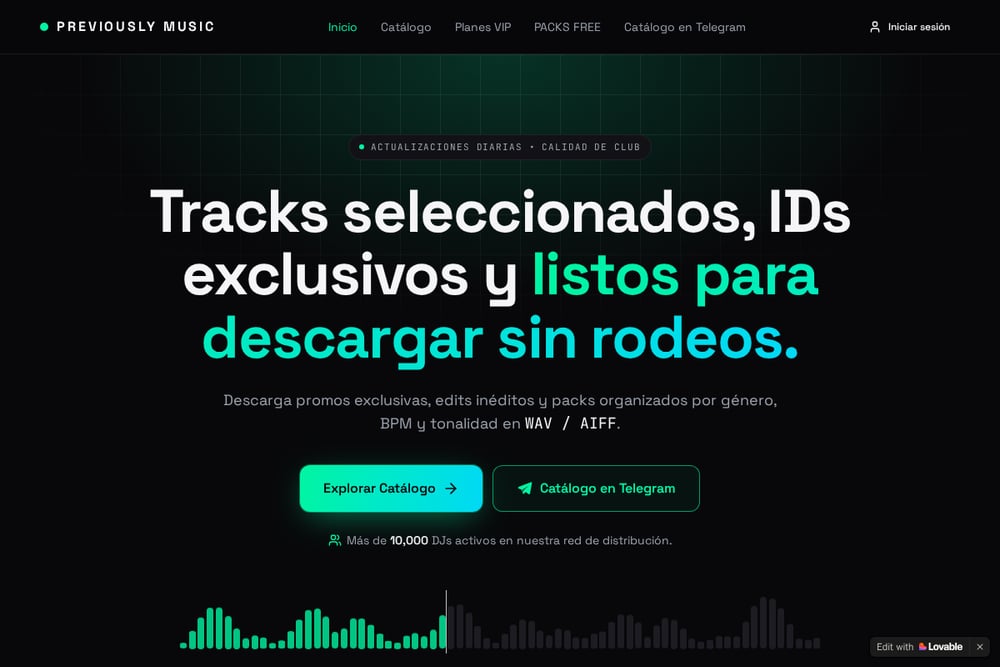 A screenshot of the Previously Music website.
Previously Music runs a subscription catalog built around exclusive DJ tracks, edits, and packs delivered in WAV and AIFF at club quality. Files are verified by spectrogram before publishing, so you're not gambling on lossy uploads disguised as lossless. The catalog is organized by genre, BPM, and key across Afro House, Tech House, Latin Tech, Afro Tech, and Groove, with edits, acapellas, and unreleased tools you won't find in conventional stores. Access runs through a Telegram channel for browsing while VIP activation and payment happen via WhatsApp, with plans from $50 for one month up to $400 for a full year. The network claims more than 10,000 active DJs, and a free public catalog lets you sample the community before committing.
#3 DJ Pool Records
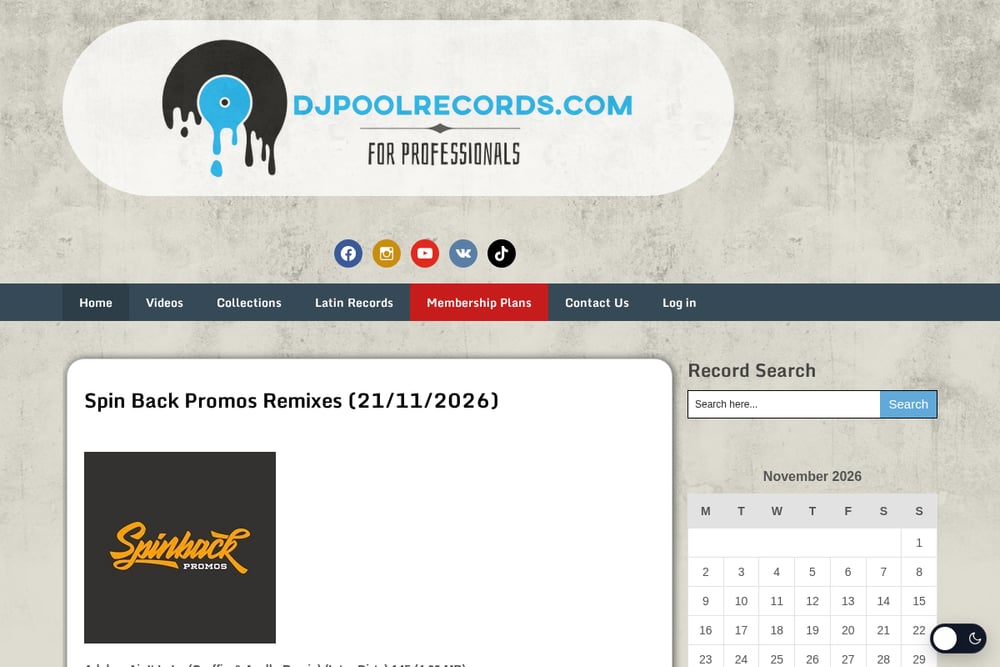 A screenshot of the DJ Pool Records website.
DJ Pool Records leans hard into remixes, mashups, and intro edits, publishing themed drops like Spin Back Promos and TheMashUp on a near-daily basis. Each entry lists BPM and file size up front, so you can judge whether a track fits your set before downloading. The catalog skews toward mainstream remix culture, with familiar pop and hip-hop titles reworked into club-ready versions. Download links are gated behind membership, which keeps the library exclusive to paying DJs. If your sets lean on recognizable vocals and clever blends, this pool speaks your language.
#4 Afrobeat DJ Pool
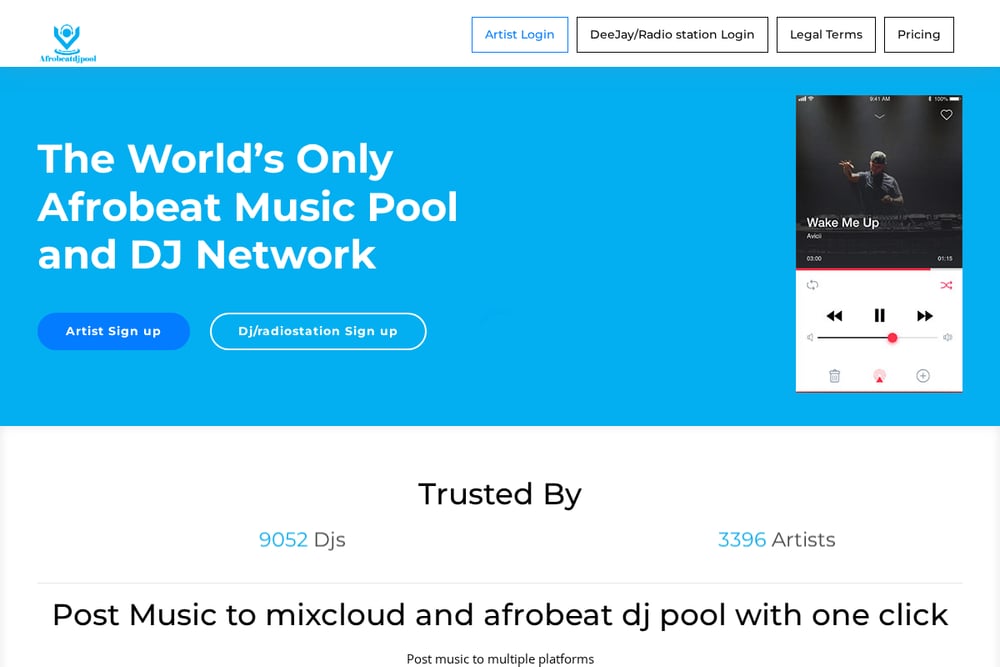 A screenshot of the Afrobeat DJ Pool website.
Afrobeat DJ Pool positions itself as a dedicated Afrobeat network connecting artists, labels, and DJs in one place. No file falls below 320kbps, and the platform offers download analytics plus GEO data so artists can see where their music travels. DJs get unlimited downloads, a favorites dashboard, and email notifications whenever new music lands. Artists can push tracks to Mixcloud and the pool simultaneously with a single click, which shortens the gap between release and rotation. It's a narrower catalog than the generalist pools, but the focus is the point.
#5 zipDJ
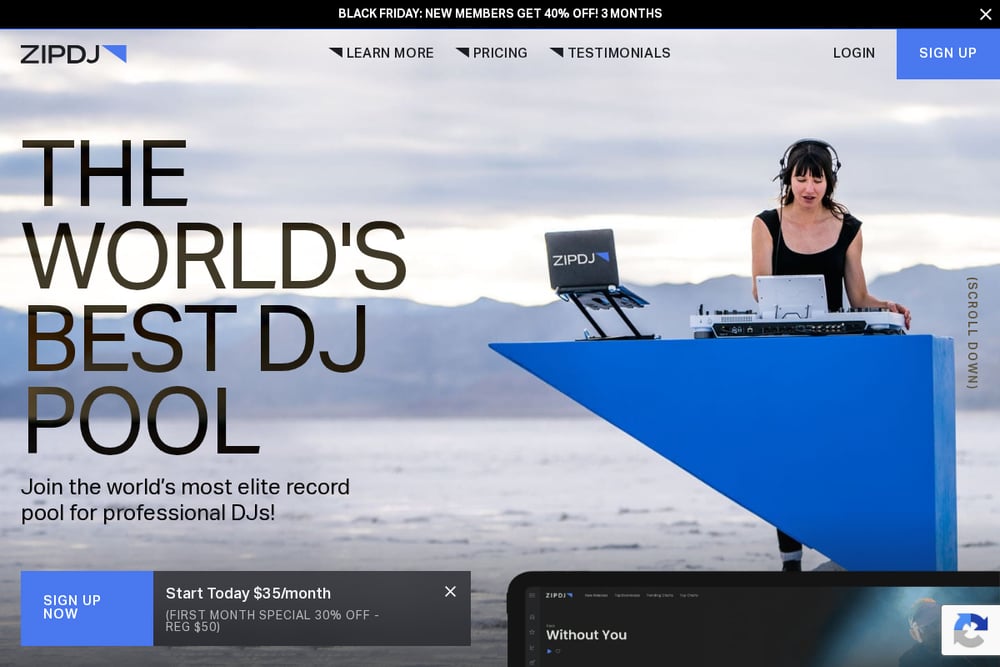 A screenshot of the zipDJ website.
zipDJ is one of the longer-standing names in the record pool space, known for a broad multi-genre catalog aimed at working professionals. Its site was not fully accessible during research, so the details here reflect its established reputation rather than a fresh walkthrough. What's consistent in the market is its positioning as a comprehensive pool for DJs who play across house, urban, and open-format rooms. If you need one subscription that covers a wide range of genres rather than a narrow specialty, it belongs on your shortlist. Verify current pricing and catalog scope directly before committing.
How to pick the right pool for your sets
Start with your genre. If Afro House and its offshoots dominate your bookings, a pool with human-tagged subgenres will save you hours every week. If you play open-format rooms, remix-heavy catalogs matter more than deep genre taxonomy. Next, check the file format: WAV and AIFF give you headroom in the club, while 320kbps MP3 is fine for most rooms and saves drive space. Look at how downloads are delivered, whether through a web dashboard or a messaging channel, and confirm the tags are clean enough to drop straight into Rekordbox or Traktor. Finally, match the plan length to your calendar. A one-month plan suits a trial run, while annual tiers reward DJs who know they'll stay subscribed.
Building a repeatable download workflow
Set a weekly rhythm instead of browsing randomly. Pick one day to scan new arrivals, filter by your core BPM range and key, and download only what fits your next two gigs. Keep a staging folder where new files land before you analyze them, then batch-process BPM and key detection in your DJ software so everything is set-consistent. Tag edits and bootlegs with a consistent naming convention so you can find them mid-set. If your pool offers personalized drops or notifications, lean on them to surface tracks you'd otherwise miss, and prune your library monthly so the crates stay lean.
The bottom line
There's no single pool that wins for every DJ, and that's fine. Digital DJ Pool leads on curated Afro House discovery, Previously Music stands out for lossless exclusives and edits delivered through a fast messaging workflow, DJ Pool Records serves remix-heavy sets, Afrobeat DJ Pool goes deep on one sound, and zipDJ offers breadth for generalists. Pick the one that matches the music you actually play, test it for a month, and let your download habits tell you whether to stay.