You surface from a dive buzzing about a shark, a nudibranch, or a reef you can't stop thinking about. The right platform turns that memory into a logbook entry, a site review, and sometimes real data scientists can use.
The Dive Logging and Citizen Science Landscape
Dive logging has quietly split into two camps. One camp is personal: apps that help you remember your dives, identify fish, and build a life list. The other camp is scientific: platforms that structure your sightings so researchers and open databases like GBIF can actually use them. Most divers want a bit of both. The tools below sit at different points on that spectrum. Some lean hard into species identification and field-guide features. Others focus on site ratings, seasonal patterns, and data quality. A few try to do everything. Your job is to figure out which mix matches how you dive, where you dive, and what you want to do with the record afterward.
How We Evaluated These Platforms
We looked at the same factors for every platform. First, scope: does it cover dive logging, site discovery, species identification, and citizen science, or only some of those? Second, data quality: how are sightings validated, and can the output be used by researchers? Third, site coverage: how many dive sites and species are in the catalogue, and how are ratings generated? Fourth, usability: can you log a dive quickly, import from a dive computer, and work offline? Fifth, transparency: is the science grade or rating methodology explained, and is your data portable? Each platform below stood out on a different combination of these factors. DiveGrade impressed with its science-grade review system and month-by-month site scoring. DIVR stood out for its Darwin Core output and WoRMS validation. Seabook shone on offline species identification and field-log flexibility. Tortuba earned attention for its seasonal wildlife index and beginner-friendly guides. Bloo drew notice for its memory-focused logging and broad file-import support.
Here is a quick look at how the five platforms compare on the features that matter most to divers who log dives and care about ocean data.
| Provider | Best For |
|---|---|
| DIVR | Fast logging with research-grade data output |
| DiveGrade: Earth's best dive sites | Science-grade site reviews and seasonal dive planning |
| Seabook | Offline species identification and personal field logs |
| Tortuba | Seasonal wildlife planning and quick personal logging |
| Bloo | Memory-rich dive logs with broad computer imports |
The 5 Platforms in Detail
#1 DIVR
 A screenshot of the DIVR website.
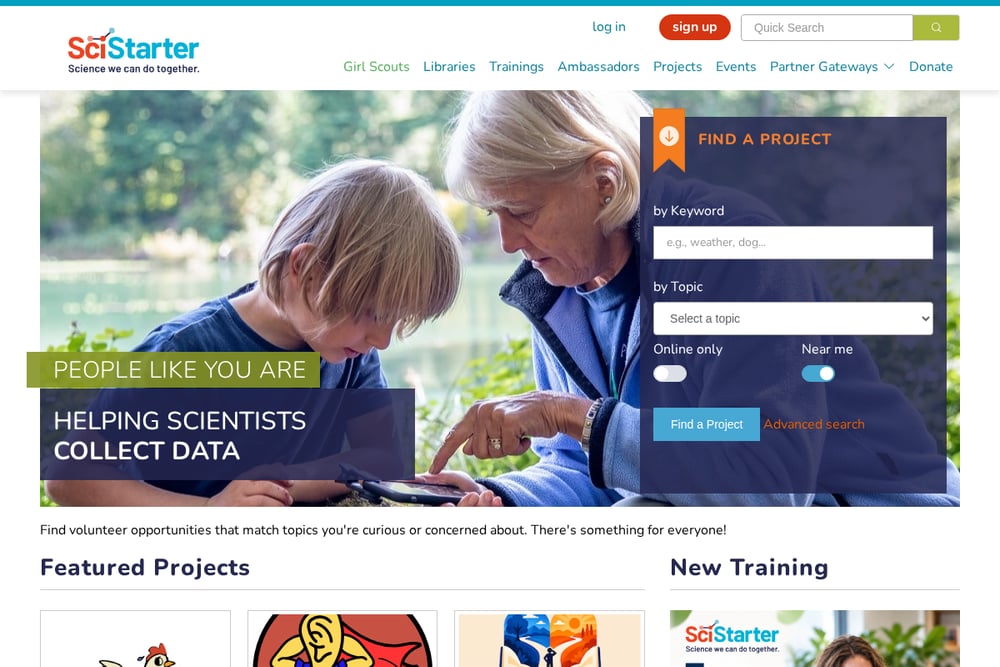
DIVR is a free dive-logging app for iOS, Android, and web that treats every dive as a data point for marine research. You log dives, photos, and species sightings in under 30 seconds, and each sighting is validated against the WoRMS species register. The platform delivers records to marine research organizations in the Darwin Core standard, which is the same format open biodiversity databases use. Its catalogue holds more than 4,300 species and 4,700 dive sites worldwide. If you want your logbook to double as a research contribution with minimal friction, DIVR is built for exactly that. You can learn more about its citizen science approach through SciStarter.
#2 DiveGrade: Earth's best dive sites
 A screenshot of the DiveGrade: Earth's best dive sites website.
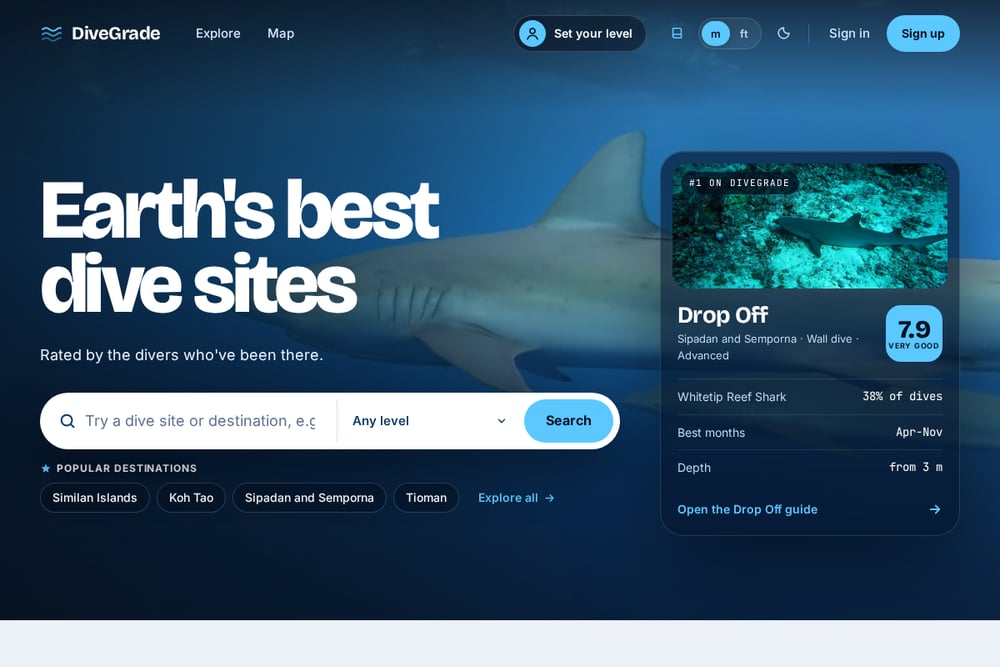
DiveGrade is a community-driven platform where divers rate dive sites, log dives, and record species sightings in a science-grade format. Every review gets a science grade based on what you report: the date, the animals you saw, a photo, conditions, and a logged dive from your computer. That grade never changes your rating of the site, which keeps site scores honest. The platform scores dive sites month by month using logged dives, diver reviews, and ocean data, so you can filter by your certification level, the month you plan to travel, and what you want to see. Popular destinations like Sipadan and Semporna, Koh Tao, and the Similan Islands are already covered, with sites like Drop Off rated 7.9 and tagged for whitetip reef sharks. You can explore the full site at DiveGrade.
#3 Seabook
 A screenshot of the Seabook website.
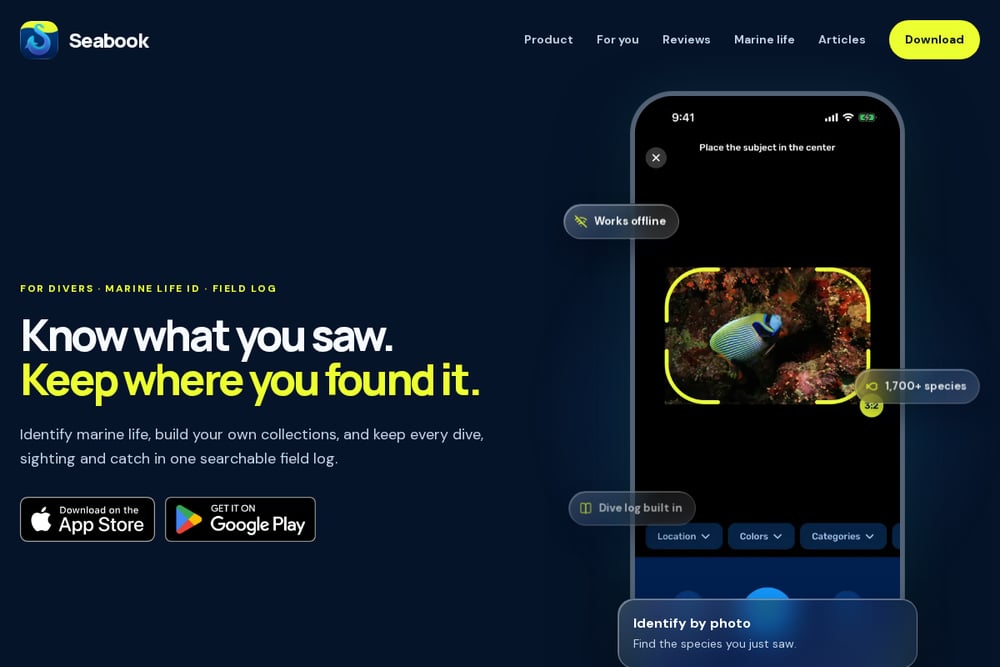
Seabook is a fish identifier and dive log built for divers who want to know exactly what they just saw. You can identify marine life by photo, using trait filters and look-alike comparisons to confirm the species. The app works offline, which matters when you are on a boat with no signal. It covers more than 1,700 species and lets you save finds into trip lists, study sets, wish lists, or any collection that matches how you explore. Dive log and sightings stay connected, so depth, conditions, photos, and notes remain attached to each encounter. Seabook is a strong fit if species identification is the heart of your diving experience. See the full feature set at Seabook.
#4 Tortuba
 A screenshot of the Tortuba website.
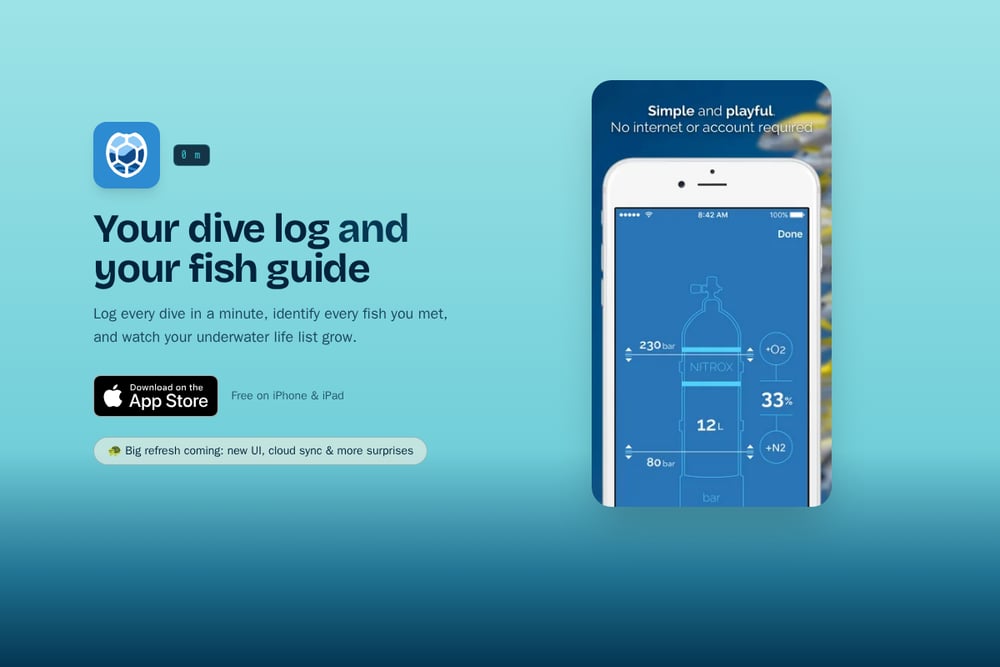
Tortuba is a dive log and fish guide for iPhone and iPad that aims to make logging painless. You capture site, depth, time, and buddy in about a minute while your hair is still wet. A built-in fish guide lets you browse by look and add species straight to the dive, growing your personal life list with every entry. The Tortuba Index is its standout feature: a seasonal guide to where and when to see the ocean's best-known animals, sourced and rated for how likely you are to actually meet one. It covers animals like scalloped hammerheads, grey reef sharks, and hammerheads in the Galápagos, with 28 animals across 14 destinations. Tortuba also publishes practical guides for divers, including beginner site selection and advanced certification questions. Visit Tortuba to see the index and guides.
#5 Bloo
 A screenshot of the Bloo website.
Bloo is an iPhone dive log conceived as much for preserving the photos, people, and memories of a dive as for recording its technical details. You enter site, maximum depth, duration, conditions, and rating, attach up to six shots, and add notes. Dives can be grouped into trips, and an interactive globe shows the locations you have visited. Summary stats cover total bottom time, depth records, countries visited, and dives by year. Bloo imports FIT files from Garmin Descent and Suunto Ocean computers, UDDF files from Shearwater, Subsurface, Oceanic+, and MacDive exports, along with sites, buddies, equipment, and depth-profile information. It also attempts to identify existing dives to prevent duplication and lets you export logs as JSON or UDDF to avoid lock-in. Read more about Bloo in Divernet's app roundup.
How to Choose the Right Platform for You
Start with your primary goal. If you want your dives to feed real research, prioritize platforms with validated species data and standard output formats. DIVR and DiveGrade both fit that bill, though they approach it differently: DIVR focuses on fast logging and Darwin Core delivery, while DiveGrade focuses on science-grade reviews and month-by-month site scoring. If you care most about identifying what you saw, Seabook's photo ID and offline mode are hard to beat. If you plan trips around seasonal wildlife, Tortuba's index gives you a head start. If you want a beautiful personal record with strong import support, Bloo is worth a look. Next, check coverage for the regions you dive. A platform with deep coverage of the Indo-Pacific may not help much in the Caribbean. Then test the logging flow. If it takes more than a minute, you probably will not keep up with it. Finally, confirm data portability. You should be able to export your logs in a standard format so your history is not trapped.
Turning Your Dive Habit into a Data Workflow
You do not need to choose between a personal logbook and a science contribution. A simple workflow can cover both. Log the dive in your primary app as soon as you surface, while the details are fresh. Import the dive computer file if the app supports it, so depth and time are measured rather than remembered. Add species sightings with photos where you can, and tag conditions like visibility, current, and temperature. If you use DiveGrade, complete the science-grade fields to raise the grade of your review without affecting your site rating. If you use DIVR, let the WoRMS validation run and confirm the species matches. At the end of each trip, export your logs in a standard format and back them up. Over time, that habit builds a record that is useful to you and potentially useful to researchers.
The Bottom Line
The right platform depends on what you want your dive log to do. DIVR is the most direct route from a logged dive to a research-ready record. DiveGrade gives you the most structured way to rate sites and plan dives by month, level, and wildlife. Seabook is the strongest choice for species identification, especially offline. Tortuba makes seasonal wildlife planning and quick logging feel easy. Bloo preserves the memories and technical details with impressive import flexibility. Try one as your primary logbook, and consider a second for the features it does best. Your future self, and possibly a marine researcher, will thank you.