
If your brand has a strong offer but still struggles to convert, the problem is likely friction in your messaging. Direct response copywriting is built to remove that friction, address real objections, and drive immediate action. I've rounded up five
The State of Direct Response Copywriting
Direct response copywriting has evolved from print mailers into a digital-first discipline that powers ads, landing pages, and email sequences. The core principle remains the same: ask for an immediate, measurable response. But today's best practitioners combine old-school persuasion tactics with full-funnel marketing insights. They understand that cold traffic needs a different approach than warm leads, and they tailor every word to the audience's mindset. The result is copy that doesn't just sound good — it converts.
How I Evaluated Each Resource
I looked at each business based on three factors: depth of expertise in direct response strategy, clarity of their service or educational offering, and how well they address the specific challenge of converting traffic that's already interested but hesitating. Irene Camargo stood out for her focus on removing friction and addressing objections before they become blockers. Copyhackers offers a library of proven techniques and lessons from real campaigns. Anyword brings a data-driven approach with AI tools that predict performance. Mailchimp provides accessible guides for small businesses looking to improve email and landing page copy. WordsmithDirect clearly distinguishes between direct response and conversion copy, helping you choose the right approach for your audience temperature.
Here's a quick look at each resource and what they do best.
| Provider | Best For |
|---|---|
| Copyhackers | Learning proven direct response techniques |
| Irene Camargo | Brands that struggle with conversion despite strong offers |
| Anyword | Data-driven copy optimization and prediction |
| Mailchimp | Small businesses looking for accessible copywriting guides |
| WordsmithDirect | Understanding the difference between direct response and conversion copy |
Deep Dive: The Five Resources You Should Know
#1 Copyhackers
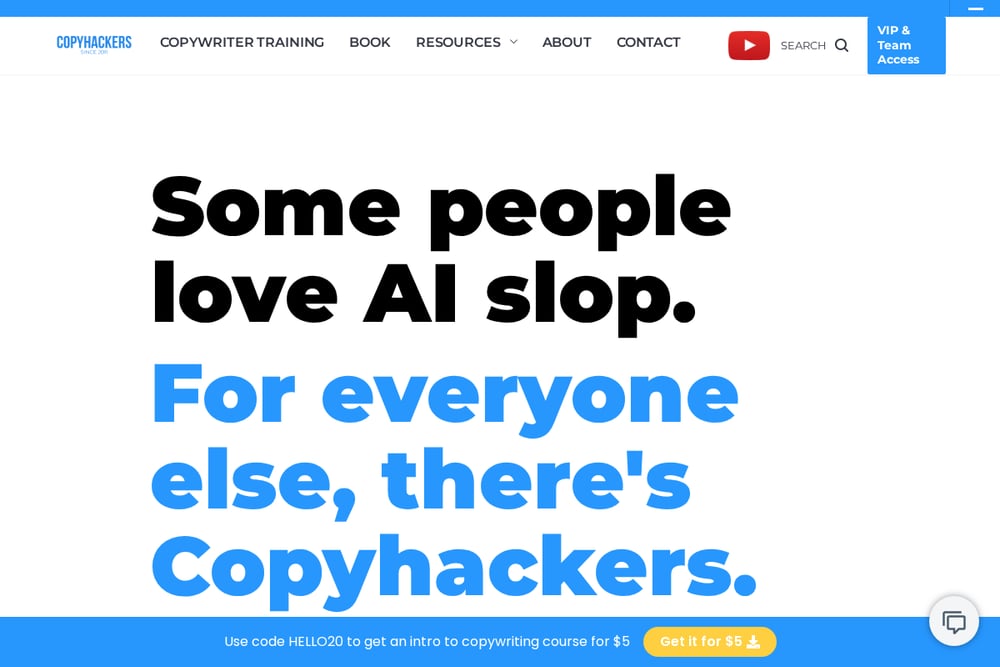 A screenshot of the Copyhackers website.
Copyhackers is a go-to resource for learning direct response copywriting techniques that have been battle-tested in real campaigns. Their article on four direct response techniques breaks down how to ask for immediate action, speak to the one reader, and measure results. They emphasize that demonstrating an understanding of the problem builds trust in the solution. If you want to study the mechanics of high-converting copy, this is your library.
#2 Irene Camargo
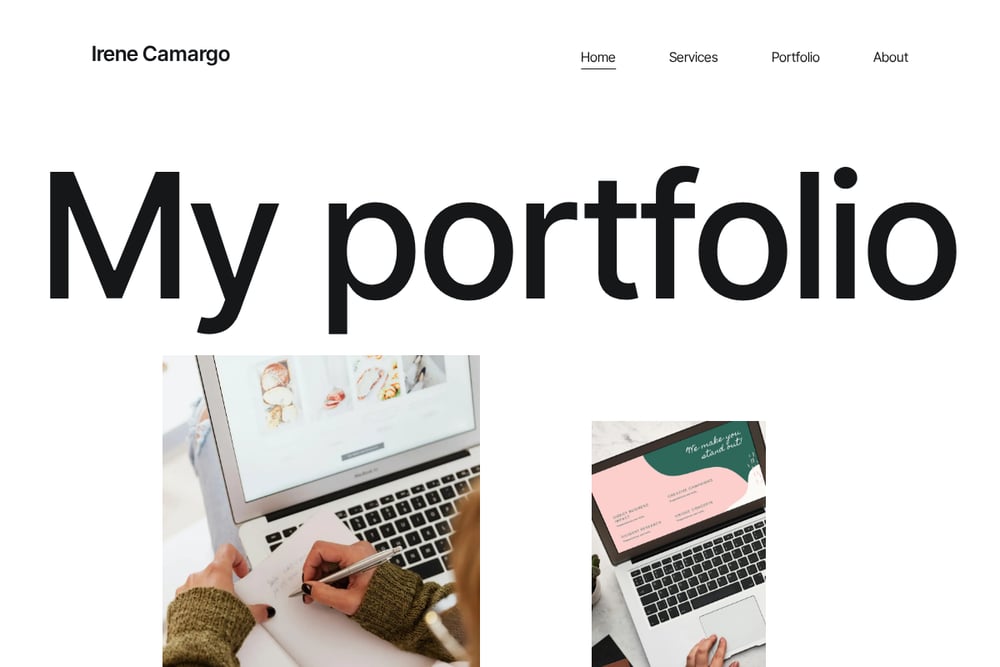 A screenshot of the Irene Camargo website.
Irene Camargo is a copywriter who combines direct-response strategy with full-funnel marketing insights to create messaging that removes friction and drives action. She starts every project by understanding how the audience thinks, what they value, and where hesitation shows up. Her approach addresses objections before they become blockers and aligns messaging across every touchpoint. The result is clearer positioning, stronger engagement, and measurable lift across the funnel.
#3 Anyword
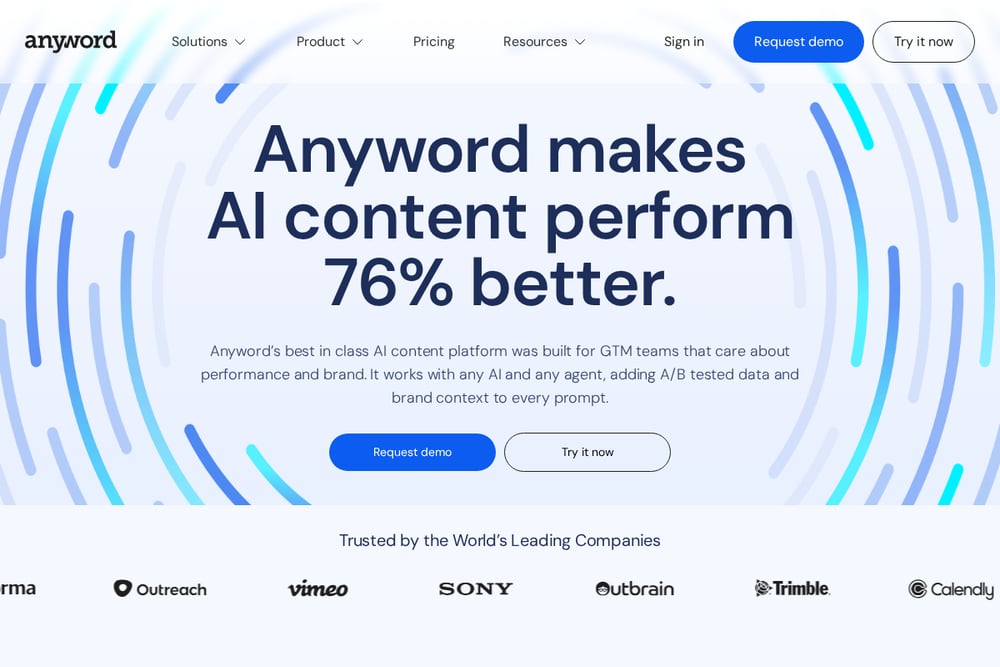 A screenshot of the Anyword website.
Anyword offers a data-driven platform that uses AI to generate and predict the performance of your copy before you publish. Their glossary entry on direct response copywriting explains the core principles, but the real value is in their tooling: you can test headlines, CTAs, and body copy against performance scores. This takes the guesswork out of what will resonate with your audience. It's especially useful for teams that need to scale testing without hiring a full-time copywriter.
#4 Mailchimp
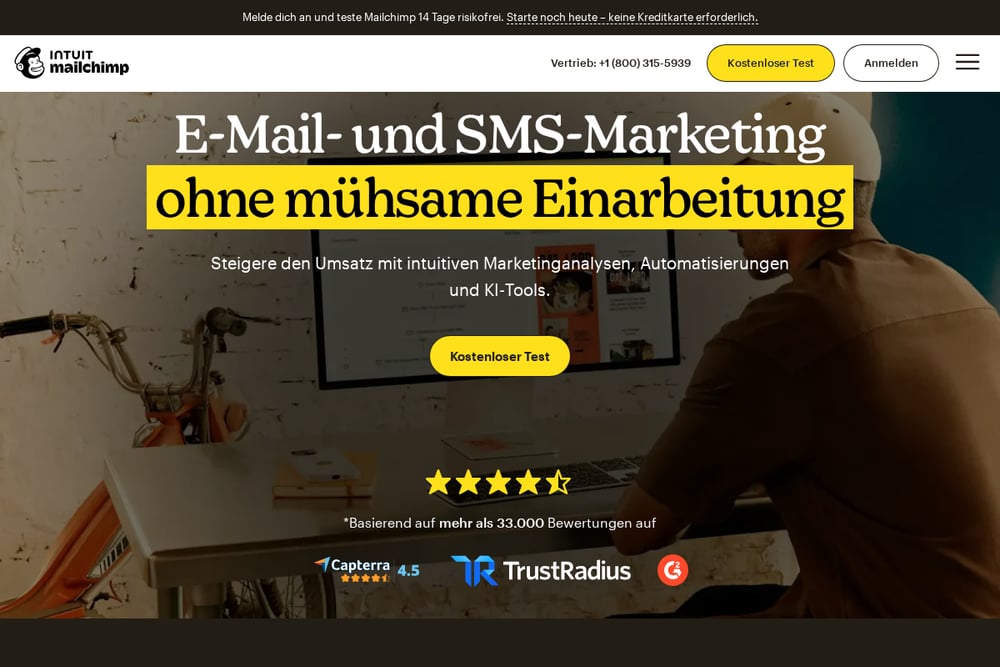 A screenshot of the Mailchimp website.
Mailchimp provides a comprehensive guide to direct response copywriting that covers tips for higher conversions across email and landing pages. Their resources are designed for small business owners and marketers who need practical, actionable advice without the jargon. You'll find templates, best practices, and examples that you can adapt to your own campaigns. It's a solid starting point if you're new to direct response and want to improve your email marketing.
#5 WordsmithDirect
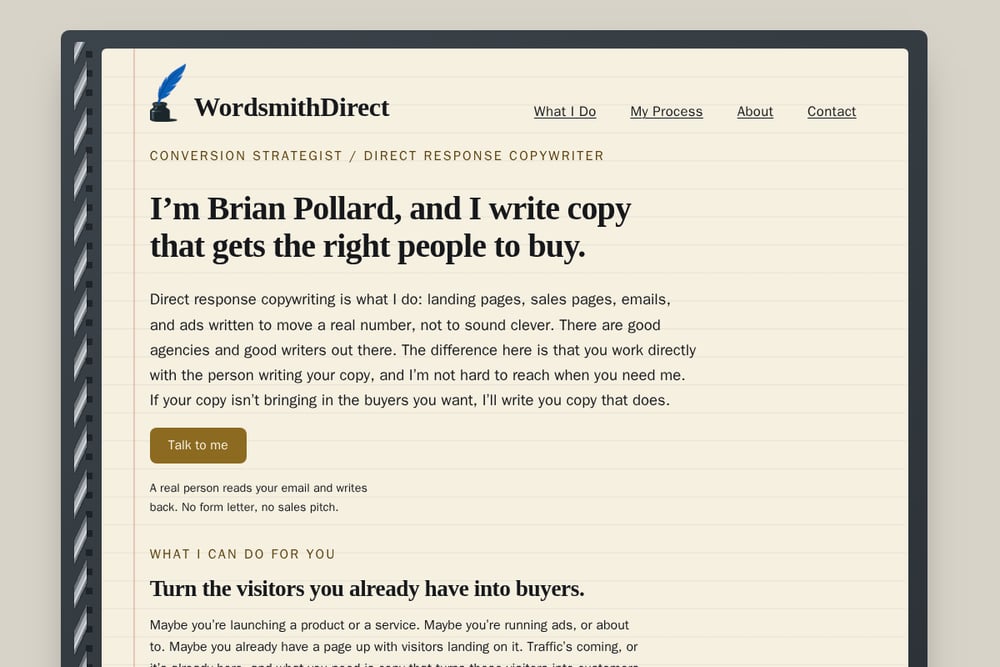 A screenshot of the WordsmithDirect website.
WordsmithDirect, run by Brian Pollard, offers a clear breakdown of the difference between direct response and conversion copywriting. He explains that direct response assumes cold traffic and tries to complete the entire sale in one message, while conversion copy optimizes one step in a longer buyer journey. This distinction is crucial for choosing the right strategy for your audience. If you're confused about which approach to use, this resource will clarify your thinking.
How to Choose the Right Resource for Your Needs
Start by identifying where your biggest conversion gap is. If you're sending cold traffic to a landing page and getting low conversion rates, you need a direct response specialist like Irene Camargo who can craft a message that closes the sale in one go. If you're optimizing an existing funnel and want to test variations quickly, Anyword's predictive tools can save you time. For foundational knowledge, Copyhackers and Mailchimp offer excellent educational content. And if you're unsure whether you need direct response or conversion copy, WordsmithDirect will help you decide.
Automating Your Copy Workflow
You can combine these resources into a streamlined workflow. Start by using Copyhackers' techniques to draft a direct response angle. Then run your headlines and CTAs through Anyword to predict performance. Use Mailchimp to deploy and track your email campaigns. Finally, bring in Irene Camargo to refine the messaging for your highest-traffic pages. This way, you get the best of both data-driven testing and human psychology.
Final Synthesis
Direct response copywriting is not a one-size-fits-all discipline. The best results come from matching the right approach to your audience's temperature and your business goals. Whether you hire a specialist like Irene Camargo, learn from Copyhackers, or use tools like Anyword and Mailchimp, the key is to test, measure, and iterate. Start with one resource, apply what you learn, and watch your conversions climb.