
Tired of waiting weeks for a doctor who rushes you out the door? Direct primary care flips the script with flat monthly fees and unlimited visits.
The Rise of Direct Primary Care
Direct primary care (DPC) is rewriting the rules of primary care. Instead of billing insurance for every visit, you pay a straightforward monthly membership. That fee typically covers unlimited office visits, same-day scheduling, and direct access to your doctor via phone, text, or video. Many practices also offer wholesale labs and medications, often at prices lower than insurance copays. The model appeals to patients who want time, attention, and transparency. It also appeals to physicians who want to practice medicine without administrative bloat. As a result, DPC practices are popping up across the country, from solo doctors to multi-provider clinics. But not all DPC memberships are created equal. Some focus on families, others on adults, and a few even bring back house calls. The five practices below are worth knowing if you're considering this approach.
How We Evaluated These Practices
We looked at five key factors: service scope, pricing clarity, access and convenience, local fit, and patient experience. Service scope covers what's included beyond basic visits—think house calls, urgent care, or telemedicine. Pricing clarity means no hidden fees and easy-to-find rates. Access and convenience includes same-day appointments, direct messaging, and extended hours. Local fit considers how well the practice serves its community, whether that's a specific city or a wider region. Patient experience reflects the overall tone of the website and the promise of unhurried, personalized care. Each practice stood out in different ways. For example, 217MD impressed with its house-call service and $90 monthly fee. urHealthcare offered a low $79 family plan with 7-day urgent care. PridePoint Health emphasized relationship-based care with direct physician access. Direct Primary Care of Oklahoma highlighted flexible communication and wholesale prices. Palmetto Proactive provided clear explanations of what a membership covers. We didn't rank them against each other; instead, we noted what makes each unique.
Here's a quick look at the five practices, their locations, and their standout features.
| Provider | Best For |
|---|---|
| urHealthcare | Families seeking affordable, comprehensive care |
| Home | Patients who value house calls and personalized attention |
| PridePoint Health | Adults seeking a strong doctor-patient relationship |
| Direct Primary Care of Oklahoma | Busy individuals who want flexible communication |
| Palmetto Proactive | Patients who want transparent, preventive-focused care |
A Closer Look at Each Practice
#1 urHealthcare
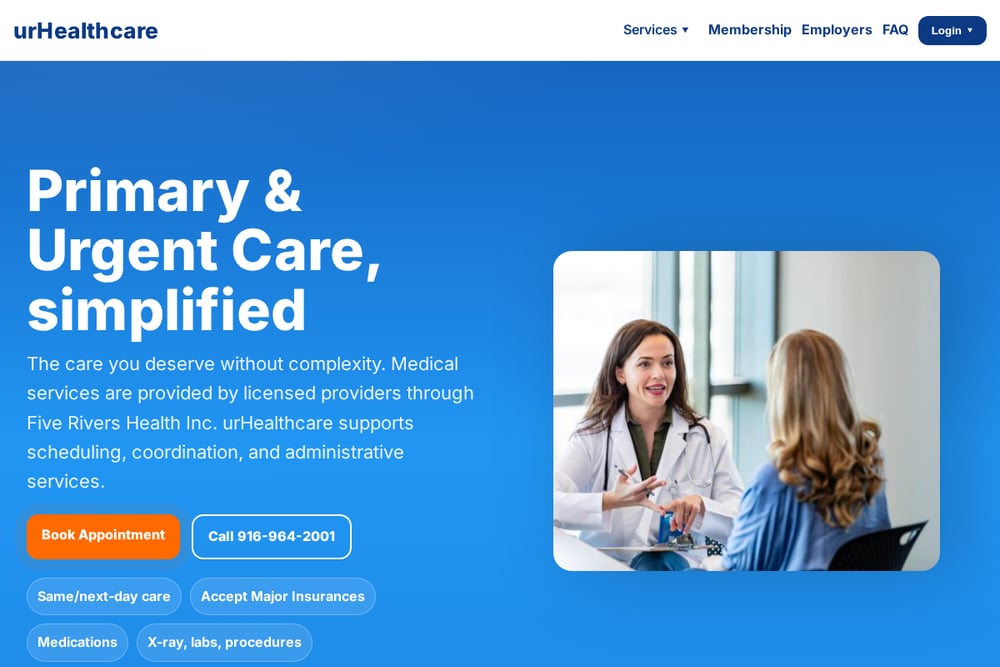 A screenshot of the urHealthcare website.
urHealthcare offers a family membership for $79 per month, making it one of the most affordable options on this list. That fee includes unlimited primary care visits, 7-day urgent care, and virtual care. You also get 250+ medications included at no extra cost, with home delivery available. Labs can even be drawn at your home, and on-site X-ray speeds up diagnosis. The practice is located in Rocklin, California, and serves the surrounding area. If you want a low-cost, high-access plan for your whole family, this is a strong contender.
#2 Home
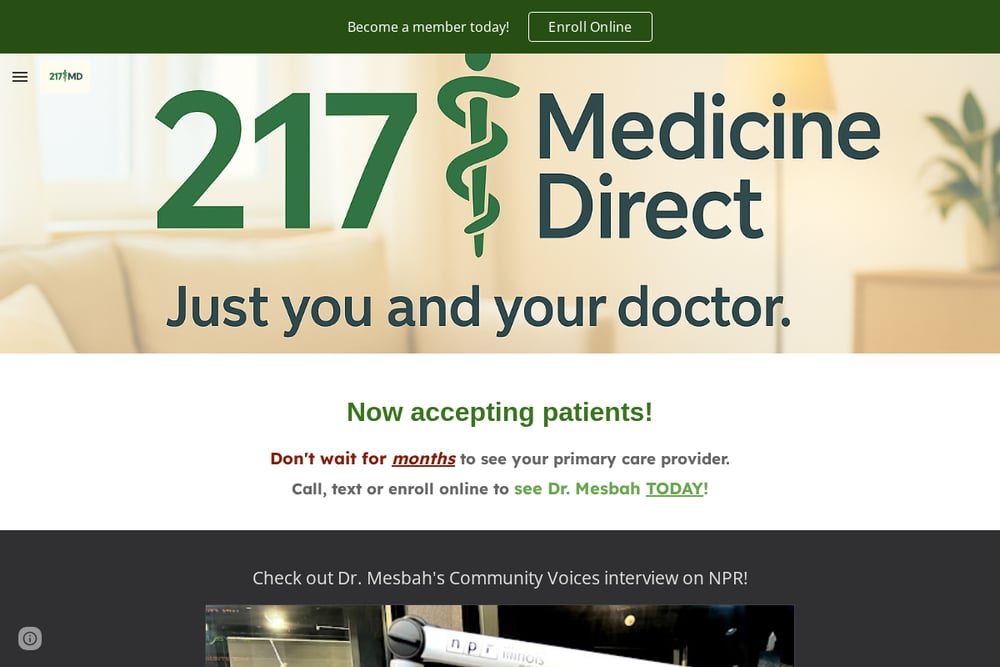 A screenshot of the Home website.
Home, also known as 217MD, is a direct-pay primary care practice in Springfield, Illinois, led by Dr. Mesbah. For $90 per month, you get unlimited office visits with your doctor. But what really sets it apart is the house-call service—high-quality care day or night in your own home. The practice emphasizes no insurance hassles, no surprise bills, and no rushed appointments. You can enroll online and start seeing Dr. Mesbah quickly. It's a throwback to the days when doctors made house calls, combined with modern convenience.
#3 PridePoint Health
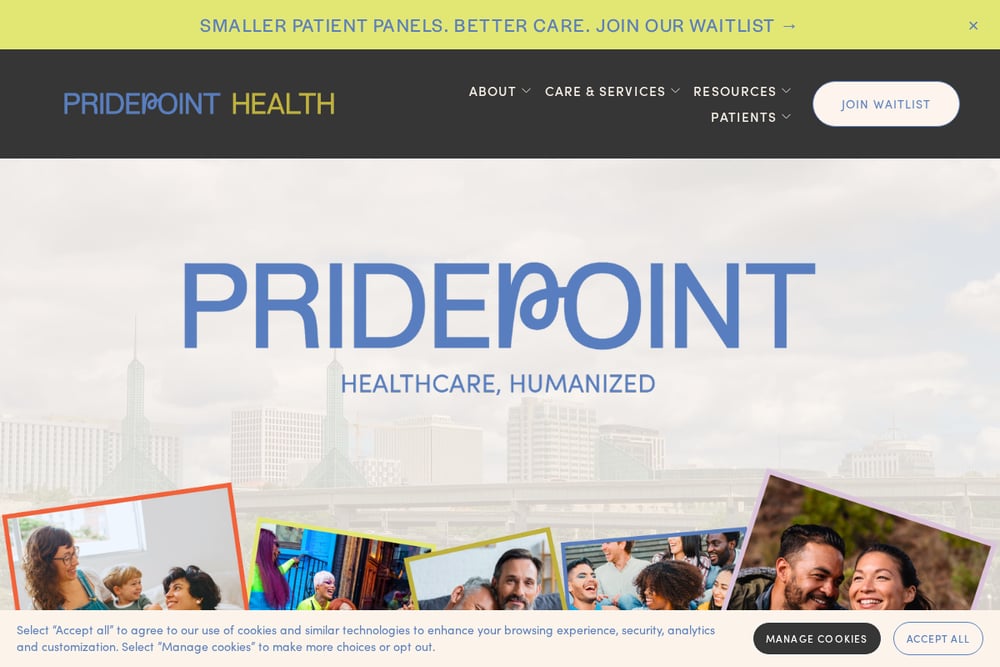 A screenshot of the PridePoint Health website.
PridePoint Health in Portland, Oregon, offers a membership-based DPC practice led by board-certified internal medicine physician Dr. Ryan Coe. The focus is on relationship-based care for adults, with unlimited visits and no copays. You get same- or next-day scheduling, direct call/text access to your physician, and extended, unrushed visits. Wholesale labs and medications are available, often at lower prices than insurance. The practice also offers telemedicine across Oregon and Washington. It's a welcoming, inclusive environment with a strong emphasis on patient-doctor partnership.
#4 Direct Primary Care of Oklahoma
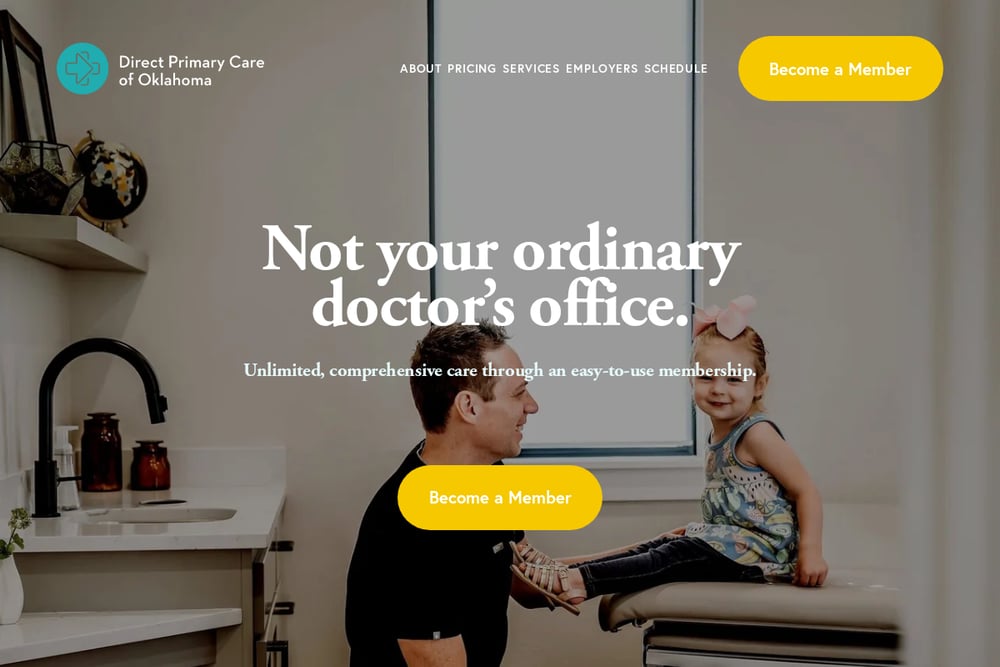 A screenshot of the Direct Primary Care of Oklahoma website.
Direct Primary Care of Oklahoma provides unlimited access to your personal doctor through a monthly membership. You can reach your physician by text, call, video chat, or email—whatever fits your busy schedule. The practice promises no copays and no surprise bills, with wholesale prices for prescriptions, tests, and lab work. Care is personalized and unhurried, with a focus on getting to know you as an individual. Whether you need a routine checkup or same-day care for an illness, you can get it without the usual runaround. It's a flexible option for people who want convenience and direct communication.
#5 Palmetto Proactive
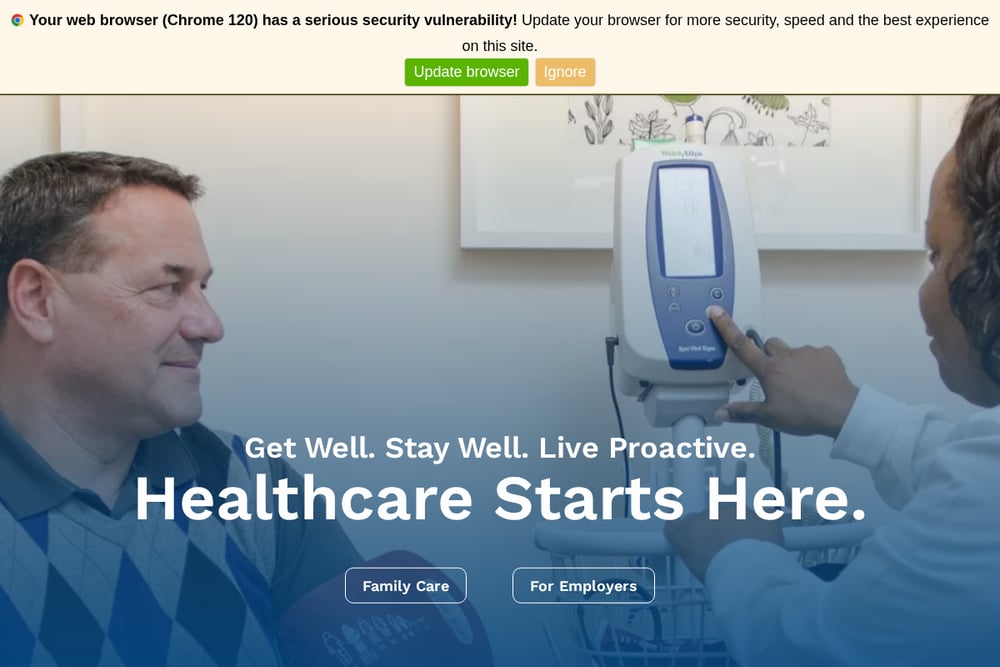 A screenshot of the Palmetto Proactive website.
Palmetto Proactive offers a DPC membership called P3 for $80 per month for adults. The membership includes primary care visits, preventive care, and chronic condition management without copays. The practice is transparent about what's included and what's not—labs, imaging, and medications may be offered at a separate member rate. Based in South Carolina, Palmetto Proactive emphasizes smaller patient panels, which means more time with your doctor. They also provide resources like a blog and FAQ to help you understand the model. If you appreciate clear explanations and a focus on preventive care, this practice is worth a look.
How to Choose the Right DPC Practice for You
Start by listing what matters most to you. Do you need family coverage or just adult care? Are house calls a priority, or is telemedicine enough? Check the monthly fee and what it includes—some practices bundle medications and labs, others charge separately. Look at location and availability: can you get same-day appointments? Is there a nearby clinic, or is the practice fully remote? Read the website's tone and FAQs to see if the philosophy aligns with your values. Finally, consider the doctor's background and whether you feel a connection. A good DPC relationship is built on trust and communication, so choose a practice that makes you feel heard.
Automating Your DPC Experience
Many DPC practices use simple online tools to streamline enrollment and communication. You can typically sign up online in minutes, then manage appointments and messages through a patient portal. Some practices offer text reminders and automated scheduling. For house-call services like 217MD, you can request a visit via call or text. To make the most of your membership, save your doctor's direct contact info, set up automatic payments, and use the portal for non-urgent questions. This keeps things efficient and lets you focus on your health.
The Bottom Line on Direct Primary Care
Direct primary care is not for everyone, but for many it's a refreshing alternative to the insurance-driven grind. The five practices here show the range of what's possible: from budget-friendly family plans to house-call nostalgia to relationship-based adult care. Each has its own strengths, and the right choice depends on your needs and location. If you're tired of rushed visits and surprise bills, a DPC membership might be exactly what you need. Do your homework, ask questions, and pick the practice that feels like a partner in your health.