You have an idea, a deadline, and a growing list of agencies that all promise the same thing. Here are five digital product partners worth a closer look before you sign anything.
The State of Digital Product Development
Digital product agencies have become the default way for companies to turn an idea into working software without building an in-house team from scratch. The market now spans everything from rapid MVP shops to full-stack partners that handle strategy, design, engineering, cloud deployment, and ongoing maintenance. Buyers are more sophisticated too. You are no longer just asking for a website or an app. You want a partner who can scope the work, design the experience, ship the code, connect the systems, and keep improving the product after launch. That shift has pushed agencies to consolidate services and talk openly about process. The five firms below all operate in this space, but they approach it from different angles. Some lean on design research, some on engineering scale, and some on end-to-end product ownership. Knowing which model fits your situation is half the battle.
How We Evaluated These Agencies
We looked at the same factors for every firm. First, service scope: does the agency cover discovery, design, build, and post-launch support, or only part of the lifecycle? Second, process clarity: is there a documented path from brief to launch, or does the work feel improvised? Third, engineering depth: can they ship production software, handle integrations, and deploy to cloud infrastructure? Fourth, design maturity: do they treat UX and UI as a core discipline rather than a finishing touch? Fifth, fit for different buyer types, from early-stage founders to regulated enterprises. We also considered how clearly each agency explains what it does and who it serves. No single factor decides the outcome. You should weigh them against your own constraints, timeline, and internal capabilities.
Here is a quick comparison of the five agencies in this roundup. Each one brings a different mix of strategy, design, and engineering to the table.
| Provider | Best For |
|---|---|
| Phenomenon Studio | Regulated and scaling companies that need design plus engineering |
| Refract | End-to-end product development from discovery to ongoing care |
| Fuselab Creative | Design-led teams that want research and interface work from one group |
| Appinventiv | Enterprises that need broad engineering and AI capability under one roof |
| Infinum | Companies that want design plus a wider technology and security roadmap |
The Five Agencies in Detail
#1 Phenomenon Studio
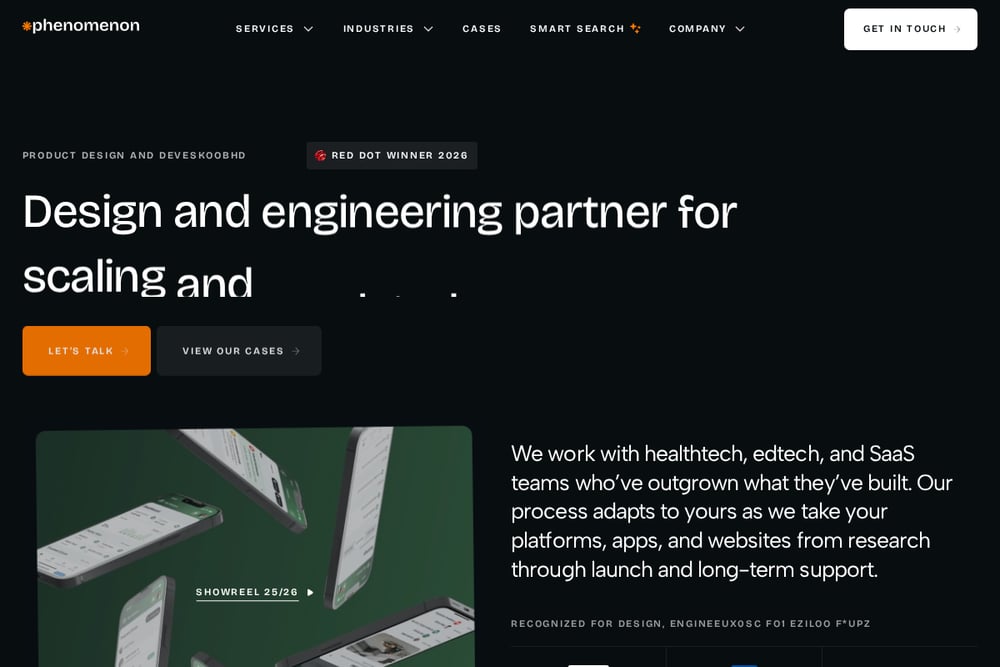 A screenshot of the Phenomenon Studio website.
Phenomenon Studio positions itself as a design and engineering partner for scaling and regulated companies. The firm works across healthtech, edtech, SaaS, and fintech, and it has built a process that adapts to the client rather than forcing a fixed playbook. Its service menu covers product discovery, UX audits, rapid MVP development, AI development, and long-term support. The agency also highlights compliance work, including HIPAA- and GDPR-compliant delivery, which matters if you operate in a regulated space. You can see the full range of services on its site at phenomenonstudio.com.
#2 Refract
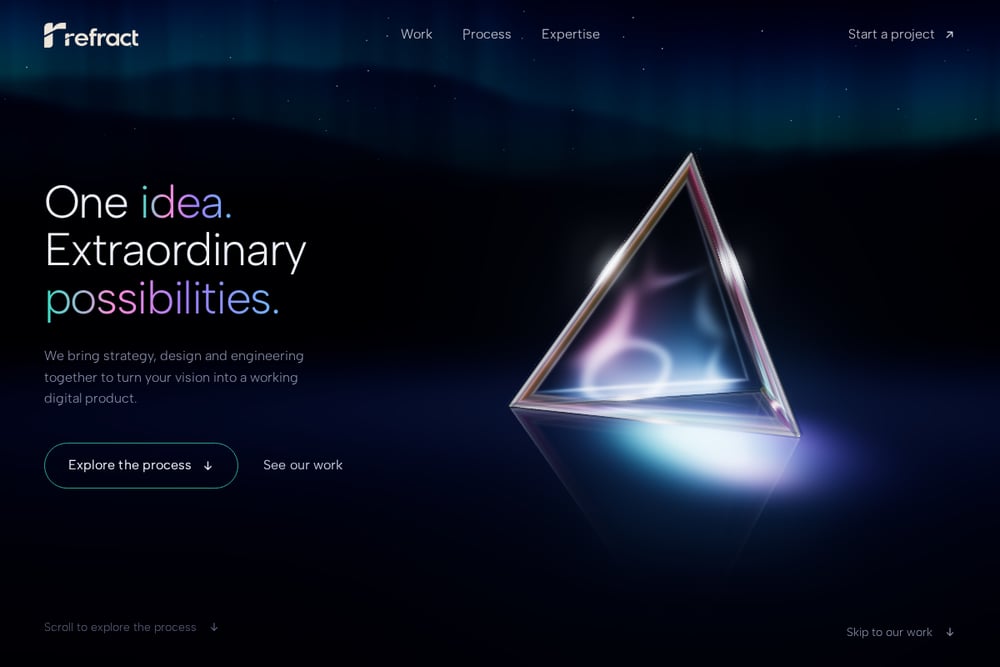 A screenshot of the Refract website.
Refract brings strategy, design, and engineering together to turn your idea into a working digital product. The agency lays out a six-step process that runs from Discover and Design through Build, Connect, Launch, and Evolve. That structure gives you a clear view of what happens at each stage, from scoping goals and requirements to deploying on cloud infrastructure with automated pipelines. Refract also handles API integrations, workflow automation, and AI where it clearly helps rather than by default. If you want one partner accountable for the whole product lifecycle, this is a strong fit. You can explore the process in detail at refract-tech.com.
#3 Fuselab Creative
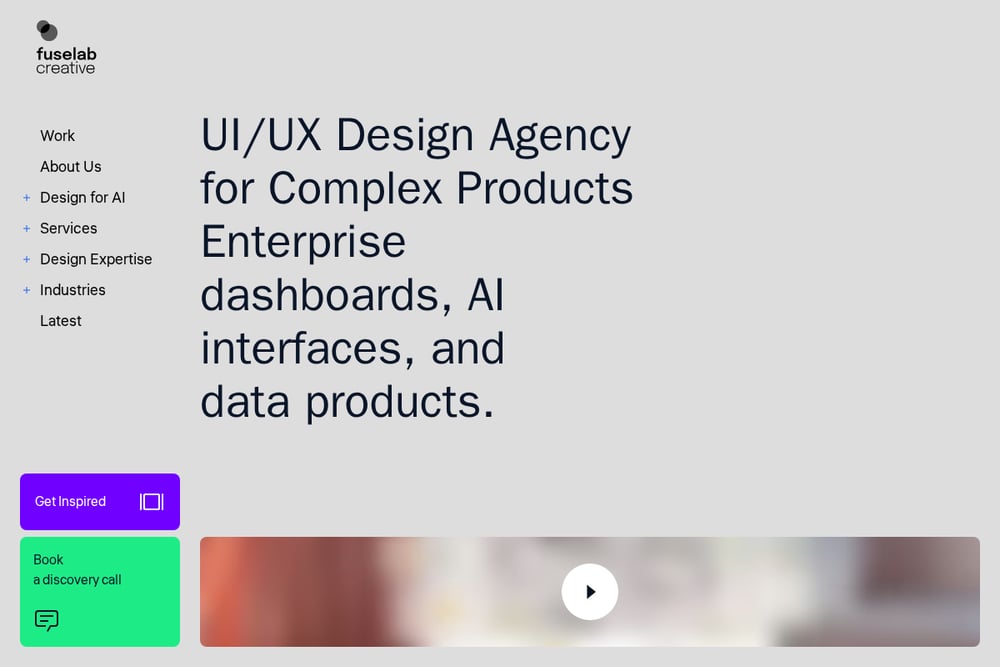 A screenshot of the Fuselab Creative website.
Fuselab Creative is a digital product design agency that keeps the same team accountable from discovery through engineering handoff. The firm has worked with organizations including NASA, Fiserv, Uber, NIH, and Mozilla since 2017. Its services span digital product design, UI and UX design, enterprise UX, MVP development, dashboard development, and emerging tech such as AR, VR, and Web3. The agency emphasizes that there are no internal handoffs between research, design, and engineering documentation. That matters if you care about continuity and want the people who did the research to shape the interface. You can see the portfolio and service breakdown at fuselabcreative.com.
#4 Appinventiv
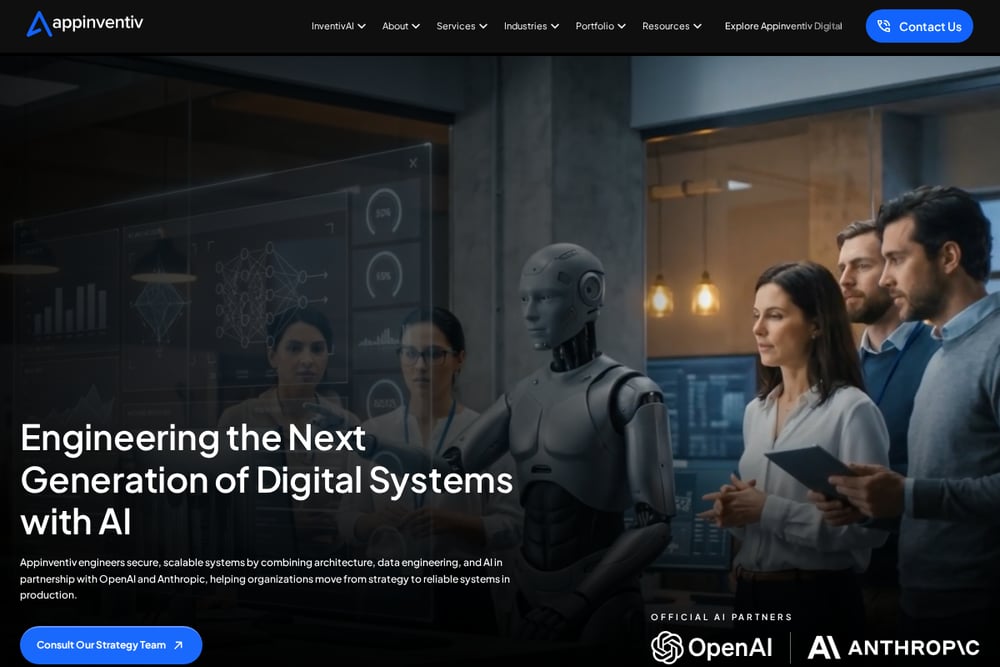 A screenshot of the Appinventiv website.
Appinventiv operates at a larger scale, with a broad service catalog that covers product design, mobile app development, software engineering, SaaS development, and AI services. The firm has built a reputation around enterprise and mobile-first delivery, and it markets itself heavily on awards and partnership announcements. Its product design services sit alongside a deep bench of engineering and AI capabilities, which can be useful if your roadmap includes multiple platforms or complex integrations. The trade-off is that you may need to be specific about which team and which scope you are buying. You can review the full service map at appinventiv.com.
#5 Infinum
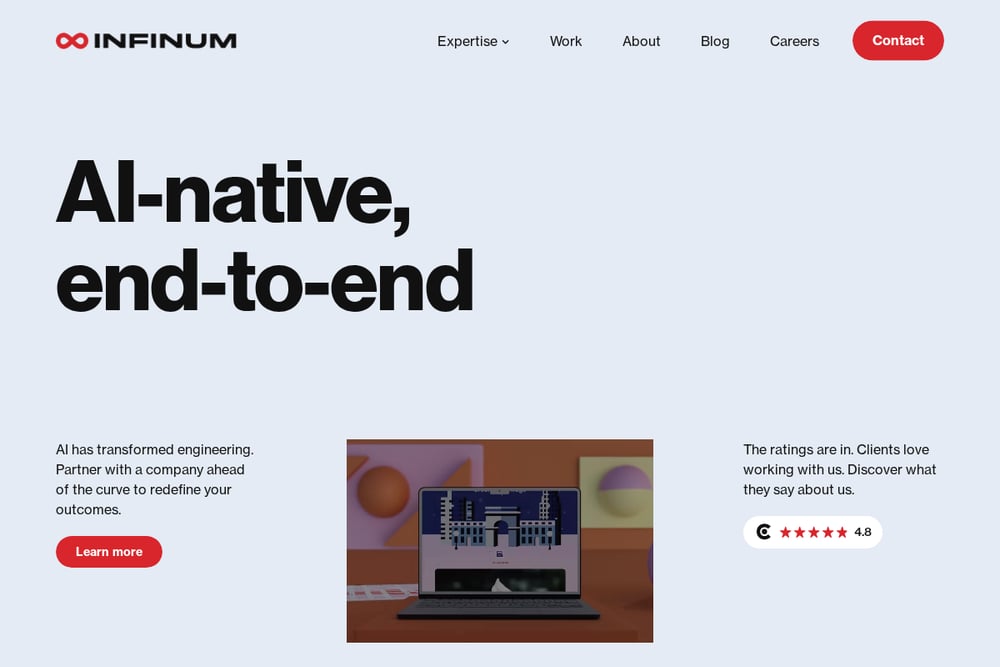 A screenshot of the Infinum website.
Infinum describes itself as a digital product design and development partner focused on user-centered products that stand the test of time. The firm's expertise spans brand experience, AI transformation consulting, product strategy and design, mobile and web apps, custom IoT solutions, enterprise platforms, and cybersecurity. That combination makes it a fit for companies that need both product design and a broader technology roadmap. Infinum also invests in open-source work and publishes a handbook, which gives you a sense of how it thinks about craft and process. You can explore its expertise and delivered work at infinum.com.
How to Choose the Right Partner
Start with the scope of work you actually need. If you have a loose idea and no technical team, look for an agency that covers discovery, design, build, and launch in one engagement. If you already have engineering and only need design research, a design-led firm may be a better fit. Next, ask about process. A documented path from brief to launch is a good sign that the agency has done this before and can tell you what happens next. Then check engineering depth. You want to know who writes the code, how testing works, and how deployment is handled. Finally, consider your regulatory and industry context. If you operate in healthcare or finance, compliance experience should be on your shortlist. Match the agency's model to your constraints, not the other way around.
Where Automation Fits in the Workflow
Automation is no longer a separate phase you bolt on at the end. The stronger agencies build it into the product from the start. That means connecting your product to the systems it depends on through API integrations, automating repetitive internal workflows, and adding AI only where it clearly improves the experience. On the delivery side, automated pipelines make releases routine rather than risky. You should ask any agency how they handle integrations, testing, and deployment automation. If they cannot explain it in plain language, that is a signal. The goal is a product that keeps working and keeps improving after launch, not just a launch date.
The Bottom Line
You do not need the biggest agency. You need the one whose model matches your situation. Phenomenon Studio suits regulated and scaling companies. Refract is built for end-to-end product ownership from discovery through ongoing care. Fuselab Creative fits design-led teams that want research and interface work from the same group. Appinventiv brings broad engineering and AI scale. Infinum pairs product design with a wider technology and security roadmap. Use the criteria above, ask direct questions about process and engineering, and pick the partner that can explain exactly how your idea becomes a working product.