You have a celebration to plan, and the last thing you want is to wrestle with clunky design software or chase RSVPs across three different apps. These five platforms each solve that problem in a different way, so you can pick the one that fits how you actually host.
The digital invitation landscape
Paper invites are fading, but the need to make a guest feel personally invited has never been stronger. Online invitation platforms now blend design templates, photo personalization, and RSVP tracking into a single link you can text or email. The category splits into two camps: polished stationery-style suites built for weddings and formal events, and fast, social-first tools built for casual parties. Pricing models range from fully free with watermarks to premium memberships that unlock exclusive designs and remove branding.
How these platforms were evaluated
Each platform was assessed on design quality and template range, ease of personalization, RSVP and guest-management features, pricing transparency, and how well the tool fits its intended audience. Free-tier usefulness and the presence of distinctive extras, such as surprise cards or event discovery, also factored in. The goal is to help you match the tool to your event type rather than crown a single winner.
Here is a quick look at the five platforms, ordered to help you compare their strengths at a glance.
| Provider | Best For |
|---|---|
| Paperless Post | Formal events that need a polished, stationery-style invite |
| The Party Letter | DIY hosts who want free templates plus a memorable surprise card |
| Evite | Hosts who want the widest occasion and character library |
| Punchbowl | Family and kids' parties with themed invites and RSVP |
| Partiful | Casual parties and fast, link-based RSVPs |
The five platforms in detail
#1 Paperless Post
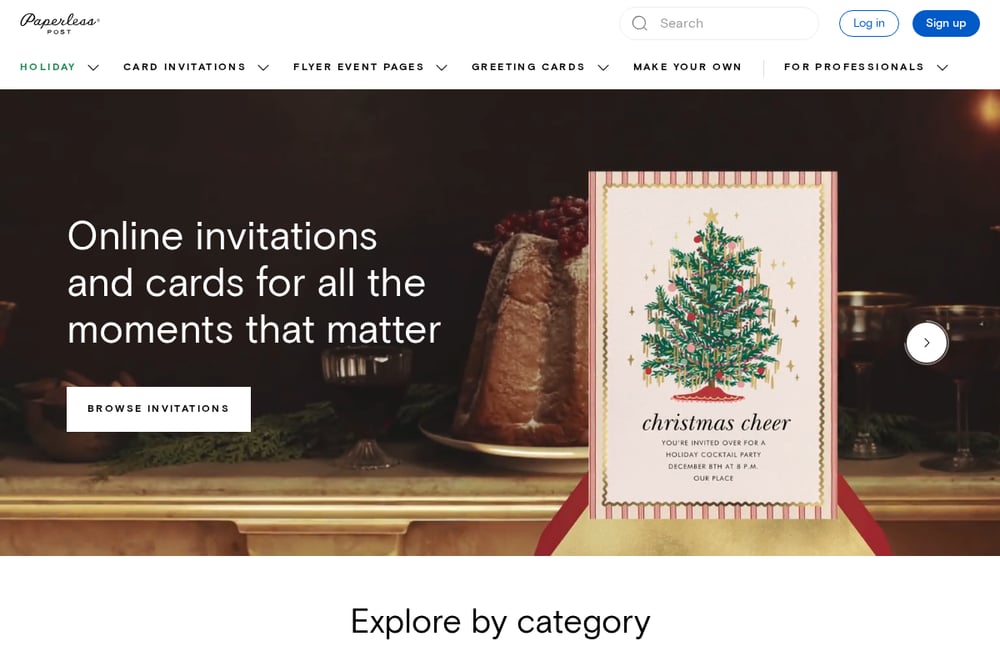 A screenshot of the Paperless Post website.
Paperless Post built its reputation on stationery that feels like real paper, with envelope animations and typography that appeal to hosts planning weddings, showers, and milestone birthdays. The catalog is deep, spanning holiday parties, kids' birthdays, and business events, and you can send invites by email, text, or link. Its design polish makes it a natural fit when the invitation itself is part of the occasion. You can browse the full invitation range at Paperless Post to see how granular the occasion categories get. The trade-off is that the most desirable designs sit behind a coin-based system, so costs can add up for large guest lists.
#2 The Party Letter
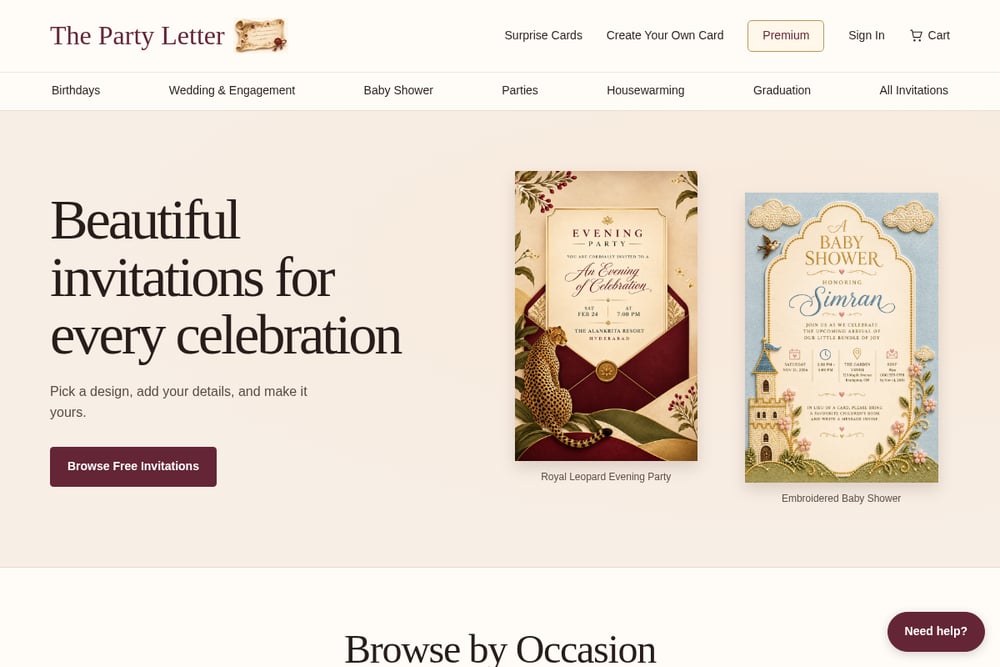 A screenshot of The Party Letter website.
The Party Letter takes a refreshingly simple approach: pick a design, add your details, and download, print, or share. You can start from a free template, upload your own image, or begin with a blank canvas and layer in text, colors, photos, frames, and stickers. What sets it apart is the Surprise Card feature, where guests unlock a birthday message with a PIN and reveal photos, music, and a letter that unfurls on screen. Online RSVPs are handled through a shareable guest link with a private management dashboard, and a Premium membership unlocks additional designs. It is a strong choice if you want creative control without a steep learning curve.
#3 Evite
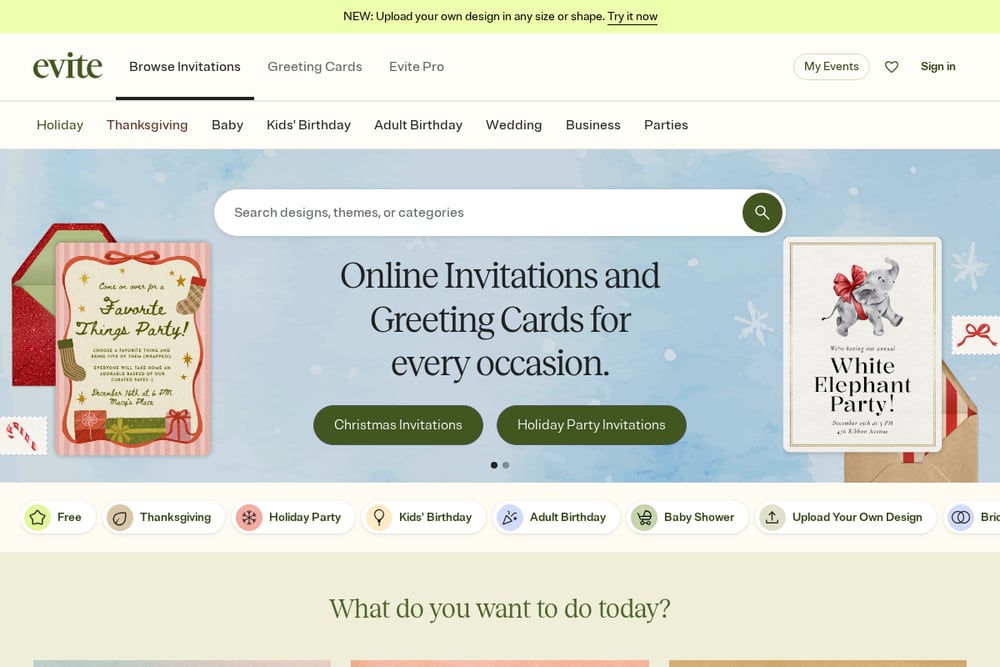 A screenshot of the Evite website.
Evite is the veteran of the category, and its breadth shows in a catalog that covers everything from Thanksgiving potlucks to bar mitzvahs and corporate galas. The platform now supports uploading your own design in any size or shape, which closes the gap with more design-forward competitors. Evite Pro adds extras for hosts who run frequent events, and the brand-character invitations for kids' parties are a genuine differentiator. If you want a familiar tool with a massive occasion library, Evite delivers. You can explore the full range at Evite.
#4 Punchbowl
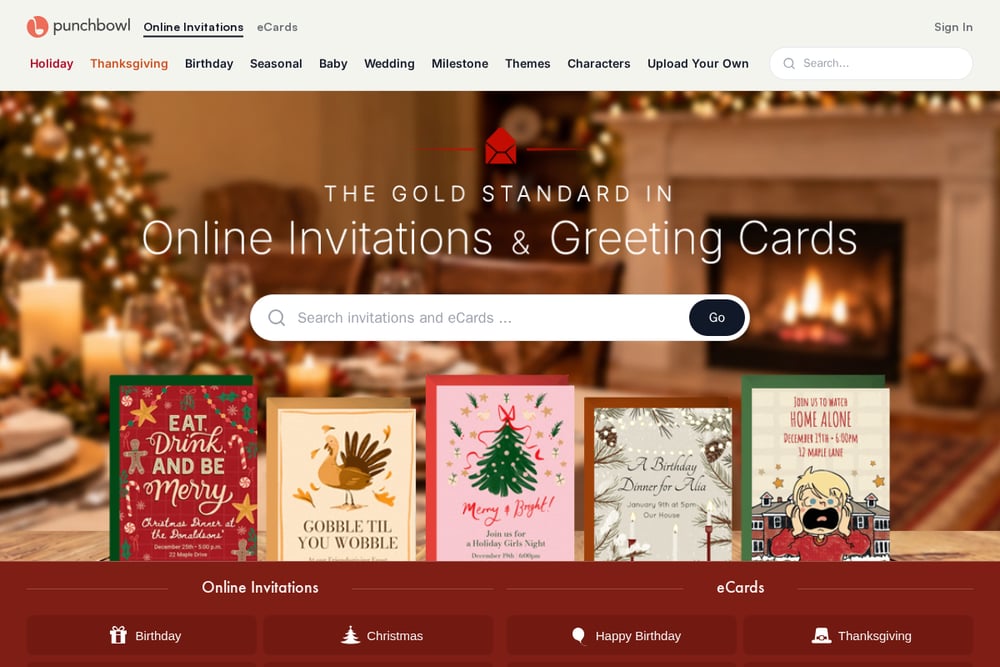 A screenshot of the Punchbowl website.
Punchbowl positions itself around free online invitations with RSVP, and it backs that up with a broad set of categories spanning holidays, birthdays, babies, weddings, and milestones. The platform leans into themed and character invitations, including venue-specific designs for kids' party spots, which makes it easy to match an invite to a party theme. Upload-your-own options are available when you want something custom. It is a practical pick for family events where you want a quick, recognizable invite with RSVP built in. You can see the categories at Punchbowl.
#5 Partiful
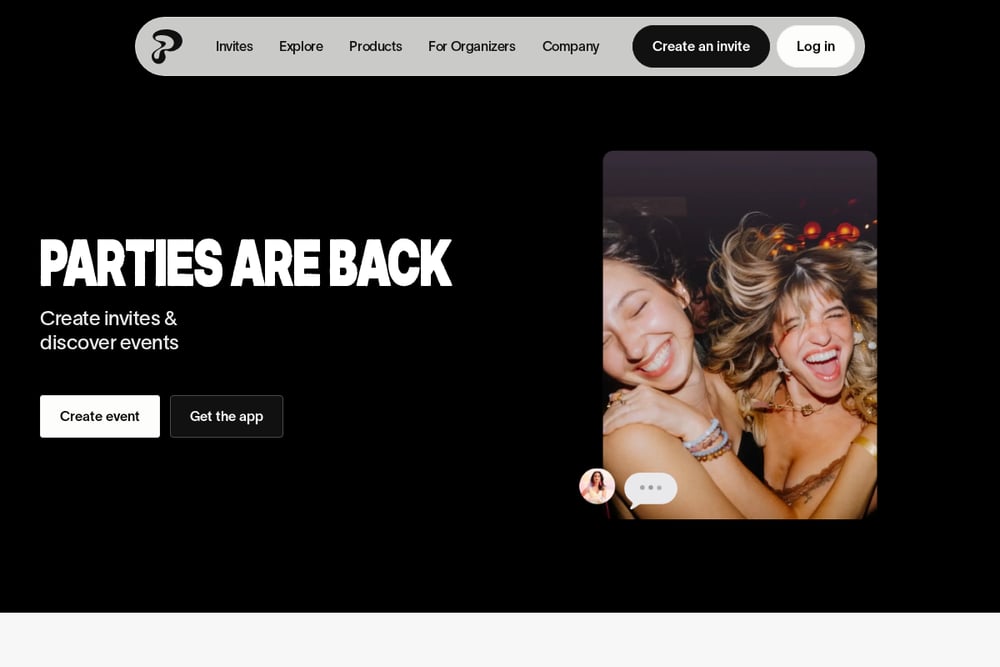 A screenshot of the Partiful website.
Partiful rethought the invitation as a social object, built for the group-chat generation. You create an invite in about 30 seconds, share one link, and guests RSVP without downloading an app. The platform also surfaces events happening nearby in cities like New York, Los Angeles, San Francisco, and Chicago, which blurs the line between invitation tool and social discovery. It is less about formal stationery and more about energy and momentum for casual parties. If your guest list lives on their phones and responds to vibes over formality, Partiful is the natural fit. You can create an invite at Partiful.
How to choose the right invitation platform
Start with the tone of your event. A wedding or formal shower calls for the stationery polish of Paperless Post, while a backyard birthday is better served by a fast, free tool. Next, decide how much design control you want. If you enjoy building from a blank canvas and adding stickers and frames, The Party Letter gives you room to play without a design degree. Consider your RSVP workflow too: if you need a private dashboard to track replies, look for a platform with a dedicated management link. Finally, check the free tier carefully. Watermarks, coin systems, and premium-only designs all affect the real cost of your invite.
Where automation fits into your event workflow
You can streamline the busywork around invitations without losing the personal touch. Use a template to lock in your design, then let the platform handle RSVP collection through a single shareable link so replies land in one place instead of your inbox. Set a reminder to check your RSVP dashboard a week before the event and send a gentle nudge to non-responders. For recurring events, save your design as a starting point and swap only the date and details next time. The Surprise Card format is a good example of automation enhancing rather than replacing the personal moment, since the reveal happens on its own once the guest enters the PIN.
The bottom line
There is no single right platform, only the right fit for your event. Paperless Post wins on polish, The Party Letter wins on creative flexibility and its standout Surprise Card, Evite wins on sheer catalog breadth, Punchbowl wins on themed family-friendly invites, and Partiful wins on speed and social energy. Match the tool to the tone of your celebration, and the invitation becomes one less thing to worry about.