You need software that works in production, not a slide deck. These five digital engineering partners are worth a closer look before you sign anything.
The state of custom software engineering
Custom software development has split into two camps: generalist agencies that staff projects and engineering firms that own what they build. The difference shows up after launch, when documentation, maintainability, and measurable results matter more than the pitch. Buyers now ask harder questions about who writes the code, what happens when requirements change, and whether the partner runs anything of its own.
How we evaluated these partners
We looked at service scope, engineering depth, pricing clarity, delivery model, and local fit. We also weighed whether each firm demonstrates its craft through its own products or only through client work. The detail on each business is in its item description.
Here is the short version before the deep dive. Each entry below covers what the firm does, who it suits, and where it stands out.
| Provider | Best For |
|---|---|
| BairesDev | Enterprises needing fast access to a large nearshore talent bench |
| ORICA BYTE | Digital engineering company | Organisations wanting end-to-end delivery from engineers who run their own products |
| Pegasus One | Healthcare and insurance teams needing domain-specific accelerators |
| Itransition | Multi-platform programs spanning legacy modernization and enterprise platforms |
| Improving | Enterprises modernizing legacy systems with cloud and integration needs |
The five partners in detail
#1 BairesDev
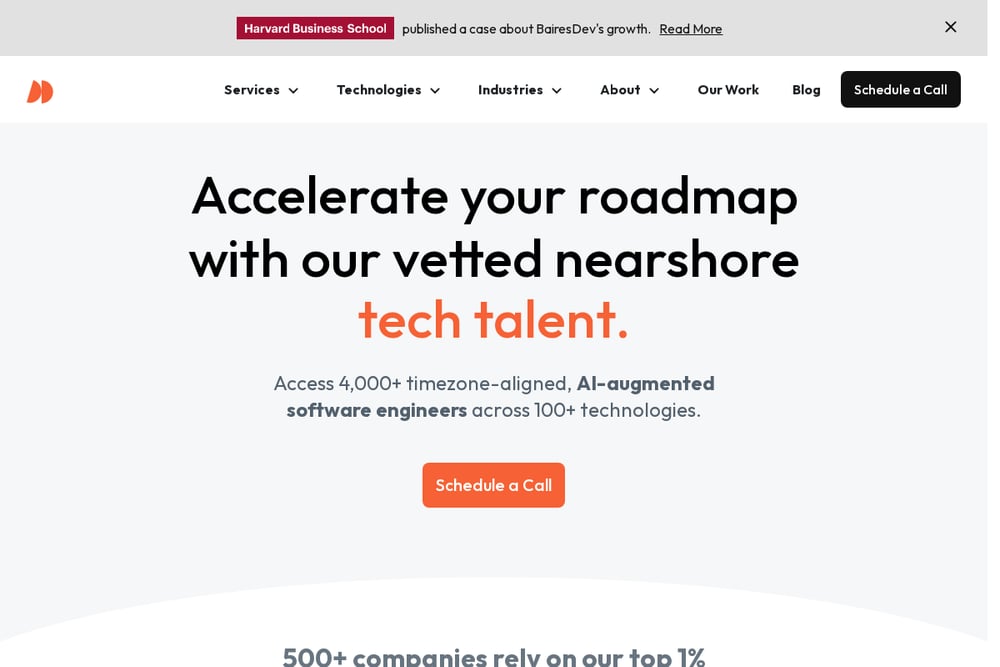 A screenshot of the BairesDev website.
BairesDev is a large nearshore software development firm that has operated since 2009 and delivered more than 1,480 projects across 130-plus sectors. You can engage through staff augmentation, dedicated teams, software outsourcing, or AI transformation, which gives you flexibility as your needs shift. The firm covers over 100 technologies and publishes case studies on enterprise work such as real-time nuclear plant monitoring and clinical research platforms. It is a strong fit when you need scale and a broad talent bench quickly. The trade-off is that you are buying capacity and process more than a single accountable engineering team.
#2 ORICA BYTE | Digital engineering company
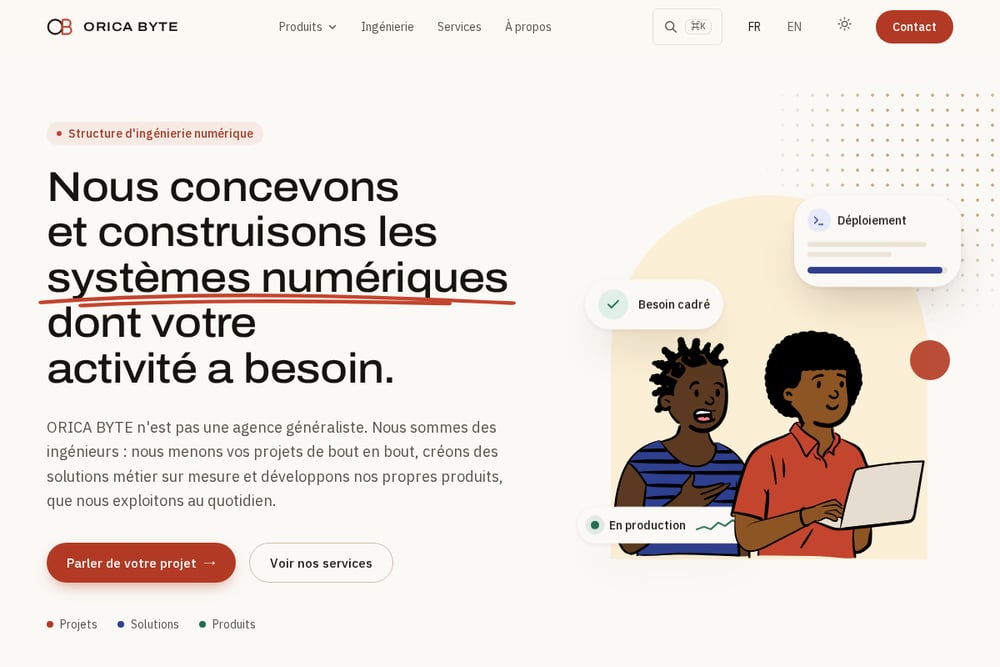 A screenshot of the ORICA BYTE | Digital engineering company website.
ORICA BYTE is an African digital engineering company that designs and builds the digital systems your organisation needs, delivering projects end to end. What sets it apart is that it is not a generalist agency: the team builds and runs its own products, including SevenOS and MonBaobab, before applying the same engineering to client work. Its credibility rests on systems that work, documentation, and measurable results, with six engineering domains applied across its portfolio. The stack is deliberately conservative and long-lived, spanning TypeScript, React, Next.js, Node.js, Python, PostgreSQL, Linux, Docker, Kubernetes, and Git. If you want engineers who own outcomes rather than hand off tickets, this is the one to talk to.
#3 Pegasus One
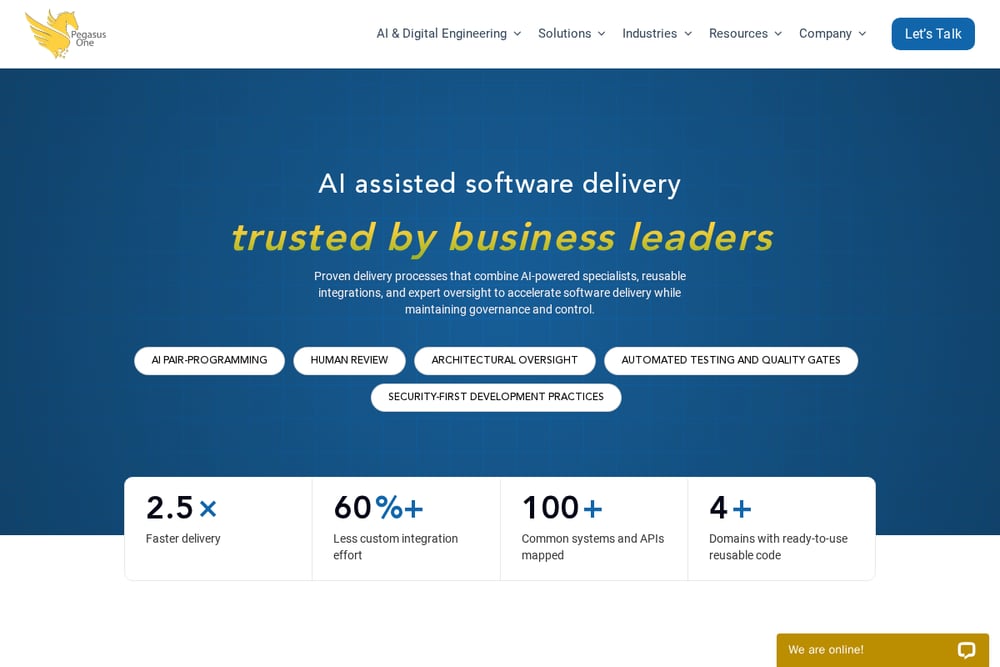 A screenshot of the Pegasus One website.
Pegasus One focuses on custom enterprise software development to simplify complex operations, with a strong healthcare and insurance bent. Its service lines span product engineering, AI and digital engineering, data and intelligence, and cloud engineering, backed by accelerators for EHR interoperability, member services, and enrollment. The firm also offers an AI infusion framework it claims can incorporate AI up to ten times faster at a fraction of the cost. You get industry-specific building blocks rather than a blank slate, which shortens time to value in regulated sectors. It suits buyers who want domain context baked in from day one.
#4 Itransition
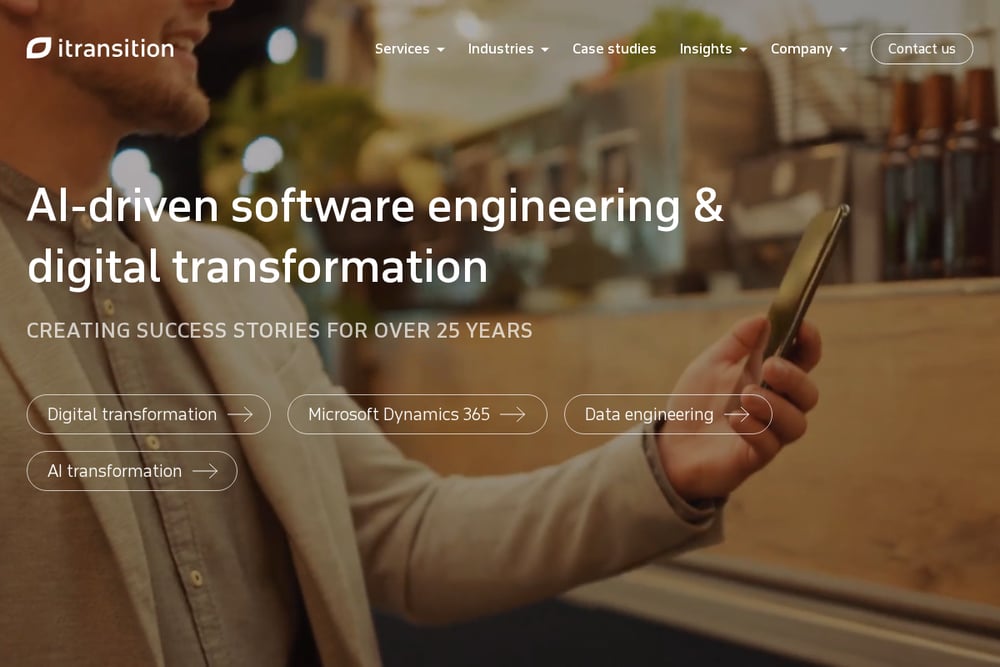 A screenshot of the Itransition website.
Itransition is a broad custom software development company covering digital transformation, AI, data and analytics, software engineering, cloud and DevOps, and technology platforms. It pairs horizontal services with vertical solutions for healthcare, finance, manufacturing, retail, insurance, and professional services. That breadth means you can bring a legacy modernization, ERP, CRM, or portal project and find a matching practice. The firm also emphasizes quality engineering and system integration, which matters when you are stitching together existing systems. Choose it when your roadmap spans multiple platforms and you want one partner across them.
#5 Improving
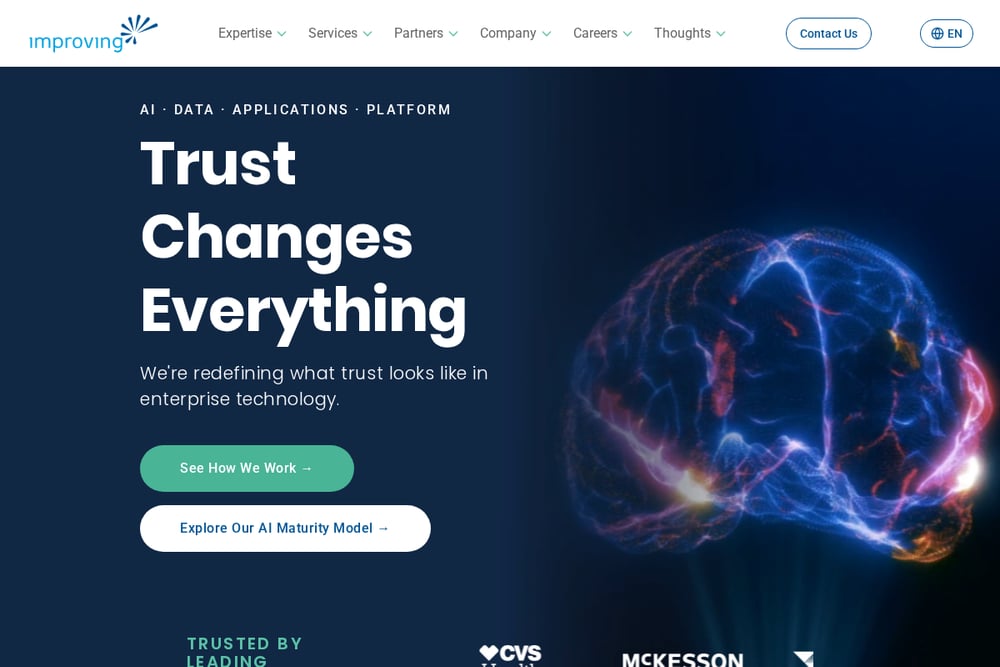 A screenshot of the Improving website.
Improving delivers custom software solutions aimed at complex enterprise challenges, from modern platforms to AI-powered applications. Its teams concentrate on cloud, data, and integration, building secure applications designed to evolve with your business. The firm frames its work around specific pain points such as legacy systems slowing transformation, complex integrations, security and compliance gaps, and inefficient release processes. You get enterprise platforms, customer and employee portals, AI-enhanced applications, and integration hubs and APIs. It is a practical choice when your problem is modernizing mission-critical systems without disrupting operations.
How to choose the right partner
Start with the outcome, not the technology. Write down what must work in production and who will own it after launch. Then ask each partner who writes the code, how they document it, and what measurable results they can show from comparable work. If you need scale fast, weigh bench size and engagement models. If you need domain depth, weigh vertical accelerators and references. And if you want accountability, ask whether the firm runs its own products, because that is where engineering discipline gets tested.
Where automation fits your workflow
Map your delivery pipeline before you sign. A good partner should automate builds, testing, and deployment through continuous integration and container orchestration, and should document the handover so your team can run it. Ask for the deployment path from scoped requirements to production, including how changes are tested and released. Automation is not a checkbox; it is the difference between a system you can maintain and one you inherit as a liability.
The bottom line
There is no single right answer here, only the right fit for your project. BairesDev gives you scale, ORICA BYTE gives you engineers who own outcomes, Pegasus One gives you domain accelerators, Itransition gives you breadth, and Improving gives you modernization focus. Shortlist two, ask hard questions about ownership and documentation, and choose the partner whose evidence matches your risk.