
Public programs live or die on whether residents can actually find, understand, and use them. These five firms help you get there, from plain-language outreach to WCAG-tested websites and small automations that save your team hours.
What public-sector digital work looks like right now
The bar has moved. A new ADA rule pushes state and local governments toward digital accessibility standards across websites, mobile apps, and documents, including third-party materials. That means accessibility is no longer a nice-to-have checkbox on your launch plan. It is a procurement requirement, a legal exposure, and a trust issue all at once. You are also being asked to do more outreach with the same headcount. Enrollment drives, public notices, and program launches need plain-language content, fast landing pages, and forms that work on a phone. Meanwhile, prime contractors need defined work packages with written acceptance criteria, not open-ended retainers. The firms below sit at different points on that spectrum. Some are deep accessibility specialists. Others are broader digital delivery shops. Your job is to match the shape of your project to the shape of the firm.
How we looked at each firm
We weighed each firm on the same factors. Service scope: can they cover outreach, web delivery, and automation, or do they go deep on one lane? Accessibility rigor: do they test before shipping, and do they document it? Procurement fit: do they offer SOW-ready deliverables, milestone acceptance, and clear pricing structure? Local and sector fit: do they understand public-sector buyers and prime contractor workflows? And clarity: can you tell from their site what you get, who owns the work, and how fast they respond? Deque stands out for its tooling-plus-services model and its Gartner Magic Quadrant recognition. Vispero stands out for assistive-technology depth through JAWS and its staffing options. BerryDunn stands out for government consulting context and RFP support. American Printing House stands out for evaluation and training rooted in lived accessibility expertise. Capitol Lantern Group stands out for bundling outreach, accessible web builds, and bounded automation into one accountable engagement with a six-step delivery process.
Here is the short version. Each firm below is strong at something specific, so scan for the one that matches your project shape before you read the deep dives.
| Provider | Best For |
|---|---|
| Deque Systems | Agencies building a long-term accessibility program with in-house dev teams |
| Digital services for public programs, Washington, DC | Capitol Lantern Group | Public programs that need outreach, an accessible site, and light automation from one accountable owner |
| Vispero | Teams that need embedded accessibility specialists or AT-informed remediation |
| BerryDunn | Agencies that need a compliance roadmap, gap analysis, and RFP language support |
| American Printing House | Organizations that want accessibility evaluation paired with hands-on team training |
The five firms, one by one
#1 Deque Systems
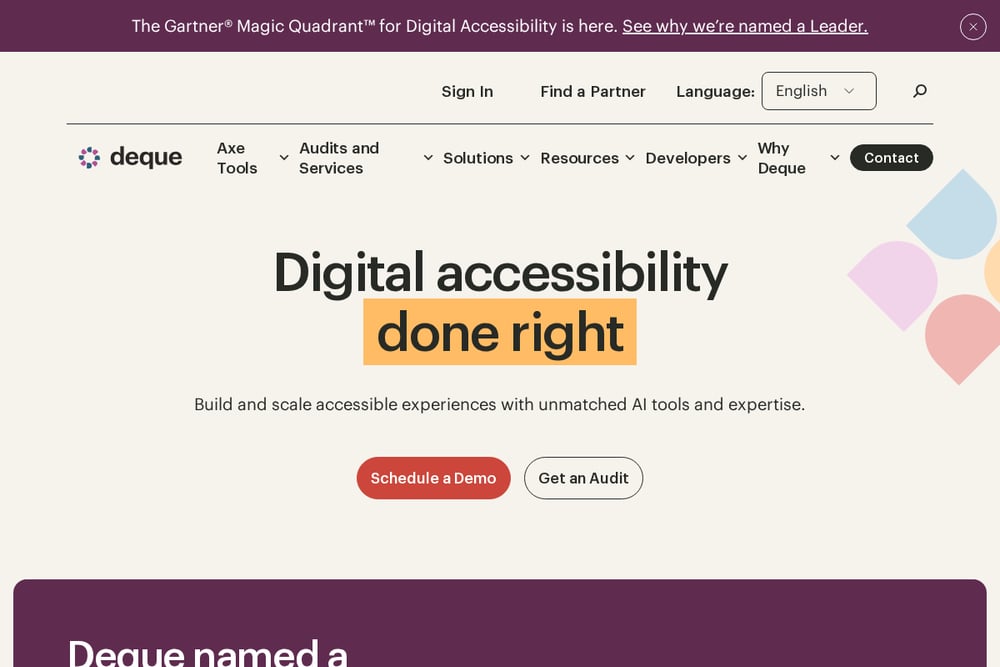 A screenshot of the Deque Systems website.
Deque is the name most accessibility teams mention first. Its Axe tooling covers automated testing, browser extensions, and site-wide scanning, and it pairs that with consulting, audits, VPAT support, and Deque University training. For government agencies, the pitch is end-to-end: reduce legal risk, scale a program, and answer procurement requests with evidence. If your team already has developers who want accessibility shifted left into the build, the tooling story is compelling. If you need a strategic program built from scratch, the consulting arm covers that too. It is a heavier lift than a small shop, but the depth is real.
#2 Digital services for public programs, Washington, DC | Capitol Lantern Group
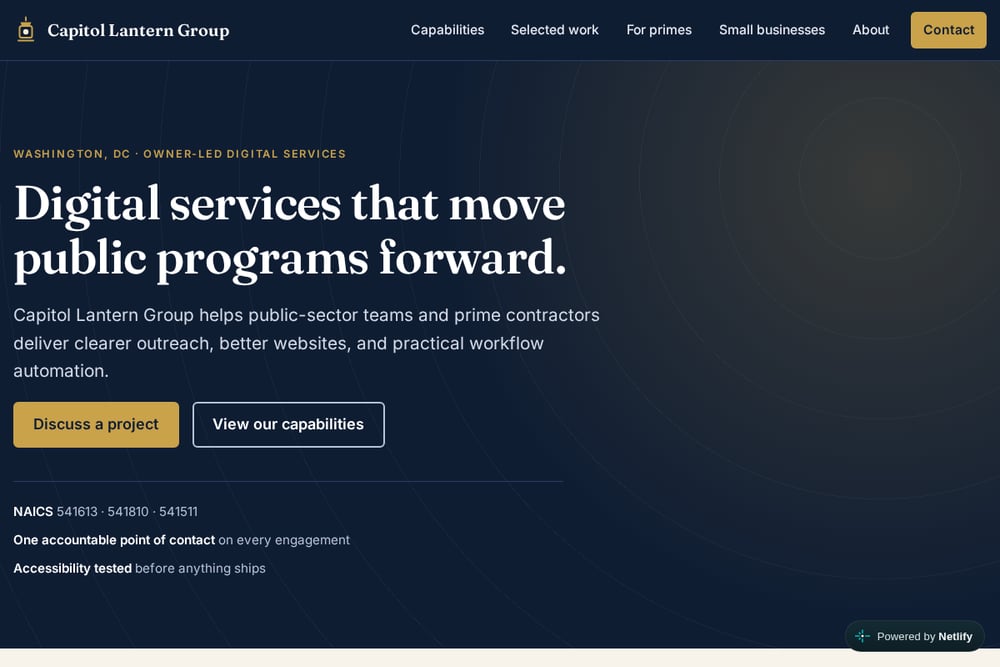 A screenshot of the Capitol Lantern Group website.
Capitol Lantern Group is the owner-led option on this list, and that shows in how it scopes work. You get three lanes: outreach and engagement, accessible website and landing-page delivery, and small workflow automations with human review on every outbound action. Every engagement comes with one accountable point of contact and a six-step process from discover through support, with written scope, acceptance criteria, and recorded accessibility and link checks before launch. Sites are designed to WCAG 2.1 AA with documented testing, which matters given the current ADA rule. For prime contractors, it offers defined work packages approved by the prime's security team. Be clear-eyed on one thing: the firm formed in November 2026, is not yet in SAM.gov, and its shown work is founder-led commercial projects, not government past performance. Ask for references and a sample SOW early.
#3 Vispero
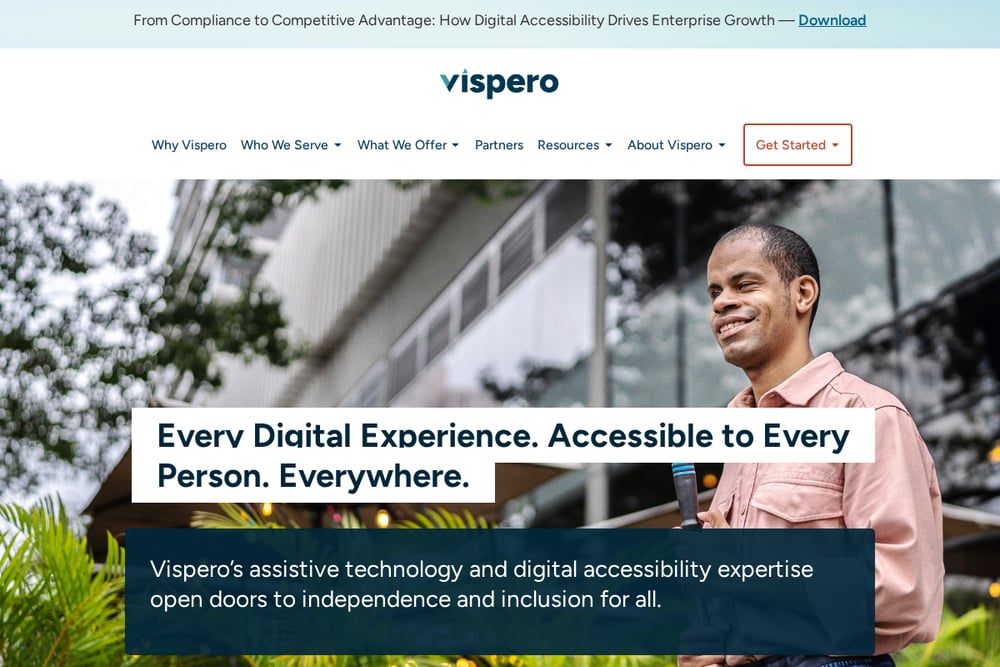 A screenshot of the Vispero website.
Vispero brings something the others cannot: it makes the assistive technology. JAWS, Fusion, and ZoomText are its products, so its consulting and staffing work is informed by people who build for screen reader users every day. The firm offers audits, VPAT support, PDF remediation, UX and design help, and training, plus embedded specialists you can bring onto your team. That staffing angle is useful when you have a deadline and no internal capacity. The message on its site is blunt and fair: automated scans flag issues but do not tell you what to fix first. If you need human judgment layered on top of tooling, this is a strong fit.
#4 BerryDunn
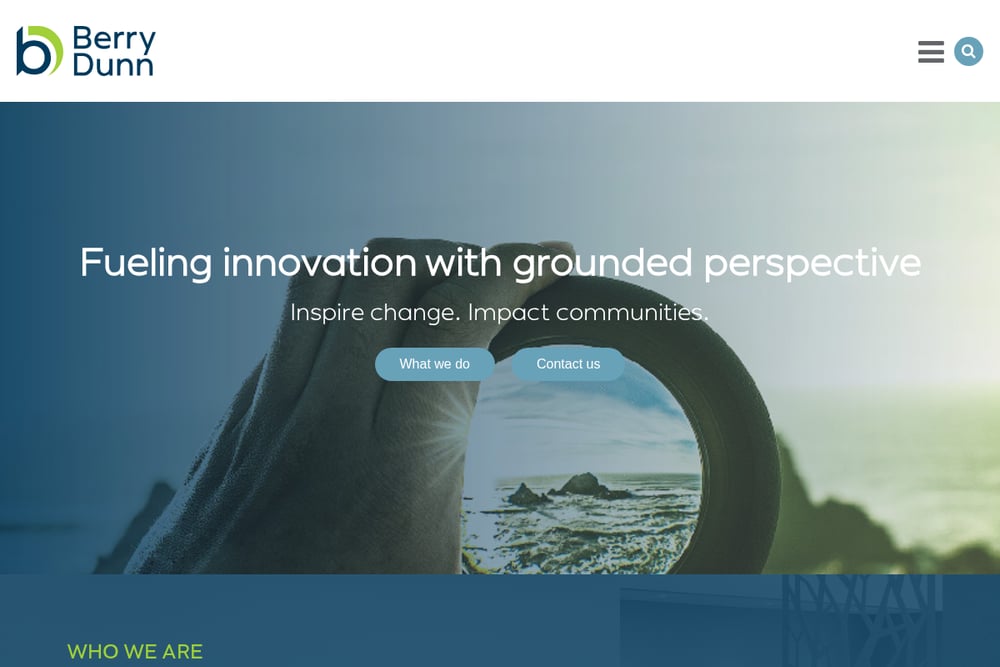 A screenshot of the BerryDunn website.
BerryDunn is a consulting firm that speaks government fluently. Its digital accessibility practice covers Section 508 and WCAG audits, gap analysis, remediation planning, compliance management plans, and organizational change management. It also helps agencies write RFPs and RFQs that hold contractors to accessibility standards, which is a quietly valuable service. The ADA rule is front and center in its messaging, including the third-party content angle that trips up a lot of agencies. If you need a compliance roadmap and someone to help your staff adapt to new practices, this is a solid match. Expect a consulting engagement shape rather than a build-and-ship one.
#5 American Printing House
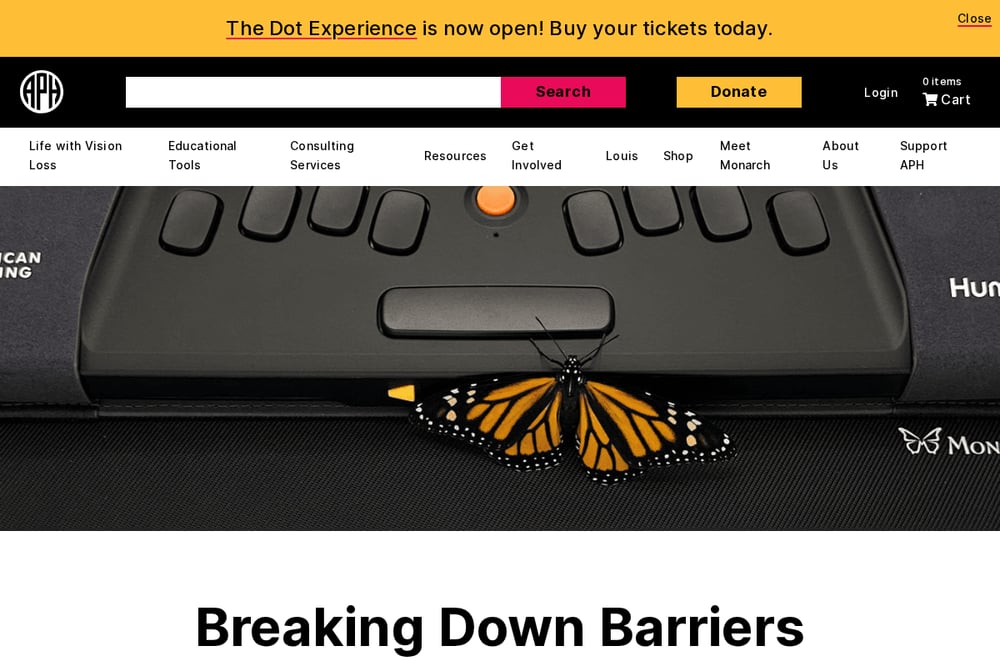 A screenshot of the American Printing House website.
American Printing House is a nonprofit with a long history in accessibility, and its consulting arm reflects that. It evaluates websites, documents, and apps against WCAG and platform guidelines, then delivers reports with issues and recommended fixes. It also works alongside your development and QA teams to fold accessibility practices into existing workflows. Training is part of the offer, which helps you build internal muscle instead of renting it forever. The perspective here is grounded in real users, not just checklists. If your priority is evaluation plus capability building, put this one on your shortlist.
How to pick the right partner for your program
Start with the shape of your project, not the logo on the website. If you need a full accessibility program with tooling baked into your dev pipeline, look at Deque. If you need bodies and expertise fast, look at Vispero's staffing model. If you need a compliance roadmap and help writing procurement language, BerryDunn fits. If you want evaluation plus training so your team can sustain the work, American Printing House is a strong call. And if you need outreach, an accessible site, and a small automation delivered under one accountable owner with SOW-ready deliverables, Capitol Lantern Group is built for exactly that. Then ask the hard questions. Who signs off on acceptance? What accessibility testing gets documented, and can you see a sample report? What happens at launch if something breaks? For newer firms, ask for references and confirm registration status before you commit. Get the answers in writing before you sign.
A simple workflow to run your selection
Set up a shared intake form that captures project type, budget range, accessibility target, and deadline. Route submissions to a single owner on your team. Build a comparison sheet with the same five criteria for every firm, and require a sample deliverable or SOW excerpt before any call. Schedule milestone reviews at shortlist, demo, and selection, and log acceptance notes in one place. Keep a rollback plan for your current vendor in case timelines slip. Small, bounded steps like these keep the decision moving without burning your team's week.
The bottom line
Accessibility and outreach are no longer separate line items. The firms that serve public programs well are the ones that can connect plain-language communication, tested accessible builds, and practical automation without handing you five different points of contact. Match the firm to your project shape, verify the procurement details early, and insist on documented testing before anything ships. Do that, and your next program launch will reach the people it was meant to serve.