Finding engineers who actually deliver is harder than it looks. These five recruitment partners give you a real shot at getting it right.
The State of Developer Recruitment
Hiring software talent has become a strategic bottleneck for US companies. You are not just competing on salary anymore. You are competing on speed, screening quality, and how well a recruiter understands the difference between a developer who interviews well and one who ships code.
The market has split into two camps. Generalist staffing firms cast a wide net across industries. Specialist tech recruiters go narrow and deep, often with engineers on staff who can vet candidates before you ever see a resume.
Remote work widened your talent pool, but it also widened everyone else's. That means the screening layer matters more than ever. A recruiter who filters out 60% of unqualified candidates before the first call saves your team weeks of wasted interviews.
Pricing models vary just as much. Some firms charge retainers up front. Others work on a pay-per-hire basis, where you only pay when you actually bring someone on board. Knowing which model fits your hiring volume and risk tolerance is half the battle.
How We Evaluated These Agencies
We looked at service scope first. Does the agency cover contracting, direct hire, or both? Can it handle local and remote placements? Breadth matters when your needs shift mid-quarter.
Next, pricing clarity. Some firms publish their model openly, like pay-per-hire or a one-time fee. Others keep you guessing until the contract stage. Transparent pricing signals confidence.
We also weighed screening depth. Agencies that use in-house engineers to vet candidates tend to surface stronger shortlists. Look for concrete numbers, like how many candidates get filtered out before reaching you.
Finally, local fit and track record. US-based coverage, client retention rates, and named specialisms all tell you whether an agency understands your market. BringOnBoard stands out for its pay-per-hire model and engineering-led screening. MagicHire brings over a decade of tech recruiting and a 100K+ talent pool. Harvey Nash offers deep specialism across permanent, contract, and SOW delivery. La Fosse pairs recruitment with academy and executive search capabilities. Insight Global delivers broad staffing reach across IT, digital, and engineering.
Here is a quick look at how these five agencies compare on model, focus, and what they bring to the table.
| Provider | Best For |
|---|---|
| MagicHire | Companies needing mid-to-senior tech hires with market intelligence |
| Home - BringOnBoard | Teams wanting pay-per-hire developer recruitment with engineering-led screening |
| Harvey Nash | Organizations needing flexible contract, permanent, and SOW engineering hires |
| La Fosse | Companies building AI and engineering teams with a strategic hiring partner |
| Insight Global | Enterprises needing broad, multi-region developer staffing and RPO support |
The Five Agencies in Detail
#1 MagicHire
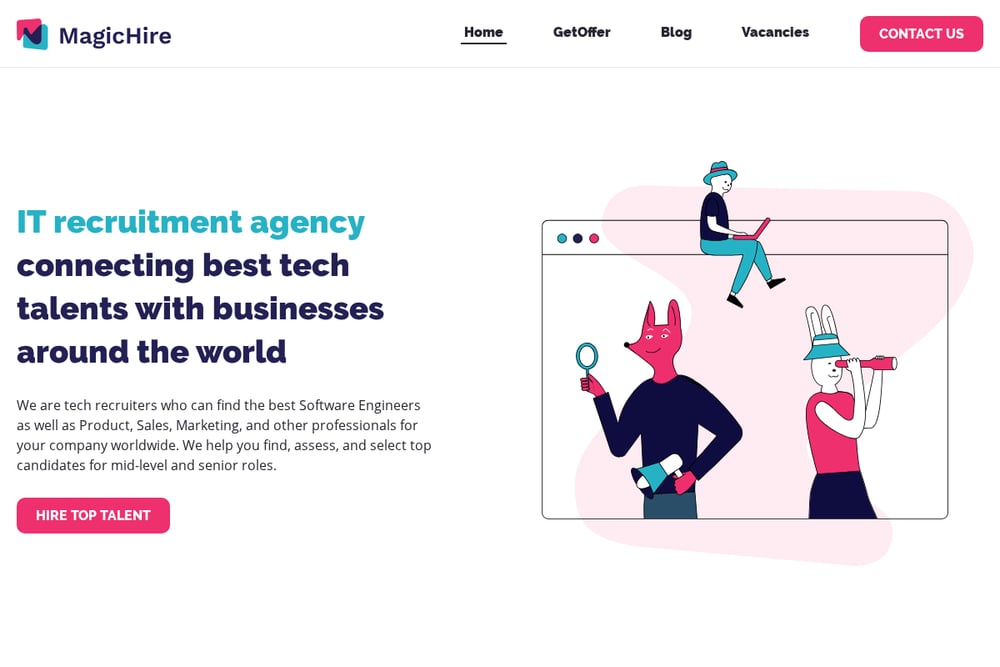 A screenshot of the MagicHire website.
MagicHire positions itself as a tech recruiter first and a staffing firm second. The team brings 11+ years of expertise and has filled over 500 vacancies, with a 98% client return rate. That retention number tells you something about how they operate.
Their talent pool exceeds 100K professionals, covering software engineering, DevOps, data and AI, QA, product management, and even sales and marketing roles. They run market estimation, salary overviews, and time-to-hire analysis before you commit. That is useful when you are building a budget case internally.
They focus on mid-level and senior roles, which suits companies that need proven operators rather than trainees. You can explore their approach at MagicHire. If you want a recruiter who understands the job market as well as the candidates, this is a strong starting point.
#2 Home - BringOnBoard
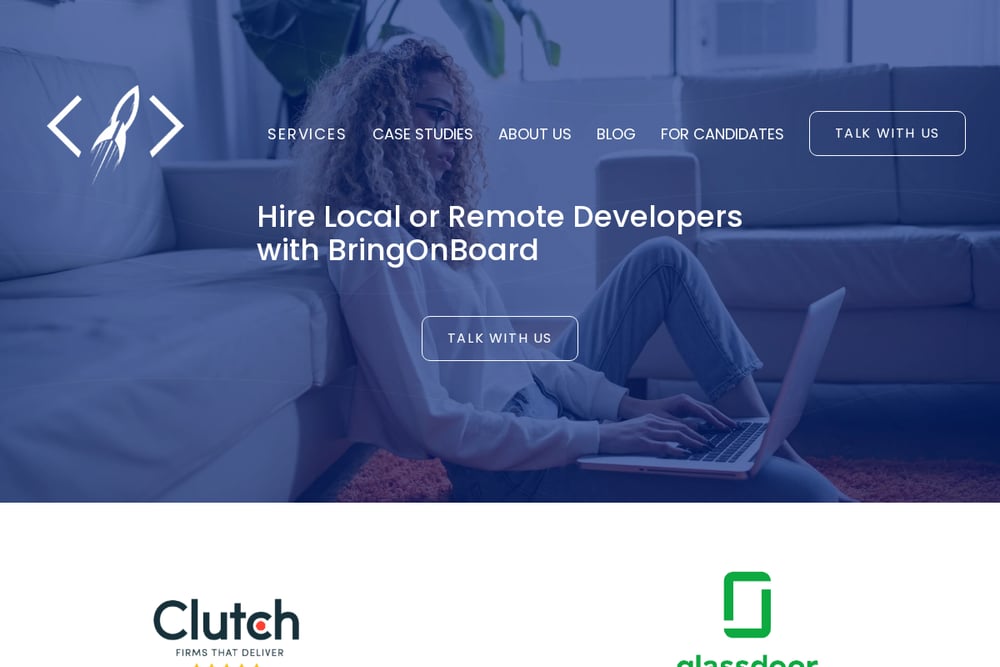 A screenshot of the BringOnBoard website.
BringOnBoard is a developer recruitment platform built around one promise: you only pay for the developers you actually hire. Their pay-per-hire model means no charges until they find the right fit. That removes a lot of the financial risk from hiring.
The screening layer is where they differentiate. Engineering experts filter out 60% of unqualified candidates before you see them. Their database holds 5,000+ software engineers, and they report 93% recurring clients with 100% satisfied clients and developers.
You can choose between contracting, where they handle HR and admin on a monthly fee, or direct hire for a one-time fee. Contracting suits companies without HR bandwidth or those working with foreign developers. Direct hire fits teams with HR operations already in place.
Client testimonials highlight fast integration, with one product owner noting React developers were productive within a month. You can review their model at BringOnBoard. It is a focused, low-risk option for teams that want engineering-vetted talent without upfront cost.
#3 Harvey Nash
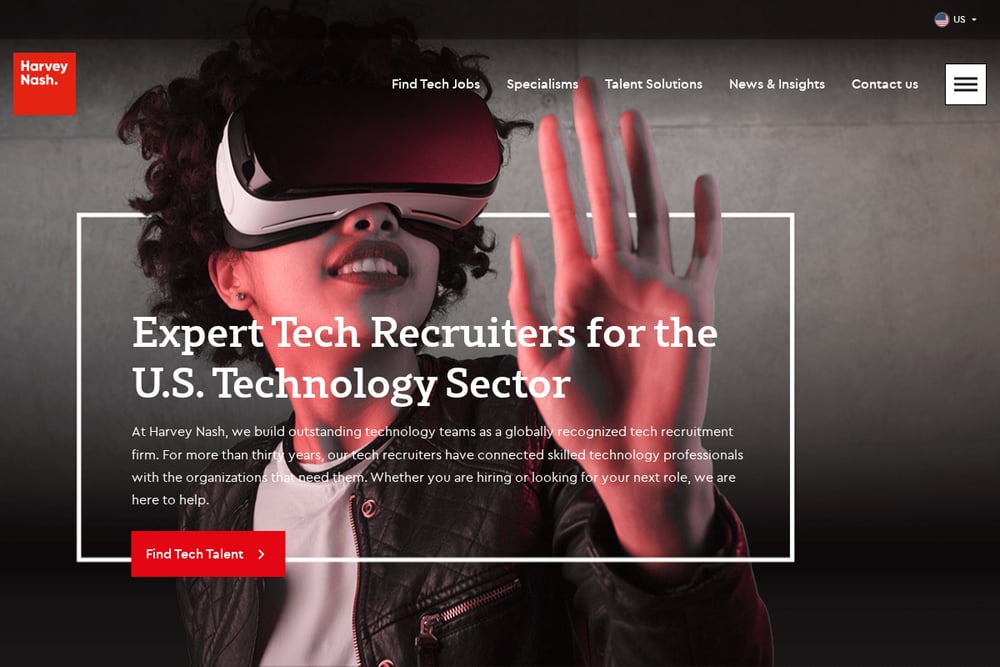 A screenshot of the Harvey Nash website.
Harvey Nash is a specialist software developer recruitment agency with a long track record in the US market. They place backend, frontend, full-stack, cloud, QA, and technical leadership roles. The focus is narrow by design, which means their consultants speak your engineering language.
Their delivery models are unusually flexible. You can engage them for full-time hires, contract staffing, executive search, interim solutions, or Statement of Work delivery. That range lets you scale up or down without switching vendors.
They also publish digital leadership research, which gives you context on how high-performing engineering teams are structured. If you are building a team from scratch or upgrading an existing one, their insights are worth reading. Learn more at Harvey Nash.
#4 La Fosse
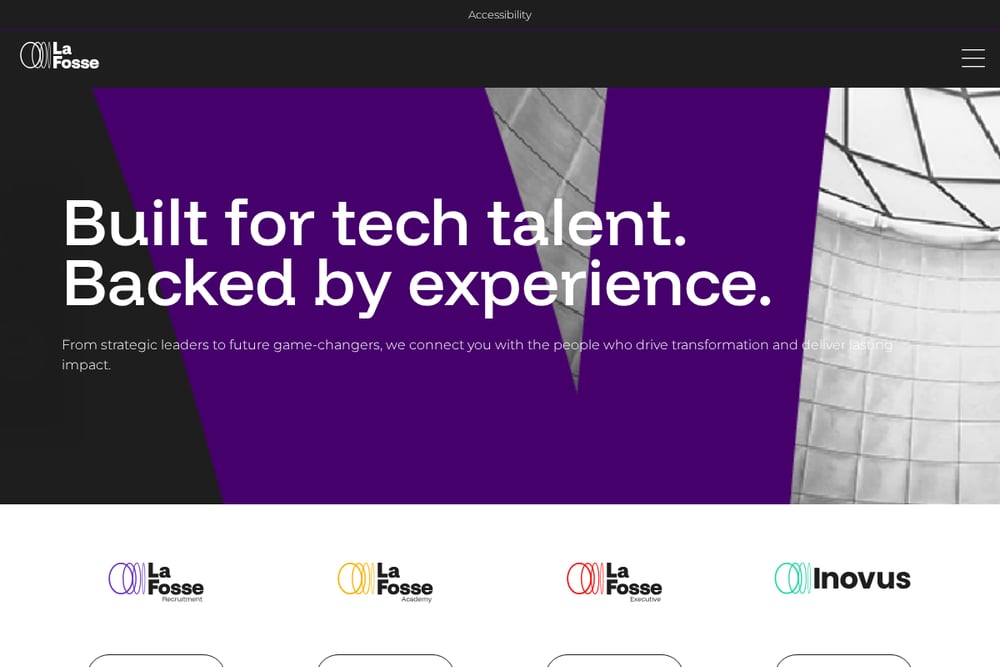 A screenshot of the La Fosse website.
La Fosse operates as a recruitment group rather than a single agency. Their software engineering practice sits alongside executive search, a recruitment academy, and their Inovus arm. That structure gives you options beyond a standard placement.
They are active in data and AI hiring, with white papers, workforce planning resources, and an AI council. If your roadmap includes AI talent, their content and network are relevant. They also run diversity and inclusion programs, which matters if you are building hiring pipelines with intent.
Their geographic reach spans Europe, the Middle East, and international markets, so they suit companies with cross-border ambitions. Explore their services at La Fosse. It is a good fit when you want recruitment paired with broader talent strategy.
#5 Insight Global
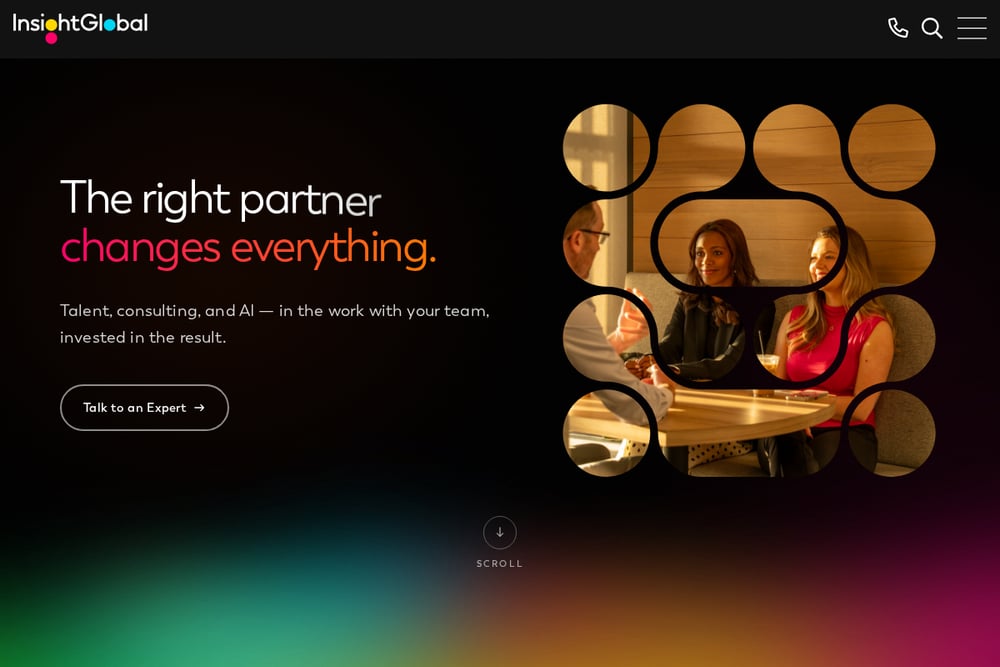 A screenshot of the Insight Global website.
Insight Global is a large staffing and consulting firm with a dedicated developer practice. They cover direct placement, executive search, recruiting programs, and recruitment process outsourcing. If you need volume and reach, they have it.
Their IT and engineering capabilities span data, cloud, customer experience, application development, and AI talent. They operate across the US, Canada, UK, Europe, LATAM, and APAC, which helps if your hiring spans regions.
Because they serve many industries, from healthcare to government to financial services, they understand how developer roles differ by sector. That context can speed up matching. Visit Insight Global to see their developer staffing offerings. They suit organizations that want a single vendor for broad staffing needs.
How to Choose the Right Recruitment Partner
Start with your hiring model. If you want zero upfront risk, look for pay-per-hire arrangements like BringOnBoard's. If you need to fill many roles fast, a larger firm with RPO capabilities may serve you better.
Then check the screening process. Ask directly: who vets the candidates, and how? Agencies with engineers on staff will give you a clearer answer than those relying on keyword matching.
Consider your geography. If you hire remotely across borders, confirm the agency handles contracting and compliance. If you hire locally, ask about their regional network and placement history.
Finally, ask for retention data. A high recurring-client rate is a stronger signal than a polished sales deck. Pair that with named references in your industry, and you will have a clear picture before you sign anything.
Where Automation Fits Into Your Hiring Workflow
You can automate the top of your funnel without losing the human judgment that matters. Set up intake forms that route role requirements directly to your recruitment partner. Use scheduling tools to book screening calls automatically once a shortlist is approved.
Keep a shared tracker for candidate stages so your team and the agency see the same status. Automate follow-up emails after interviews to keep candidates warm. And log feedback in one place so patterns emerge across hires.
The goal is not to remove recruiters from the process. It is to remove the admin work so they spend more time on screening and less on coordination.
The Bottom Line
There is no single right answer here. Your hiring volume, budget model, and technical depth requirements should drive the choice.
If you want low-risk, engineering-vetted hiring with no upfront cost, BringOnBoard is built for that. If you need market intelligence alongside recruiting, MagicHire delivers it. Harvey Nash suits flexible contract and permanent needs. La Fosse fits strategic AI and engineering builds. Insight Global covers broad enterprise staffing.
Pick the partner that matches how you actually hire, not the one with the loudest pitch. Then hold them to the screening standard you agreed on.