Stuck making minimum payments and watching your balance barely move? These five resources give you a real plan instead of another guilt trip.
Where debt payoff help actually stands
Credit card minimums are designed to keep balances alive for years, and most people never see the math until they sit down and look. That's why the debt payoff space has filled up with calculators, spreadsheets, printable trackers, and step-by-step checklists. The good ones do the same thing: they turn a scary pile of balances into a clear next action. The weak ones bury you in numbers or push a paid program before you've understood your own situation.
How we looked at each resource
We weighed four things: how clearly each resource explains its pricing (free should mean free), how much of the payoff process it actually covers, how easy the first step is for someone who is already overwhelmed, and whether the guidance stays educational rather than salesy. We also considered how well each one handles the specific problem of minimum payments.
Here's the short version before the details. Each resource below approaches debt payoff from a different angle, so the right pick depends on whether you want a guided week, a spreadsheet, a calculator, or human counseling.
| Provider | Best For |
|---|---|
| Happy Giraffe | Spreadsheet lovers who want a self-managed plan |
| 7-Day Debt Reset Checklist | GroundedCents | Anyone paralyzed by minimum payments who needs a first step |
| GreenPath | Seeing the true cost of minimum payments |
| Ramsey Solutions | People who want a structured, opinionated plan |
| Credit Counselling Society | Printable and app-based progress tracking |
The five resources, one by one
#1 Happy Giraffe
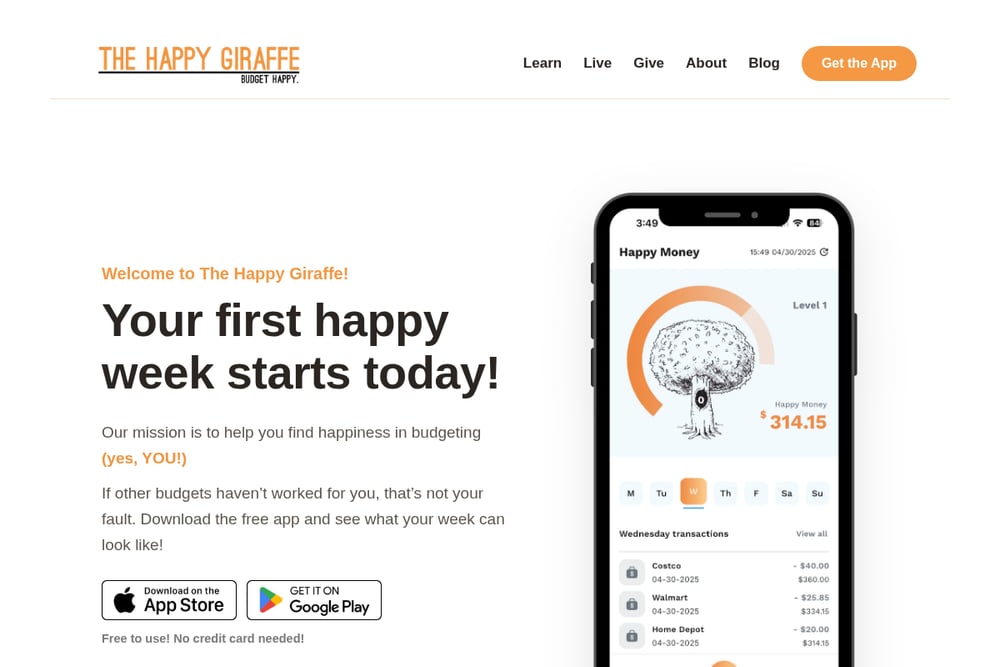 A screenshot of the Happy Giraffe website.
Happy Giraffe offers a free debt payoff spreadsheet that goes beyond listing balances. You enter your debts, pick Snowball or Avalanche, and the sheet lays out your payoff steps in order so you always know what to focus on next. Progress tracking is built into the same file, which keeps momentum visible month to month. There's also a separate tab with the full math if you want to see how the plan works. It's a strong fit if you like working in a spreadsheet and want a plan you can update yourself.
#2 7-Day Debt Reset Checklist | GroundedCents
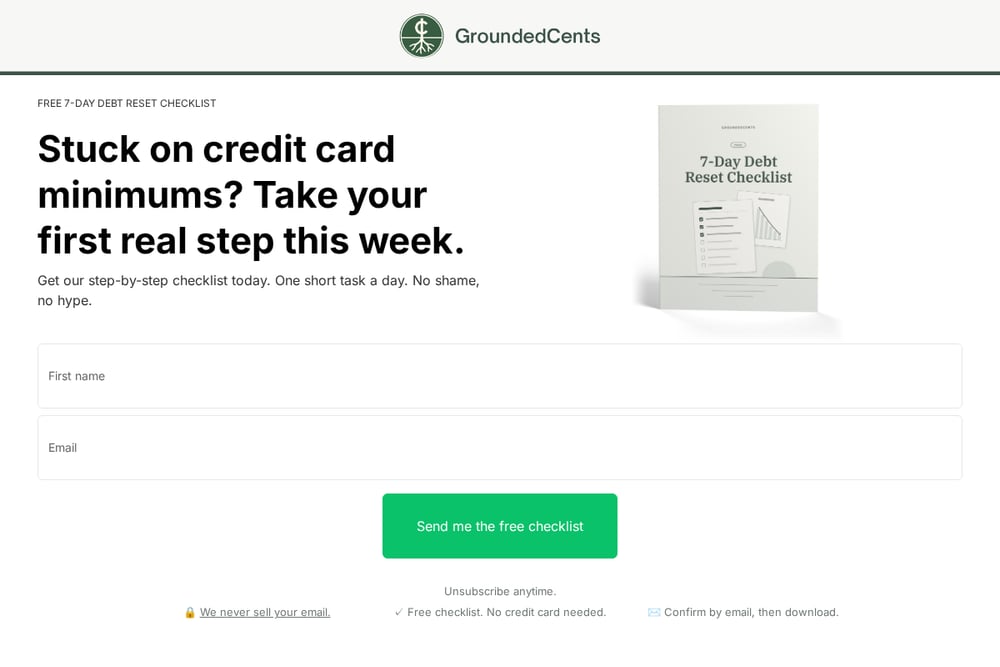 A screenshot of the 7-Day Debt Reset Checklist | GroundedCents website.
GroundedCents takes a different approach: instead of handing you a calculator, it walks you through one short task a day for a week. The free checklist has you gather every card into one table so you know exactly what you owe, then shows your real payoff timeline if you only pay the minimum. From there you get a calm plan for which card to tackle first and a four-step call script for asking your issuer for a lower APR. The tone is deliberately plain, with no shame and no hype, and the checklist is free with no credit card required. It's the gentlest on-ramp here for someone who has been avoiding their statements.
#3 GreenPath
 A screenshot of the GreenPath website.
GreenPath is a nonprofit credit counseling organization with a deep resource library, including a credit card minimum payment calculator that answers the question most people are afraid to ask. It shows what happens when you pay only the minimum, why interest keeps building even when you pay on time, and how lenders calculate that minimum in the first place. Beyond the calculator, GreenPath offers free debt counseling and a debt management program if you decide you want human help. The calculator is a good reality check before you commit to any payoff strategy.
#4 Ramsey Solutions
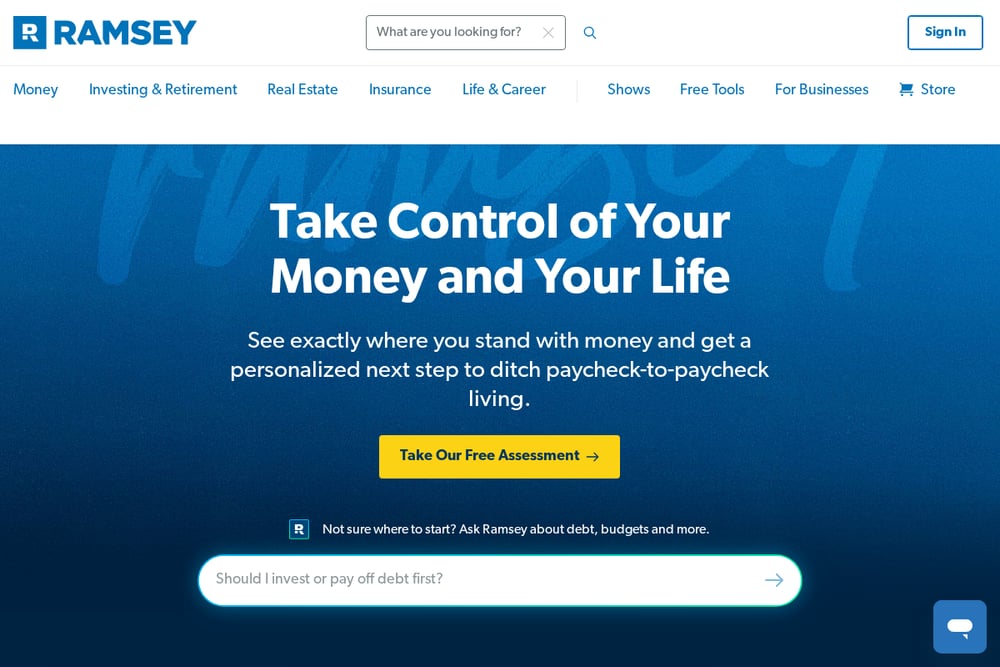 A screenshot of the Ramsey Solutions website.
Ramsey Solutions brings a well-known voice and a free debt payoff calculator built around the debt snowball method. You plug in your balances and rates, and it maps out the order to pay things off and how long the whole journey takes. The broader site adds budgeting tools, articles, and a structured seven-step plan for people who want a framework to follow. It's opinionated, which helps if you want someone to just tell you what to do next. If you prefer a neutral tone, look elsewhere, but the calculator itself is quick and useful.
#5 Credit Counselling Society
 A screenshot of the Credit Counselling Society website.
The Credit Counselling Society offers three free ways to track debt: a printable PDF, an Excel or Google Sheets template, and an online app. The printable version includes a debt list, a payment log, and a payoff tracker you color in as balances drop, which is surprisingly motivating. Everything is free with no sign-up, and the organization is a nonprofit with counseling services behind the tools if you need more support. It's a solid pick if you like a physical tracker on the fridge or want options across formats.
Picking the one you'll actually use
Start with your temperament, not the tool. If opening your statements makes your stomach drop, pick the guided option that gives you one small task at a time. If you love a spreadsheet and want to model scenarios, go with a template you can edit. If you mainly need to understand why minimums keep you stuck, run the numbers through a calculator first. And if you want a person in your corner, choose the nonprofit that offers counseling alongside its free tools. The right resource is the one you'll open again next week.
Put your payoff on autopilot
Once you've picked a plan, automate the boring parts. Set autopay for at least the minimum on every card so you never miss a due date, then schedule a recurring calendar reminder for the one extra payment your plan calls for. Keep your debt table in one place and update it on the same day each month so your payoff timeline stays honest. If you asked for a lower APR, log the follow-up date so you actually check back. Small recurring actions beat one heroic month every time.
The bottom line
Minimum payments are a treadmill, but you don't have to stay on it. Happy Giraffe gives spreadsheet people a real plan, GroundedCents gives overwhelmed people a gentle first week, GreenPath shows you the true cost of minimums, Ramsey offers a structured path, and the Credit Counselling Society covers printable and app tracking. Pick one this week and take the first step. That's the whole trick.