
When a tense moment unfolds, your words can either calm the storm or make it worse. These five providers give first responders the communication tools to handle crisis with confidence.
The Growing Demand for De-Escalation Skills
First responders face more pressure than ever to resolve conflicts without force. Agencies are investing in verbal de-escalation and crisis communication training to improve outcomes and rebuild community trust. The market now offers a mix of in-person workshops, online courses, and train-the-trainer programs. You can choose from specialized mental health modules, instructor certifications, and book-based curricula. This roundup highlights five providers that stand out for their practical approach and clear pricing.
How We Evaluated These Providers
We looked at service scope, pricing transparency, delivery format, and how well each program fits the needs of first responder teams. Phillip Antony offers private cohort workshops with published flat rates and a companion book. Hanrahan Consulting provides a state-approved mental health de-escalation course with both in-person and on-demand options. Verbal Judo brings decades of tactical communication training and a range of course formats. Force Science emphasizes evidence-based human performance and instructor certification. Dolan Consulting Group delivers scalable online and in-person verbal conflict management with tiered pricing. Each provider has strengths that may suit different agency sizes and training goals.
Here is a quick comparison of the five providers, including their primary focus and best-fit audience.
| Provider | Best For |
|---|---|
| Hanrahan Consulting, LLC | Agencies seeking specialized mental health crisis training |
| De-escalation Workshops | Phillip Antony | Teams wanting a book-based, private cohort experience |
| Verbal Judo | Departments wanting a legacy verbal communication system |
| Force Science | Agencies building in-house instructor capacity |
| Dolan Consulting Group | Large agencies needing cost-effective bulk training |
A Closer Look at Each Provider
#1 Hanrahan Consulting, LLC
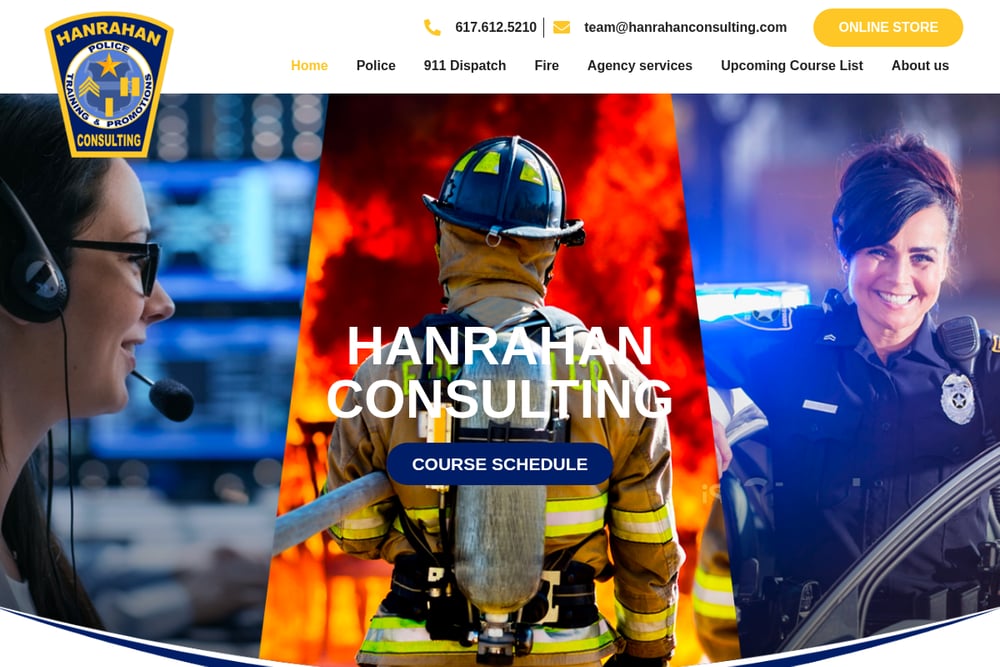 A screenshot of the Hanrahan Consulting, LLC website.
Hanrahan Consulting focuses on de-escalation for mental health calls, a critical niche for first responders. Their course covers understanding mental illness, verbal and non-verbal communication, and alternative tools to prevent physical intervention. It is state 911 approved and available both in-person and on-demand. With a fee of $225 for in-person and $195 for on-demand, it is an accessible option for individual officers or small teams. The curriculum includes real-life scenarios and information on mental health laws and follow-up services.
#2 De-escalation Workshops | Phillip Antony
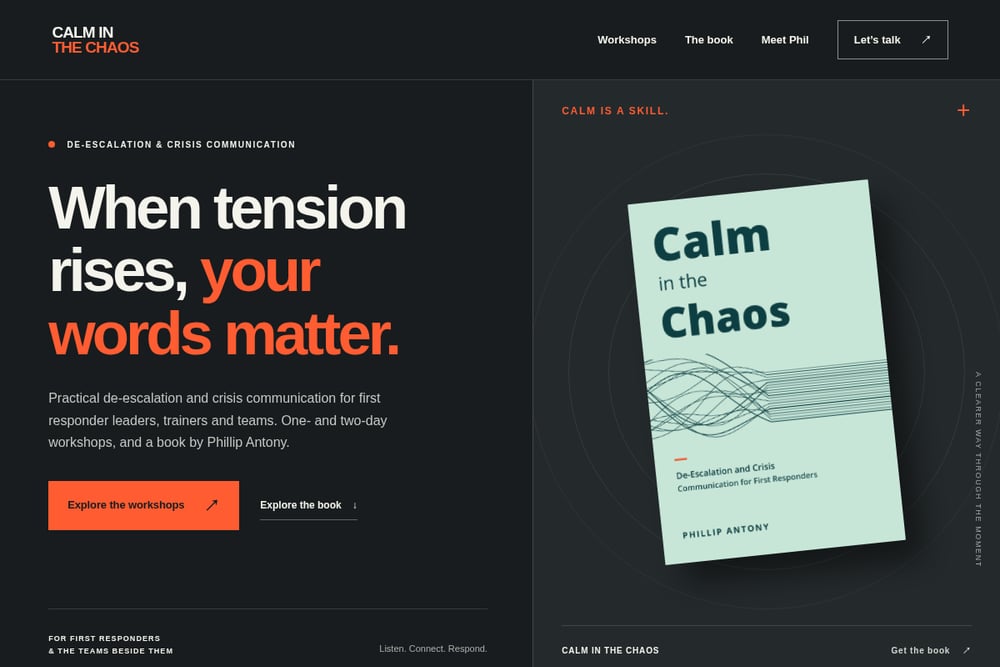 A screenshot of the De-escalation Workshops | Phillip Antony website.
Phillip Antony offers private agency workshops built around his book Calm in the Chaos. The one-day Foundation Workshop costs $5,175 USD for up to 24 participants and covers active listening, rapport, boundaries, and team handoffs. The two-day Practice Intensive at $8,625 USD adds coached practice and scenario adaptation. Both formats include demonstrations, small-group practice, and a next-shift plan. You can explore the workshops and the book directly on the site.
#3 Verbal Judo
 A screenshot of the Verbal Judo website.
Verbal Judo is a long-established name in tactical communication training. Their de-escalation courses for police emphasize presence, listening, and slowing down encounters to reduce conflict. They offer in-person and webinar options, plus instructor certification and one-on-one recertification. The curriculum is rooted in the philosophy of redirecting behavior with words rather than force. It is a solid choice for agencies looking for a proven, widely recognized program.
#4 Force Science
 A screenshot of the Force Science website.
Force Science takes an evidence-based approach, merging communication with rapid behavioral assessment and tactical decision-making. Their Realistic De-Escalation Instructor Course is designed for law enforcement and public safety professionals who will train others. The program is built on human performance research and offers in-person and online formats. It is ideal for agencies that want to develop internal instructors. The focus on science and decision-making under stress sets it apart.
#5 Dolan Consulting Group
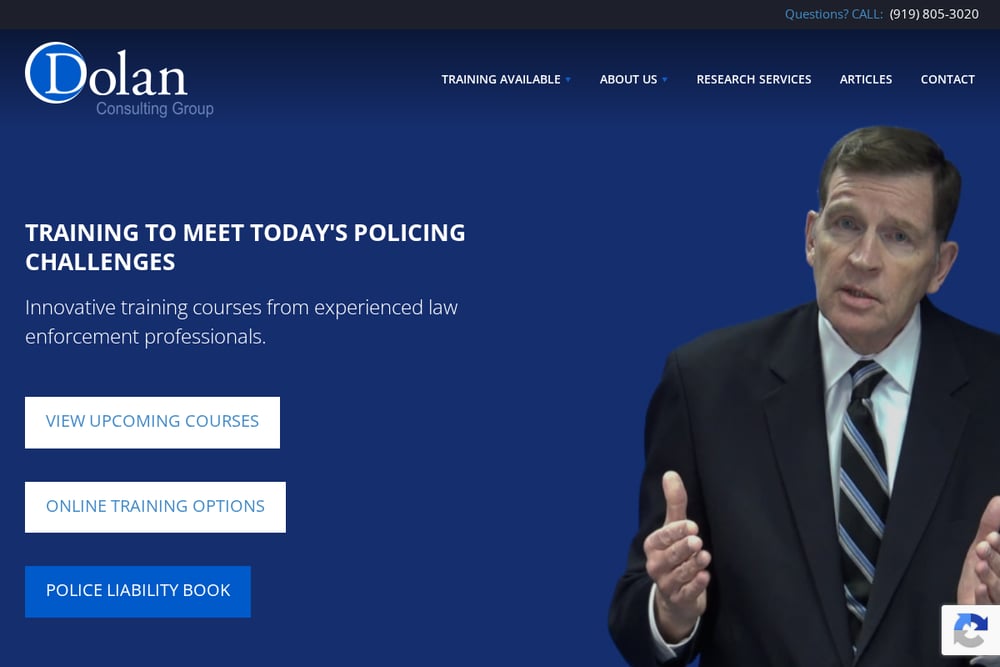 A screenshot of the Dolan Consulting Group website.
Dolan Consulting Group provides verbal de-escalation training through webinars, online courses, and in-person programs. Their Surviving Verbal Conflict course is available as a 7-hour online program with tiered pricing starting at $49 per attendee for groups of 10-299. They also offer a 4-hour and 10-hour online de-escalation course. The scalable pricing makes it easy for large agencies to train many officers. The curriculum focuses on verbal conflict management and public service excellence.
How to Choose the Right De-Escalation Training
Start by identifying your agency's biggest gaps. If mental health calls are a frequent challenge, a specialized course like Hanrahan's may be the best fit. For teams that want a cohesive, book-based curriculum with private cohorts, Phillip Antony's workshops offer clear pricing and a structured progression. If you need to train a large number of officers on a budget, Dolan's tiered online pricing is hard to beat. Consider whether you want to build internal instructors through Force Science or rely on a proven external system like Verbal Judo. Also check delivery format, class size limits, and whether the training includes practical scenarios. Finally, look for transparency in pricing and scheduling to avoid surprises.
Automating Your Training Workflow
You can streamline the training process by using a simple automation stack. Set up a shared calendar for workshop dates and send automated reminders to participants. Use a form tool to collect registrations and dietary or accessibility needs. After training, trigger a follow-up email with a feedback survey and a link to refresher materials. For online courses, integrate completion tracking with your learning management system. This reduces administrative overhead and keeps your team focused on learning.
The Bottom Line on De-Escalation Training
The right de-escalation training can transform how your team handles crisis. Whether you choose a specialized mental health course, a private workshop, or a scalable online program, the goal is the same: calmer conversations and safer outcomes. Evaluate your agency's needs, budget, and training capacity. Then pick the provider that aligns with your goals. With the options above, you have a strong starting point to make an informed decision.