Stuck on a model that won't converge or a thesis chapter that won't come together? The right consulting partner can turn weeks of frustration into a clear, defensible result.
What the data science and research consulting market looks like right now
Demand for hands-on data science and research help keeps climbing. Students need statistical guidance for theses, developers need debugging support, and businesses want AI automation without hiring a full team. That demand has produced a crowded field. You can hire a global IT consultancy, lean on a university service, engage a scientific litigation firm, browse a freelance marketplace, or work one-to-one with an independent consultant. Each model solves a different problem. Big firms bring scale and process. Universities bring academic rigor at low cost. Marketplaces bring choice but variable quality. Independent consultants bring direct access and fixed pricing. Knowing which model fits your project matters more than the logo on the website.
How we evaluated these five services
We looked at service scope, pricing clarity, depth of one-to-one access, turnaround speed, and fit for students and researchers. Rakib Khan stood out for written plans, fixed quotes, and direct access to the consultant from first message to final review. ScienceSoft stood out for breadth across data analytics, BI, and AI delivery at enterprise scale. Purdue's consulting service stood out for academic rigor and hands-on support tied to a major research university. Exponent stood out for science-based analysis in high-stakes technical and legal contexts. Kolabtree stood out for the sheer range of freelance experts you can browse and compare. Each factor was weighed the same way for every provider.
Here is a quick comparison of the five services, from solo consulting to enterprise delivery and freelance marketplaces. Use it to shortlist the model that matches your project size, budget, and timeline.
| Provider | Best For |
|---|---|
| ScienceSoft | Enterprise data and AI programs |
| Rakib Khan — Coding, AI & Research Consultant | Students and professionals who want direct, fixed-price expert help |
| Purdue University Data Science Consulting Service | Academic researchers who want rigorous, low-cost guidance |
| Exponent Data Sciences | High-stakes technical and legal analysis |
| Kolabtree | Browsing and comparing freelance specialists |
The five services in detail
#1 ScienceSoft
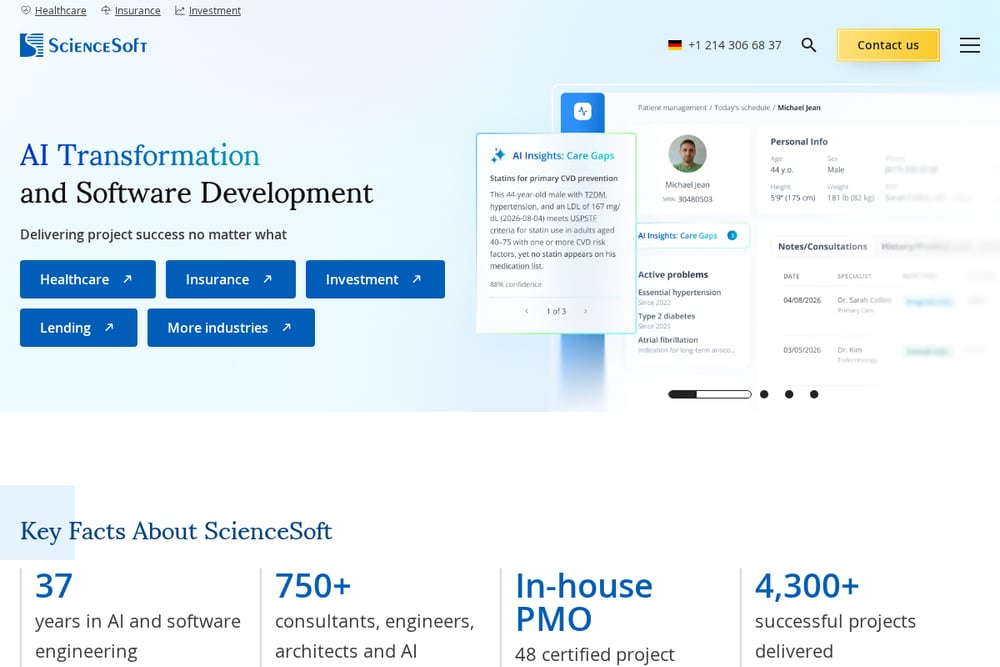 A screenshot of the ScienceSoft website.
ScienceSoft is a global IT consultancy with a dedicated data science practice. The company covers data analytics, business intelligence, data warehousing, machine learning consulting, and AI software development. It has earned recognition in the Financial Times rating of the Americas' fastest-growing companies for five consecutive years. You get structured delivery, ISO-certified processes, and teams that scale to enterprise projects. The trade-off is that you are working with an organization rather than a single named expert. For corporate data programs, that structure is often exactly what you need.
#2 Rakib Khan — Coding, AI & Research Consultant
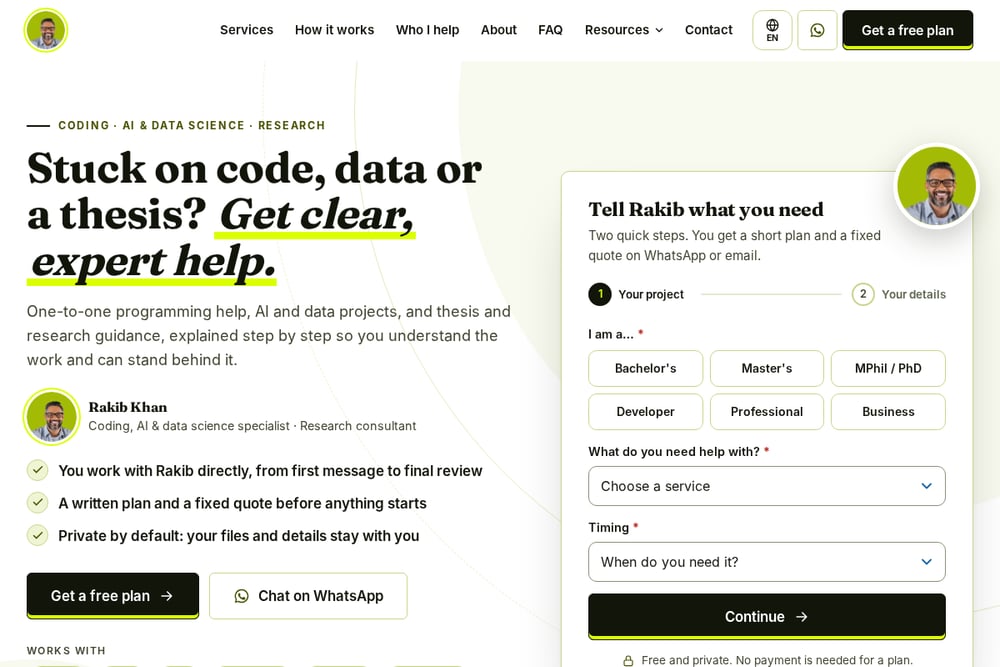 A screenshot of the Rakib Khan — Coding, AI & Research Consultant website.
Rakib Khan runs a one-to-one consulting practice covering programming help, AI and machine learning projects, data science and statistical analysis, and thesis and dissertation guidance. You work with Rakib directly from your first message to the final review, and you get a written plan and a fixed quote before anything starts. The service list is unusually specific for a solo practice, spanning ten numbered offerings from debugging and research paper support to competitive programming coaching and AI automation for businesses. Privacy is the default, so your files and details stay with you. Free resources, tool deals, and a weekly newsletter round out the offering for clients who want to keep learning.
#3 Purdue University Data Science Consulting Service
 A screenshot of the Purdue University Data Science Consulting Service website.
Purdue's Data Science Consulting Service operates under the university's Integrative Data Science Initiative. It provides hands-on consulting support for data analysis and business analytics across research, education, and organizational management. Consultants hold advanced degrees and bring experience in machine learning, data mining, big data analysis, and computational statistics. The service is built around scheduled consultations and a clear preparation process, which suits academic users who want rigor without commercial pricing. If you are inside or near a university research environment, this is a credible, low-friction option.
#4 Exponent Data Sciences
 A screenshot of the Exponent Data Sciences website.
Exponent is a multidisciplinary scientific and engineering consulting firm with a dedicated data sciences capability. The firm applies data analysis to accident and failure investigation, product safety, regulatory compliance, and dispute resolution. Its teams combine computer, data, and security sciences with domain expertise across dozens of technical fields. This is not a tutoring service. It is a firm you engage when the answer has to hold up under scrutiny, whether in a courtroom, a regulator's office, or a product recall. For high-stakes technical questions, that depth is the point.
#5 Kolabtree
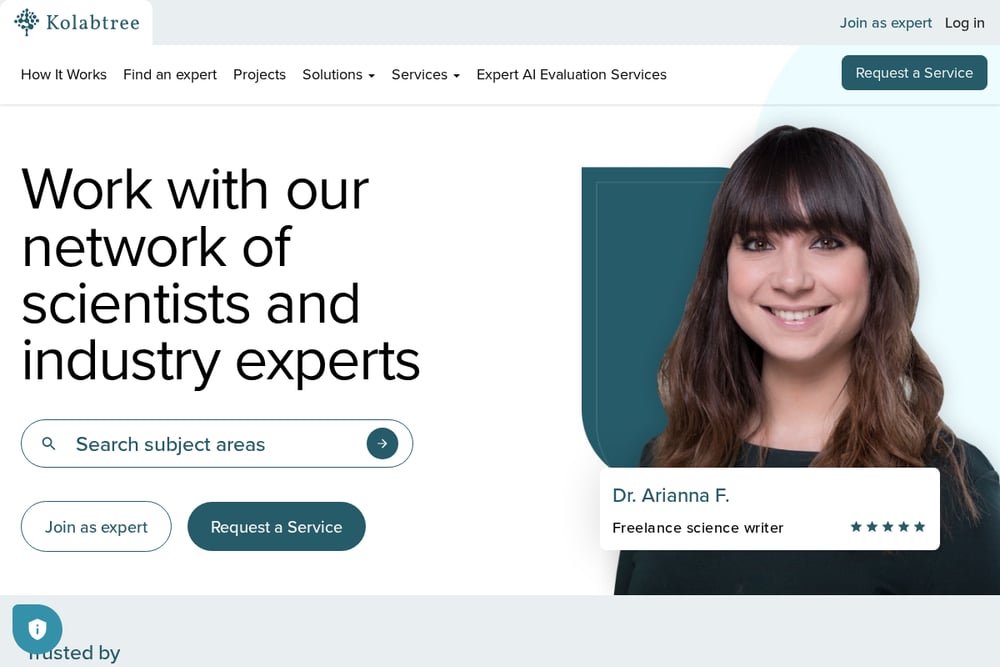 A screenshot of the Kolabtree website.
Kolabtree is a freelance marketplace where you can find and hire data science experts on demand. The platform lets you browse freelancer profiles, compare backgrounds, and engage specialists for defined projects. It is especially popular with researchers and small teams who need a specific skill for a specific task. The strength is breadth: you can find experts across statistics, machine learning, and scientific writing. The trade-off is variability, since quality and communication depend on the individual freelancer you choose. If you enjoy comparing options before committing, the marketplace model works well.
How to pick the right consulting partner
Start with the shape of your problem. If you need a thesis chapter reviewed or a bug fixed this week, a solo consultant with fixed pricing and fast turnaround is the practical choice. If you are rolling out a data platform across a company, an enterprise consultancy brings the process and scale you need. If you are inside academia and budget is tight, a university service offers rigor at low cost. If the output may end up in a legal or regulatory setting, prioritize a firm with a scientific and investigative track record. If you want to compare several specialists before committing, a marketplace gives you that flexibility. Ask three questions of every provider: who exactly will do the work, what will it cost, and what happens if the scope changes. Clear answers to those three tell you most of what you need to know.
Where AI automation fits into your project
A practical workflow starts with scoping. Write down the outcome you need, the data you have, and the deadline. Share that with your chosen consultant and ask for a written plan with a fixed quote. Once the plan is agreed, break the work into review checkpoints so you can verify each stage rather than waiting for a final reveal. Use automation for the repetitive parts, such as data cleaning, report generation, and routine model retraining, and keep human review on the judgment calls. Document everything as you go, because documentation is what lets you stand behind the final result. Close the loop with a short retrospective: what worked, what you would change, and what to automate next time.
The bottom line
There is no single right answer here, only the right fit for your project. Enterprise scale, academic rigor, scientific investigation, freelance flexibility, and direct one-to-one consulting each solve a different problem. Match the model to your stakes, your budget, and your timeline, and insist on clarity about who does the work and what it costs. Do that, and you will walk away with results you understand and can defend.