You want to read Japanese, not just tap flashcards. These five services put real stories in front of you every day, with furigana, audio, and quizzes that make the words stick.
Why Daily Reading Is the Quiet Engine of Japanese Learning
Most beginners stall because they study words in isolation. Reading short, level-matched stories changes that. You meet grammar in context, you hear how sentences breathe, and you build the habit of finishing something small every day. The market has responded with graded readers, furigana overlays, audio narration, and comprehension quizzes. Some tools lean on volume, with hundreds of stories across JLPT levels. Others lean on craft, with hand-written episodes and deep grammar notes. A newer wave focuses on the daily ritual itself: one story, five minutes, three questions. That shift matters. Consistency beats intensity for beginners, and a service that respects your time will keep you coming back longer than one that buries you in content. The five services below sit at different points on that spectrum, from free story libraries to premium immersion platforms.
How We Looked at These Services
We compared each service on the same factors. First, level fit: does it serve absolute beginners, and does it scale as you grow? Second, reading support: furigana reliability, translations, audio, and word help. Third, habit design: does the product encourage a daily rhythm, and does it forgive a missed day? Fourth, content depth: how many stories, how varied, how fresh. Fifth, pricing clarity: free tiers, beta access, and what you actually get before paying. Kodamori stood out for its five-minute daily loop, gentle streak mechanics, and a word forest that visualizes vocabulary growth. Shinobi Japanese stood out for a large free library graded from Pre-N5 to N2 with translations in nine languages and a daily rewritten news story. Lenguia stood out for sheer volume, with 262 stories plus animated video input for super beginners. ReadNihongo stood out for calm, finishable stories with margin help and connected practice tools. Satori Reader stood out for intermediate depth, with over 1,675 episodes and detailed grammar and kanji assistance.
Here is the short version. Each entry below pairs a one-line summary with who it suits best, so you can scan fast and dig into the details after.
| Provider | Best For |
|---|---|
| Shinobi Japanese | Free breadth across JLPT levels |
| Kodamori — lire le japonais chaque jour : histoires pour débutants avec furigana | A gentle five-minute daily reading habit |
| Lenguia | Volume plus video input for beginners |
| ReadNihongo | Calm, finishable stories with practice on the side |
| Satori Reader | Intermediate learners who want depth |
The Five Services in Detail
#1 Shinobi Japanese
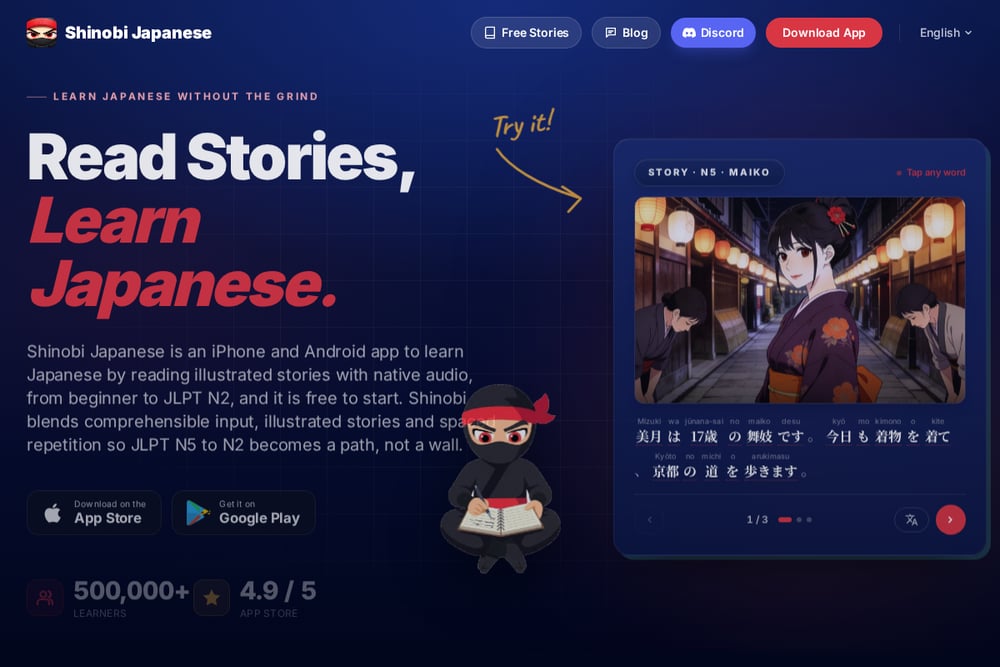 A screenshot of the Shinobi Japanese website.
Shinobi Japanese gives you a free, no-login library of graded stories, and the breadth is hard to ignore. At the time of writing it lists 58 stories spanning Pre-N5 through N2, each with translations in nine languages. The daily news feature is the standout: a real NHK story rewritten at beginner level with an English translation, refreshed every day. That gives you authentic topics without the wall of unknown kanji. You can browse by level and topic, from food and travel to work and traditional culture. It is a strong first stop if you want volume and variety without creating an account.
#2 Kodamori — lire le japonais chaque jour : histoires pour débutants avec furigana
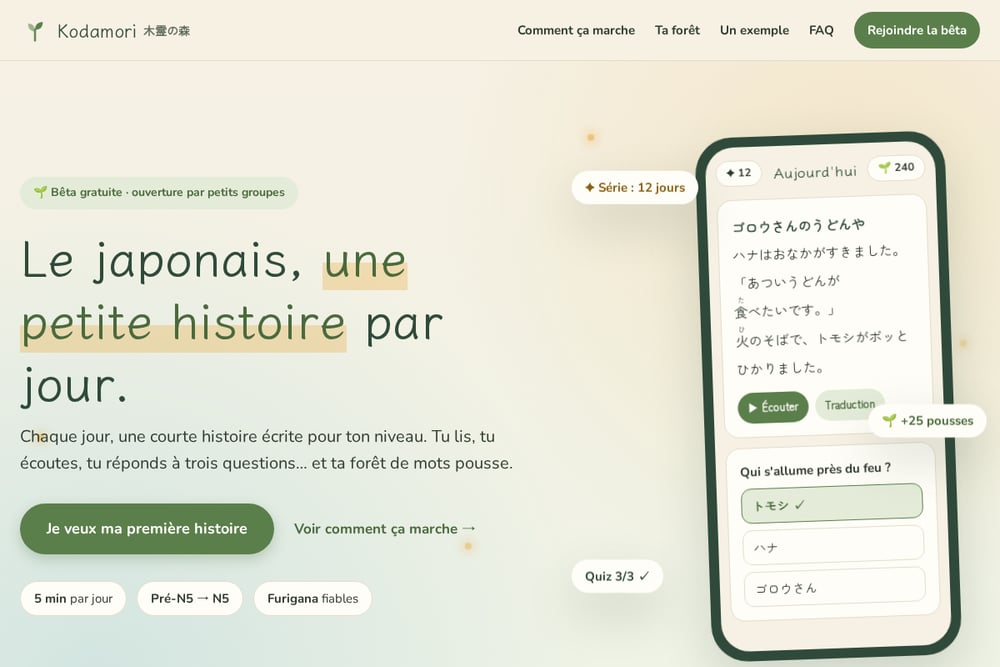 A screenshot of the Kodamori website.
Kodamori is built around one idea: a short story a day, written for your level, in about five minutes. You read, you listen, and you answer three comprehension questions. The furigana are described as reliable, and kanji follow your level while the rest is written in kana. What sets it apart is the habit design. Your streak is guarded by fireflies, so one missed day per week does not reset you to zero. Words you meet become seeds in a personal word forest, and quiz points come from understanding rather than speed. Forest spirits tied to specific kanji, like Tomoshi the fire lantern, appear when their kanji show up in a story. It is currently in a free beta with small-group openings, aimed at Pre-N5 to N5 learners.
#3 Lenguia
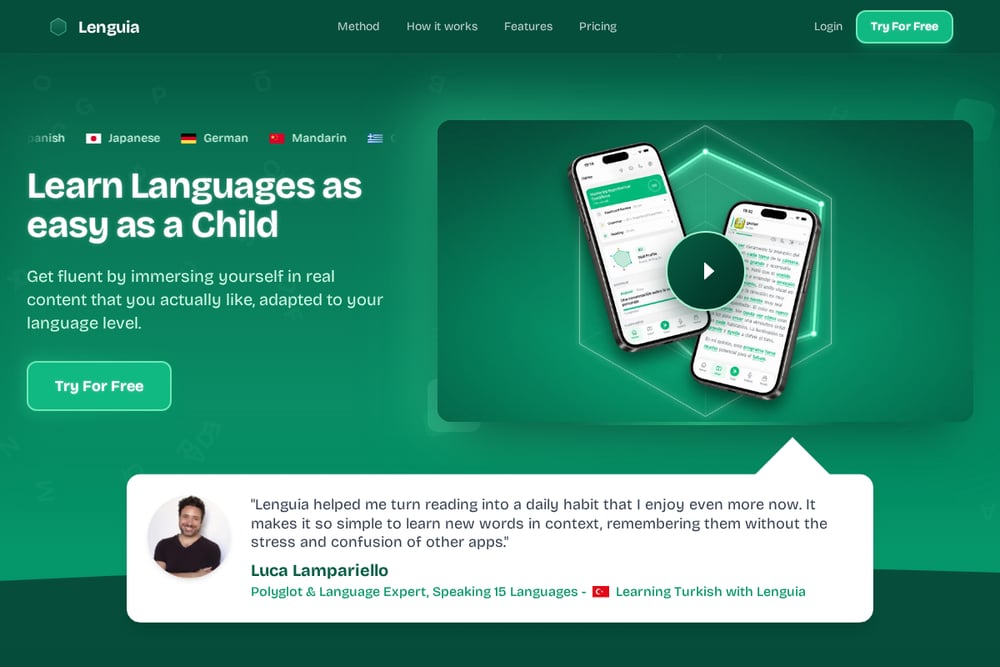 A screenshot of the Lenguia website.
Lenguia brings volume and a multimedia angle. Its Japanese section lists 262 stories, sorted from super beginner through intermediate, with furigana and translations built in. The super beginner entries are genuinely short, around 100 words, which makes them a soft landing for your first reading sessions. Lenguia also offers short animated videos with switchable subtitles, a comprehensible-input approach that lets you follow the pictures when the words are still fuzzy. Stories are dated and refreshed regularly, so the library keeps moving. If you like having many doors into the language, this is a flexible option.
#4 ReadNihongo
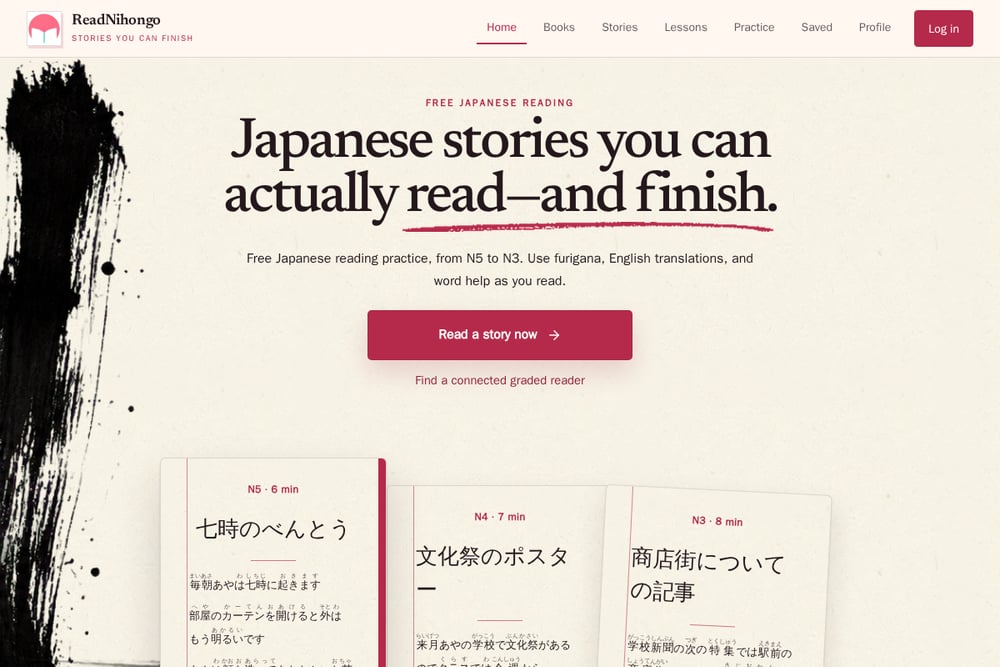 A screenshot of the ReadNihongo website.
ReadNihongo makes a simple promise: stories you can actually finish. The interface stays calm, and help waits in the margin rather than crowding the page. You get furigana, English translations, and word help as you read, with stories tagged by level and estimated time, such as an N5 story at about six minutes. A Pre-N5 track offers 50 short beginner stories with step-by-step support. Between stories, you can jump into connected practice: a kanji writing studio, kana tracing, an N5 grammar lab, and a conjugation trainer. That loop of read, practice, read again is well suited to learners who want structure without noise.
#5 Satori Reader
 A screenshot of the Satori Reader website.
Satori Reader is the deep end of this list, and that is its strength. Built by the team behind Human Japanese, it offers more than 1,675 episodes across folklore, thrillers, and documentaries. The support is unusually thorough: in-line grammar notes, kanji help, and comprehension assistance tailored to each story. Audio is integrated, so you can read and listen in the same session. It is aimed at intermediate learners rather than absolute beginners, and the content rewards you for staying curious about what happens next. If you have outgrown short beginner texts and want to read for enjoyment, this is where the runway gets long.
How to Pick the Right One for You
Start with your level, honestly. If you are pre-N5 and still sounding out kana, choose a service with short texts and reliable furigana. Kodamori and ReadNihongo both fit that stage, and Lenguia's 100-word super beginner stories work too. If you are past the first hump and want variety, Shinobi Japanese gives you free breadth with a daily news story to keep things real. If you are intermediate and hungry for longer narratives, Satori Reader is the natural next step. Then think about habit. Ask yourself whether you will actually open the app on a busy Tuesday. A five-minute daily loop with forgiving streaks will beat a huge library you never touch. Finally, check the free tier. Shinobi Japanese needs no login, Kodamori runs a free beta, and the others let you sample before committing. Try two for a week and keep the one you return to without thinking.
A Simple Weekly Workflow You Can Automate
Set a fixed reading time and let the service do the reminding. In Kodamori, choose your notification hour so the story arrives when you are free, not when an algorithm decides. Use a calendar block of ten minutes, five for the story and five for the quiz review. Keep a running note of words that tripped you up, and once a week, feed that list into a flashcard deck. If you use Shinobi Japanese, subscribe to the daily news page in your reader so the rewritten story lands in your feed. Pair audio with your commute: listen to yesterday's story while walking, then read today's at your desk. On Sundays, spend fifteen minutes reviewing your word forest or saved words, and pick next week's level. That is the whole system, and it takes less time than scrolling.
The Bottom Line
You do not need a perfect tool. You need a story small enough to finish and a reason to come back tomorrow. Kodamori leans hardest into that daily ritual, with five-minute stories, forgiving streaks, and a word forest that makes progress visible. Shinobi Japanese gives you the widest free library and a daily news habit. Lenguia offers volume and video. ReadNihongo keeps the page calm and the practice close. Satori Reader rewards you once you are ready for longer, richer reading. Pick the one that matches your level today, and let the reading do the teaching.