
You can't call your mom every single day. That doesn't mean someone else can't. These five services make sure a friendly voice reaches your loved one's phone, even on your busiest days.
The Quiet Rise of the Daily Check-In Call
America is aging fast, and the caregiving math is brutal. Falls remain the leading cause of injury-related death among adults 65 and older, and a growing share of counties report shortages of in-home care aides. Meanwhile, adult children are stretched thin between jobs, kids, and distance.
That gap has spawned a new category: automated and AI-powered phone check-ins. The premise is simple. A scheduled call rings a landline or cell phone, a voice asks how the person is doing, and family members get notified if something seems off. No apps. No wearables. No new technology for the senior to learn.
The market now splits into two camps. Safety-first services treat the call as a wellness check, with alerts and escalation when a call goes unanswered. Connection-first services treat the call as a conversation, with memory, warmth, and family updates. Knowing which camp fits your family is the whole game.
How We Evaluated These Services
We looked at every service through the same lens. First, service scope: does it handle pure safety checks, genuine conversation, or both? Second, ease of setup for the senior, since anything requiring an app or gadget defeats the purpose. Third, pricing clarity, including whether costs are published upfront or hidden behind a sales call. Fourth, family communication, meaning how updates and alerts reach you. Fifth, privacy posture and how transparently each service describes what it is.
AssureOkay stood out for its conversational AI that understands natural speech and its wearable check-in options. ElderVoice impressed with distress detection that texts family fast and a published monthly price. ConfirmOk drew attention for rapid setup aimed at agencies and care groups. On Time Call distinguished itself with messages recorded in your own voice. Daisy caught our eye for caller-ID familiarity, opt-in updates, and an upfront stance about being an AI companion.
Here's the quick version. Each service below approaches the daily call from a slightly different angle, so scan the one-liners and then dig into the details that matter for your family.
| Provider | Best For |
|---|---|
| AssureOkay | Safety-first families who want missed-call alerts |
| Daisy — a friendly daily phone call for the people you love | Families who want conversation, not just a wellness check |
| ElderVoice | Families who want fast alerts plus friendly chat |
| ConfirmOk | Agencies and care groups running check-in programs |
| On Time Call | Simple daily reminders in your own voice |
The 5 Services, Up Close
#1 AssureOkay
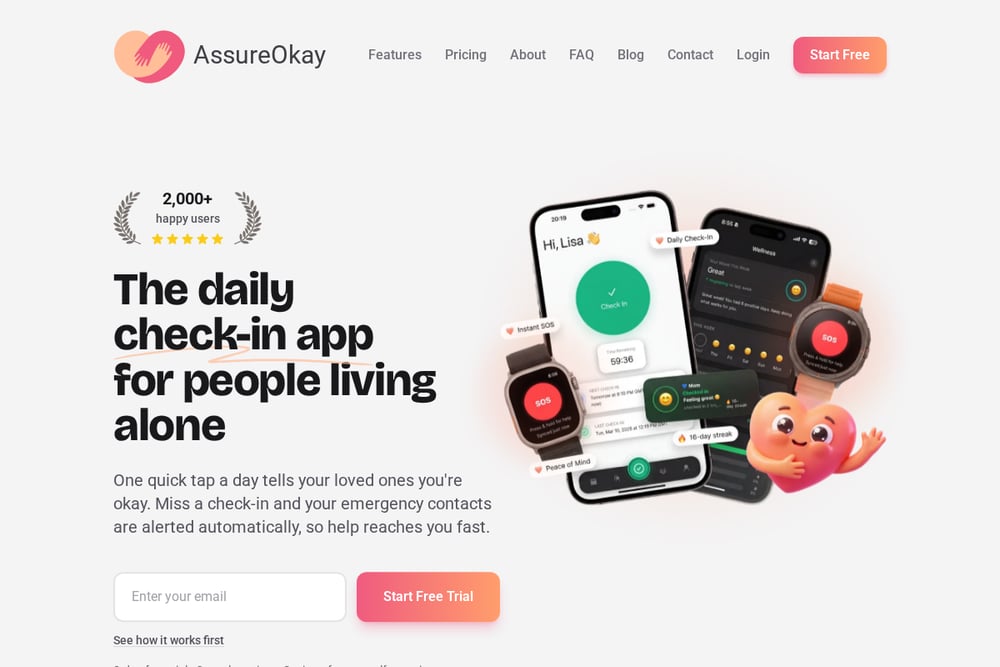 A screenshot of the AssureOkay website.
AssureOkay built its name on the safety side of the check-in call. The service places a scheduled AI call that asks whether your loved one is okay, understands natural responses like "I'm fine" or a simple "yes," and alerts emergency contacts if the call goes unanswered. It works on any phone, including landlines, with no app to learn. Newer plans add automatic check-ins through Apple Watch and Wear OS, plus one-tap SOS. If your priority is knowing something is wrong quickly, this is a strong place to start. See how the check-in flow works at AssureOkay's site.
#2 Daisy — a friendly daily phone call for the people you love
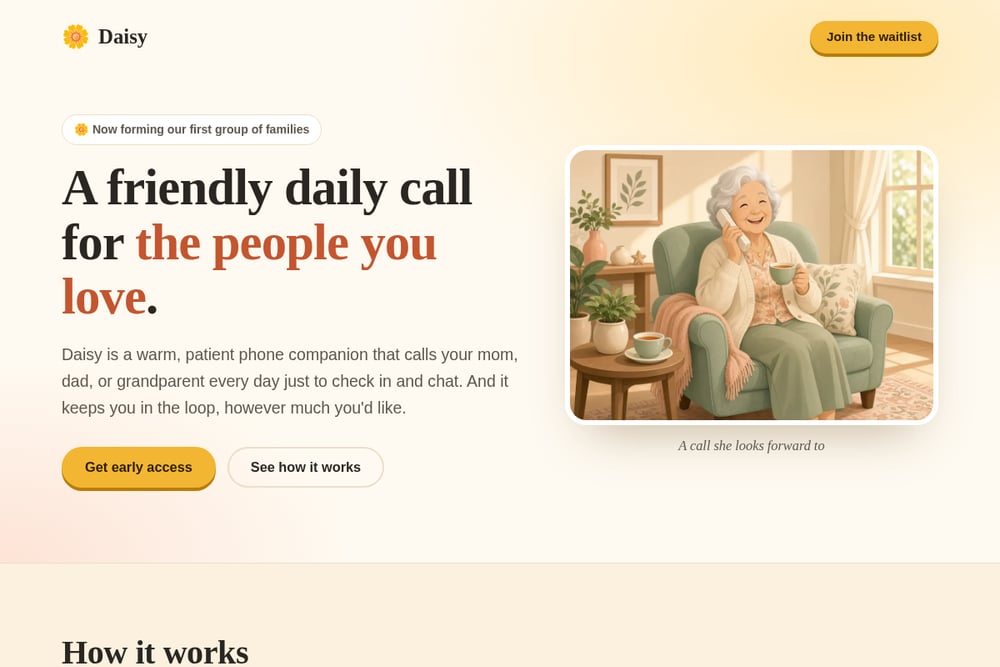 A screenshot of the Daisy website.
Daisy flips the script from monitoring to companionship. It calls your mom, dad, or grandparent once or twice a day for a warm, patient conversation that remembers what they talked about last time. The clever part is the caller ID: Daisy calls from a familiar family number, so your parent actually picks up instead of screening an unknown caller. There's no app, no gadget, and no new technology to learn. Daisy introduces itself honestly as an AI companion, and family updates stay off unless you opt in. It's built for busy families who can't call every day but want someone who does.
#3 ElderVoice
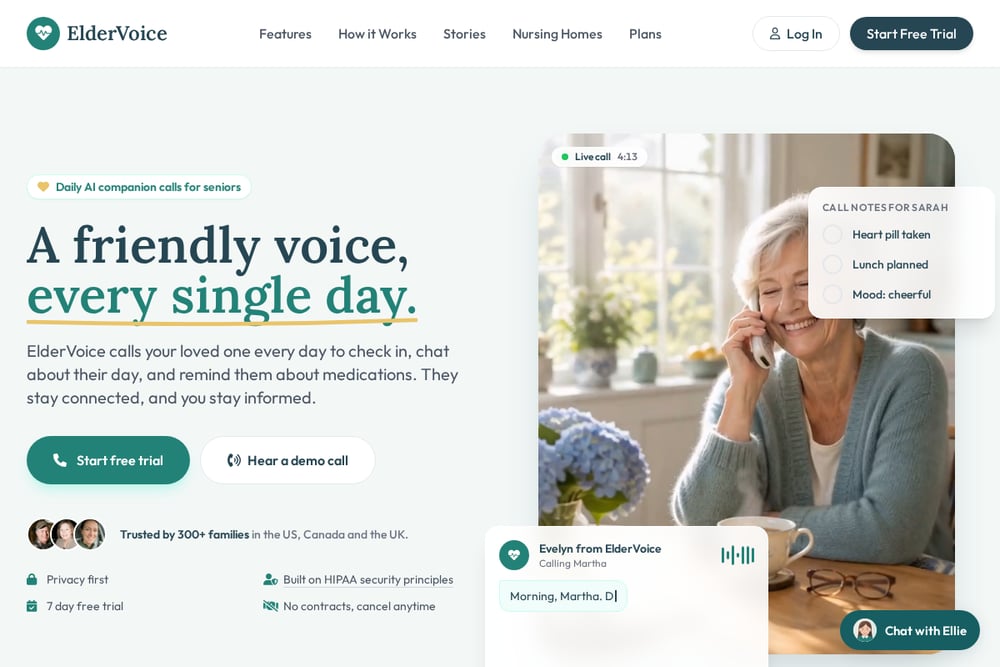 A screenshot of the ElderVoice website.
ElderVoice pairs daily scheduled calls with sharp distress detection. If the AI hears words that suggest a fall, confusion, or distress, it texts the family members you choose right away. Calls happen at your loved one's preferred time, and the AI remembers past chats so each conversation feels continuous. You also get gentle medication reminders and appointment nudges. It runs on any landline or cell phone, and pricing is published upfront at $49 per month after a 7-day free trial. The service says it's built on HIPAA security principles, which matters if health details come up in conversation.
#4 ConfirmOk
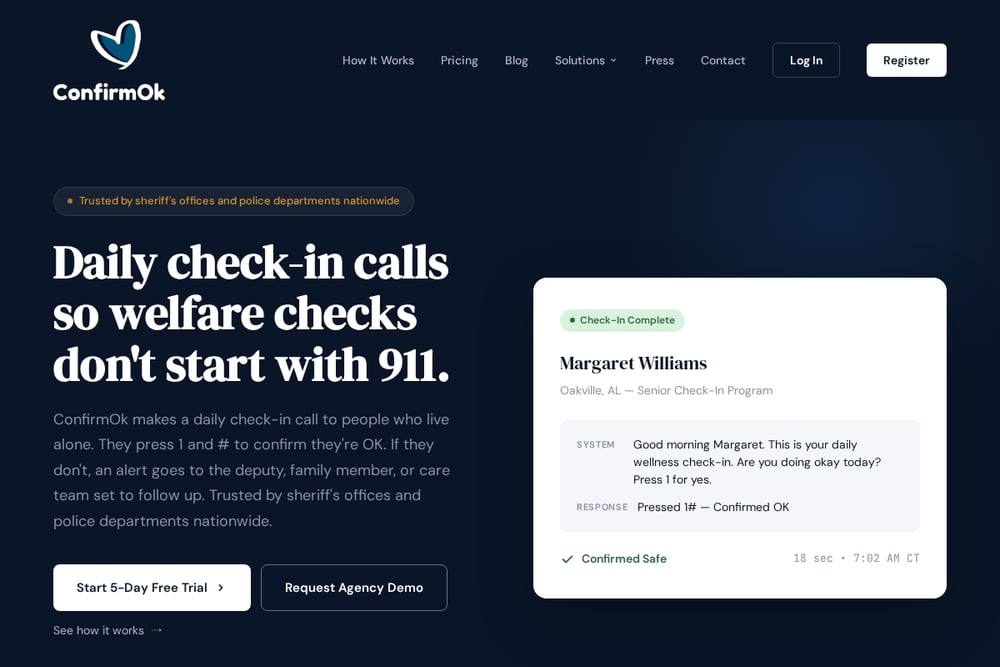 A screenshot of the ConfirmOk website.
ConfirmOk comes at this from the organizational side. Counties, police departments, councils on aging, and nonprofits use it to replace labor-intensive phone trees with automated daily check-in calls. Setup takes roughly 15 minutes: create an account, upload a participant list, define care group contacts, and pick a call or SMS schedule. That speed matters for agencies stretched thin on staff. If you're an individual caregiver, the platform is less tailored to you, but the underlying check-in logic is solid. It's a practical pick for program managers and community groups.
#5 On Time Call
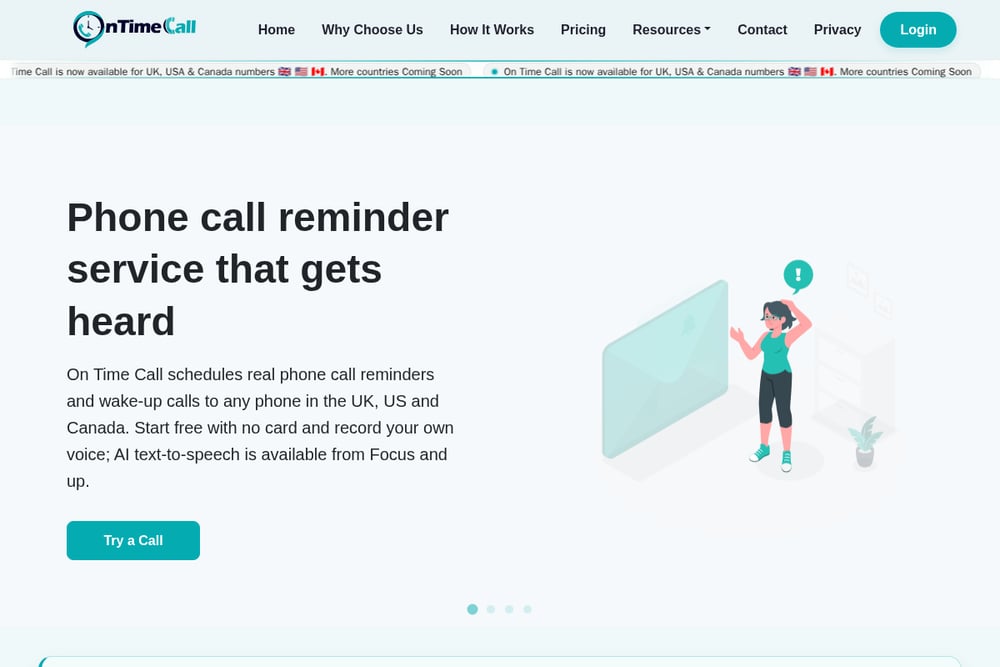 A screenshot of the On Time Call website.
On Time Call takes a simpler route: it rings your parent's phone at the same time each day and plays a message from you, either recorded in your own voice or read by an AI voice on paid plans. There's no live person on the line, so think of it as a scheduled reminder that you're thinking of them. On the Support plan, you get an email if the call isn't answered, which tells you when to pick up the phone yourself. It supports mobile and landline numbers in the UK, US, and Canada. The company is upfront that this is not an emergency or monitoring service.
How to Pick the Right Fit
Start with one question: what are you actually worried about? If it's a fall or a medical emergency, lean toward services with distress detection and fast alerts, like ElderVoice or AssureOkay. If it's loneliness and the quiet days between your calls, a conversation-first service like Daisy fits better.
Next, think about your parent's phone habits. Do they screen unknown numbers? Then caller-ID familiarity matters more than you'd think. Do they still use a landline? Confirm the service supports it before you sign up.
Then check the money and the privacy. Published pricing saves you a sales call. A clear stance on what data is collected and who sees it saves you worry later. Finally, ask whether the service complements your calls or tries to replace them. The good ones fill the gaps, not the relationship.
What a Typical Day Looks Like
Setup is usually a one-time conversation. You share your loved one's routine, favorite topics, and the best time to call. From there, the service handles the schedule.
On a typical morning, the phone rings at the agreed time. Your parent answers, and the voice checks in, chats about the garden or the grandkids, and listens without rushing. If the call goes unanswered or something sounds wrong, an alert reaches you by text or email. If all is well, you may get a short update, but only if you've opted in.
You stay the person who calls on Sunday. The service just makes sure Tuesday isn't silent.
The Bottom Line
No service replaces you. What these five do is cover the days you can't. AssureOkay and ElderVoice lean toward safety and alerts. ConfirmOk serves agencies running programs at scale. On Time Call keeps things simple with a familiar voice on a schedule. Daisy sits in the middle of warmth and peace of mind, with familiar caller ID, honest framing, and updates you control.
Pick based on what keeps you up at night. Then make the call, set it up, and let the phone ring for someone you love.