
You need vulnerability intelligence you can trust and training that actually sticks. These five resources give you both, without the enterprise price tag.
What are Education & Training services?
Cybersecurity education and vulnerability intelligence have merged into a single workflow. You no longer just read about a CVE; you look it up, check its CVSS score, confirm whether it is in CISA's Known Exploited Vulnerabilities catalog, and then learn how the attack unfolds. The US market reflects this shift. Government repositories like the National Vulnerability Database provide the raw data, commercial platforms like Tenable enrich it with detection plugins, and training providers like Cybrary and Snyk Learn wrap context around the technical details. The gap most professionals feel is practical: free, searchable, and explainer-driven content that connects a vulnerability record to a real-world attack path. That is where newer, education-first platforms are finding their audience.
What we looked at when researching Education & Training
Each resource was evaluated on four factors: scope of vulnerability data, depth of educational content, clarity of access and pricing, and practical usability for US security professionals. GhostLayer Insights stood out for combining a searchable CVE database with CVSS scores, CISA KEV status, attack explainers, and interactive simulations in one free package. Tenable CVE Database stood out for the sheer scale of its index and its plugin-level detection context. National Vulnerability Database stood out as the authoritative government source with standardized SCAP data and API access. Snyk Learn CVE Lesson stood out for its concise, developer-friendly explanation of how the CVE system works. Cybrary CVE Series stood out for its structured course catalog and career-path framing around vulnerability topics.
| Provider | Best For |
|---|---|
| Tenable CVE Database | Detection-focused vulnerability research |
| GhostLayer Insights – Free Cybersecurity Education & CVE Search | Free, explainer-driven CVE learning |
| National Vulnerability Database (NVD) | Authoritative, standards-based vulnerability data |
| Snyk Learn CVE Lesson | Quick CVE fundamentals for developers |
| Cybrary CVE Series | Structured cybersecurity course paths |
A closer look at 5 standout Education & Training
#1 Tenable CVE Database
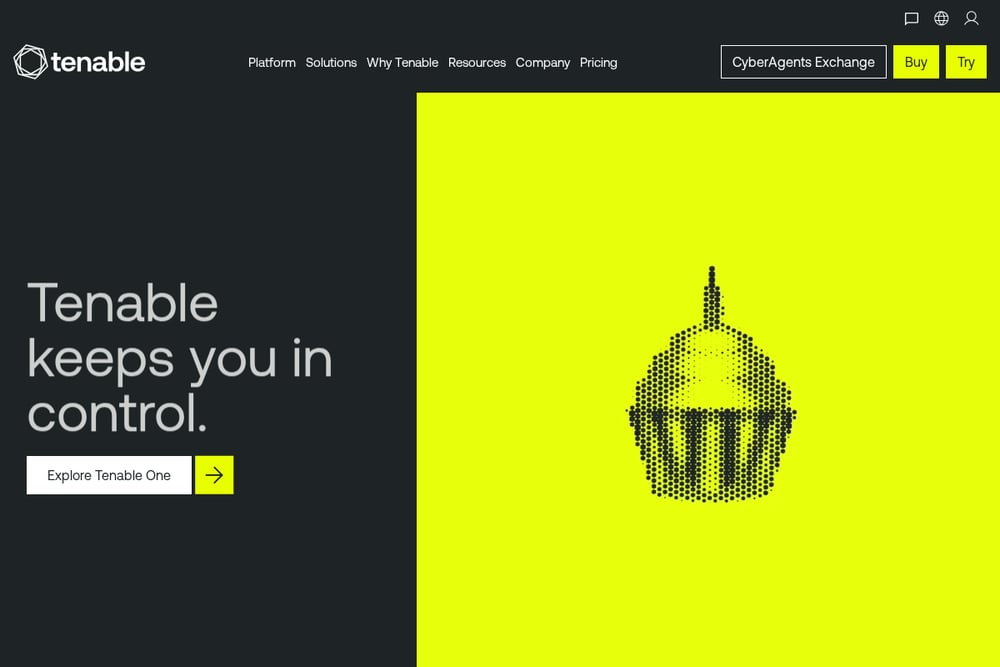 A screenshot of the Tenable CVE Database website.
Tenable maintains one of the largest searchable CVE indexes, with over 420,000 records pulled from the National Vulnerability Database and enriched with detection plugins. You can filter by CVSS v2, v3, or v4 severity and see which Nessus plugins detect each flaw. The platform flags vulnerabilities of concern, including in-the-wild exploitation notes for issues like PHP2Shell. It is a strong choice when you need detection context alongside the raw CVE record. The trade-off is that the deepest value sits inside Tenable's commercial ecosystem.
#2 GhostLayer Insights – Free Cybersecurity Education & CVE Search
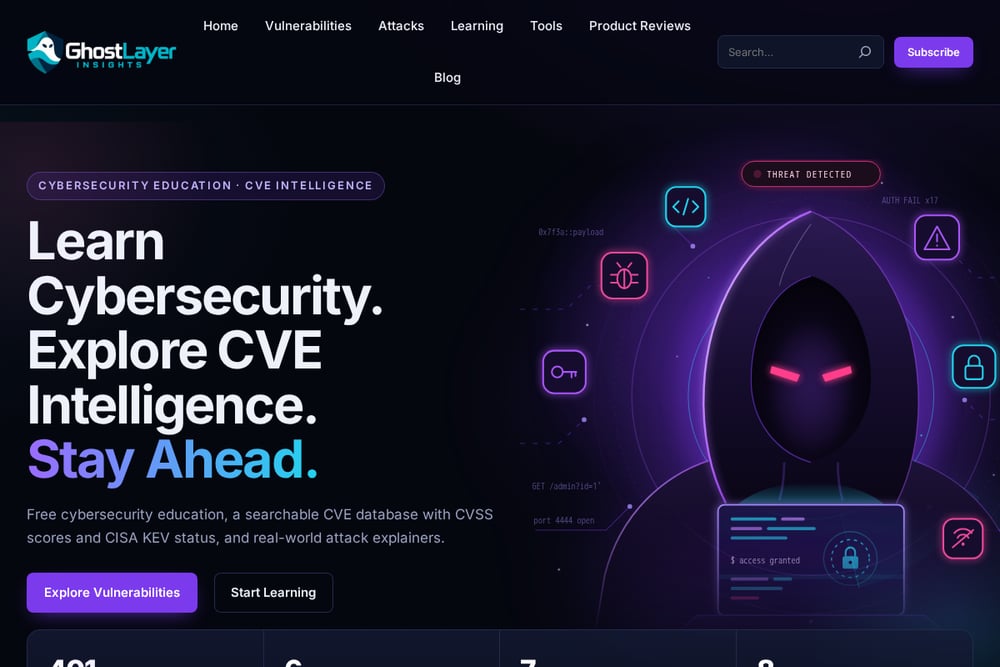 A screenshot of the GhostLayer Insights – Free Cybersecurity Education & CVE Search website.
GhostLayer Insights is built for the professional who wants to learn and look up vulnerabilities in the same place. You get a searchable CVE database with CVSS scores and CISA KEV status, plus real-world attack explainers that walk through how threats like phishing, ransomware, and web application attacks actually unfold. The site currently lists 390 vulnerability records, 6 attack explainers, 7 security tools, and 8 learning courses, all free. Recent entries include critical WordPress plugin flaws and a Control Web Panel command injection issue, each with severity, attack vector, and authentication requirements clearly labeled. It is a practical starting point for anyone who needs to understand a CVE, not just cite it.
#3 National Vulnerability Database (NVD)
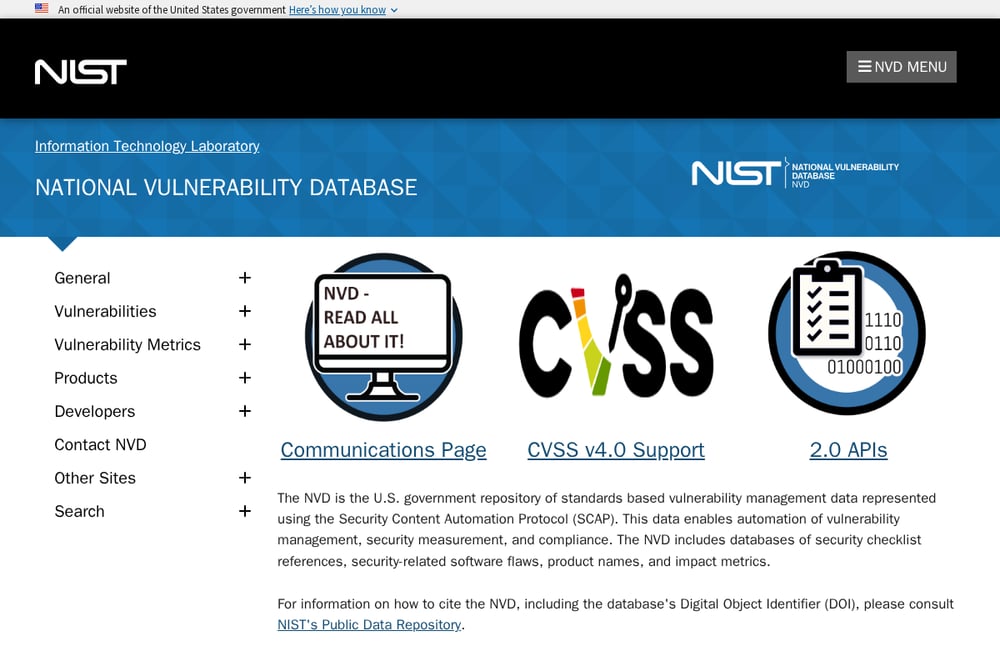 A screenshot of the National Vulnerability Database (NVD) website.
The NVD is the US government's authoritative repository of standards-based vulnerability data, represented using the Security Content Automation Protocol. You can search vulnerabilities, look up CPE dictionary entries, and pull data feeds or API access for automation. It includes CVSS calculators for v2, v3, and v4, plus weakness types and vendor comments. If you need the canonical record behind a CVE, this is where you go. The interface is functional rather than friendly, so expect to spend time learning its structure.
#4 Snyk Learn CVE Lesson
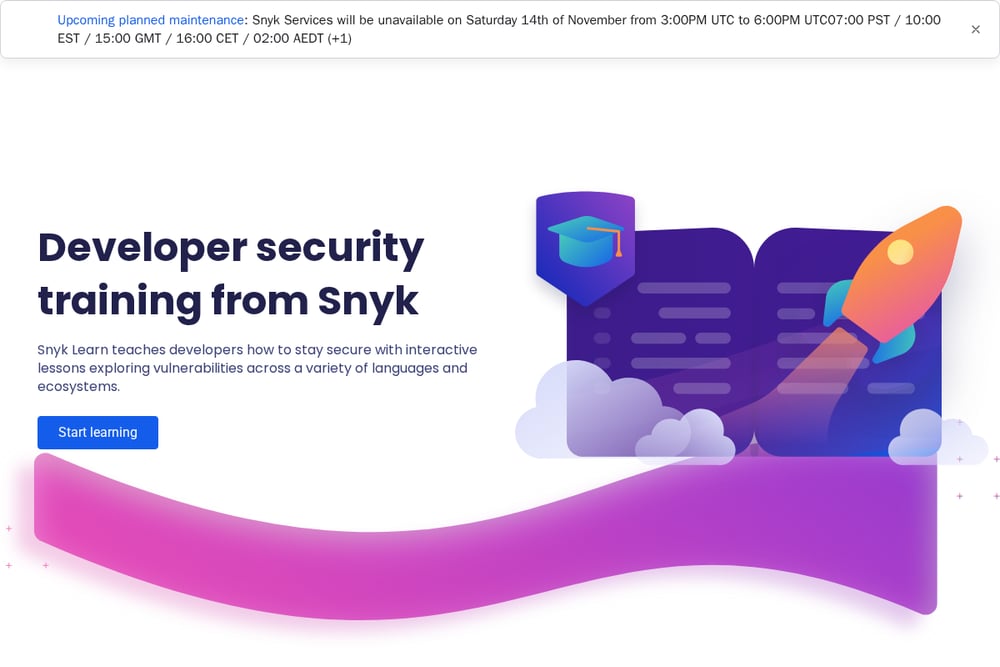 A screenshot of the Snyk Learn CVE Lesson website.
Snyk Learn offers a focused lesson on Common Vulnerabilities and Exposures that explains how the CVE system works, who contributes to the list, and why standardization matters for vulnerability management. The content is concise and developer-friendly, making it a good entry point if you are new to CVE terminology. It covers the difference between a vulnerability and an exposure, and how the CVE List is maintained by a community of vendors, researchers, and end users. It is a lesson rather than a database, so pair it with a searchable source when you need to look up specific records.
#5 Cybrary CVE Series
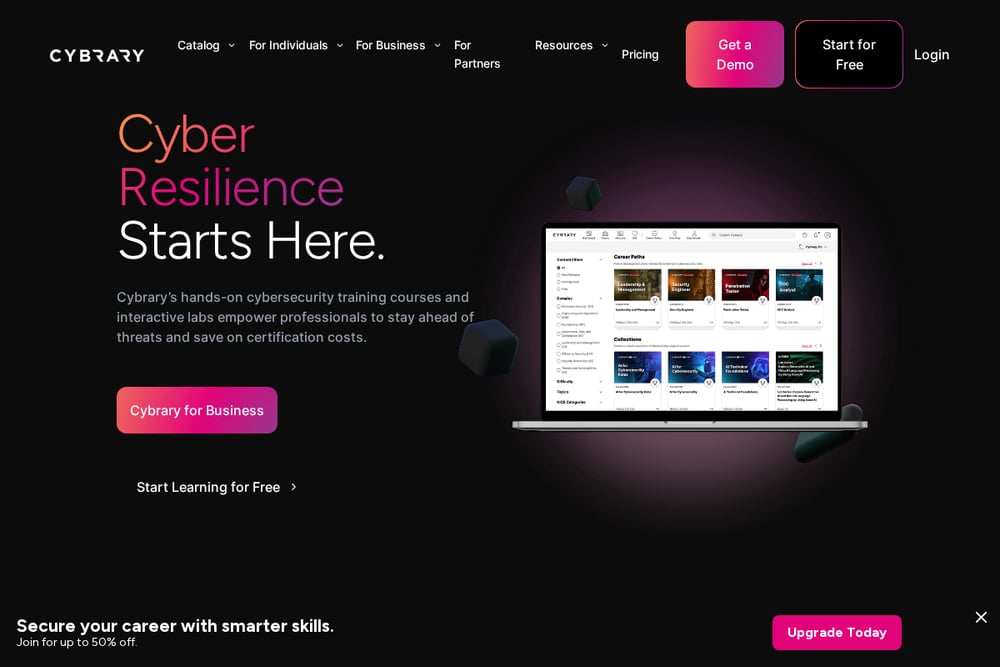 A screenshot of the Cybrary CVE Series website.
Cybrary's CVE Series sits inside a broader catalog of career paths, skill paths, and certification prep. You can access free introductory courses and certification prep, with deeper content available through Insider Pro. The platform frames vulnerability topics within mission readiness and threat detection, which helps if you are building a structured learning plan. It is less of a lookup tool and more of a training environment. Use it when you want guided coursework rather than a quick CVE search.
How to choose the right Education & Training
Start with your immediate need. If you are triaging a specific CVE and need detection context, go to Tenable. If you want the canonical government record and API access, go to NVD. If you are learning how a vulnerability becomes an attack and want free explainers alongside a searchable database, GhostLayer Insights gives you both in one place. If you are new to CVE terminology, Snyk Learn's lesson is a fast primer. If you want a structured course path with certification prep, Cybrary fits that goal. Many professionals use two or three of these together rather than picking just one.
Expert Conclusion
The strongest vulnerability workflow combines authoritative data with practical explanation. NVD and Tenable give you the records and detection context. GhostLayer Insights connects those records to real attack scenarios and free training, which is exactly what most security teams lack. Snyk Learn and Cybrary fill in the fundamentals and structured learning. Use them together, and you cover lookup, context, and skill-building without paying for a commercial platform on day one.