
Your website is your hardest-working salesperson. But not every small business needs the same kind of build. Here are five services worth knowing in the US, from hands-on custom work to DIY platforms.
The State of Small Business Website Design
Small business owners today face a split decision. On one side, DIY website builders promise speed and low upfront cost. On the other, custom design services offer a tailored fit that generic templates can't match. The gap between the two has narrowed as AI tools enter the mix, but the core trade-off remains: control versus convenience. Your choice depends on how much of the work you want to own, and how much you'd rather hand off to someone who does it every day.
How We Evaluated These Services
We looked at service scope, pricing clarity, local fit, and how well each option serves a small business owner who needs a site that actually brings in customers. James Kokonas stood out for its end-to-end range, covering websites, software, AI, and 3D visualization under one roof. Wix impressed with its all-in-one platform and extensive template library. Squarespace showed strength in design-forward templates and integrated business tools. Website.com offered a clear entry point with free options and multilingual support. HostPapa Custom Website Design appealed for its do-it-for-me approach and hosting bundle. Each has a distinct sweet spot depending on your budget, timeline, and technical comfort.
Here's a quick look at how these five services compare on the factors that matter most to a small business owner.
| Provider | Best For |
|---|---|
| Wix | DIY builders who want speed and an all-in-one toolkit |
| James Kokonas · Websites, software, AI and 3D | Businesses that need a custom site plus the software and AI behind it |
| Squarespace | Creative and service businesses that prioritize design |
| Website.com | First-time site owners who want a free, simple start |
| HostPapa Custom Website Design | Owners who want a hands-off, done-for-you design |
A Closer Look at Each Service
#1 Wix
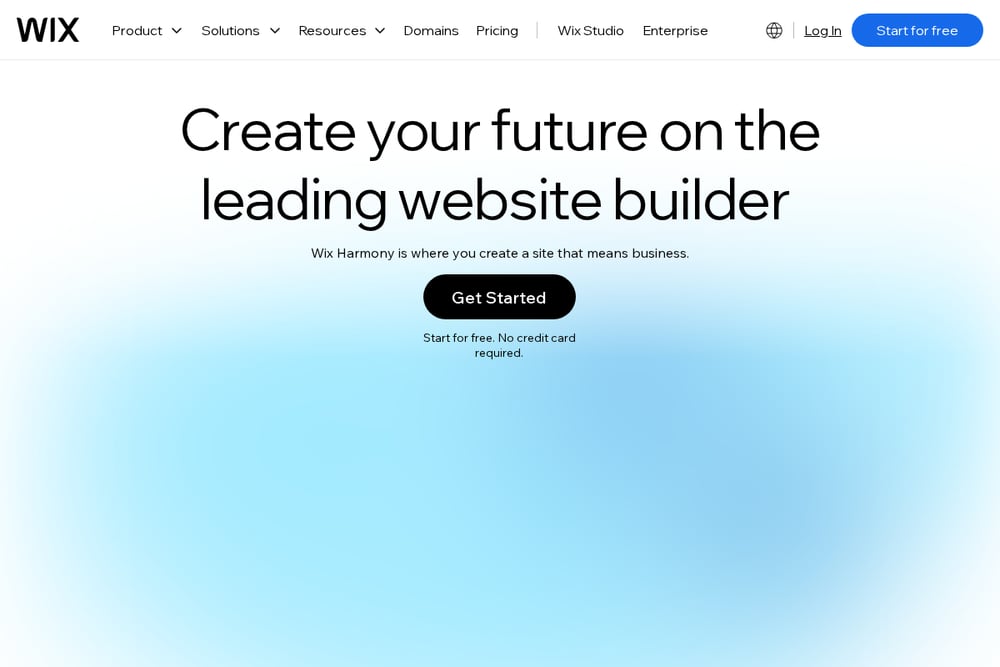 A screenshot of the Wix website.
Wix is the household name in DIY website building, and for good reason. You get an AI website builder that goes from prompt to live site in minutes, plus over 2,000 templates to choose from. For small businesses that want to launch fast without hiring a developer, Wix removes most of the friction. Its ecosystem includes payments, email marketing, SEO tools, and scheduling, so you can run much of your business from one dashboard. The trade-off is that you're working within Wix's system, which can feel limiting if you need deep customization later.
#2 James Kokonas · Websites, software, AI and 3D
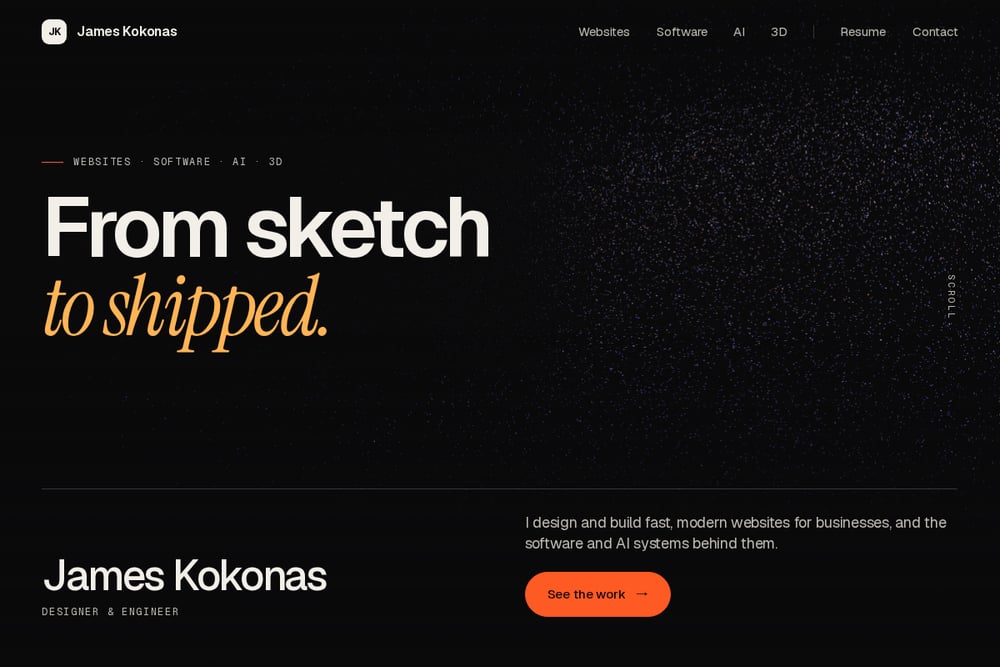 A screenshot of the James Kokonas · Websites, software, AI and 3D website.
James Kokonas is a designer and engineer who builds fast, modern websites for businesses, and the software and AI systems behind them. This isn't a template shop. You get a phone-first site built around how your customers search and call, with a page for every service and every town you work in. The portfolio includes Brick Design Studio, a live LEGO kit design web app with a custom 3D engine and an LLM tool loop, and ReFLX, a platform for an Amazon office-supply business. If you need a site that connects to real business logic, like quoting, ordering, or document extraction, this is the rare solo operator who can ship the whole stack.
#3 Squarespace
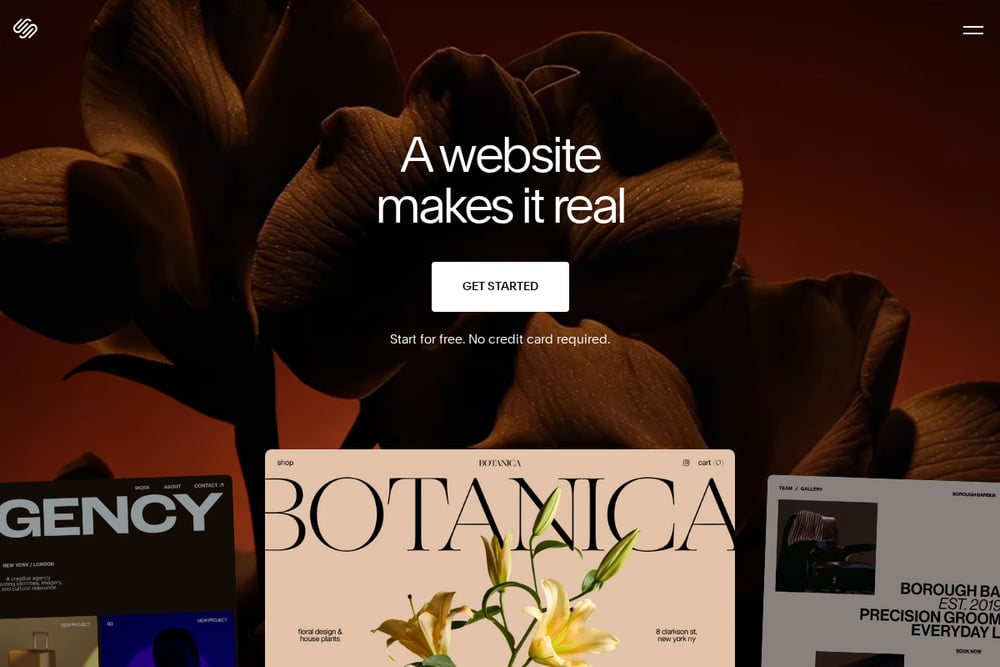 A screenshot of the Squarespace website.
Squarespace has built a reputation for beautiful, design-forward templates that make small businesses look polished without a designer. Its platform now includes AI website building, ecommerce, scheduling, invoicing, and email campaigns. For creative professionals and service businesses, Squarespace offers a strong balance of aesthetics and function. The learning curve is gentle, and the results tend to look more custom than many competitors. If your brand relies on visual presentation, Squarespace is a solid place to start.
#4 Website.com
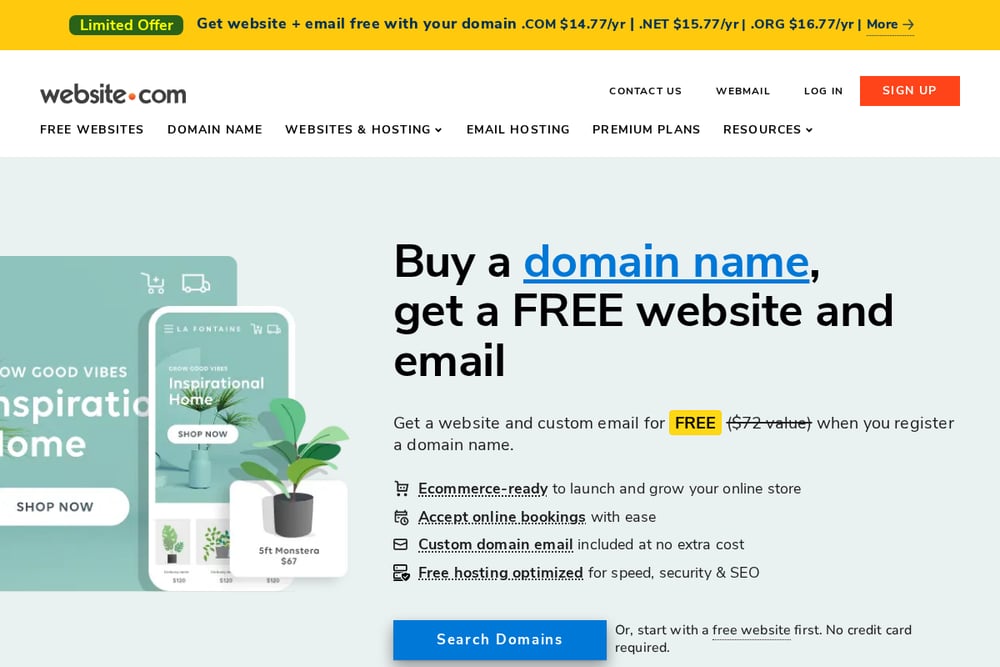 A screenshot of the Website.com website.
Website.com keeps things simple with a free website builder, domain registration, and hosting in one place. You get over 500 customizable templates, an online store builder, and scheduling software. Multilingual support is a standout feature if you serve customers in more than one language. The platform is approachable for first-time site owners who want to get online without a big investment. It's not the most powerful option, but it covers the essentials for a small business presence.
#5 HostPapa Custom Website Design
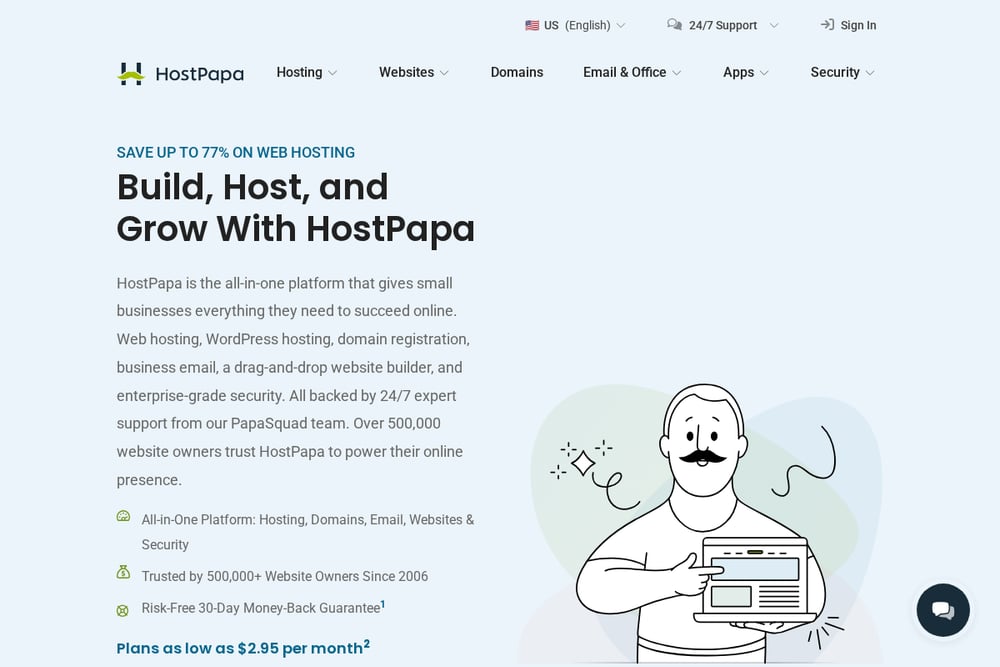 A screenshot of the HostPapa Custom Website Design website.
HostPapa offers a do-it-for-me custom website design service alongside its hosting and domain products. If you'd rather not build the site yourself, their team can handle the design while you focus on running your business. The service pairs well with HostPapa's other tools, including email, security, and business management apps. It's a practical choice for owners who want a hands-off approach and a single provider for hosting and design. The trade-off is less flexibility than a fully bespoke agency engagement.
How to Choose the Right Fit
Start with your budget and your timeline. If you need a site live this week and you're comfortable with a builder, a DIY platform like Wix or Website.com gets you there. If design is central to your brand, Squarespace is worth a look. If you want someone else to handle the build, HostPapa's custom design service or a solo designer like James Kokonas can take it off your plate. The bigger question is scope. Do you just need a brochure site, or do you need a site that connects to orders, quotes, or AI workflows? Match the service to the job, not the other way around.
Where Automation Fits In
Modern small business sites increasingly need to do more than display information. They need to capture leads, route inquiries, and sync with the tools you already use. James Kokonas builds agents and pipelines that read documents, answer questions, and move data between systems, with the testing it takes to trust them in production. Platforms like Wix and Squarespace offer built-in automation for email marketing and scheduling. If your workflow involves repetitive data entry or document processing, look for a provider who can connect those dots, not just build a pretty page.
The Bottom Line
There's no single right answer here. Your business model, technical comfort, and growth plans should drive the decision. DIY platforms give you control and speed. Custom services give you a tailored result and someone to call when things break. James Kokonas sits in a rare spot, offering both the website and the software and AI systems behind it, which matters if your site is meant to do real work. Whichever you choose, pick a partner or platform that can grow with you, not one you'll outgrow in six months.