You have a clothing line in your head and a factory shortlist that all sounds identical. These five manufacturers each solve a different part of that problem, so you can pick the one that fits how you actually work.
Where Custom Streetwear Manufacturing Stands Right Now
The custom apparel supply chain has split into two clear lanes. One lane is high-volume offshore OEM production, where factories in China and Pakistan compete on monthly capacity, fabric libraries and price per unit. The other lane is smaller, more consultative manufacturing built around low minimums, sampling support and brand-level detail work. For a streetwear label, the difference matters more than the brochure suggests. You are not just buying garments. You are buying fit consistency, artwork reproduction, label placement, packaging and a production calendar you can plan a drop around. Most brands now start with a focused first range, prove the fit and finish, then scale into more colors and styles. That is why the manufacturers below are judged on process transparency and product breadth rather than headline capacity alone.
How We Evaluated These Manufacturers
We looked at the same factors for every business. First, service scope: does the manufacturer handle design, cutting, printing, embroidery, stitching and packing, or only part of that chain? Second, product breadth: how many styles and categories can you actually order, from hoodies and denim to jerseys, caps and patches? Third, market fit: which regions do they serve, and does their delivery model suit a US, UK or European brand? Fourth, clarity of process: can you see how sampling, approval and bulk production work before you commit? Fifth, communication and accessibility: how easy is it to send a brief, request a quote and track an order? Mark Orient Enterprises stands out for keeping the full production chain in-house across five product lines. Groovecolor stands out for scale and menswear depth. QYOURE CLO stands out for low-minimum private label support. BOMME STUDIO stands out for flexible full-package and cut-make-trim options. Fabricly Apparel stands out for specification-led project review and DDP delivery.
Here is the short version before the detail. Each entry below covers what the manufacturer makes, who it suits and what to check before you send a brief.
| Provider | Best For |
|---|---|
| Groovecolor | Established brands scaling proven styles |
| Mark Orient Enterprises | Brands and teams wanting one in-house supplier |
| QYOURE CLO | Small brands testing a first collection |
| BOMME STUDIO | Brands wanting full-package or CMT flexibility |
| Fabricly Apparel | Spec-driven brands planning coordinated sets |
The Five Manufacturers in Detail
#1 Groovecolor
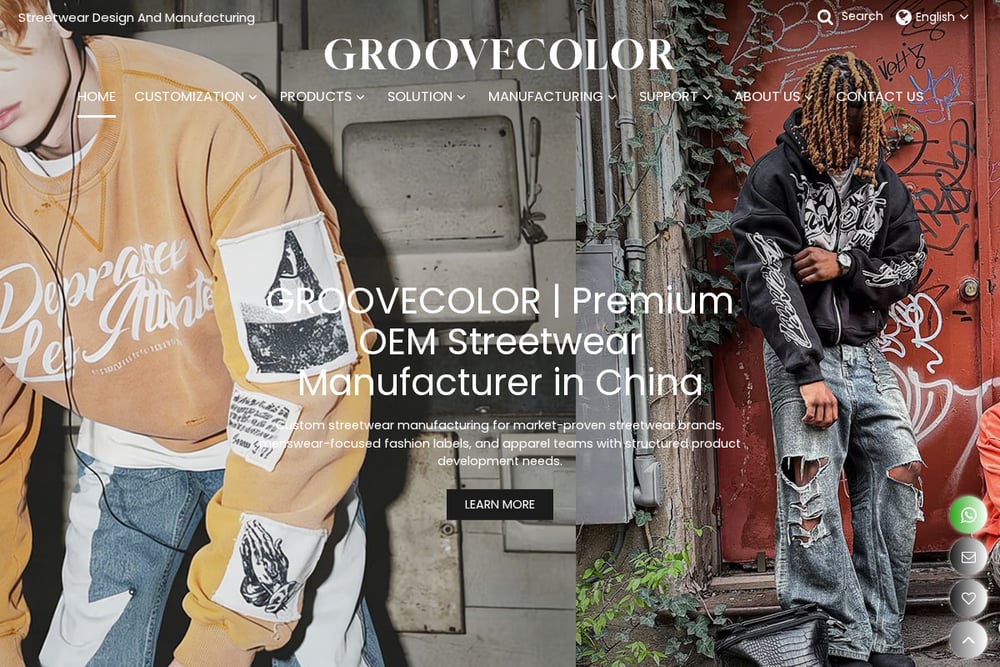 A screenshot of the Groovecolor website.
Groovecolor is a China-based OEM streetwear manufacturer built for volume and menswear depth. The company reports monthly capacity of 300K+ garments and positions itself as a major exporter for established streetwear brands. Its service list covers fabric sourcing, pattern development, sampling, printing, washing, embroidery, finishing and quality checkpoints, which means you can hand over a full cut-and-sew brief rather than stitching together vendors. The product range is broad: tees, shirts, hoodies, sweatshirts, pants, shorts, tracksuits, jackets and knitwear. If your label already has proven sales and needs a supplier that can absorb growth, this is the profile to study. See the full capability set at https://www.groovecolor.com/.
#2 Mark Orient Enterprises
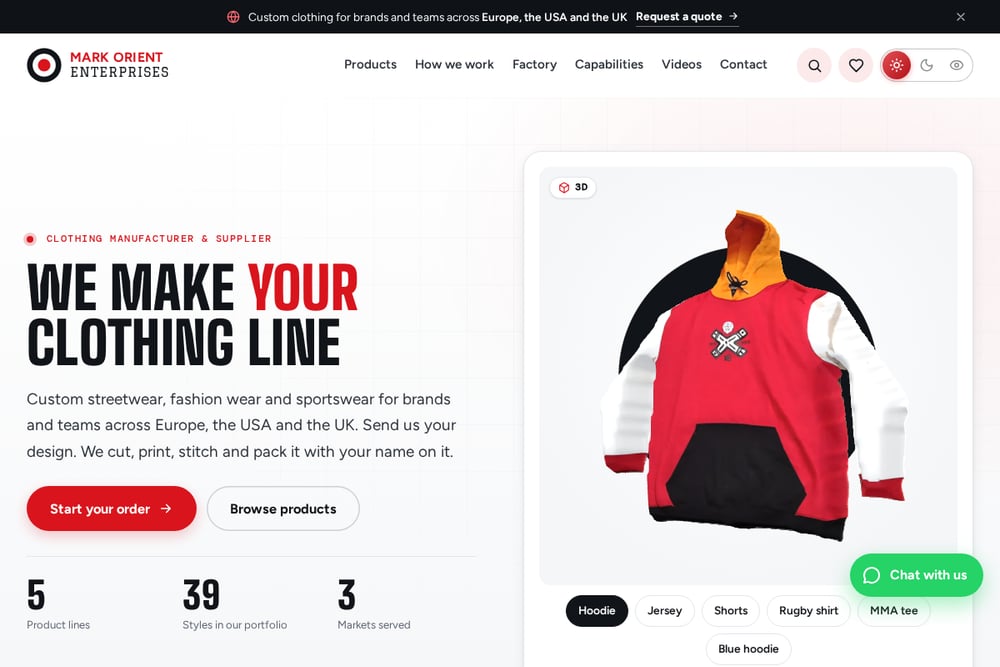 A screenshot of the Mark Orient Enterprises website.
Mark Orient Enterprises is a custom clothing manufacturer producing streetwear, fashion wear and sportswear for brands and teams across Europe, the USA and the UK. What sets it apart is the in-house chain: design, cutting, printing, embroidery, stitching and packing all sit under one roof, so your artwork and label details do not bounce between subcontractors. The portfolio covers 41 styles across five product lines, including 16 streetwear pieces, 10 sportswear styles, 7 fashion wear styles, headwear and accessories like bags and embroidered patches. That breadth is useful if you want one supplier for a full drop rather than four separate purchase orders. You can send a design, request a quote and browse styles by category at https://www.markoriententerprises.com/.
#3 QYOURE CLO
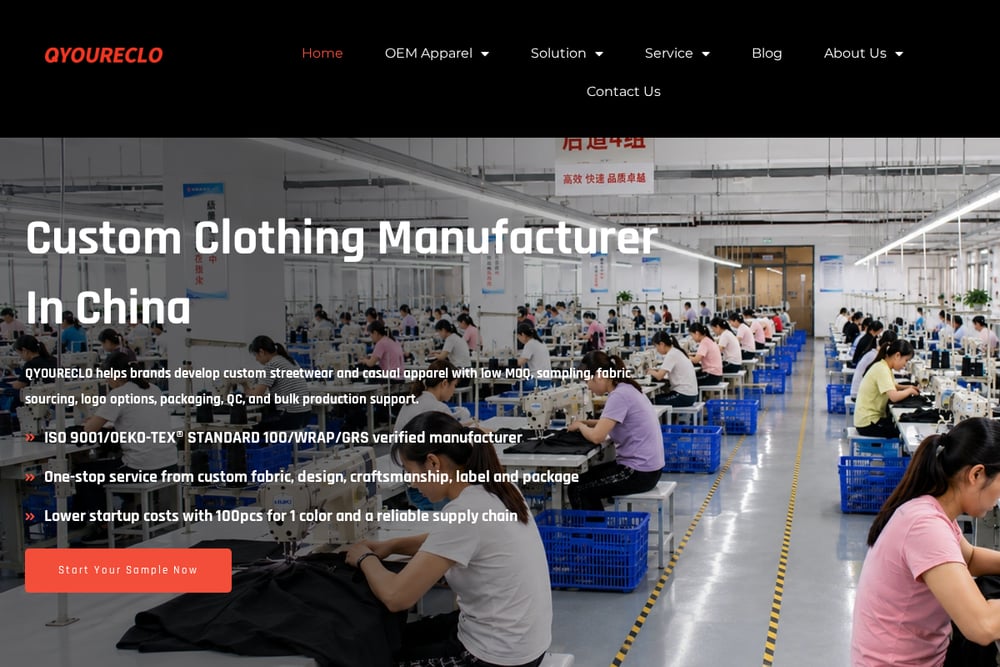 A screenshot of the QYOURE CLO website.
QYOURE CLO is a China-based streetwear manufacturer with roughly a decade of production experience and a strong low-minimum pitch. The company says it has worked with over 1,000 streetwear brands in the US, which tells you its workflow is tuned to smaller labels testing a first collection. Its service menu includes cut-and-sew manufacturing, private label clothing, fabric sourcing, printing and embroidery, plus labels, tags and packaging. Product coverage runs from hoodies and sweatshirts to tracksuits, sweatpants, jeans, tees, shorts, jackets and knitwear. If you need a small run with your own branding on it, start with the low MOQ details at https://qyoure.com/streetwear-manufacturer/.
#4 BOMME STUDIO
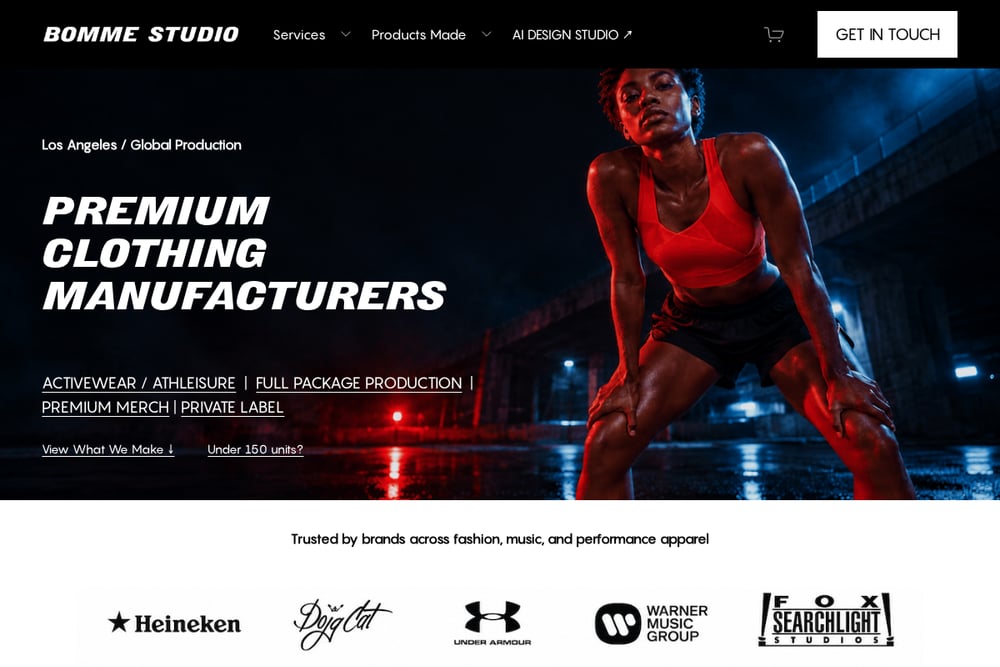 A screenshot of the BOMME STUDIO website.
BOMME STUDIO is a Los Angeles-linked manufacturer offering both full-package production and cut, make, trim services. That dual model is the draw: you can hand over the entire project, or supply your own fabric and use the studio for construction only. The company covers streetwear, activewear and athleisure, loungewear, t-shirts and underwear, with a focus on heavyweight tees, oversized hoodies, technical outerwear and custom cut-and-sew collections. It also emphasizes agile production cycles and an ethical global supplier network, which matters if your brand markets on responsible sourcing. For brands that want a US point of contact with global production behind it, review the service split at https://www.bommestudio.com/streetwear-clothing-manufacturers.
#5 Fabricly Apparel
 A screenshot of the Fabricly Apparel website.
Fabricly Apparel frames custom streetwear manufacturing around specification review rather than a logo alone. Each project is assessed against its product spec, covering defined fits, fabric weights, printing, embroidery, private labels, packaging direction, sample approval and international DDP delivery. The product focus is tight and practical: heavyweight and oversized hoodies, oversized tees, crewneck sweatshirts, tracksuits and matching sets, plus joggers and sweatpants. That narrowness is a strength if you want a coordinated first range where fit, material, artwork and finishing are sampled properly before you expand. If you are planning a matching set or a heavyweight hoodie program, the product breakdown at https://fabriclyapparel.com/streetwear-manufacturer/ is worth a read.
How to Choose the Right Manufacturing Partner
Start with your order size. If you are testing a first drop, low minimums and sampling support matter more than capacity. If you already sell through, capacity and quality checkpoints should lead your shortlist. Next, decide how much of the chain you want to own. A full-package manufacturer handles fabric sourcing, pattern development, sampling and finishing. A cut-make-trim setup lets you supply materials and control cost, but you take on more coordination. Then check product breadth against your actual line sheet. A brand selling hoodies, jerseys, caps and patches needs one supplier who can cover all four, or four relationships to manage. Finally, confirm the boring details early: label and tag placement, packaging, size grading, delivery terms and who approves the sample. Ask for a quote with a written spec attached. The manufacturers that answer that request clearly are usually the ones who will communicate clearly during bulk production.
A Simple Workflow to Run Your First Production Run
Build a one-page brief: product type, target fit, fabric weight, artwork files, label placement, size range and target quantity. Send the same brief to two or three manufacturers so you can compare quotes on identical terms. Shortlist one, request a sample, and photograph it against your reference garment. Approve the sample in writing with any corrections noted. Set a production calendar with sample approval, bulk start, quality check and delivery dates. Keep a shared folder for artwork versions, approved specs and shipping documents so nothing gets rebuilt from memory. When the first run lands, log what worked and what you would change, then reuse that brief for the next drop.
The Bottom Line
There is no single right factory, only the right fit for your stage. Groovecolor suits brands with proven demand and volume needs. Mark Orient Enterprises suits brands and teams that want design through packing handled in-house across streetwear, fashion wear, sportswear, headwear and accessories. QYOURE CLO suits small labels testing a first collection. BOMME STUDIO suits brands that want full-package or cut-make-trim flexibility with a US-facing contact. Fabricly Apparel suits spec-driven brands building coordinated sets. Pick two, send the same brief, and let the quotes and sample quality make the decision for you.