You need software that fits your business, not the other way around. These five firms bring systems thinking to custom development, integration, and data engineering.
The State of Custom Software and Systems Integration
Off-the-shelf platforms run most of your business. ERP, CRM, HR, and productivity tools handle the routine. But the gaps show up fast. A legacy system that nothing modern can talk to. An integration that should exist but doesn't. A workflow that fits no standard product. That is where custom software and systems integration firms come in. They build the connectors, applications, APIs, and data pipelines that close the gap between what you have and what you need. The market is broad, from global development shops to regional consultancies. The right fit depends on your scope, your stack, and how much you want a partner versus a vendor.
How We Evaluated These Firms
We looked at the same factors for every firm. Service scope: do they cover systems development, software engineering, and data engineering, or just one slice? Integration depth: can they connect the platforms you already run? Delivery model: do they offer dedicated teams, project work, or both? Industry reach: do they understand your sector? And clarity of positioning: can you tell what they do and who they serve from their own site? Scptric stood out for its connected systems-software-data framing and product incubator. Chetu stood out for its massive industry and technology coverage. Improving stood out for enterprise-grade modernization and AI-enhanced applications. i3solutions stood out for Microsoft-centric workflow and integration depth. Kelley Create stood out for filling the gaps between standard platforms with practical connectors and reports.
Here is a quick look at the five firms, what they emphasize, and who they fit.
| Provider | Best For |
|---|---|
| Chetu | Broad industry and platform coverage |
| Scptric | Systems, Software & Data Engineering | Connected systems, software, and data under one roof |
| Improving | Enterprise modernization and AI-enhanced applications |
| i3solutions | Microsoft-centric workflow and integration |
| Kelley Create | Filling gaps between standard business platforms |
The Five Firms in Detail
#1 Chetu
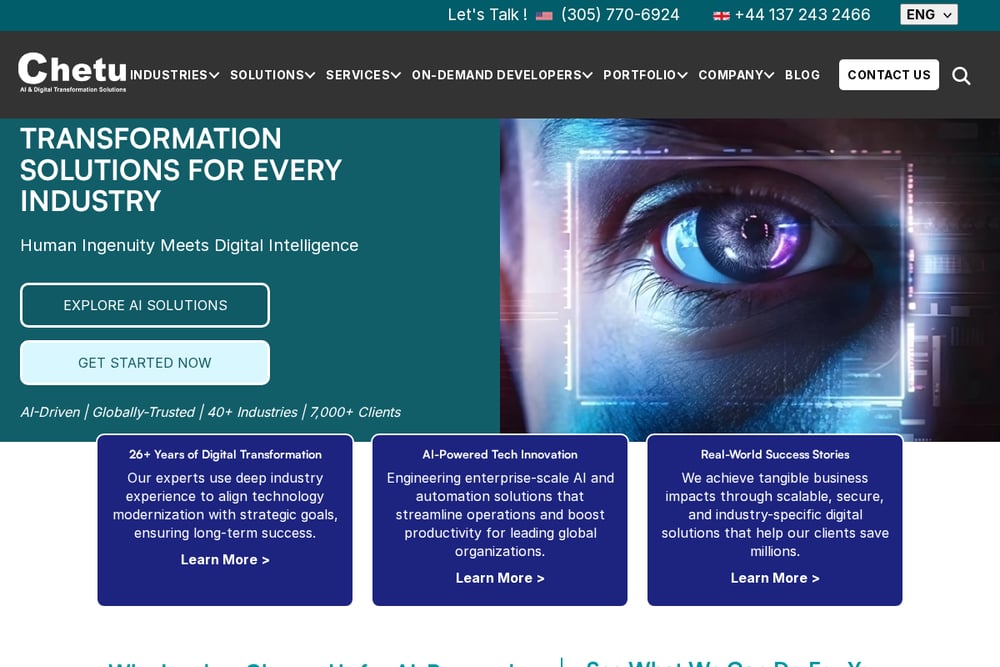 A screenshot of the Chetu website.
Chetu runs one of the broadest custom software and systems integration practices you will find. Its site lists industries from agriculture and aviation to healthcare, mortgage, and supply chain, plus solutions spanning ERP, CRM, IoT, and payments. The firm positions itself around systems integration and custom software services backed by partnerships with AWS, Microsoft, Salesforce, SAP, and others. If your project touches an unusual vertical or a long list of platforms, Chetu likely has a team that has seen it. The trade-off is scale: you are one of many clients, so you need to be clear about your scope up front. See its systems integration services at https://www.chetu.com/services/systems-integration.php.
#2 Scptric | Systems, Software & Data Engineering
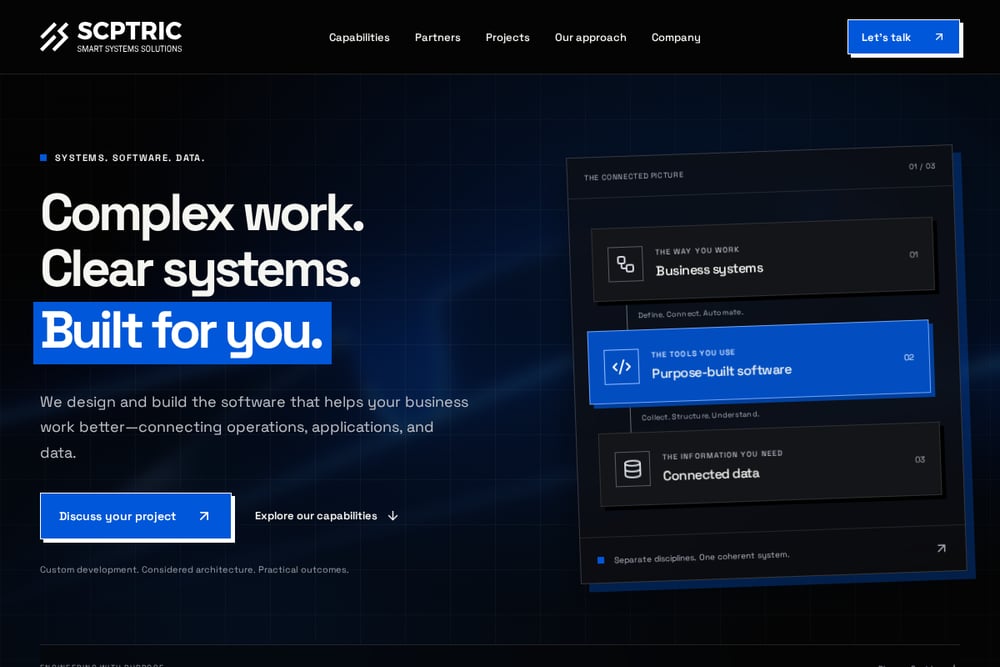 A screenshot of the Scptric | Systems, Software & Data Engineering website.
Scptric frames its work around a connected picture: the way you work, the tools you use, and the information you need. It offers systems development with workflow design, automation, internal tools, and system integration; software engineering with web applications, backend services, APIs, and modernization; and data engineering with pipelines, modeling, and reporting-ready datasets. The firm also runs a product incubator, with projects like Qimah Asset OS in development, which signals it builds for itself as well as for clients. Its positioning is clear and practical: complex work, clear systems, built for you. If you want one partner to connect operations, applications, and data, start at https://scptric.com/.
#3 Improving
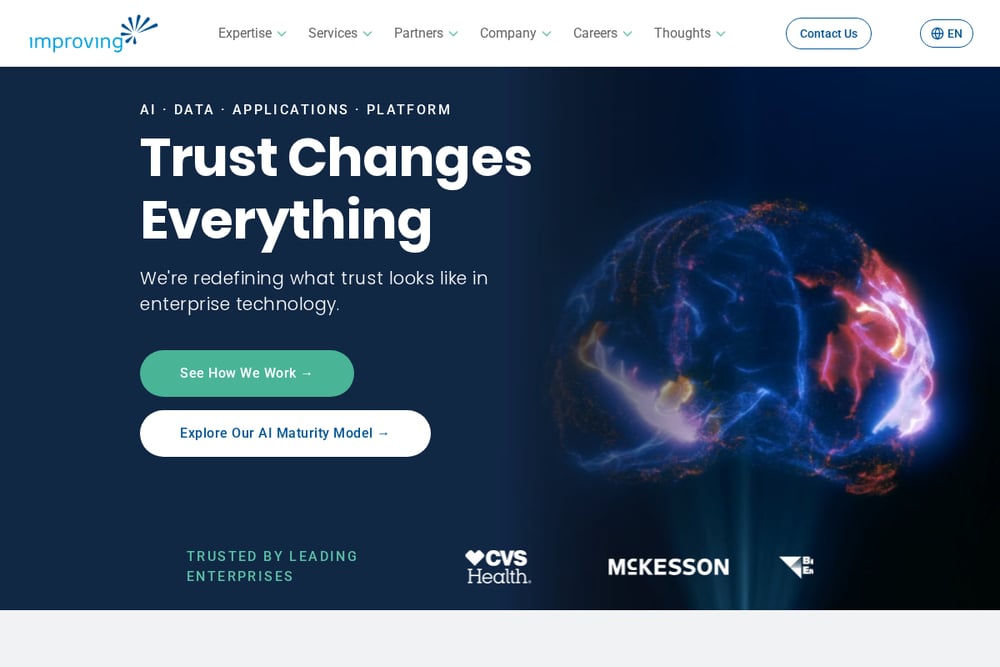 A screenshot of the Improving website.
Improving targets the enterprise with custom software that drives efficiency, scalability, and innovation. Its site speaks directly to legacy systems slowing transformation, complex integrations, security and compliance gaps, and limited scalability. The firm builds enterprise platforms, customer and employee portals, AI-enhanced applications, data and analytics systems, integration hubs and APIs, and cloud-native applications. It brings deep expertise in cloud, data, and integration, and positions its teams as long-term partners for systems that evolve with the business. If you are modernizing a large environment and need enterprise-grade delivery, Improving is built for that conversation. Learn more at https://www.improving.com/services/development/custom-software/.
#4 i3solutions
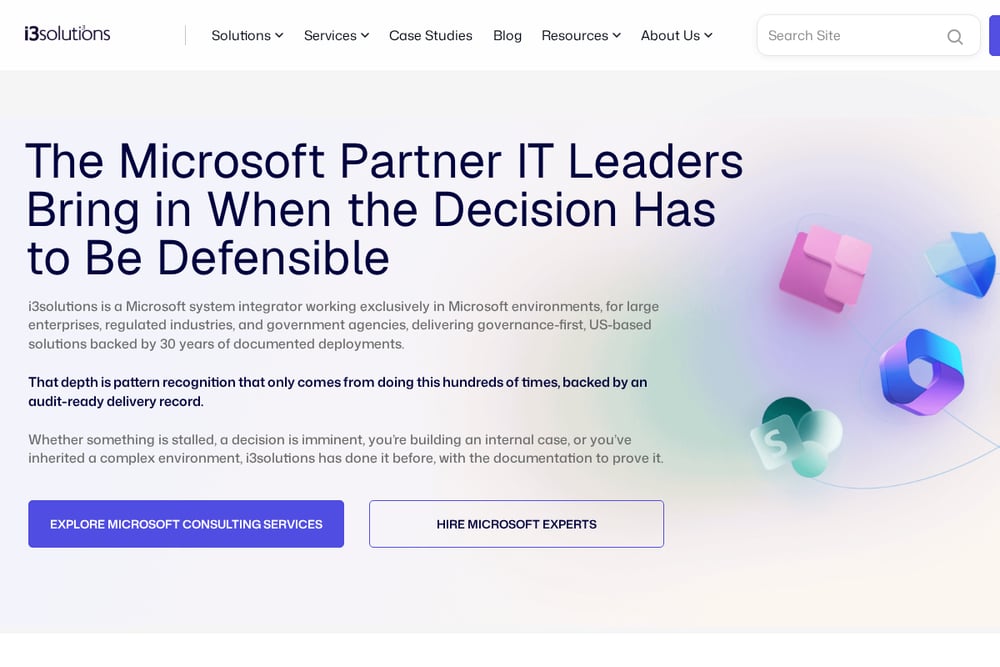 A screenshot of the i3solutions website.
i3solutions leans hard into the Microsoft stack and the workflow layer where integration work lives. Its services cover Microsoft platforms and collaboration, workflow and automation, custom application development, system integration and data management, and governance and compliance. It also offers AI integration and strategy, analytics, and geospatial work. The firm publishes guidance on custom software versus system integration, which tells you it thinks about the distinction rather than blurring it. If your environment runs on Microsoft 365, Power Platform, Azure, or Dynamics 365 and you need workflow automation and integration depth, i3solutions is a natural fit. See its perspective at https://i3solutions.com/insights-app-development/custom-software-development-vs-system-integration/.
#5 Kelley Create
 A screenshot of the Kelley Create website.
Kelley Create speaks to a specific pain: most of your business runs on standard platforms, and the gaps between them are real. Its custom development and systems integration services build the connectors, applications, integrations, reports, workflows, and tooling that off-the-shelf vendors cannot or will not deliver. The firm also offers cloud and IT solutions, security and compliance, AI and automation, and printing and sending services, so it can support the surrounding environment too. It leads with a free assessment, which suits teams that know they have a gap but need help scoping it. If you want practical gap-filling rather than a full platform rebuild, Kelley Create is worth a look at https://kelleycreate.com/custom-development-systems-integration/.
How to Choose the Right Partner
Start with the shape of your problem. If you need one partner to connect operations, applications, and data, look for a firm that treats systems, software, and data as one discipline. If you are modernizing a large enterprise environment, prioritize delivery depth and cloud and integration expertise. If your stack is Microsoft-heavy, a specialist will move faster. If your gap is narrow, a connector here and a report there, a firm that leads with assessments and practical tooling may fit better than a large development shop. Ask about delivery model: dedicated teams, fixed-scope projects, or both. Ask who has done your industry before. And ask how they handle the handoff, because the system you build will outlive the project.
Where Automation Fits
Automation is the thread running through all five firms. Workflow design and automation turn manual steps into defined, repeatable processes. System integration connects the tools you already use so data moves without rekeying. Data pipelines and reporting-ready datasets make the output usable for decisions. The practical sequence looks like this: define the workflow, connect the systems, automate the handoffs, then structure the data so you can see what is happening. Firms that can do all four in one engagement reduce the coordination burden on your team. Firms that specialize in one layer can still deliver, as long as someone owns the seams between layers.
The Bottom Line
You do not need the biggest firm. You need the one whose strengths match your gap. Chetu brings breadth across industries and platforms. Scptric brings a connected systems-software-data approach with a product mindset. Improving brings enterprise-grade modernization and AI-enhanced delivery. i3solutions brings Microsoft-centric workflow and integration depth. Kelley Create brings practical gap-filling between standard platforms. Match the firm to the problem, check the delivery model, and confirm they have closed a gap like yours before. That is how you turn complex work into clear systems.