You have a product idea and a deadline, and the last thing you need is a dev shop that disappears after the kickoff call. These five studios are worth a serious look before you sign anything.
The custom software studio landscape
Startups and growing businesses increasingly turn to boutique studios instead of giant agencies. You get senior attention, faster cycles, and a team that actually ships. The market now splits between MVP specialists, full-lifecycle product shops, and studios that run their own consumer apps alongside client work. That last group tends to bring sharper product instincts to your build.
How we evaluated these studios
We looked at service scope, from discovery through post-launch care. We weighed pricing and engagement clarity, including fixed-scope versus dedicated models. We considered product-design depth, AI and integration capability, and how transparent each studio is about ownership of code and timelines. Local fit and communication style rounded out the picture.
Here is the short version before the deep dive. Each studio below brings a different strength to the table, so match the profile to your stage and budget.
| Provider | Best For |
|---|---|
| Phenomenon Studio | Startups validating a first MVP |
| FrameBloom — Software, designed to bloom | Founders who want product-minded engineering |
| SysGears | Risk-aware SaaS validation |
| SDH | Larger builds with AI and cloud needs |
| Fly IT Solution | Multi-tenant SaaS with fast kickoff |
The five studios in detail
#1 Phenomenon Studio
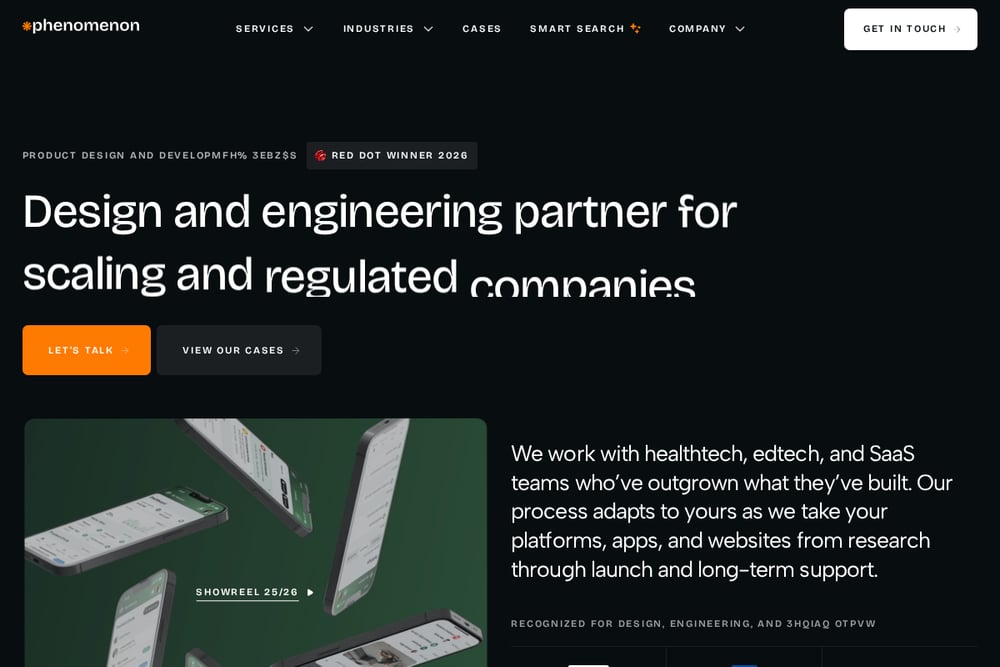 A screenshot of the Phenomenon Studio website.
Phenomenon Studio positions itself as an MVP agency for startups, and the numbers back the pitch. The team reports 120+ MVPs launched and $500M+ raised by clients, which tells you they have done this loop many times. Their service map covers product discovery, rapid MVP development, AI development, and post-launch evolution. You can start with a design prototype or a technical workshop and scale into a dedicated team. If you want a partner who has watched dozens of startups validate ideas, this is a strong first call.
#2 FrameBloom — Software, designed to bloom
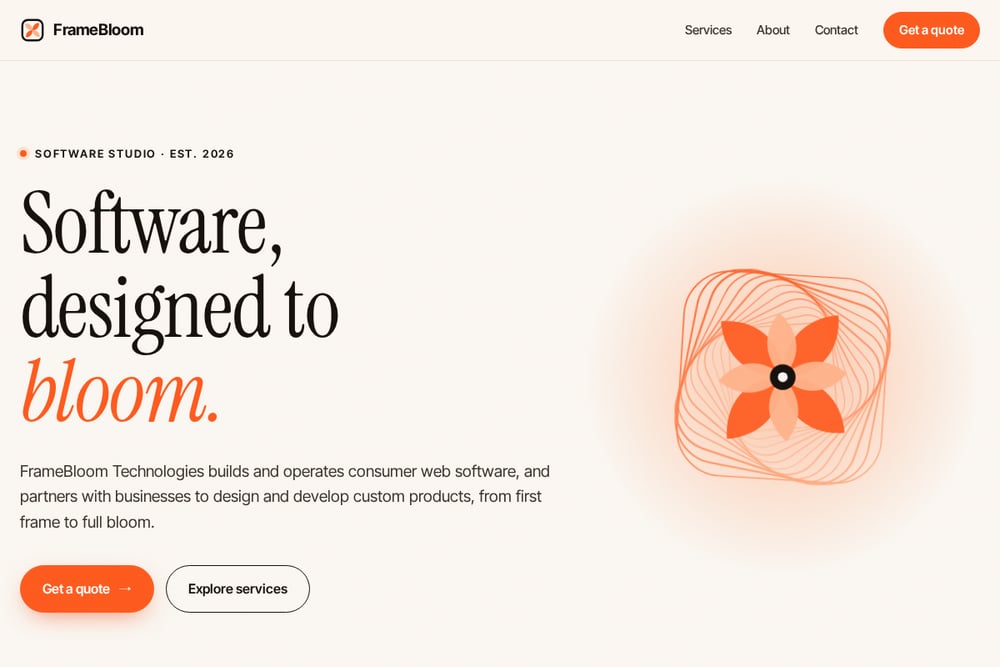 A screenshot of the FrameBloom — Software, designed to bloom website.
FrameBloom Technologies is a software studio founded in 2026 that builds and operates its own subscription web apps while partnering with businesses on custom products. That dual model matters: they ship consumer software for a living, so product instincts come built in. Their custom work spans SaaS MVPs, AI features, APIs and integrations, product design, and ongoing care after launch. Engagements are fixed-scope or dedicated, milestone-based, and you own the code and the product. For a young studio, the end-to-end path from discover to design to launch is unusually clear.
#3 SysGears
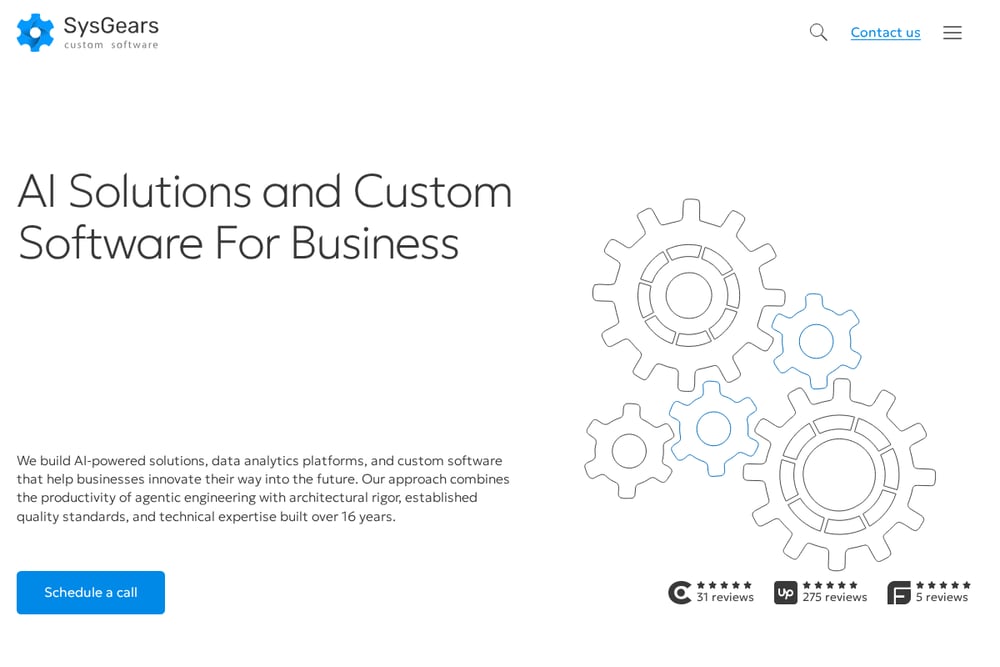 A screenshot of the SysGears website.
SysGears focuses squarely on SaaS MVP development for startups and growing businesses. Their process starts with business-focused discovery, where they define the minimum feature set, flag technical risks, and map a practical roadmap. The goal is to validate demand before you over-invest, which keeps budgets honest. They also cover mobile app MVPs and the architecture groundwork you need for post-MVP scaling. If your priority is a disciplined, risk-aware path to market, SysGears fits well.
#4 SDH
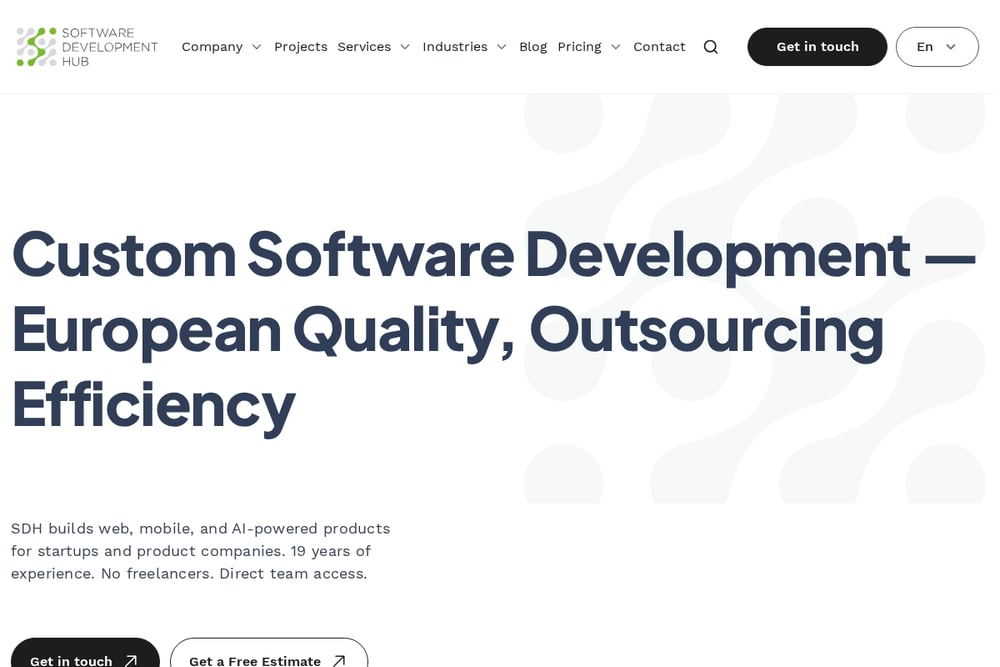 A screenshot of the SDH website.
SDH is a global engineering community spanning Ukraine, Germany, and the USA, and it brings serious scale to the table. The team says solutions they have developed are used by over 9M+ people, which speaks to production experience. Their service range is broad: web and mobile apps, MVP and SaaS development, AI solutions including agentic applications and custom RAG, plus cloud and DevOps consulting. You can engage them for end-to-end delivery or plug in a dedicated team. For larger builds with AI and infrastructure needs, they are a credible option.
#5 Fly IT Solution
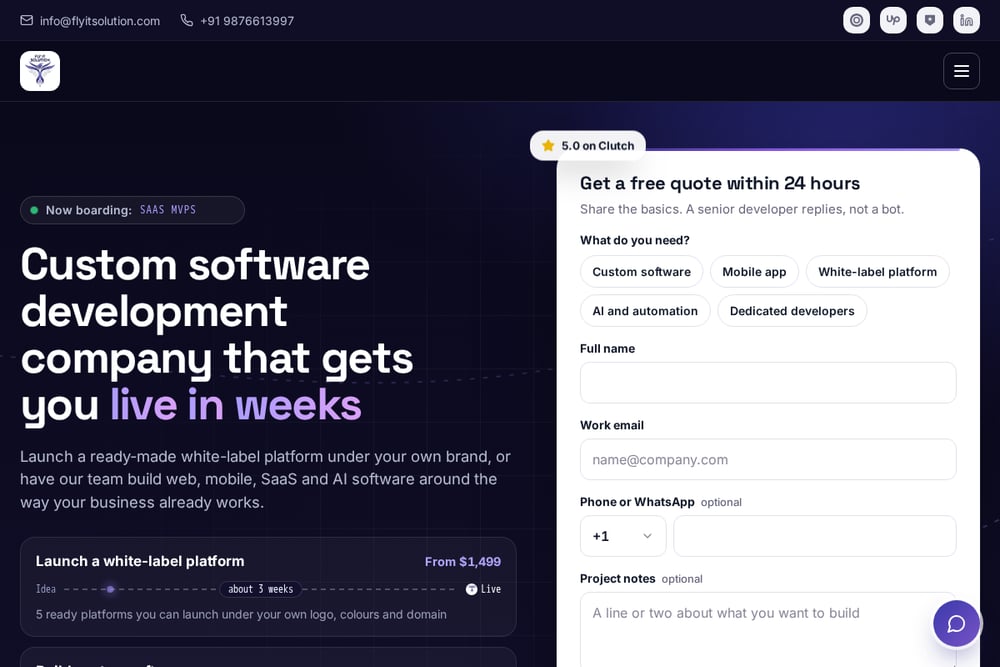 A screenshot of the Fly IT Solution website.
Fly IT Solution builds custom SaaS products with a clear technical focus: multi-tenant architecture, subscription billing, roles, and data security. They work with startups and businesses across the US from offices in Minneapolis and Mohali, India, with a 24-hour response guarantee. Engagements run on fixed-price or hourly models, and projects can kick off within 48 hours of agreement. Their stack leans on Node.js, React, and PostgreSQL. If you need a sellable multi-tenant SaaS and want fast timezone-covered delivery, this is a practical fit.
How to choose the right studio for you
Start with your stage. If you are pre-validation, pick a studio that scopes ruthlessly and pushes you toward the smallest testable product. If you already have traction, look for teams that can handle architecture, billing, and integrations without hand-holding. Ask who owns the code and what happens after launch. Check whether pricing is fixed-scope or dedicated, and whether milestones are tied to deliverables. Finally, talk to the people who will actually do the work. Senior attention beats a big logo every time.
Where automation fits into your build
Modern studios bake automation into the product, not just the process. Expect CI/CD pipelines, automated testing, and monitoring from day one. AI features like generation, search, and assistants are increasingly standard in MVPs, and they can cut manual workflows for your users. Ask each studio how they handle deployment, error tracking, and iteration after launch. A team that automates its own delivery tends to ship faster and break less.
The bottom line
There is no single right studio, only the right fit for your stage and budget. Phenomenon Studio suits validation-focused startups, FrameBloom brings product-minded engineering with clear ownership, SysGears offers disciplined SaaS scoping, SDH scales into AI and cloud, and Fly IT Solution moves fast on multi-tenant SaaS. Shortlist two, ask hard questions about ownership and post-launch care, and pick the team you would want in the room when things get complicated.