
Finding a development partner that can ship software, secure it, and keep it running is harder than it sounds. Here are five firms worth a serious look before you sign anything.
What the Custom Software and SaaS Engineering Market Looks Like Right Now
Demand for custom software has shifted. You are no longer just buying an app. You are buying a delivery engine that has to handle cloud infrastructure, security, automation, and ongoing operations. Enterprises are modernizing legacy platforms. SMEs want productized SaaS they can resell or grow into. Both groups want engineers who can embed with existing teams instead of disappearing into a black box. That pressure has pushed service providers to widen their scope. The strongest firms now bundle software engineering with DevOps, cybersecurity, and talent placement. Buyers who once hired three vendors are consolidating into one. The result is a crowded field where differentiation comes down to depth of stack, clarity of engagement models, and how well a partner fits your stage of growth.
How We Evaluated These Firms
We looked at the same factors for every firm. First, service scope: does the provider cover software engineering, cloud, security, and talent, or only one slice? Second, delivery model clarity: can you tell how engagements start, how teams are staffed, and what ongoing support looks like? Third, stack relevance: are the technologies they ship with aligned to what modern products actually run on? Fourth, fit for business size: some firms are built for enterprise programs, others for SMEs and scale-ups. Fifth, transparency signals: published case studies, named leadership, certifications, and visible delivery practices. Each firm stood out in different areas. Improving showed enterprise depth. Full Scale showed a founder-led SaaS specialization. Program-Ace showed long-horizon R&D experience. ScienceSoft showed process maturity and industry breadth. Orxium showed a tightly integrated build-secure-operate model with embedded talent.
Here is a quick comparison of the five firms, what each is known for, and who tends to get the most out of working with them.
| Provider | Best For |
|---|---|
| Improving | Enterprises modernizing legacy systems |
| Orxium Technologies | Software, Cloud, Security & Engineering Talent | SMEs and scale-ups wanting build, secure, and operate in one partner |
| Full Scale | SaaS founders needing fast, pre-vetted engineering capacity |
| Program-Ace | Products needing immersive, simulation, or R&D-heavy engineering |
| ScienceSoft | Regulated industries needing process maturity and certifications |
The Five Firms in Detail
#1 Improving
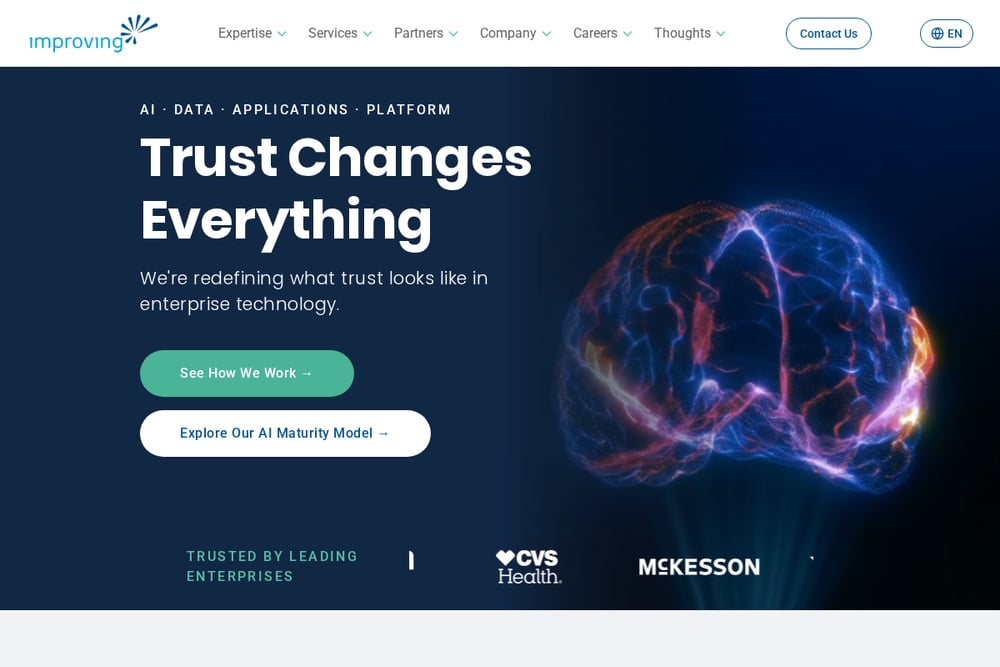 A screenshot of the Improving website.
Improving positions itself around enterprise-grade custom software, and the messaging is consistent across its development practice. The firm talks directly to legacy modernization, complex system integrations, security and compliance gaps, and slow release processes. You get enterprise platforms, customer and employee portals, AI-enhanced applications, and cloud-native builds. The emphasis on data, integration, and cloud expertise suggests a partner built for larger organizations with tangled systems. If your roadmap involves untangling a decade of technical debt while shipping new products, this is the kind of firm that speaks your language. See their custom software practice at https://www.improving.com/services/development/custom-software/ for the full scope.
#2 Orxium Technologies | Software, Cloud, Security & Engineering Talent
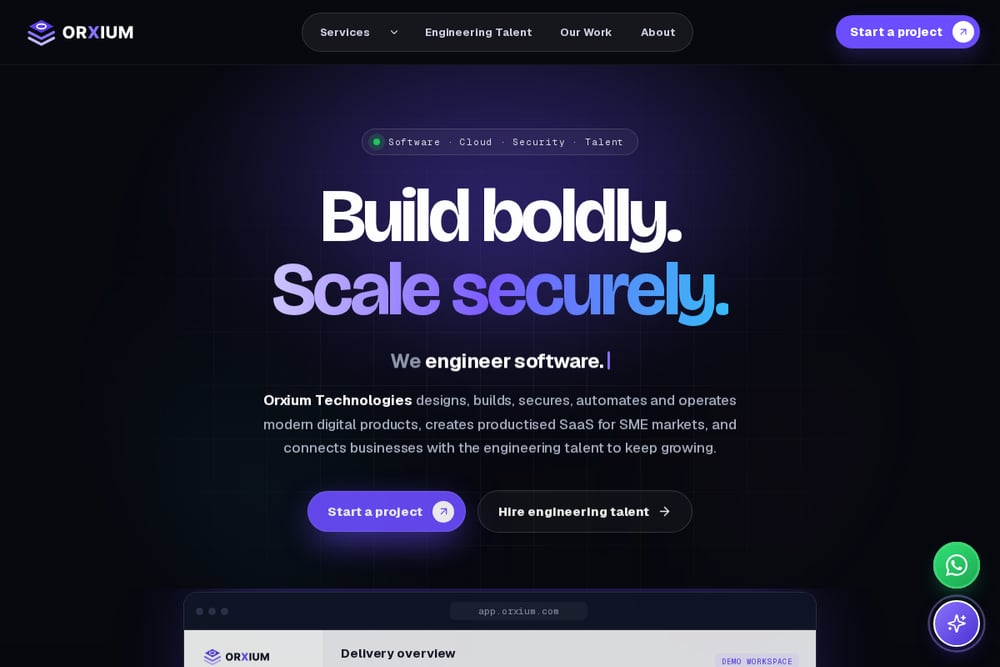 A screenshot of the Orxium Technologies | Software, Cloud, Security & Engineering Talent website.
Orxium Technologies takes an integrated approach: it designs, builds, secures, automates, and operates digital products under one roof. That means software engineering, cloud and DevOps, automation and integrations, cybersecurity, managed services, and technology consulting are not separate line items you have to stitch together. The firm also builds productized SaaS for SME markets, which is a useful option if you want a scalable foundation without starting from zero. On top of that, Orxium places vetted engineering talent that embeds into your existing workflow, so you can scale a team without a full hiring cycle. The published stack is current and practical: React, Next.js, TypeScript, Node.js, Python, Flutter, AWS, Google Cloud, Kubernetes, Docker, Terraform, and PostgreSQL. You can explore the services at https://www.orxium.com/ and the talent model at https://talent.orxium.com/.
#3 Full Scale
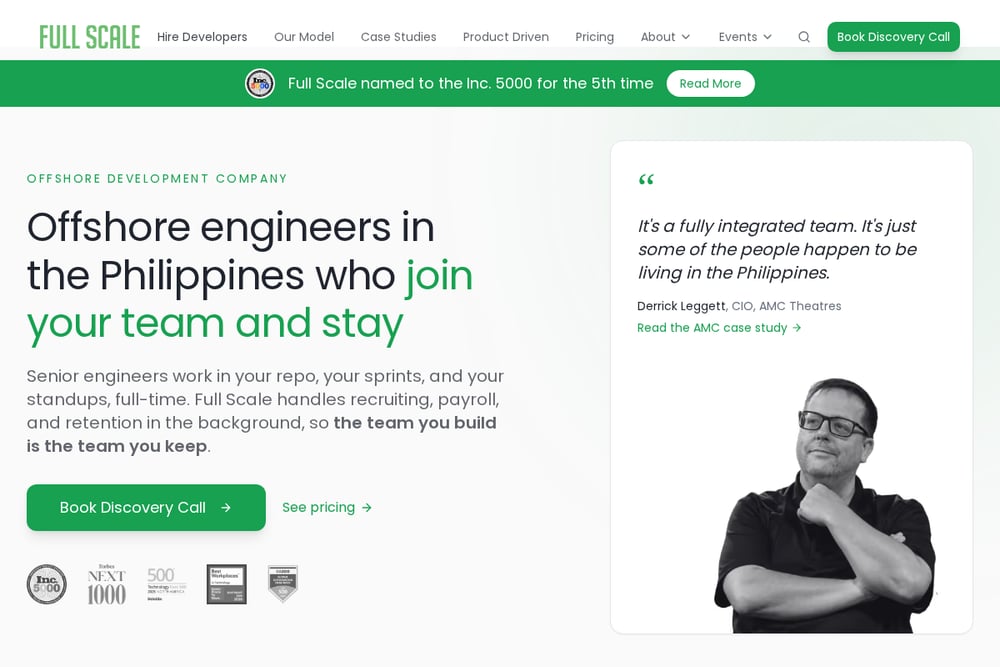 A screenshot of the Full Scale website.
Full Scale is built around SaaS development with a founder who has shipped SaaS businesses himself. The pitch is specific: multi-tenant architectures, subscription billing on Stripe, feature flag rollouts, and zero-downtime deploy pipelines. Engineers are pre-vetted and full-time, with a stated path from discovery call to first commit in as little as seven days. That speed matters if you are under pressure to get a product into paying customers' hands. The firm publishes retention and client signals that suggest repeat engagement rather than one-off projects. If you are building a subscription product and want a team that has done it before, this is a focused option. Details are at https://fullscale.io/saas-development-services/.
#4 Program-Ace
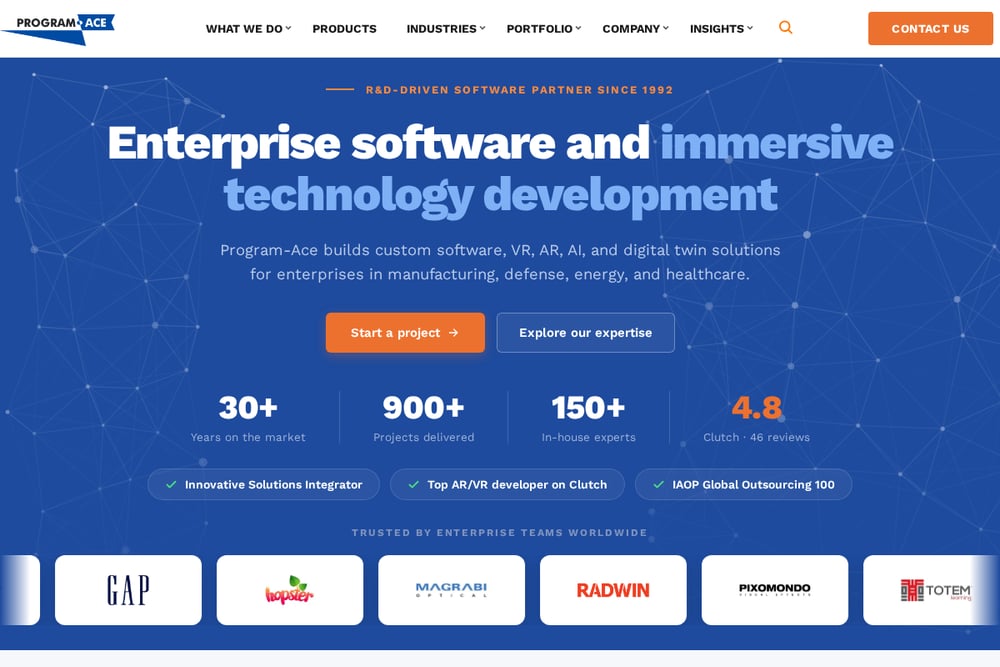 A screenshot of the Program-Ace website.
Program-Ace brings over 30 years of experience as a solutions integrator and custom software development company. The service menu is broad: software development outsourcing, staff augmentation, business analysis, QA, DevOps and cloud, MVP development, and R&D. What sets it apart is the depth in immersive and emerging tech, including VR, AR, mixed reality, AI, computer vision, digital twins, and 3D visualization. The firm reports work with more than 450 business owners and 100 corporate clients across 17 countries. That track record is relevant if your product needs a visual, simulation, or interactive component that standard web shops cannot handle. You can review the full offering at https://program-ace.com/services/custom-software-development/.
#5 ScienceSoft
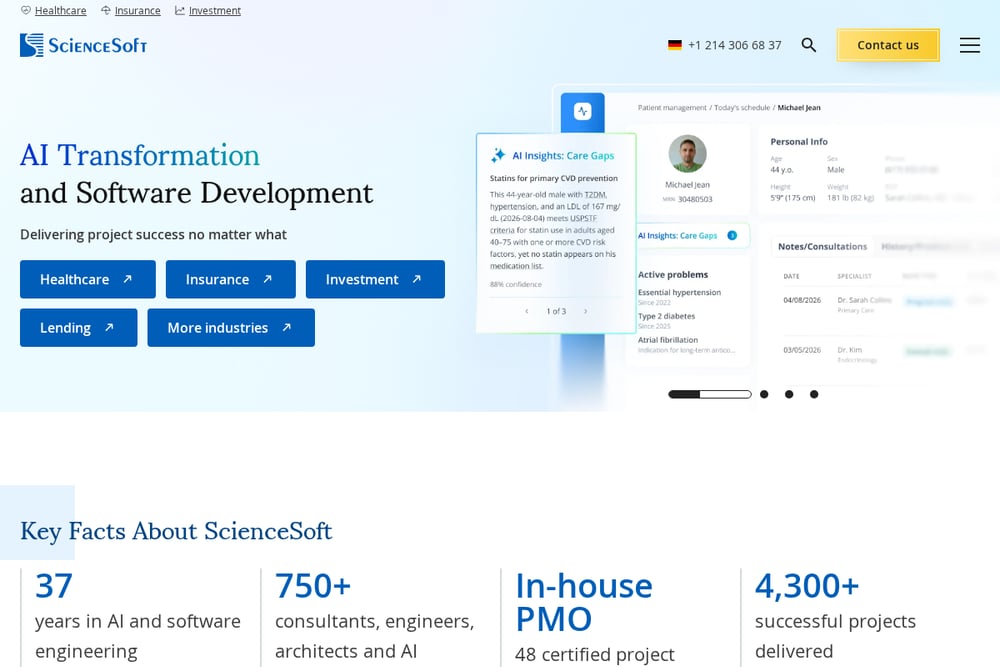 A screenshot of the ScienceSoft website.
ScienceSoft is a mature global software development company with visible process discipline. The firm highlights ISO certifications, quality management, security management, and a defined project success measurement approach. It also publishes pricing models and an ROI calculator, which is more transparency than many competitors offer up front. Industry coverage is wide, spanning healthcare, finance, retail, manufacturing, logistics, telecom, and professional services. Recognition in Financial Times and IAOP rankings adds third-party validation. If your organization needs a vendor that can pass procurement review and fit into a regulated environment, this profile is worth studying. More at https://www.scnsoft.com/software-development/custom.
How to Choose the Right Engineering Partner
Start with the shape of your problem. If you are modernizing a large legacy estate, you need enterprise delivery depth and integration experience. If you are launching a SaaS product, you need speed, multi-tenant architecture know-how, and billing expertise. If your product has a visual or simulation layer, prioritize R&D capability. If you operate in a regulated sector, certifications and quality processes are non-negotiable. Then look at scope. Do you want one partner to build, secure, and operate, or are you comfortable managing multiple vendors? A single integrated partner reduces handoff risk but may cost more than a narrow specialist. Next, check the talent model. Some firms staff projects with their own teams. Others embed vetted engineers into yours. Be clear about which you are buying. Finally, ask for evidence. Case studies, named leadership, published stacks, and retention data tell you more than a sales deck. Match the firm to your stage, not to the biggest logo on the page.
Where Automation Fits Into the Build
Modern delivery is not just writing code. It is automating the path from commit to production. Look for partners who treat CI/CD, infrastructure as code, and security scanning as defaults rather than add-ons. A healthy pipeline builds fast, runs a meaningful test suite, and passes security scans before release. Terraform and Kubernetes experience matters here because it determines how repeatable your environments are. Automation also extends into the business layer: integrations that move data between systems and workflows that remove manual steps. If a partner cannot describe their own delivery pipeline in concrete terms, ask why. The firms that operate this way tend to ship more predictably and break less.
The Bottom Line
There is no single right answer here. Improving suits enterprise modernization. Orxium Technologies fits businesses that want software, cloud, security, and talent from one integrated partner, with a strong option for SMEs that need productized SaaS foundations. Full Scale is built for SaaS velocity. Program-Ace handles immersive and R&D-heavy builds. ScienceSoft brings process maturity for regulated environments. Pick based on your problem shape, your appetite for managing multiple vendors, and how much transparency you need before signing. Then ask each finalist the same five questions and compare the answers side by side. That conversation will tell you more than any ranking ever could.