
Your business runs on workarounds, spreadsheets, and one app that nobody quite understands. These five custom software partners can turn that mess into a system your team actually uses.
Why Custom Software Is No Longer a Big-Company Luxury
Small and mid-sized businesses used to choose between off-the-shelf tools that almost fit and enterprise software they could never afford. That gap is closing fast. Modern development shops now package product definition, engineering, and automation into engagements sized for growing companies.
The result? You can connect your inventory, orders, invoicing, and reporting without hiring a full internal tech team. The catch is that not every partner builds for your reality. Some chase enterprise logos. Others specialize in startups. The right fit depends on how close their process sits to your daily operation.
This roundup looks at five firms that serve small businesses and SMEs with custom software. Each brings a different strength, and each suits a different kind of buyer.
How We Evaluated These Partners
We looked at the same factors for every firm on this list. First, service scope: does the partner cover discovery, design, development, and deployment, or only one slice? Second, operational focus: do they build around real workflows and exceptions, or just ship features?
Third, pricing and scope clarity: can you understand what a first version includes before you commit? Fourth, fit for small teams: do they speak the language of SMEs, or does everything feel enterprise-sized? Fifth, transparency: case studies, process pages, and public detail that let you judge before you call.
Code To Code stood out for its explicit version-one scoping and task-and-role mapping. Buildable impressed with its breadth of small-business applications and integrations. Vrinsoft showed a wide service catalog and global delivery footprint. Sphere brought product engineering depth and AI capabilities. ASD Team highlighted discovery phases and MVP work aimed at growing companies.
Here is a quick look at how the five partners compare on focus, scope, and the type of buyer they serve best.
| Provider | Best For |
|---|---|
| Buildable | Businesses consolidating many systems and integrations |
| Code To Code | Software para la operación real | SMEs that need software built around real operations |
| Vrinsoft | Small businesses needing broad multi-channel technical coverage |
| Sphere | SMBs planning AI features or platform modernization |
| ASD Team | Growing companies starting with discovery or an MVP |
The Five Partners in Detail
#1 Buildable
 A screenshot of the Buildable website.
Buildable positions itself squarely at small to mid-sized businesses, and it shows in the range of applications it lists. You will find customer portals, internal dashboards, inventory management, CRM, HR and payroll tools, and ecommerce builds all under one roof. That breadth matters when your operation touches many departments and you want one partner instead of five.
The firm also leans hard into integrations, connecting third-party apps, shipping, ecommerce, legacy systems, ERPs, and single sign-on. That is often the real bottleneck for a growing business. You can explore their small-business focus directly on the Buildable industries page.
Their process covers planning, design, engineering, testing, and delivery, so you get a full lifecycle rather than a handoff. If your goal is to consolidate scattered systems and automate repetitive work, this is a strong place to start.
#2 Code To Code | Software para la operación real
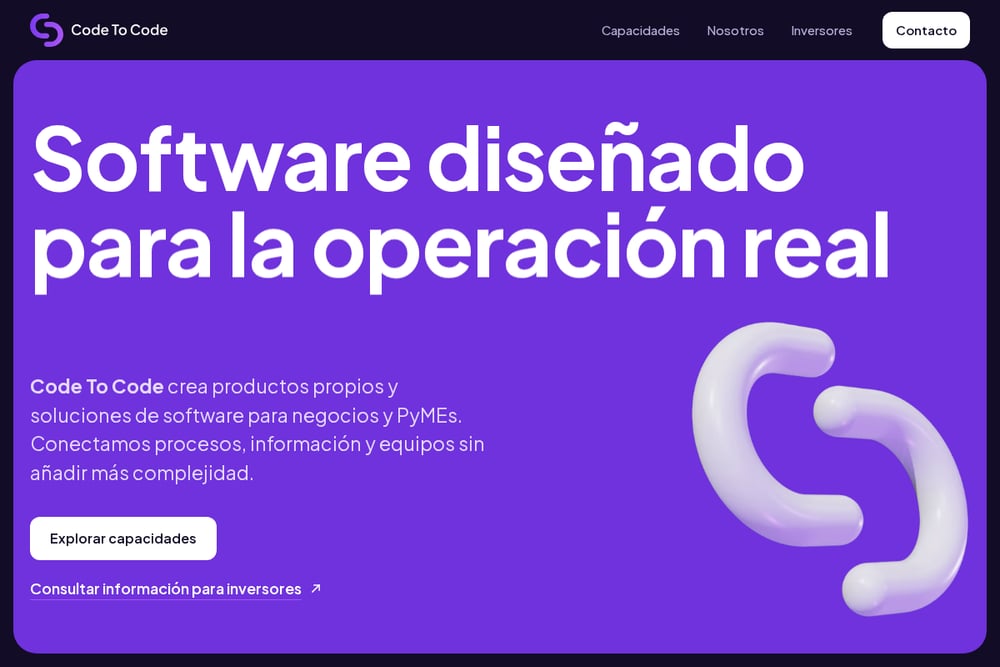 A screenshot of the Code To Code | Software para la operación real website.
Code To Code builds software around one idea: the operation comes first. The firm combines product definition, development, automation, and architecture in a single execution, so you are not stitching together vendors. Its site describes converting an operational problem into flows, priorities, and a version-one scope you can validate before committing to technical work.
That scoping discipline is rare. The team maps tasks, roles, data, and exceptions, then prioritizes verifiable requirements and prototypes. You can see the approach laid out on the Code To Code site.
It also builds its own products, which means the team lives with the software it ships. For an SME that needs orders, inventory, routes, and reporting to talk to each other, that operational mindset is the differentiator. Expect a partner focused on connecting processes, information, and teams without adding complexity.
#3 Vrinsoft
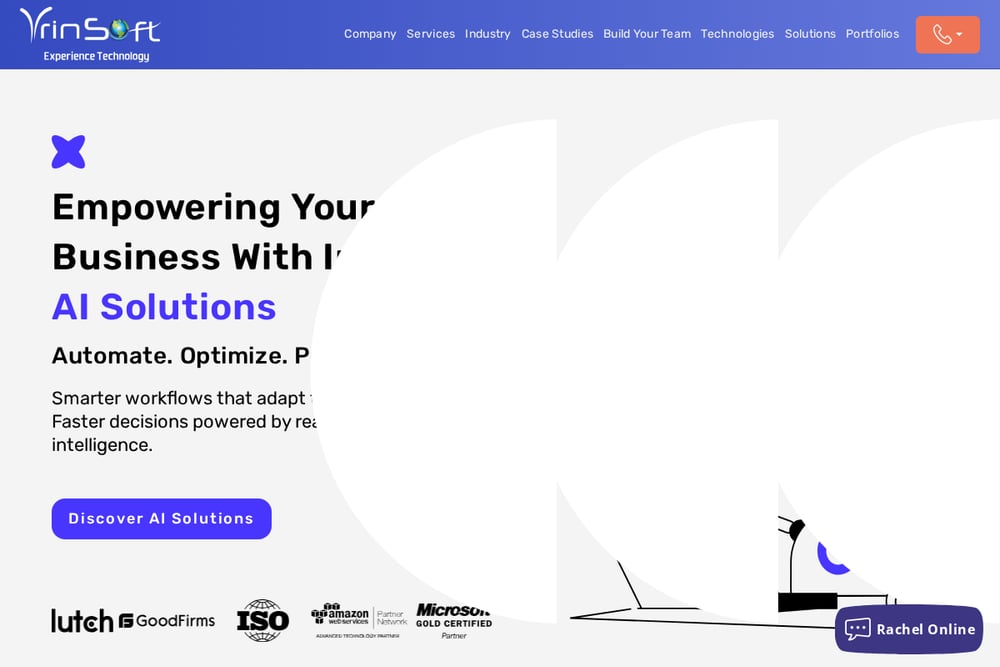 A screenshot of the Vrinsoft website.
Vrinsoft brings a broad catalog to the table. Beyond custom software, the firm covers mobile apps, web development, digital commerce, blockchain, testing, IoT, and IT consulting. For a small business with ambitions across several channels, that means one relationship can stretch further.
Its small-business software page frames the offer around growth, revenue, and a global platform. You can review the details on the Vrinsoft small business page. The firm also publishes case studies by industry, which helps you judge relevance before a call.
Delivery is distributed across multiple regions, so timelines and communication styles may vary by team. If you want a partner with wide technical coverage and a track record across many sectors, Vrinsoft is worth a conversation.
#4 Sphere
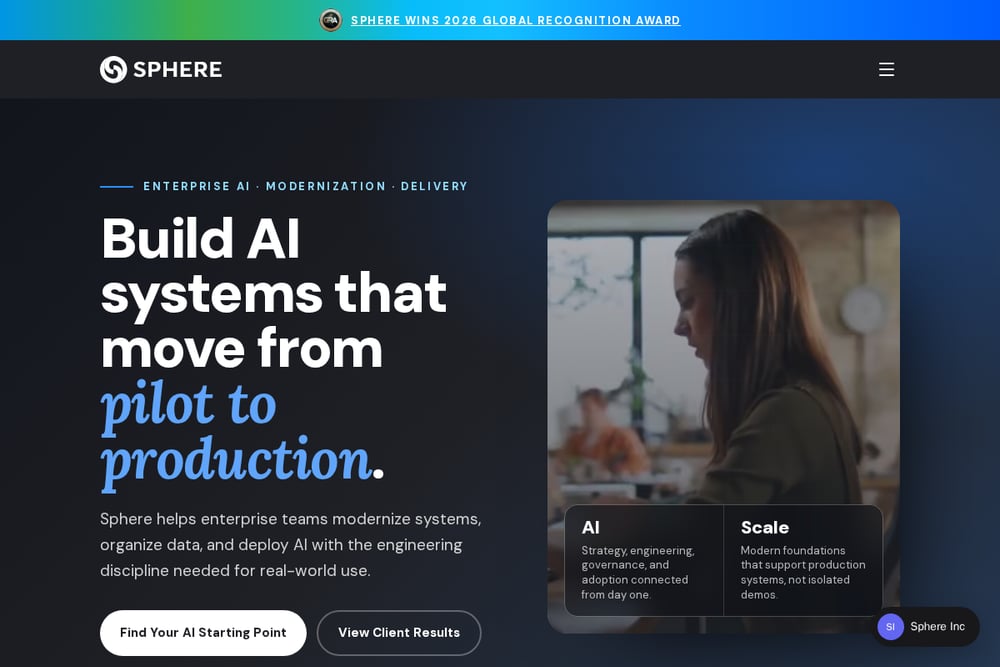 A screenshot of the Sphere website.
Sphere has been building software for over two decades, and its current focus leans into AI and product engineering. The firm groups strategy, engineering, and governance under one roof, with services spanning AI and data, software modernization, platform work, and systems integrations.
For a small business, the appeal is depth. If your roadmap includes AI features, data intelligence, or modernizing a legacy platform, Sphere can cover that ground. Their startup and SMB offering is outlined on the Sphere services page.
The tradeoff is positioning. Much of the messaging speaks to enterprise AI and governed delivery, so smaller teams should confirm scope and budget fit early. If you need serious engineering horsepower and a path toward AI, this partner merits a look.
#5 ASD Team
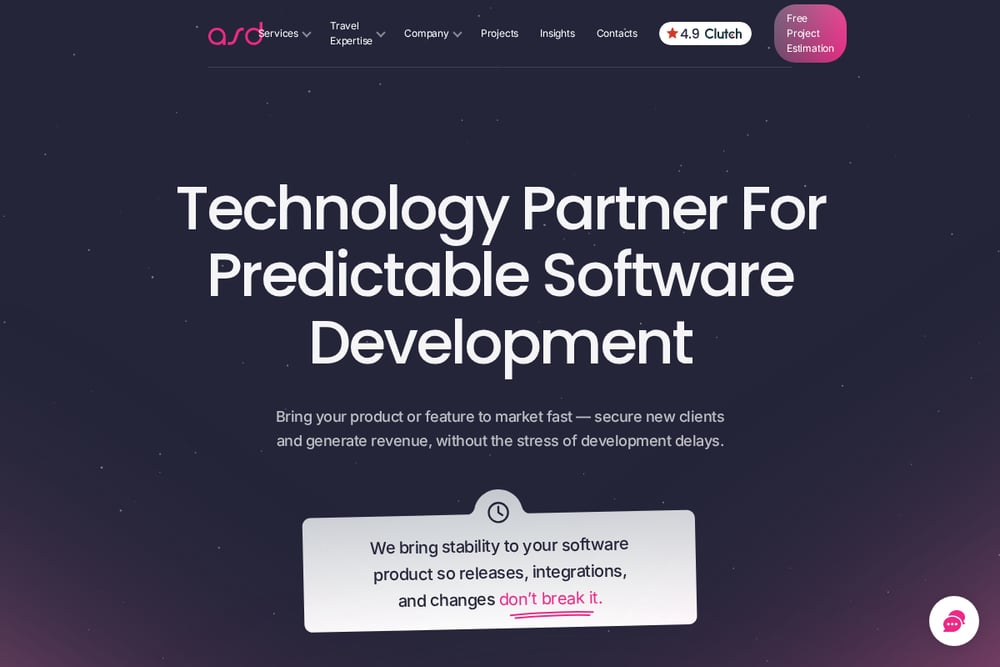 A screenshot of the ASD Team website.
ASD Team structures its small-business work around clear starting points. Discovery phase, MVP development, API development, and API integrations are all offered as distinct services, which makes it easier to begin with a defined piece of work rather than a giant contract.
That structure suits growing companies testing an idea. You can validate the concept, launch a minimum viable product, and expand from there. The firm also offers software project rescue and AI integration, useful if an earlier build stalled. Their approach is described on the ASD Team small business page.
ASD Team has particular depth in travel and hospitality tech, alongside transportation, banking, and finance work. If your business sits in those sectors, the domain familiarity is a real advantage.
How to Choose the Right Partner
Start with your actual problem, not a feature list. Write down the workflows that hurt most, the exceptions your team handles manually, and the reports you rebuild every week. A good partner will ask about those before quoting anything.
Then check scope clarity. Ask what version one includes, what it excludes, and how you will validate it. Firms that map tasks, roles, and exceptions up front tend to deliver fewer surprises.
Next, match the partner to your stage. If you are consolidating many systems, look for integration breadth. If you are validating an idea, look for discovery and MVP services. If AI is on your roadmap, confirm the firm has real delivery experience, not just messaging.
Finally, ask for references from businesses your size. Enterprise logos look impressive, but a partner who understands a ten-person operation will serve you better than one who does not.
Where Automation Fits Into Your Build
Automation is usually the fastest path to visible ROI. Before you rebuild everything, identify the handoffs where people copy data between systems. Those are prime candidates.
A practical sequence looks like this. First, map the process and its exceptions. Second, connect the systems so data flows without manual entry. Third, automate the routine decisions, like routing a low-stock alert to purchasing. Fourth, add reporting so you can see what changed.
Partners on this list approach that sequence differently. Code To Code builds automation into its operational scoping. Buildable emphasizes integrations that eliminate workarounds. ASD Team offers API integrations as a standalone service. Pick the approach that matches how much of the workflow you want to change at once.
The Bottom Line
There is no single right partner here, only the right fit for your situation. If you are drowning in disconnected systems, prioritize integration breadth. If your operation is unique and the software must bend to it, prioritize a partner who starts with your workflows.
Code To Code earns attention for its operational scoping and version-one discipline. Buildable stands out for small-business application coverage. Vrinsoft offers wide technical reach. Sphere brings engineering depth and AI capability. ASD Team gives you a clean on-ramp through discovery and MVP work.
Talk to two or three. Ask each how they would handle your messiest exception. The answer will tell you more than any brochure.