
Your tools don't talk to each other, so your team becomes the glue. These five US-facing software and integration partners exist to fix exactly that.
The integration gap is quietly eating your week
Most growing businesses don't have a software problem. They have a connection problem. Your sheets, CRM, inbox, payments and accounting each hold a slice of the truth, and someone has to stitch those slices together by hand. That stitching is where late reports, typing mistakes and burnout come from. Custom software and system integration firms step into that gap. They build the APIs, dashboards, portals and automations that let your existing tools exchange data on their own. The market has split into two camps: large offshore-heavy shops with enormous service catalogs, and leaner product-minded teams that scope tightly and ship in stages. Knowing which camp fits your project matters more than any logo on a landing page.
How we looked at these five
We weighed each partner on the same factors. First, service scope: does the firm cover web apps, mobile apps, APIs, hardware integrations and automation under one roof, or only part of the stack? Second, pricing and engagement clarity: fixed price versus time and materials, weekly demos, and whether you own the code at the end. Third, delivery rhythm: how work is staged, reviewed and handed over. Fourth, breadth of industry experience, since a firm that has shipped in your vertical will ask better questions early. Fifth, support after launch, because software that nobody maintains becomes the next disconnected tool. Codosync stood out for its fixed-price, weekly-demo model and explicit code ownership. Chetu stood out for the sheer size of its industry and technology catalog. Apiko stood out for its product discovery and AI workflow focus. Appinventiv stood out for enterprise-scale product engineering and AI services. Telliant stood out for Microsoft Azure depth and long-run client retention.
Here's a quick side-by-side of the five firms, what each is known for, and who each tends to suit. Use it as a starting map, then read the deeper notes below before you shortlist.
| Provider | Best For |
|---|---|
| Chetu | Complex, multi-industry integration projects |
| Custom Software Development & API Integration | Codosync | Fixed-price builds with clear code ownership |
| Apiko | Product discovery plus AI-driven automation |
| Appinventiv | Enterprise-scale product engineering and AI |
| Telliant Systems | Azure-native integration and modernization |
The five, in detail
#1 Chetu
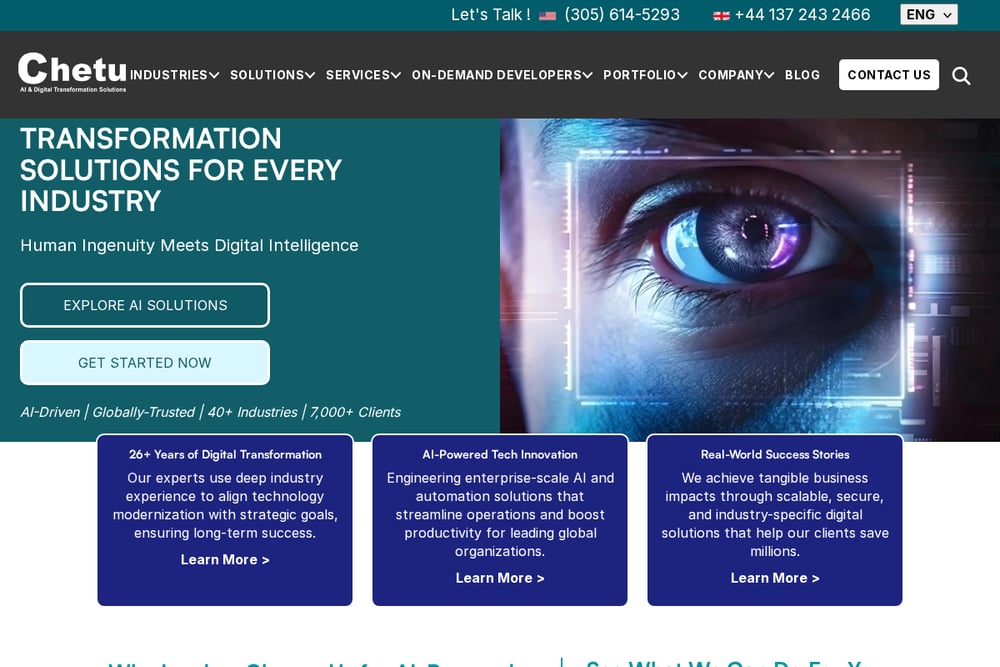 A screenshot of the Chetu website.
Chetu is the heavyweight of this group. Its systems integration practice sits inside a catalog that spans dozens of industries, from agriculture and aviation to mortgage, retail and supply chain, plus a long list of technology solutions like CRM, ERP, IoT, kiosk and embedded software. That breadth means you can usually find a team that has already shipped something close to your problem. The trade-off is scale: you're navigating a large organization, so clear scoping and a named point of contact matter. If your project touches an unusual vertical or a legacy stack, the depth here is hard to match. See the firm's integration practice at Chetu systems integration.
#2 Custom Software Development & API Integration | Codosync
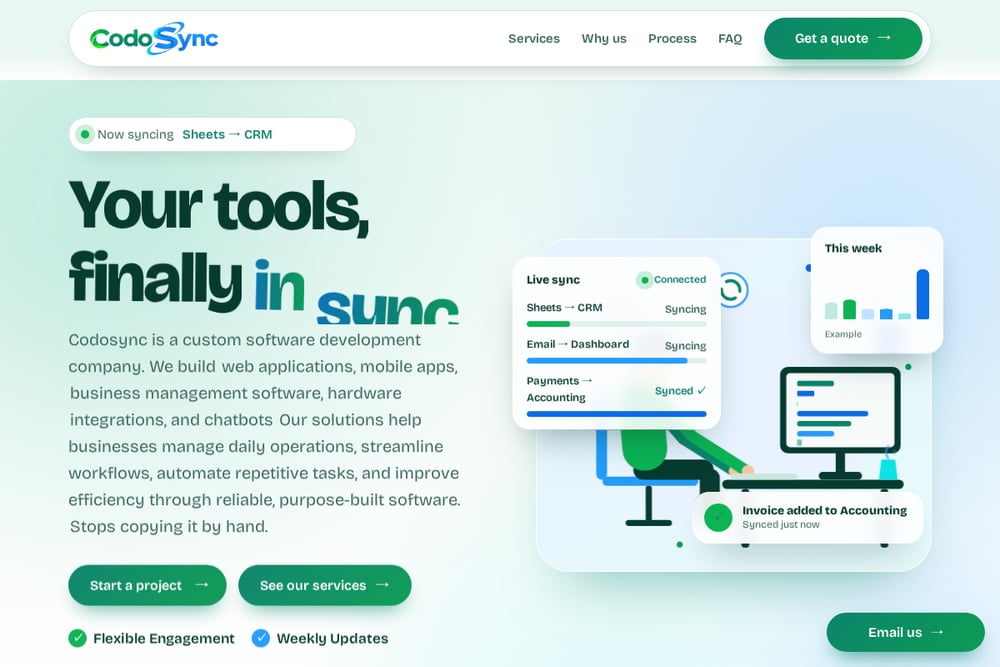 A screenshot of the Codosync website.
Codosync is built around a simple promise: your tools, finally in sync. The firm builds web apps, mobile apps, business management software, custom APIs, hardware integrations and chatbots, with a strong emphasis on replacing manual data entry with scheduled automation. What sets it apart is the engagement model. Projects run on a fixed price with weekly updates and working demos, and you own the code when it's done. That combination removes two of the biggest fears buyers have: runaway budgets and vendor lock-in. The site's own framing is blunt and useful, describing how disconnected sheets, email, CRM and payments turn your team into the connection. You can see the service breakdown at Codosync.
#3 Apiko
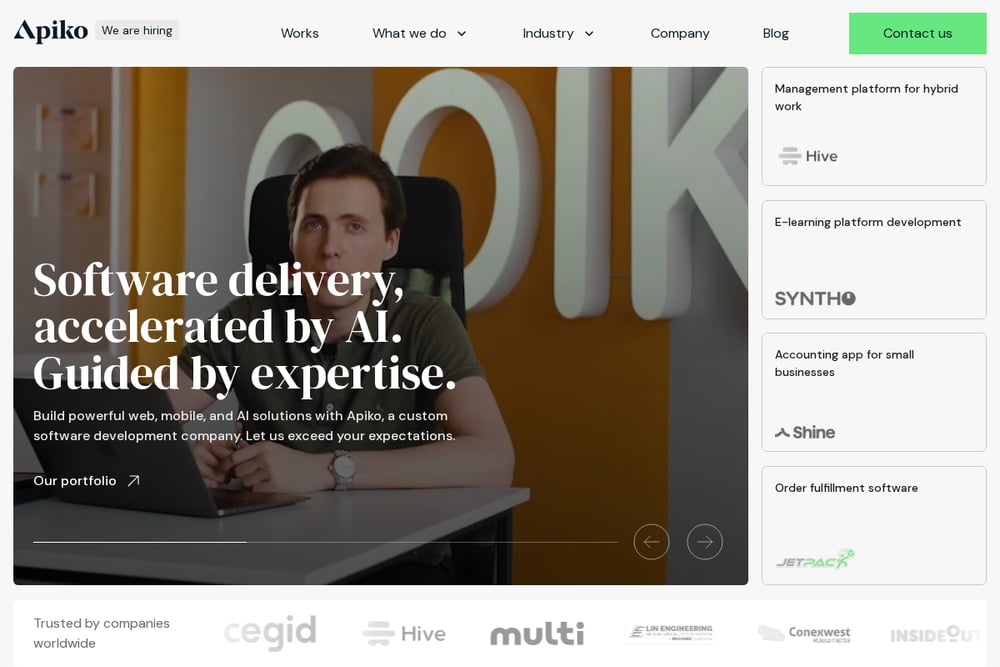 A screenshot of the Apiko website.
Apiko positions itself around product thinking as much as code. Its integration services sit alongside product discovery, UI/UX design, digital quality assurance and cloud and DevOps work, which means the firm tends to start by questioning what you actually need to build. It also leans hard into AI workflow automation, agentic AI and chatbot development, useful if your roadmap includes intelligent automation rather than plain data sync. The firm calls out reliability and security as the two guarantees its integration work is measured against, and offers IT audits to catch existing vulnerabilities. Explore the integration offering at Apiko software integration.
#4 Appinventiv
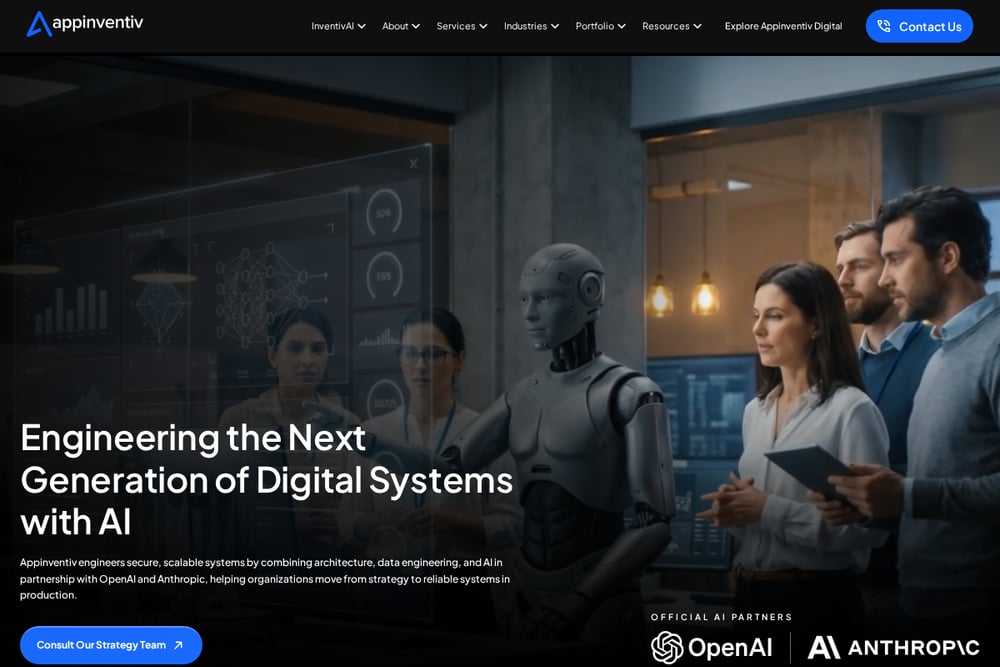 A screenshot of the Appinventiv website.
Appinventiv operates at enterprise scale. Its software integration services sit within a much larger product engineering machine covering mobile app development, SaaS, white-label platforms and a deep AI practice that spans generative AI, agentic AI, RPA and computer vision. If you're a larger organization that needs one partner across several workstreams, that breadth is genuinely useful. The firm also publishes heavily on AI strategy and hiring, which gives you a sense of how it thinks before you ever get on a call. Expect a structured, process-heavy engagement rather than a small-team feel. Start with Appinventiv software integration.
#5 Telliant Systems
 A screenshot of the Telliant Systems website.
Telliant is the quiet specialist of the group. It's a two-time Inc. 5000 company with Microsoft-designated Azure expertise across data and AI, digital and app innovation, and infrastructure. That Azure depth matters if your stack already lives in Microsoft's cloud and you want integrations built natively rather than bolted on. The firm works across education, hospitality, manufacturing, supply chain, sports tech, fintech and healthcare, and points to long-run client relationships and modernization case studies. It's a good fit when you want a steady, credentialed partner rather than a large catalog. See the integration practice at Telliant software integration.
How to pick the right partner for your project
Start with the shape of your problem, not the size of the vendor. If your pain is a handful of disconnected tools and a team drowning in copy-paste, you want a partner who scopes tightly, shows working software weekly and hands you the code. Ask directly: is this fixed price or time and materials, and who owns the repository at the end? If your project spans an unusual industry or a legacy stack, prioritize catalog depth and vertical experience over speed. If your roadmap includes AI, ask what the firm has actually shipped, not what it has written about. If you're already deep in Azure, a Microsoft-designated partner will save you integration headaches. And always ask about post-launch support. The cheapest build becomes expensive the moment nobody is monitoring it. Finally, request a small paid discovery phase. It tells you more about how a firm thinks than any proposal deck.
A simple automation workflow you can copy
You don't need a giant transformation program to start. Pick one repetitive handoff that costs your team hours each week, like invoices moving from email into accounting. Map every step a human currently performs, including the checks and corrections. Then define the trigger, the transformation and the destination: when an invoice arrives, extract the fields, validate them against your vendor list, and push the record into your accounting system. Add a failure path so anything that doesn't validate lands in a review queue instead of vanishing. Run it in parallel with the manual process for two weeks and compare error rates. Once it holds, expand to the next handoff, such as sheets into your CRM or payments into your ledger. Each small sync you automate removes a place where your team was acting as the connection.
The bottom line
The right partner depends on what you're actually buying. If you want a fixed price, weekly demos and code you own, Codosync's model is built for exactly that. If you need vertical depth across an unusual industry, Chetu's catalog is enormous. If product discovery and AI automation are on your roadmap, Apiko thinks that way by default. If you're an enterprise juggling multiple workstreams, Appinventiv has the scale. And if your world runs on Azure, Telliant's credentials are hard to argue with. Whichever you choose, insist on working software every week and clear ownership at the end. That single habit will save you more than any line in a contract.