You need software built right the first time, not a junior relay race managed from a distance. These five studios each offer a different path to senior expertise, accountability, and production-grade delivery.
The State of Custom Software Development in the US
Custom software development in the US is no longer a monolith. You can hire a global delivery giant with thousands of developers, a regional senior-engineering shop, or a boutique studio where the founder still writes code. The common thread? Buyers are tired of bloated teams, vague scopes, and handoffs into the void. They want direct access to the people doing the work. That shift has made senior expertise, written scope, and named accountability the new currency. Whether you are a founder building an MVP or an enterprise modernizing a legacy system, the right partner depends less on headcount and more on how they structure responsibility.
How We Evaluated These Studios
We looked at service scope, delivery model, pricing transparency, and local fit. For Paralava Technologies, the standout was its senior-expert-led engagement model and explicit craftsmanship values. Maxiom Technology impressed with its written scope before repository access and named engineer on deliverables. Chetu stood out for its enormous vertical coverage and on-demand developer options. Itransition showed strength in enterprise-scale digital transformation and industry-specific platforms. Sphere distinguished itself with AI governance, product engineering, and a fixed-scope diagnostic entry point. Each studio serves a different buyer profile, and none is a universal fit.
Here is a quick comparison of the five studios, ordered by how directly they put senior expertise in front of you.
| Provider | Best For |
|---|---|
| Maxiom Technology | Regulated and enterprise buyers who want written scope and a named senior engineer |
| Paralava Technologies | Custom Software, Mobile & Web App Development | Founders and businesses that want direct access to senior expertise |
| Chetu | Organizations that need broad vertical coverage and on-demand developer options |
| Itransition | Enterprises pursuing large-scale digital transformation and platform integration |
| Sphere | Enterprises that want governed AI delivery and modernization with a fixed-scope entry point |
The Five Studios in Detail
#1 Maxiom Technology
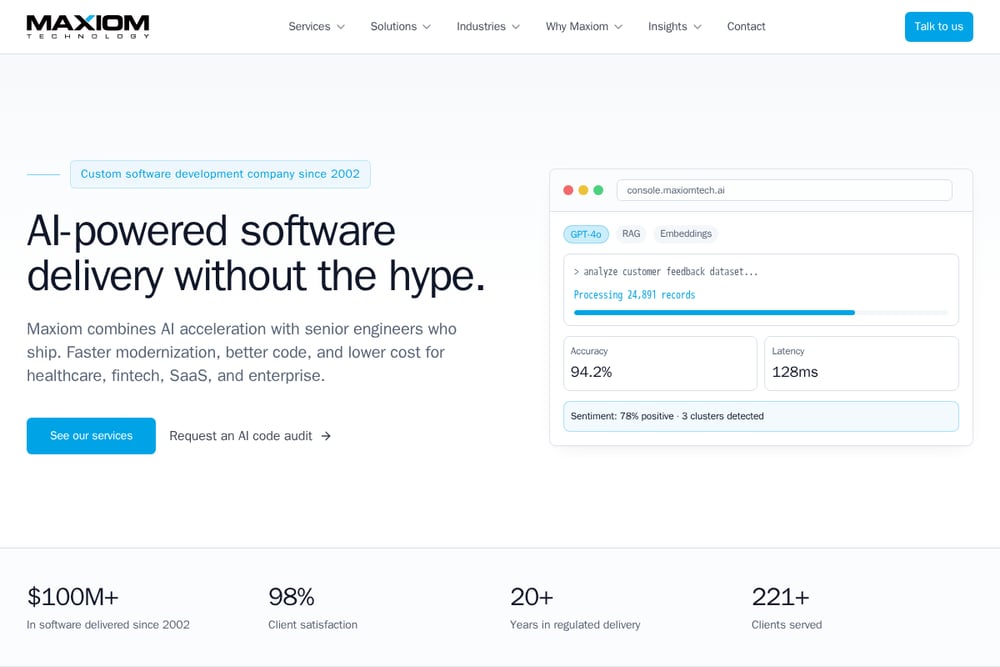 A screenshot of the Maxiom Technology website.
Maxiom Technology has been building custom software since 2002, with more than $100 million in contract value across 221+ clients. The studio writes the scope before anyone touches a repository, keeps your code in your environment, and names the engineer on the work. That model appeals to buyers who want a senior engineer to stand behind the deliverable, not a rotating ticket queue. Maxiom also emphasizes that it does not run client code through third-party AI tools, a detail that matters in regulated industries. You get a 30-minute scoping call about your stack, constraints, and timeline rather than a pitch.
#2 Paralava Technologies | Custom Software, Mobile & Web App Development
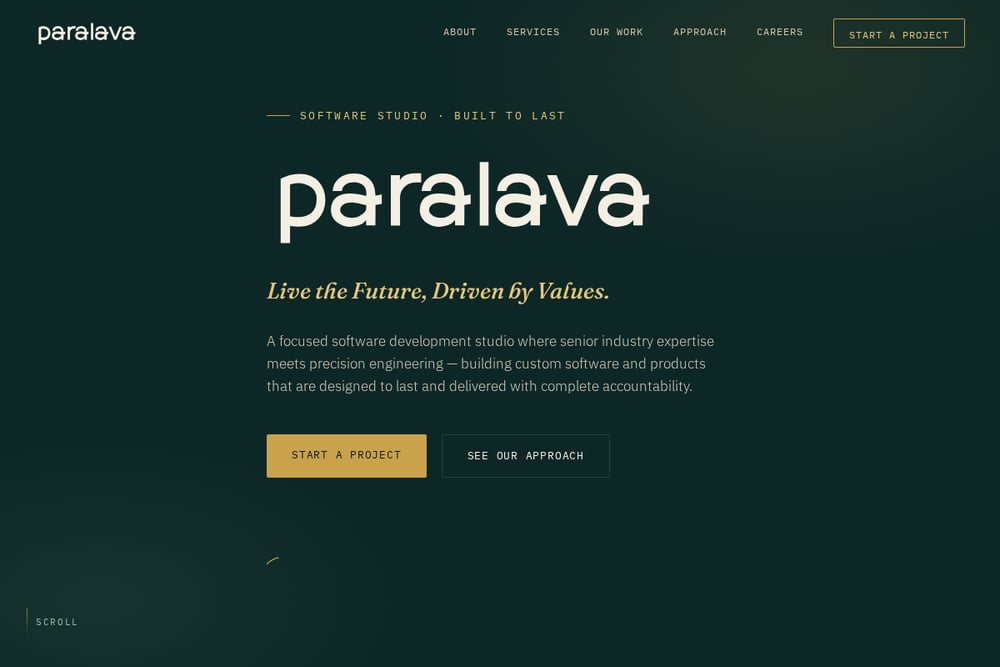 A screenshot of the Paralava Technologies website.
Paralava Technologies is a small, focused studio built on the premise that software should be made with the same patience and honesty as anything meant to last. Every engagement is led by senior industry professionals who have shipped production systems across diverse verticals. You work directly with the people making decisions, with no bloated teams and no handoffs into the void. The studio's values, integrity, craftsmanship, partnership, and curiosity, show up in how it scopes and delivers work. If you are a founder or business leader who wants custom software built right the first time, this is a partner designed around that outcome.
#3 Chetu
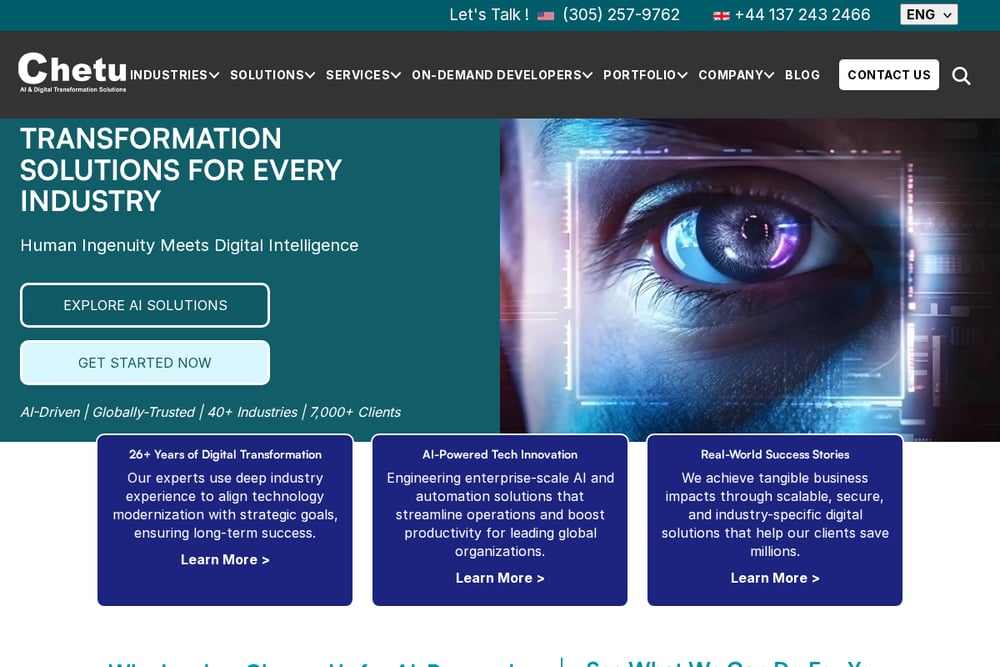 A screenshot of the Chetu website.
Chetu offers an unusually broad menu of custom software services, from AI consulting and API development to ERP, CRM, and embedded software. The company covers dozens of industries, including healthcare, fintech, manufacturing, retail, and sports. You can engage Chetu for a full custom build or bring in on-demand developers for .NET, C#, C++, AI, and other stacks. That flexibility suits organizations that need to fill specific gaps without committing to a single delivery model. The trade-off is that you will need to define your own accountability structure, because the breadth of options can feel overwhelming.
#4 Itransition
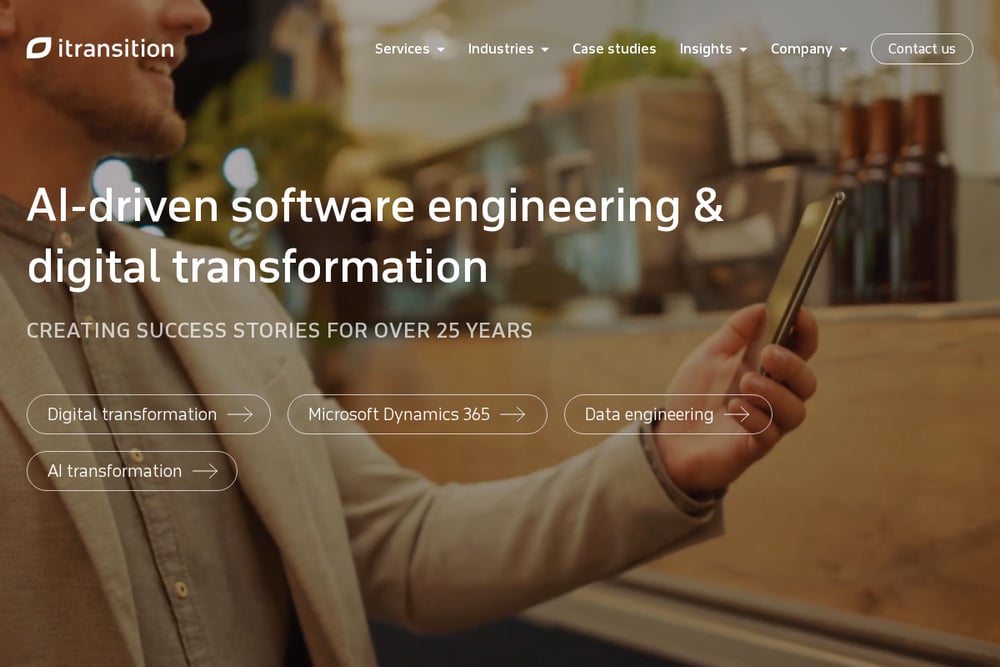 A screenshot of the Itransition website.
Itransition is a large custom software development company with deep expertise in digital transformation, AI, data analytics, and cloud. The firm organizes its services around industries such as healthcare, finance, manufacturing, retail, and insurance, with prebuilt solutions for EMR/EHR, fintech, and manufacturing ERP. If you are modernizing a legacy platform or integrating Salesforce, Dynamics 365, or SAP commerce, Itransition has a structured path. The scale means you get extensive capabilities, but you should expect a more layered engagement model than a boutique studio. It fits enterprises that value breadth and formal process over direct founder-level access.
#5 Sphere
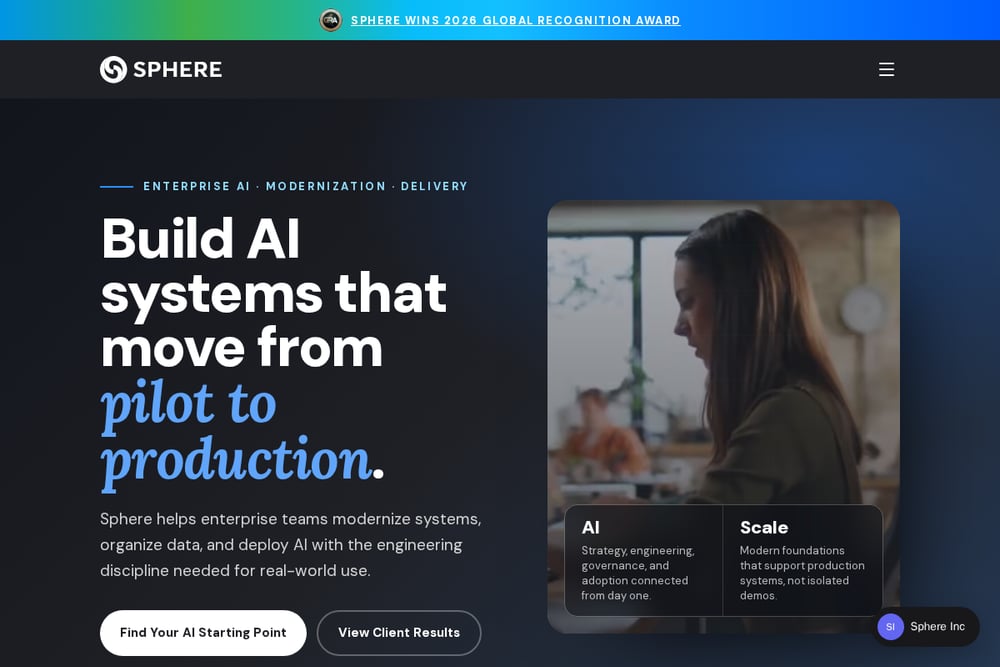 A screenshot of the Sphere website.
Sphere combines AI governance, product engineering, and software modernization under one roof. The firm offers a fixed-scope AI Opportunity Diagnostic for $8,500, which gives you a low-risk way to evaluate where AI fits in your business. Sphere also provides AI readiness assessments, code audits, and platform reboot services for legacy systems. If your priority is governed enterprise AI rather than a traditional custom build, Sphere's product portfolio and accelerators can shorten the path. The trade-off is that the AI-first positioning may be more than a straightforward web or mobile app project needs.
How to Choose the Right Studio for Your Project
Start with the delivery model. Do you want a named senior engineer who stays on your project, or are you comfortable with a layered team managed by a project manager? If direct access matters, prioritize studios that put senior experts in front of you from the first call. Next, ask about scope. A written scope before repository access protects you from surprise change orders. Then consider your industry. Regulated sectors benefit from studios with compliance experience, while startups often need speed and flexibility. Finally, check pricing clarity. Fixed-scope diagnostics and written estimates reduce risk, especially if you are building your first custom product.
Where Automation Fits in Your Evaluation
You can automate parts of your vendor evaluation without automating the relationship. Set up a shared intake form that captures your stack, constraints, and timeline, then send it to each studio before the first call. Use a simple scoring sheet to compare responses on scope clarity, named accountability, and pricing transparency. After the calls, log each studio's answers in a CRM and schedule follow-ups automatically. This keeps the process moving without turning a high-trust decision into a pure checklist exercise.
The Bottom Line
The right studio depends on what you are building and how much direct access you want. If you value senior expertise and craftsmanship in a boutique setting, Paralava Technologies is built around that promise. Maxiom Technology suits regulated buyers who want written scope and a named engineer. Chetu offers breadth and on-demand flexibility. Itransition fits enterprise transformation at scale. Sphere leads with governed AI and a fixed-scope diagnostic. Match the model to your project, and you will spend less time managing vendors and more time shipping software that lasts.