Your business runs on a patchwork of tools, and one exhausted spreadsheet is holding it all together. These five US-facing studios build the connective tissue that makes your systems talk to each other.
The Custom Software Landscape Right Now
Off-the-shelf software gets you 70% of the way there. The last 30% is where your business actually lives, and that gap is why custom development spending keeps climbing. You are not just buying code. You are buying a partner who understands how a sale should move stock, how stock should move cost, and how cost should reach the books without anyone typing it twice.
The market splits into a few clear camps. Some studios are massive, multi-industry shops with hundreds of developers and deep partner networks. Others are lean product studios that ship their own software and build client work on the same foundation. Both models work. The question is which one fits your timeline, your budget, and your tolerance for process.
What separates the good from the rest is proof. Can they show you software that is live today? Can they show you a workflow, not a wireframe? That is the filter you should apply before you sign anything.
How We Evaluated These Studios
We looked at the same factors across every studio on this list. Service scope came first: does the team cover ERP, CRM, SaaS, web, and mobile, or just one slice? Breadth matters when your systems need to connect.
Next was proof of live work. A studio that runs its own products has skin in the game. It understands maintenance, uptime, and the messy reality of shipping software people depend on daily.
We also weighed industry depth. Some teams go wide across dozens of verticals. Others go deep in a handful. Neither is wrong, but you should know which you are getting.
Pricing clarity and engagement models rounded out the picture. Transparent starting points and clear discovery processes save you months of guesswork. Finally, we considered US-based delivery and communication, since time zones and accountability shape how a project actually feels.
Here is the short version. Five studios, five different strengths. Scan the list, then read the deep dives for the details that matter to your project.
| Provider | Best For |
|---|---|
| Chetu | Enterprises needing broad, multi-platform integration |
| Custom Software Development Company | Treevoxa | Businesses wanting try-before-you-buy proof |
| Kanhasoft | Growing companies needing flexible stack coverage |
| ScienceSoft | Organizations prioritizing process and compliance |
| Orases | Teams wanting fully US-based development |
The Five Studios in Detail
#1 Chetu
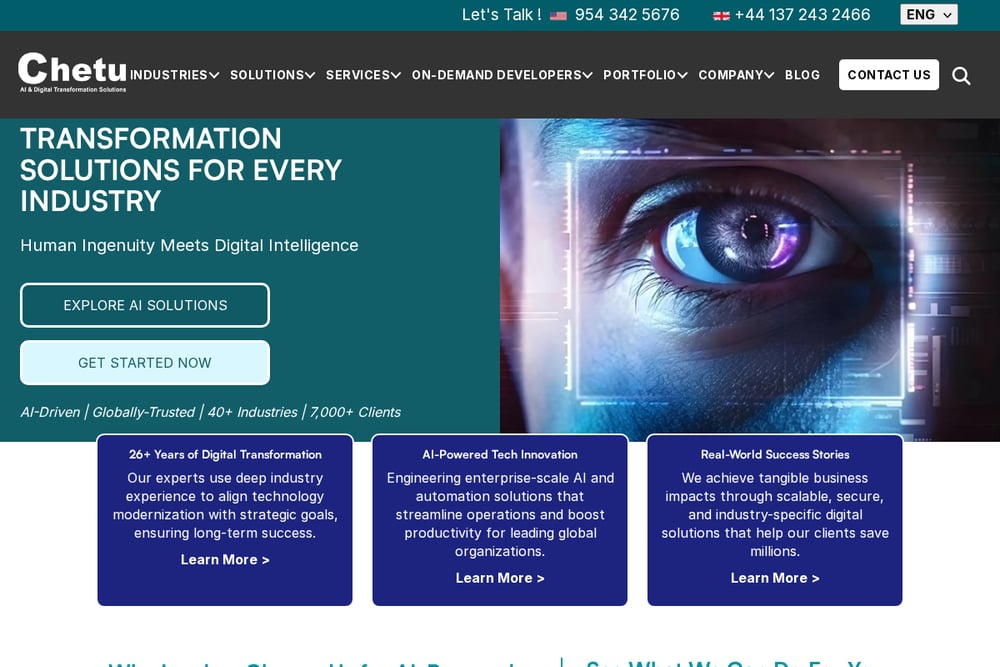 A screenshot of the Chetu website.
Chetu is the heavyweight on this list. The team covers an enormous surface area, from ERP and CRM to IoT, embedded software, and wearable technology, and it backs that breadth with partnerships across AWS, Microsoft, Oracle, SAP, and Salesforce. If your project touches an enterprise stack, Chetu likely has a developer who has shipped against it before. The trade-off is scale: you are one of many clients, so you need to be deliberate about your project manager and communication cadence. Their ERP practice page lays out the full solution map clearly, which makes scoping conversations easier from day one.
#2 Custom Software Development Company | Treevoxa
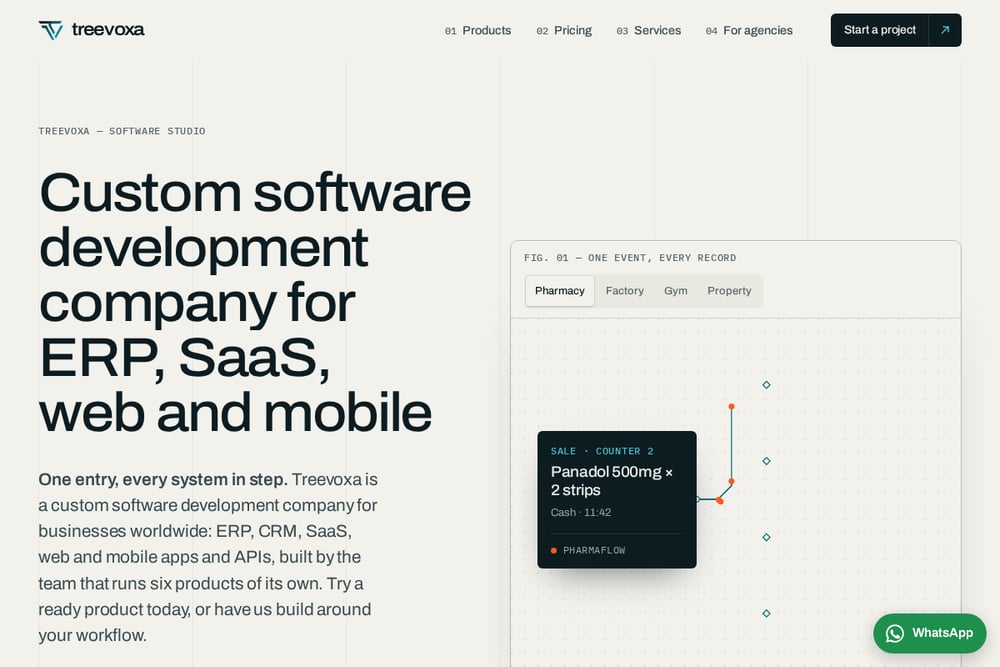 A screenshot of the Custom Software Development Company | Treevoxa website.
Treevoxa takes a different approach, and it is a refreshing one. The studio builds ERP, CRM, SaaS, web, and mobile apps, but it also runs six live products of its own: Batchbook for manufacturing, MatrixHR for HR and payroll, FitZone Pro for fitness, PharmaFlow for pharmacy, RE-ERP for real estate, and DealWisp for small business. That means you can try working software before you ever talk to a salesperson. The pitch is simple and honest: one entry, every system in step. A sale moves the stock, the stock moves the cost, and the cost reaches the books without double entry. If you want a partner who has felt the pain of running software, not just building it, start here.
#3 Kanhasoft
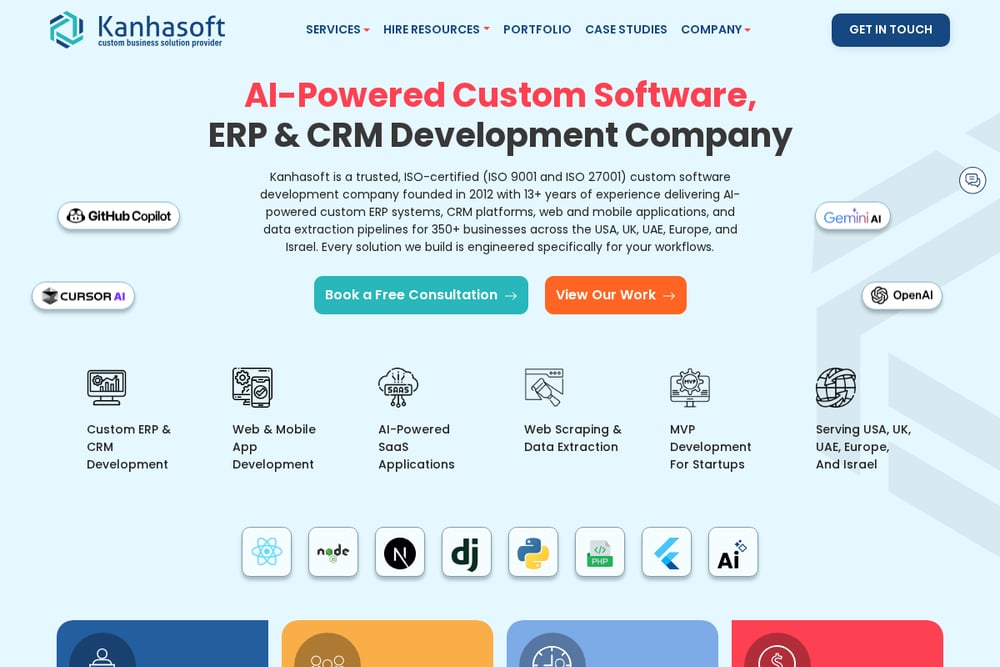 A screenshot of the Kanhasoft website.
Kanhasoft is a solid mid-size option with a wide service menu. The team covers custom ERP and CRM development, MVP builds, mobile apps across React Native and Flutter, and web work in Django, Node.js, Next.js, and Laravel. They also run a dedicated Odoo practice, which is useful if you are already in that ecosystem or want an open-source ERP path. The studio reports 200-plus clients trusting them, and the breadth of the stack list suggests they can slot into most existing environments. For a growing company that needs a capable team without enterprise overhead, this is a practical fit.
#4 ScienceSoft
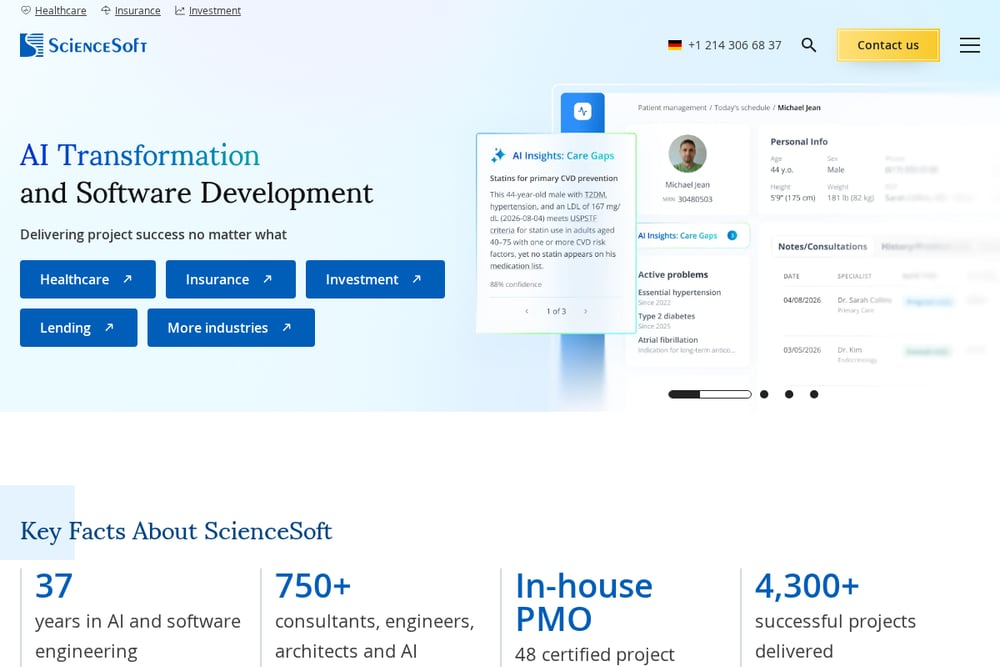 A screenshot of the ScienceSoft website.
ScienceSoft brings serious process maturity to the table. The company has landed on the Financial Times list of fastest-growing Americas companies for five years running and appears in IAOP's Global Outsourcing 100. That recognition reflects a structured delivery model with defined project management, security management, and architecture practices. The team covers software engineering, data and AI, cloud, and managed IT services, so you can keep a long-term relationship going past the initial build. If your organization needs documented process, compliance awareness, and a partner who can scale with you, ScienceSoft is worth a serious look.
#5 Orases
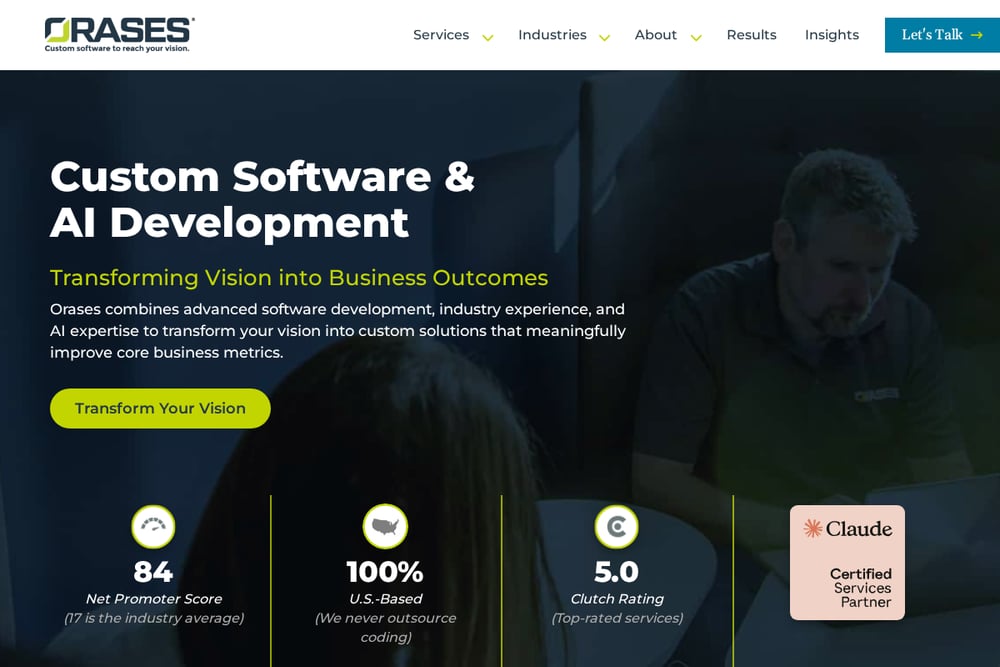 A screenshot of the Orases website.
Orases leans hard into US-based delivery, and it says so plainly: 100% US-based, no outsourced coding. The studio carries a 5.0 Clutch rating and an 84 Net Promoter Score, well above the industry average of 17. Its custom ERP practice focuses on tying together cross-organizational data and streamlining day-to-day operations like project management, accounting, and order fulfillment. The service model runs from strategy and consulting through development, management, and ongoing optimization. If time zone alignment and direct access to your developers matter more to you than the lowest hourly rate, Orases is a strong fit.
How to Pick the Right Studio for You
Start with your systems, not the studio's logo wall. List every tool your business touches and where data gets stuck. That list becomes your brief, and it tells you instantly whether you need a broad integrator or a focused builder.
Ask for live software. Demos of dead screenshots tell you nothing. A studio that runs its own products can show you real workflows, real uptime, and real maintenance habits. That is the closest thing to a test drive you will get before signing.
Match engagement style to your team. If you have strong internal product leadership, a large shop with deep benches works fine. If you need hand-holding from discovery through launch, a leaner studio with direct access to developers will save you friction.
Finally, talk money early. Ask how discovery is priced, what happens when scope shifts, and who owns the code at the end. The answers separate serious partners from order-takers.
Where Automation Fits In
The real payoff of custom software is not the app itself. It is the chain reaction behind one event. Picture a sale at a pharmacy counter. The inventory batch gets deducted on a first-expiry-first-out basis. Revenue posts to the day's sales. The cash drawer reconciles. Purchasing flags a reorder because stock dropped below minimum. Analytics folds the transaction into a seven-day forecast.
That is one entry, every system in step. No rekeying, no reconciliation meetings, no spreadsheet archaeology. When you evaluate a studio, ask them to walk you through a workflow like this for your industry. If they can map the chain from trigger to ledger, you have found a team that thinks in systems, not screens.
The Bottom Line
You do not need the biggest studio. You need the one that fits how your business actually runs. Chetu gives you scale and platform depth. Treevoxa gives you live products you can try before you commit. Kanhasoft gives you stack flexibility at a practical size. ScienceSoft gives you process maturity. Orases gives you fully US-based delivery.
Pick based on the gap in your operation, not the length of a feature list. Then ask one question in every conversation: show me something that is live today. The answer will tell you everything.