Off-the-shelf tools can only take you so far. When your workflows start leaking time and money, it's time to look at purpose-built software partners who understand the gaps.
The custom software gap is widening
Your business runs on a patchwork of SaaS tools, spreadsheets, and manual handoffs. That patchwork creates friction—duplicate data entry, disconnected systems, and processes that break as you scale. Custom software development services exist to close those gaps. The market is shifting from generic enterprise applications toward focused integrations and workflow automation that fit how your team actually works. Buyers now prioritize partners who can diagnose the problem before writing code, not just ship features.
How we evaluated these partners
We looked at service scope, process clarity, and how well each partner connects technical work to business outcomes. We also considered pricing transparency, local fit for US-based teams, and the ability to handle both integration and greenfield builds. Each business stood out in different ways: GAP for its problem-led discovery approach, Softweb Solutions for its broad enterprise and AI capabilities, Tempo Process Automation for its focus on operational gaps in mid-market organizations, MYGOM for its workflow automation and AI integration lens, and Keyhole Software for its structured enterprise development lifecycle.
Here is a quick comparison of the five partners, including their core focus and ideal engagement profile.
| Provider | Best For |
|---|---|
| Softweb Solutions | Enterprise teams needing broad platform and AI integration |
| GAP — We find what’s missing. Then we build it. | Businesses with specific workflow gaps that need a focused build |
| Tempo Process Automation | Mid-market organizations replacing manual workarounds |
| MYGOM | Teams starting with targeted workflow automation and AI |
| Keyhole Software | Enterprises needing a documented, lifecycle-driven development partner |
The five worth knowing
#1 Softweb Solutions
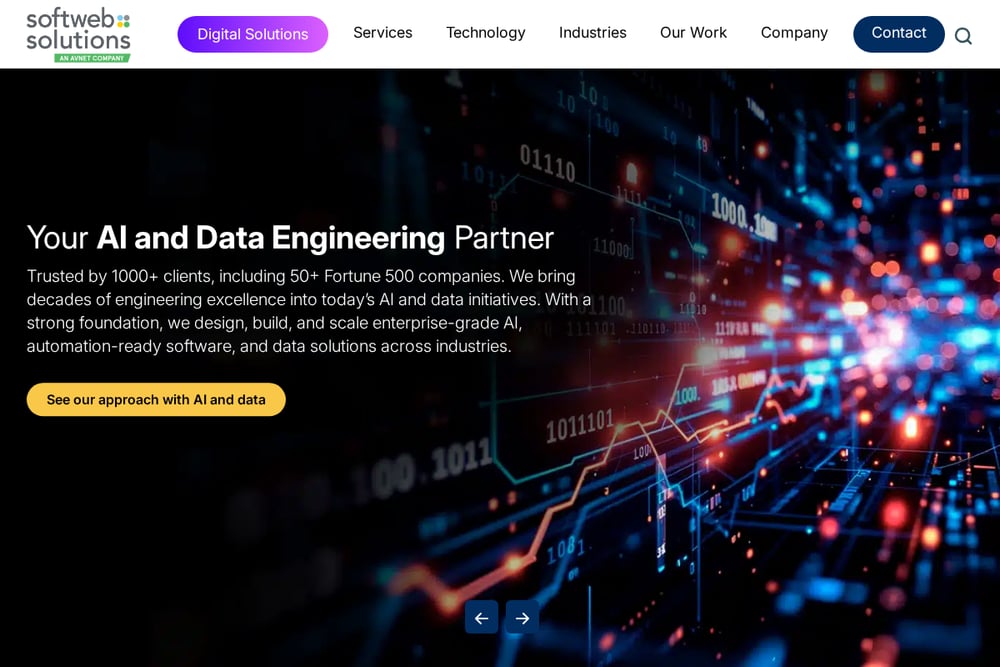 A screenshot of the Softweb Solutions website.
Softweb Solutions brings a wide enterprise toolkit to custom software development. You get access to data engineering, AI and ML, cloud migration, and Microsoft and Salesforce consulting under one roof. Their process emphasizes automation and ROI, with a focus on connecting existing systems rather than ripping and replacing. If your organization needs a partner who can handle complex integrations across multiple platforms, Softweb is built for that scale. Their custom software development services page outlines a clear path from conversation to delivery.
#2 GAP — We find what’s missing. Then we build it.
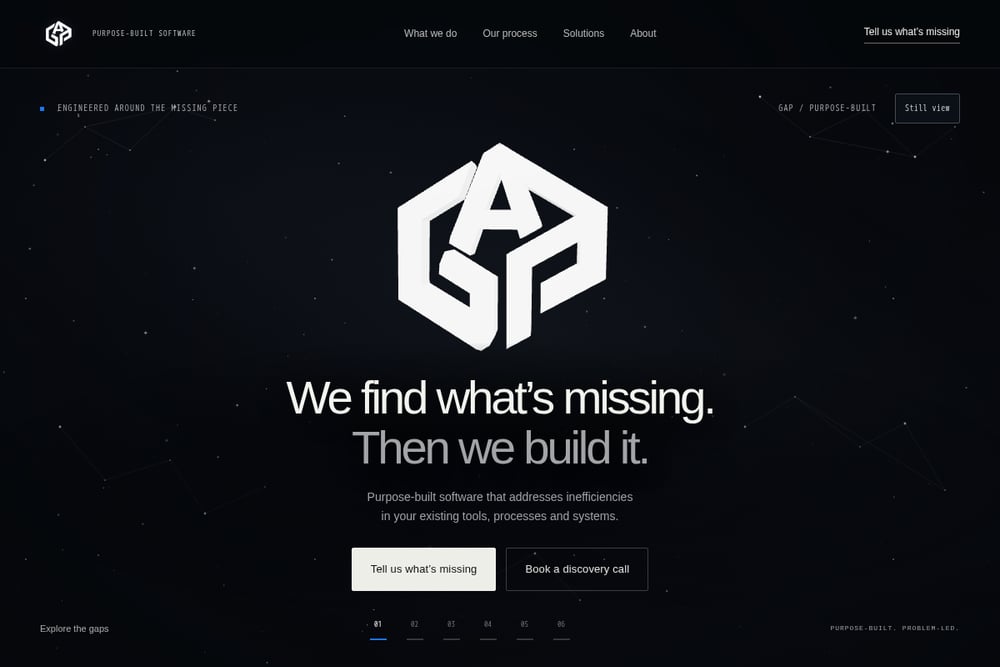 A screenshot of the GAP — We find what’s missing. Then we build it. website.
GAP starts where most firms stop: by looking beneath the surface of how work actually happens. They trace friction to its source—the duplicate entry, the failed handover, the tool that doesn't talk to another tool. Then they build the focused integration, workflow, or product that fills the gap. Their process is problem-led, not technology-led, which means you get a solution shaped around your business rather than a generic platform. If you have a specific operational gap that off-the-shelf software can't solve, GAP is worth a discovery call. Their purpose-built software approach is designed for exactly that scenario.
#3 Tempo Process Automation
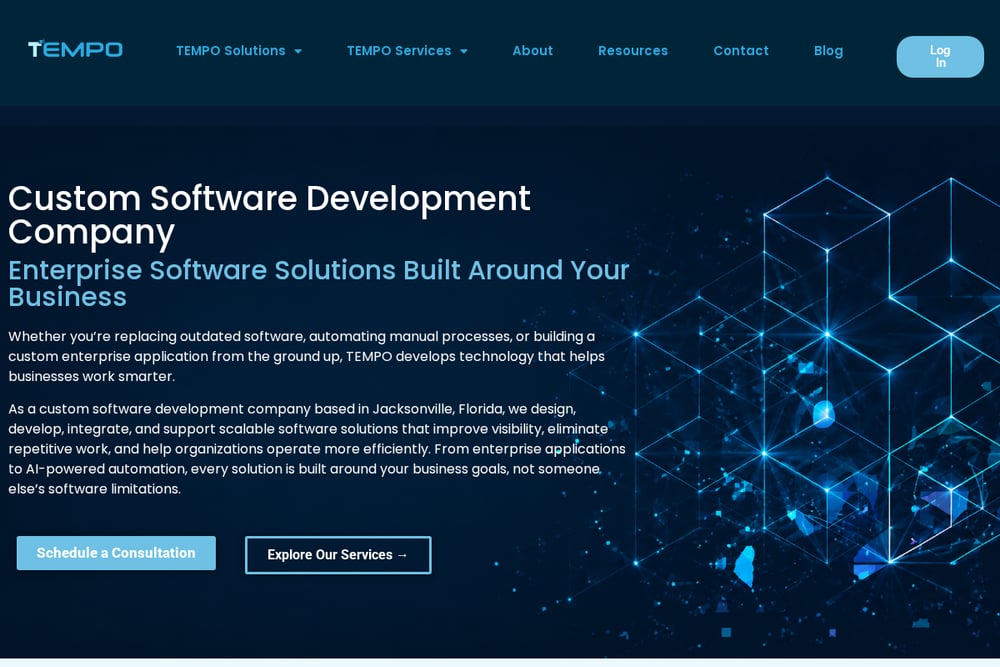 A screenshot of the Tempo Process Automation website.
Tempo Process Automation focuses on the operational gaps that standard software leaves behind. Based in Jacksonville, Florida, they work with mid-market and enterprise organizations nationwide to replace spreadsheets and manual data entry with custom applications and connected systems. Their service range includes business process automation, software integration, and application modernization. If your team is filling gaps with manual workarounds, Tempo's custom software development services are built to turn those requirements into working software.
#4 MYGOM
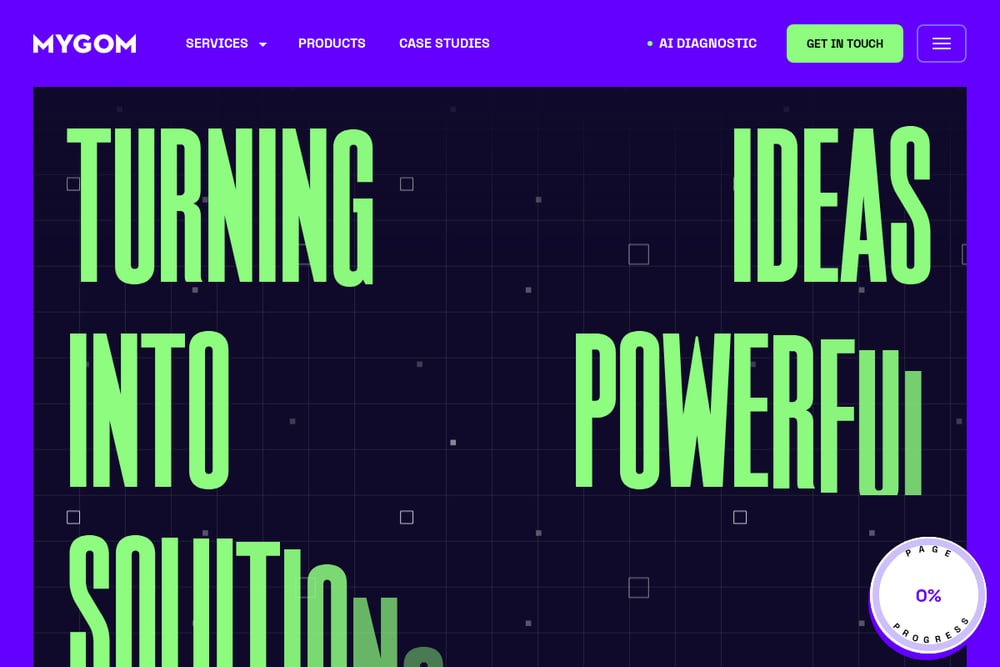 A screenshot of the MYGOM website.
MYGOM approaches custom software through the lens of workflow automation and AI integration. They offer single process automation, AI opportunity audits, and custom web app development. Their thinking is practical: automate the repetitive tasks, connect the disconnected systems, and use AI where it actually improves decision-making. If you are exploring how to boost efficiency without a full system overhaul, MYGOM's workflow automation guide is a useful starting point. They are a fit for teams that want to start small with automation and scale from there.
#5 Keyhole Software
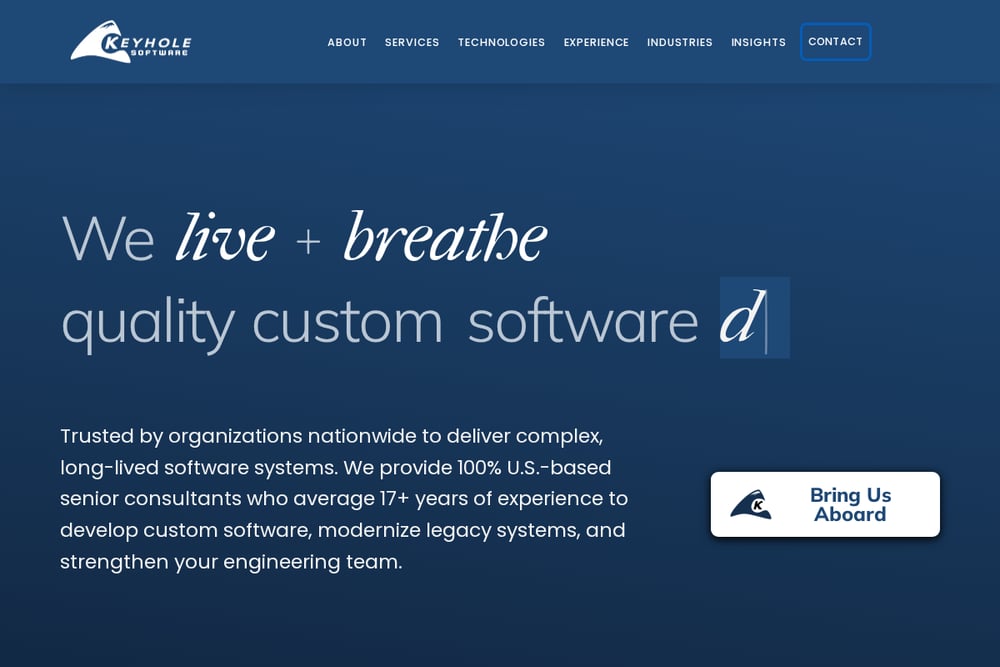 A screenshot of the Keyhole Software website.
Keyhole Software brings a structured enterprise development lifecycle to custom software projects. Their process covers discovery, requirements, architecture, agile delivery, QA, deployment, and ongoing support. They work across industries including insurance, financial services, healthcare, and government. If you need a partner with a documented methodology and deep experience in enterprise environments, Keyhole's custom software development process is worth reviewing. They are a strong fit for organizations that prioritize process rigor and long-term maintainability.
How to choose the right partner
Start by defining the gap you need to fill. Is it a disconnected tool, a manual process, or a missing product? Match that to a partner's core strength. If you need broad enterprise integration, look at firms with platform depth. If you have a specific operational friction point, prioritize partners who lead with discovery. Ask about pricing clarity and engagement models early. And check whether they can show you a process, not just a portfolio. The right partner will make you feel like they understand your workflow before they write a line of code.
Where automation fits
Automation is not about replacing your team. It is about removing the repetitive work that slows them down. The most effective custom software projects start with a single high-friction process—like report assembly or data handoff—and build a focused solution around it. That is how you get quick wins and build trust for larger integrations. Whether you choose a problem-led partner or a lifecycle-driven one, the goal is the same: make your systems work together so your people can focus on decisions, not data entry.
The bottom line
Custom software is not a luxury—it is how you close the gaps that off-the-shelf tools leave behind. The five partners here each bring a different lens: enterprise breadth, problem-led discovery, operational focus, automation-first thinking, and lifecycle rigor. Your job is to match the lens to your gap. Start with a conversation, define what better looks like, and build only what you actually need.