
You need software built around your business, not the other way around. These five partners each take a different path to getting you there.
The Custom Software Landscape Right Now
Custom development has split into two clear camps. On one side sit the large engineering firms with hundreds of specialists, deep partner networks, and the capacity to staff multi-year enterprise programs. On the other sit independent practitioners and boutique shops who work directly with founders and small teams, often at a fraction of the overhead. Both models work. The question is which one fits the shape of your project. If you need a single accountable architect who knows your codebase from the first commit, the independent route is compelling. If you need twenty people across four time zones, the larger firms have the bench. Pricing models vary just as widely, from fixed-scope project quotes to monthly retainers to dedicated team billing, so clarity on cost structure matters as much as technical skill.
How We Evaluated These Partners
We looked at the same factors for every entry. Service scope: does the firm cover design, front-end, back-end, and infrastructure, or only part of the stack? Pricing clarity: can you find out roughly what a project costs before a sales call? Local fit: is the team reachable, US-based or US-friendly in time zone, and does it understand your market? Track record: how many projects, what kinds, and over how long? Communication model: do you talk to the person writing the code, or to an account manager? Each business below stood out on different factors. Ranjith Ramesh, for instance, offers direct access to the architect and a design-to-code background that shows in the work. Avenga stood out for breadth of industry coverage and AI-native delivery. Softweb Solutions brought two decades of full-stack delivery and a wide technology menu. Chetu impressed with its enormous industry and solution catalog plus on-demand developer options. Orases distinguished itself with a US-only team, a published satisfaction score, and a SaaS specialization.
Here is a quick look at how the five compare before you dig into the details.
| Provider | Best For |
|---|---|
| Avenga | Enterprises needing broad, multi-service engineering capacity |
| Ranjith Ramesh | Freelance Full Stack Developer & Solutions Architect | Startups and SMBs wanting one accountable architect end to end |
| Softweb Solutions | Businesses planning to expand from web apps into broader digital transformation |
| Chetu | Niche industries needing specialized developers on demand |
| Orases | SaaS founders who want a fully US-based team and ongoing support |
The Five Partners in Detail
#1 Avenga
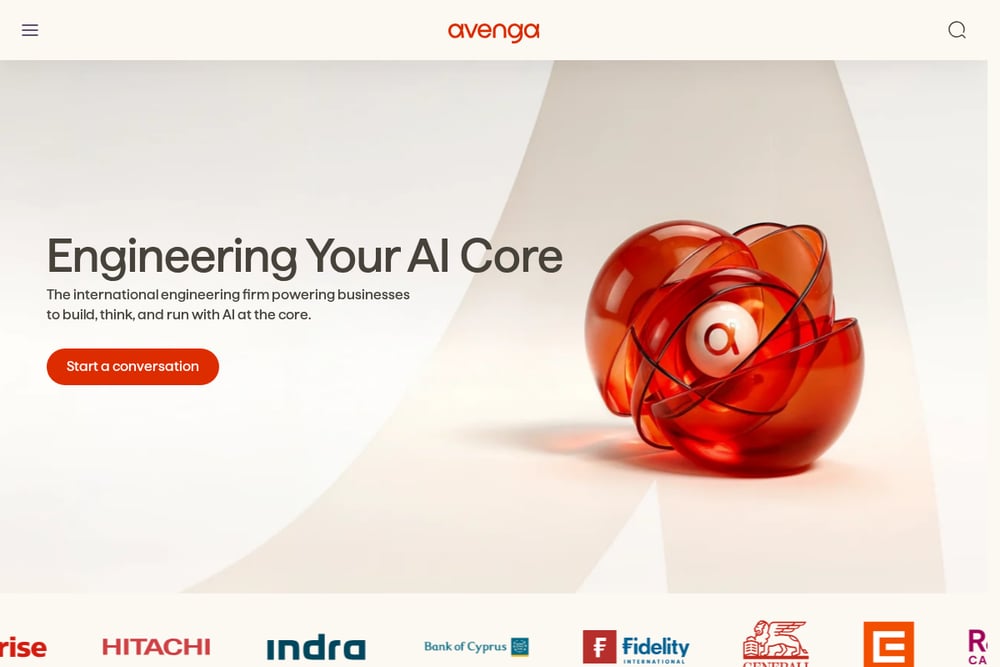 A screenshot of the Avenga website.
Avenga is a large end-to-end software engineering firm with a global footprint and a heavy emphasis on AI-native delivery. Its web development practice sits inside a broader menu that includes product engineering, platform engineering, application modernization, and managed IT operations. You get access to embedded teams, quality assurance, and cloud services under one contract, which suits organizations running complex, multi-workstream programs. The firm also publishes industry-specific expertise across automotive, life sciences, banking, retail, and telecommunications. If your project needs a partner who can also handle compliance, DevOps, and legacy modernization, Avenga covers that ground. See the Avenga web development page for the full service map.
#2 Ranjith Ramesh | Freelance Full Stack Developer & Solutions Architect
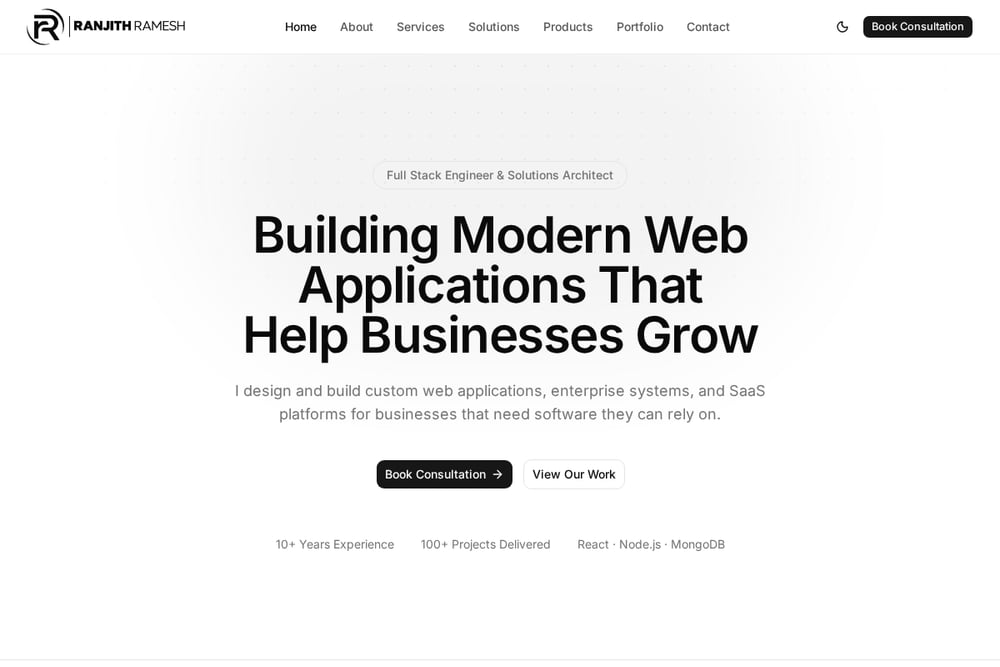 A screenshot of the Ranjith Ramesh website.
Ranjith Ramesh is an independent full-stack engineer and solutions architect who builds custom web applications, enterprise systems, and SaaS platforms. He brings over ten years of experience and more than 100 delivered projects, working in React, Node.js, and MongoDB. What sets this practice apart is the path behind it: he started as a UI/UX designer, moved into React development, and then went full stack, so design quality and technical architecture come from the same person. You work directly with the architect rather than through an account layer, which keeps decisions fast and feedback loops short. Services span corporate websites, bespoke web applications, internal enterprise systems, and SaaS builds from MVP to multi-tenant platforms. Visit the Ranjith Ramesh site to book a consultation.
#3 Softweb Solutions
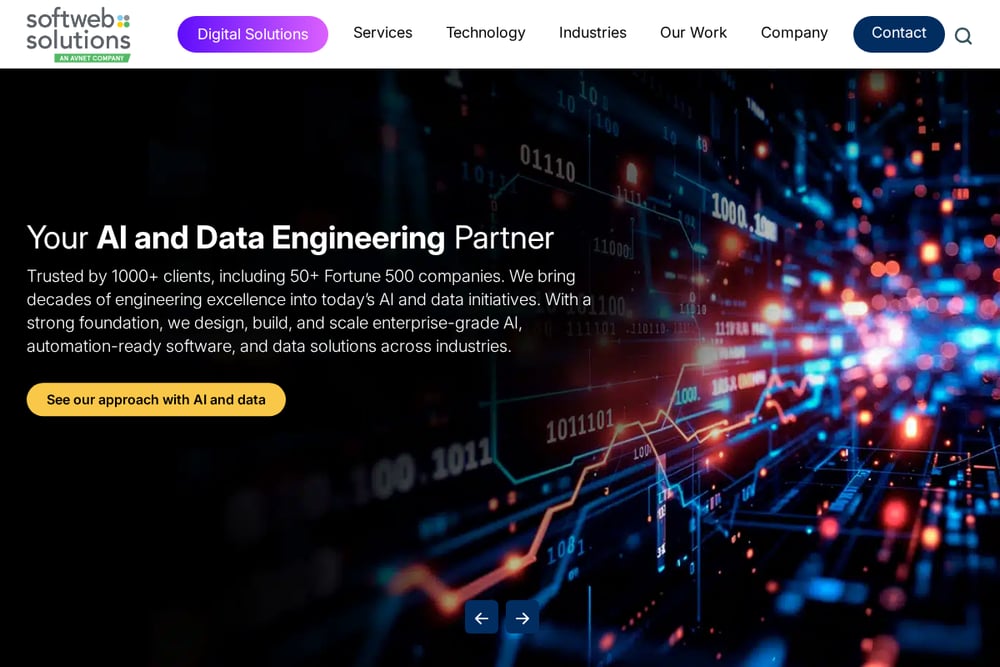 A screenshot of the Softweb Solutions website.
Softweb Solutions is a full-stack development company with more than 20 years in the market and a US base. Its full-stack practice covers web and mobile platforms, and it sits within a much larger services catalog that includes data analytics, AI and machine learning, cloud consulting, and enterprise application work. That breadth means you can start with a web application and extend into data engineering or Salesforce integration without changing vendors. The firm positions itself around ROI and long-term client relationships, and it publishes client success stories and a defined development process. For teams that expect their software to grow into a broader digital transformation effort, this is a natural fit. The Softweb full-stack page lays out the capability set.
#4 Chetu
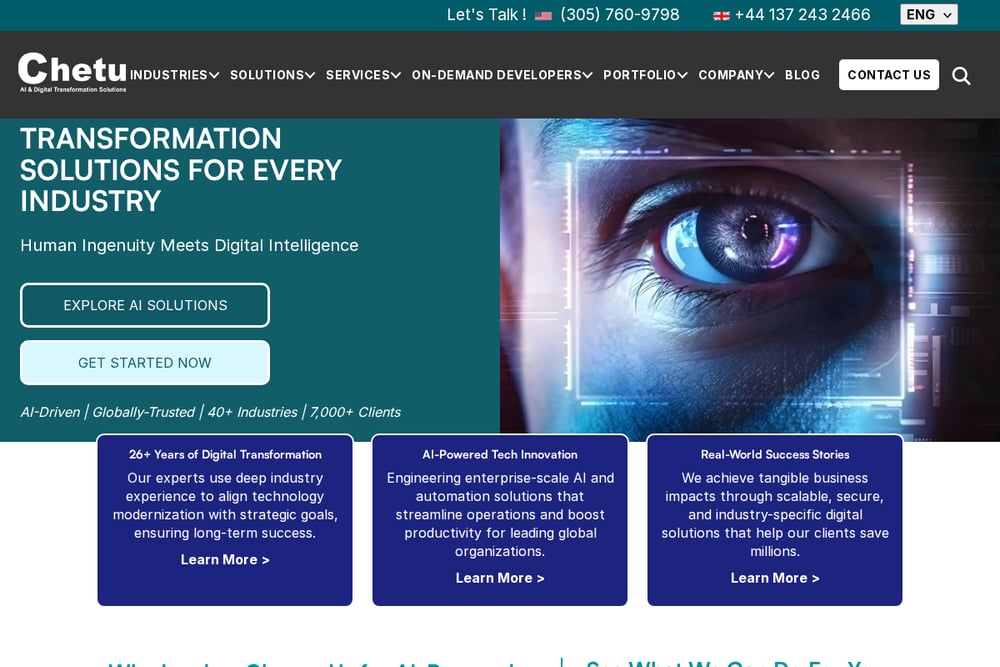 A screenshot of the Chetu website.
Chetu runs one of the widest service catalogs in the custom development space, spanning dozens of industries and an equally long list of solutions from CRM and ERP to IoT, kiosks, and wearable technology. Its full-stack offering includes on-demand developers, dedicated development teams, and named technology specialists across .NET, C#, C++, AI, and embedded systems. That depth is useful when your project touches an unusual vertical, such as agriculture, casino gaming, or corrections, where generic agencies tend to struggle. The trade-off is that you are navigating a very large organization, so scoping your engagement carefully up front pays off. Chetu also offers startup and MVP services alongside enterprise-scale delivery. Explore the Chetu full-stack page for the developer models.
#5 Orases
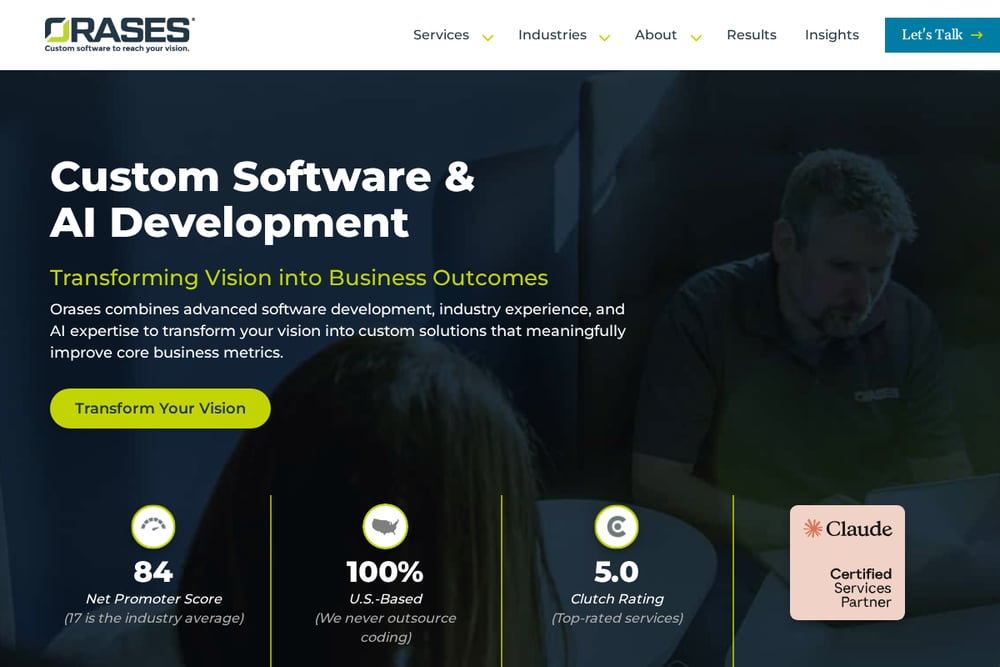 A screenshot of the Orases website.
Orases is a custom software firm with a fully US-based team and a stated policy of never outsourcing coding. It publishes an 84 Net Promoter Score against an industry average of 17, along with a 5.0 Clutch rating, which gives you concrete signals before you ever get on a call. Its SaaS application development practice focuses on subscription-based, web-hosted software, and the broader service menu covers web and mobile apps, APIs, AI consulting, UI/UX design, and legacy modernization. The firm structures engagements across strategize, consult, develop, manage, optimize, and support phases, so long-term maintenance is built into the model. If domestic staffing and post-launch support matter to you, this is worth a conversation. See the Orases SaaS development page for details.
How to Pick the Right Partner for Your Project
Start with the shape of your project, not the size of the vendor. If you have a defined scope and want one person accountable from architecture through launch, an independent architect like Ranjith Ramesh removes layers of overhead. If your roadmap spans multiple systems and you expect to add data, cloud, and integration work later, a firm like Softweb Solutions or Avenga gives you room to grow inside one relationship. Consider your industry too. Chetu's catalog is a real advantage in verticals that most agencies have never touched. Ask about pricing structure early: fixed-scope quotes suit well-defined builds, while retainers and dedicated teams suit evolving products. Finally, check who you will actually talk to during the build. Direct access to the engineer writing your code is worth more than a polished sales deck.
Where Automation Fits Into the Build
Whichever partner you choose, expect automation to appear in three places. First, in the development pipeline: automated testing and deployment keep releases predictable. Second, in the product itself: workflow automation, integrations, and AI-assisted features are now standard requests rather than differentiators. Third, in operations: monitoring, alerting, and infrastructure management should be part of the handover plan, not an afterthought. Ask each vendor how they handle all three before you sign.
The Bottom Line
There is no single right answer here, and that is the point. Avenga suits large organizations with complex, multi-service needs. Ranjith Ramesh fits startups and SMBs that want a senior architect working directly on their product. Softweb Solutions works well for teams planning broader digital transformation. Chetu shines in specialized industries that need on-demand technical depth. Orases is a strong option for SaaS founders who value a fully domestic team and long-term support. Match the partner to your project's shape, and the rest gets easier.