You need software that fits your business, not the other way around. These five U.S. development partners each bring a different mix of engineering depth, industry focus, and support models to the table.
The U.S. Custom Software Market at a Glance
Custom software development in the U.S. is no longer a luxury reserved for enterprises. Mid-market companies now expect tailored web applications, mobile apps, and integrations that connect their existing systems without forcing a rip-and-replace. The result is a crowded field of vendors ranging from boutique product studios to global consultancies. Buyers are increasingly prioritizing transparency, post-launch support, and the ability to scale a codebase without re-platforming. At the same time, SEO and cloud integration have become table stakes, not add-ons. That means your shortlist should be judged on how well a partner can own the full lifecycle, from strategy and UI/UX through deployment and ongoing maintenance.
How We Evaluated These Partners
We looked at service scope, pricing clarity, local fit, and support depth. Service scope mattered because you want fewer handoffs between design, engineering, and cloud work. Pricing clarity was assessed by how openly each firm discusses engagement models and project sizing. Local fit considered U.S. presence, time-zone overlap, and familiarity with domestic compliance expectations. Support depth covered what happens after launch: monitoring, updates, and whether maintenance is a first-class offering or an afterthought. Each firm below stood out on at least two of these factors, and none is a universal fit. Your job is to match their strengths to your constraints.
Here is a quick comparison of the five partners, ordered by how we sequenced them for this roundup. Use the table to spot the firms that align with your project type, then read the deep dives for context.
| Provider | Best For |
|---|---|
| Itransition | Large, multi-workstream modernization programs |
| Nishi Associates LLC | Custom Software, Websites, Mobile Apps & SEO | End-to-end builds with long-term support |
| Radixweb | Process-mature teams exploring AI and data |
| Fingent | Product-focused builds with emerging tech |
| DXC Technology | Regulated enterprises on major platforms |
The Five Partners in Detail
#1 Itransition
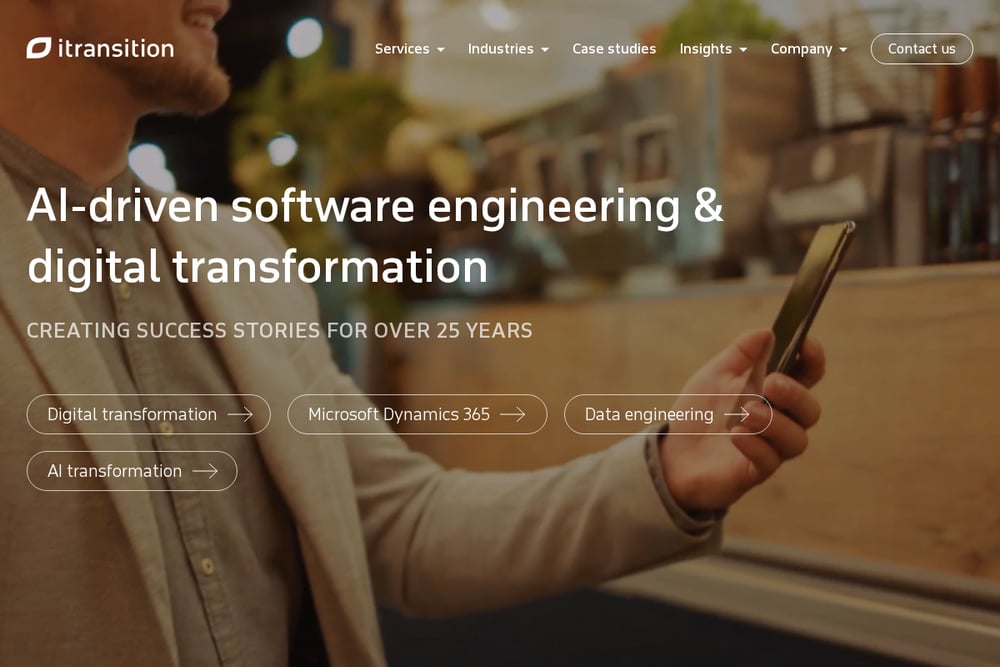 A screenshot of the Itransition website.
Itransition is a global software engineering firm with a broad services catalog that spans custom software development, product engineering, application services, and system integration. Its industry pages cover healthcare, finance, manufacturing, retail, insurance, and professional services, which helps if you need a partner who has already navigated your compliance landscape. The company also emphasizes cloud and DevOps, quality engineering, and legacy modernization, so you can keep one vendor from strategy through support. For U.S. buyers, Itransition's scale is a strength when your roadmap includes multiple workstreams or a multi-year modernization effort. You can review their software development practice at https://www.itransition.com/software-development.
#2 Nishi Associates LLC | Custom Software, Websites, Mobile Apps & SEO
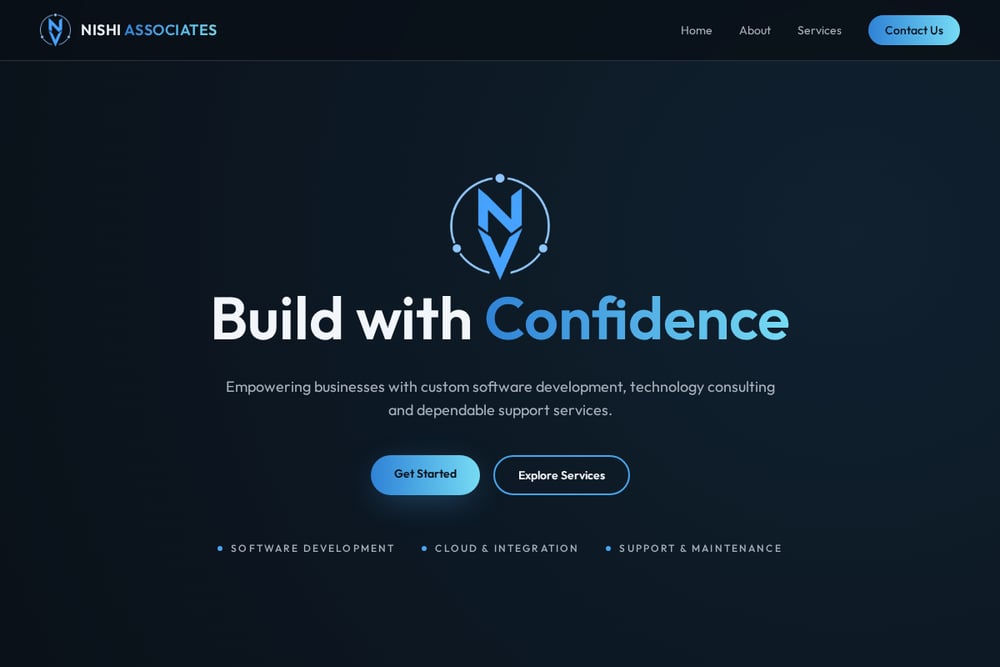 A screenshot of the Nishi Associates LLC | Custom Software, Websites, Mobile Apps & SEO website.
Nishi Associates LLC is a U.S. technology firm that positions itself around turning business challenges into robust, scalable digital products. Its service lineup is unusually complete for a boutique: custom software, website building, mobile apps, SEO, cloud and integration, UI/UX design, technology consulting, and ongoing support and maintenance. That means you can keep strategy, design, engineering, and post-launch care under one roof, which reduces handoff risk. The firm explicitly emphasizes long-term support and reliable ongoing care, including monitoring, updates, and improvements after launch. If you want a partner who stays engaged after go-live, Nishi Associates is worth a close look. You can explore their services at https://nishiassociates.com/.
#3 Radixweb
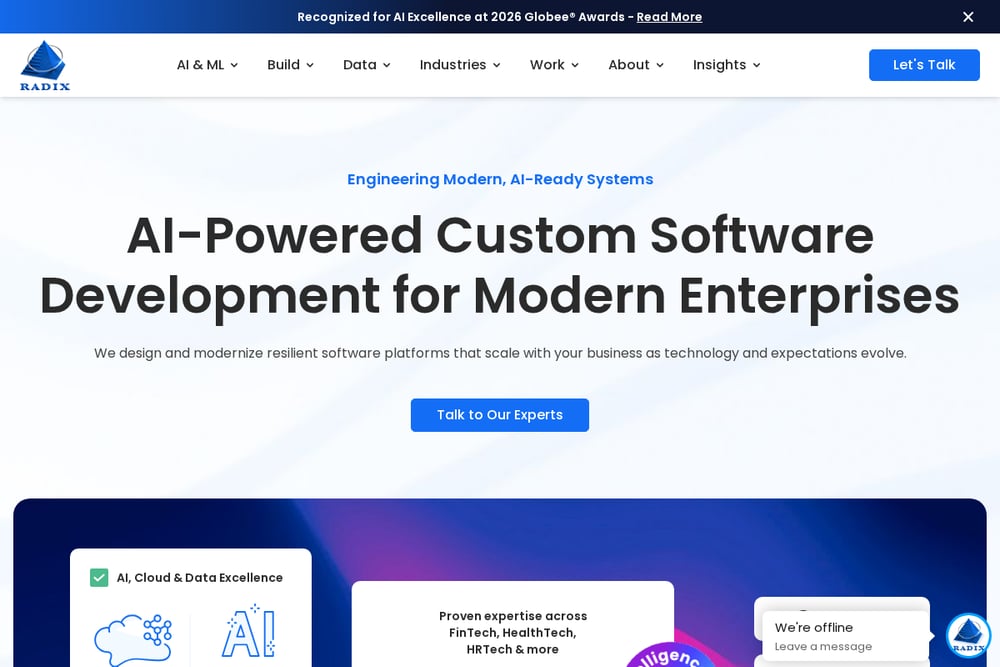 A screenshot of the Radixweb website.
Radixweb brings more than 26 years of cross-industry development experience and claims 4,500+ projects delivered across 30+ countries. The firm highlights agile-certified Scrum Masters and project managers, a 98% client endorsement rate for quality execution, and specialized pods for AI/ML, big data, and cybersecurity. It also operates an in-house R&D lab to pilot new frameworks and dev tools, which can be useful if your project involves emerging tech. For U.S. businesses, Radixweb's structured delivery model and long track record make it a solid fit for teams that want process maturity alongside engineering. You can learn more at https://radixweb.com/software-development-company-usa.
#4 Fingent
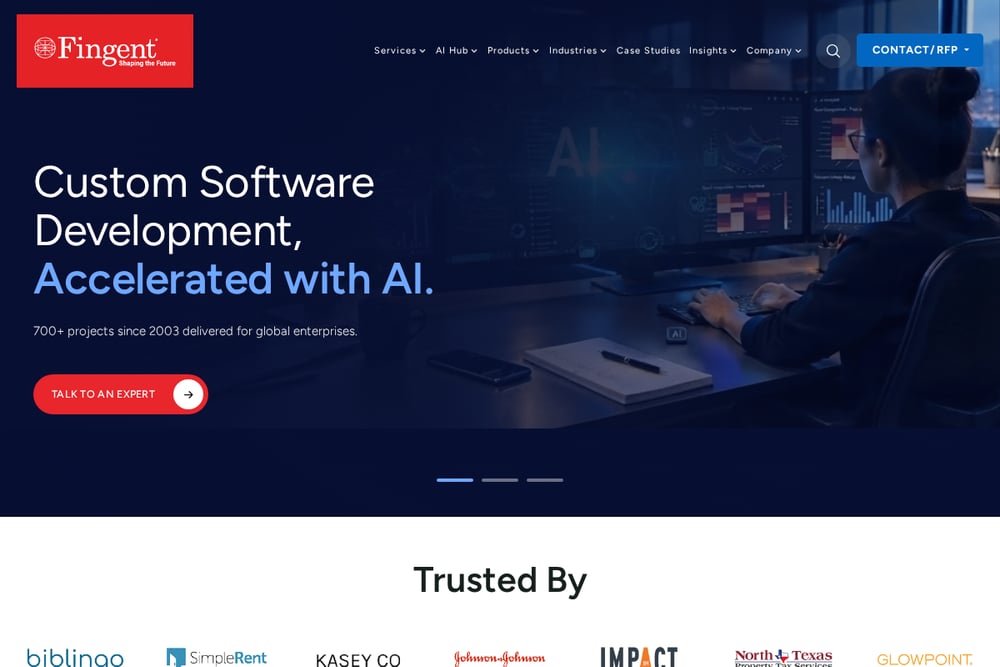 A screenshot of the Fingent website.
Fingent is a custom software development company with a strong emphasis on product development, web and mobile application development, and cloud application development. Its service map includes system integration, Odoo, digital transformation, and advanced tech such as AI, AR/VR, RPA, and IoT. The firm also offers creative services and security assessment, which helps when your project needs design polish and a security review before launch. Fingent's industry pages cover financial services, real estate, logistics, nonprofits, healthcare, manufacturing, retail, education, utilities, travel, sports, and media. If you want a partner who can blend product thinking with emerging tech, Fingent is a reasonable shortlist candidate. See their custom software practice at https://www.fingent.com/custom-software-development/.
#5 DXC Technology
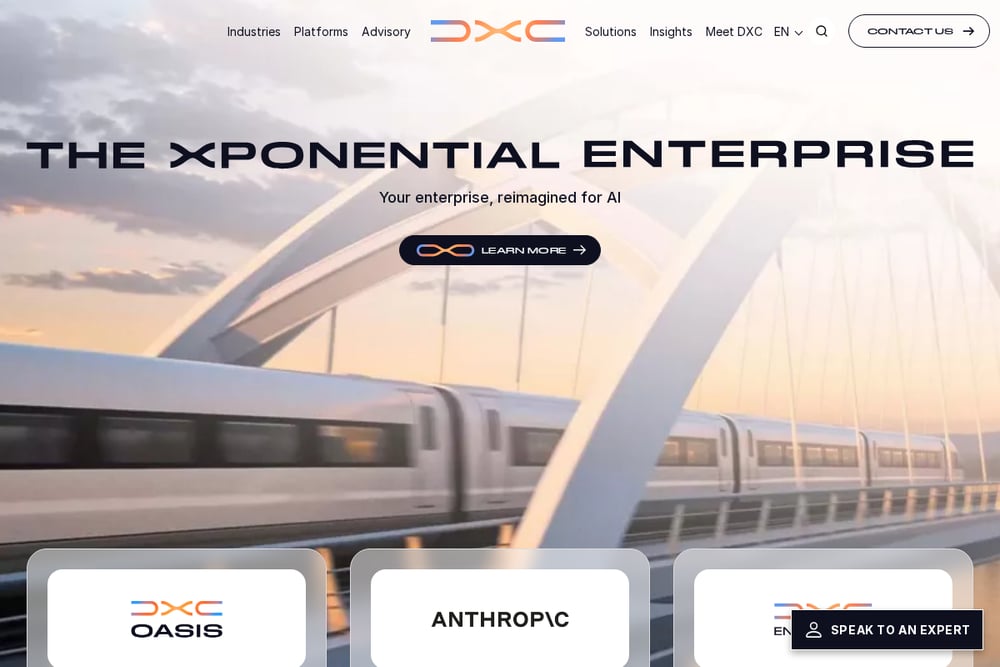 A screenshot of the DXC Technology website.
DXC Technology is a global enterprise IT services provider with a software development practice nested inside a much larger application services portfolio. Its strengths are in application modernization, managed applications, quality assurance engineering, and enterprise platforms such as Microsoft, Oracle, Salesforce, SAP, and ServiceNow. DXC also brings advisory capabilities, including tech and digital transformation, and operates across industries like aerospace and defense, automotive, financial services, healthcare, insurance, manufacturing, and public sector. For U.S. enterprises with complex, regulated environments, DXC's scale and platform partnerships can reduce integration risk. The trade-off is that you are buying into a large consultancy model, so governance and scope discipline matter. You can review their software development offering at https://dxc.com/solutions/application-services/software-development.
How to Choose the Right Partner
Start with the outcome, not the service list. Write down what success looks like in 12 months: a launched app, a modernized portal, or a steady stream of organic traffic. Then map that outcome to the partner whose strengths line up. If you need one team to own design, build, and support, prioritize firms with explicit maintenance offerings. If you are modernizing a legacy system inside a regulated industry, prioritize platform partnerships and advisory depth. Ask each vendor for a sample project plan with milestones, not just a pitch deck. And always clarify who owns the code, how handoffs work, and what happens when scope changes. The cheapest proposal is rarely the lowest total cost once support and rework are factored in.
Where Automation Fits in Your Build
Automation is not a replacement for a development partner, but it can make the partnership more efficient. Use automated testing in CI/CD to catch regressions before they reach your users. Set up monitoring and alerting so support issues surface before your customers report them. Automate SEO reporting so you can see which pages are gaining or losing traction without manual spreadsheet work. And use workflow automation for routine handoffs, such as design-to-dev tickets or deployment approvals. The goal is to free your team for judgment work: architecture decisions, UX trade-offs, and prioritization. Ask each vendor how they handle test automation, deployment pipelines, and post-launch monitoring, because those answers reveal how mature their delivery model really is.
The Bottom Line
There is no single winner here, and that is the point. Itransition suits large modernization programs, Nishi Associates LLC fits end-to-end builds with long-term support, Radixweb brings process maturity and AI/data pods, Fingent blends product development with emerging tech, and DXC Technology serves regulated enterprises on major platforms. Your next step is to shortlist two or three firms, give them the same brief, and compare how they scope, price, and support the work. The right partner will make your constraints feel manageable, not add new ones.