You need software that ships, scales, and doesn't fall apart six months after launch. These five engineering partners are worth a serious look before you sign anything.
The Custom Software Landscape Right Now
Custom software development has shifted from a nice-to-have to the backbone of how modern businesses compete. You're no longer choosing between off-the-shelf tools and a bespoke build — you're choosing how fast you can adapt when the market moves. Buyers now expect full-stack coverage: web, mobile, SaaS, cloud, DevOps, AI, and automation under one roof. That's a tall order, and it's why so many teams end up stitching together multiple vendors. The firms that stand out are the ones that treat architecture, security, and maintainability as defaults rather than upsells. They also bring production support and uptime commitments into the conversation early. If you're evaluating partners in 2026, look past the portfolio slides and ask how they handle the boring parts — documentation, testing, observability, and handoff. That's where long-term cost lives.
How We Evaluated These Partners
We looked at the same factors for every firm on this list. Service scope mattered — does the partner cover web, mobile, SaaS, cloud, AI, and automation, or just one slice? Delivery model mattered — do they offer dedicated teams, fixed-scope projects, or both? Engineering discipline mattered — clean architecture, testing, security, and documentation practices. Support mattered — production SLAs, uptime commitments, and post-launch maintenance. Transparency mattered — how clearly each firm describes its process, industries, and engagement options. OpenTechCore stood out for its explicit emphasis on clean architecture, 99.9% uptime SLAs, and 24/7 production support across 10+ service domains. IT Craft stood out for its 20+ years of end-to-end delivery and broad industry coverage. Emerline stood out for its deep AI, data management, and Microsoft partnership stack. CodesClue stood out for its clear service taxonomy and offshore-friendly engagement model. Binary Studio stood out for its product-led approach and long track record with startups and SMBs.
Here's a quick snapshot of the five firms, ordered for easy comparison. Each one brings a different strength to the table, so match the partner to your stage and stack.
| Provider | Best For |
|---|---|
| IT Craft | Enterprises needing end-to-end delivery and modernization |
| OpenTechCore — Custom Software Development & Engineering | Founders and product teams that need scalable, maintainable builds |
| Emerline | Teams layering AI and data onto existing products |
| CodesClue | Cost-conscious teams that want clear service categories |
| Binary Studio | Startups and SMBs that need product-led engineering |
The Five Partners in Detail
#1 IT Craft
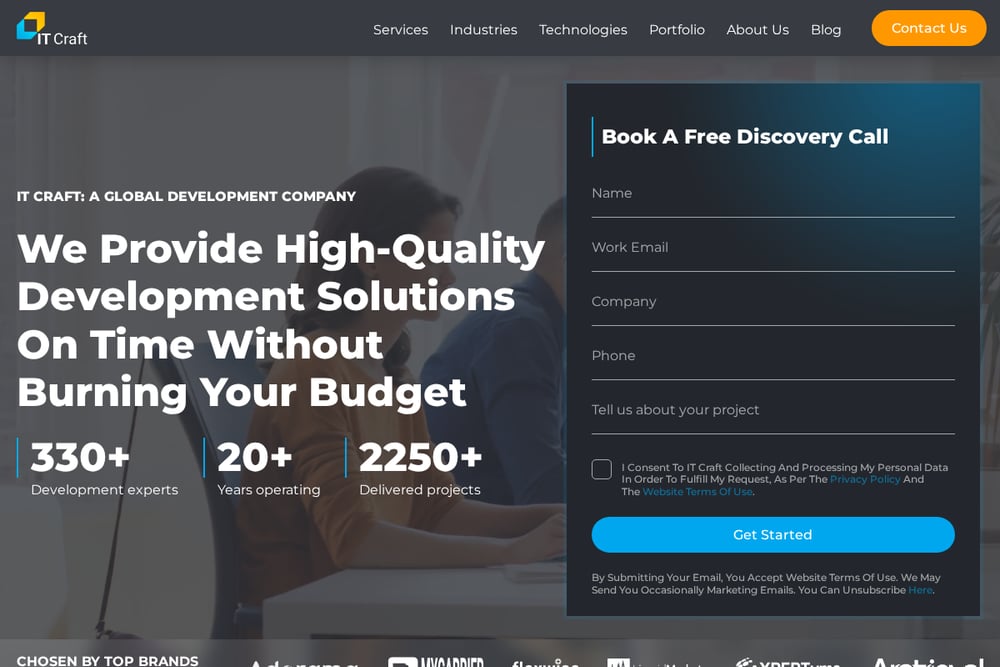 A screenshot of the IT Craft website.
IT Craft has been shipping custom software for over 20 years, and that longevity shows in how it structures engagements. The firm covers custom software development, web and mobile apps, platform-based solutions, API and system integration, app modernization, and ongoing support and maintenance. It also brings dedicated team and DevOps consulting options, which matters if you need to scale an existing engineering group rather than start from scratch. Industry coverage spans FinTech, HealthTech, eLearning, logistics, eCommerce, fantasy sports, and indoor navigation. If you want a partner that has seen a lot of edge cases, IT Craft is a strong fit. You can review its full service breakdown at itechcraft.com.
#2 OpenTechCore — Custom Software Development & Engineering
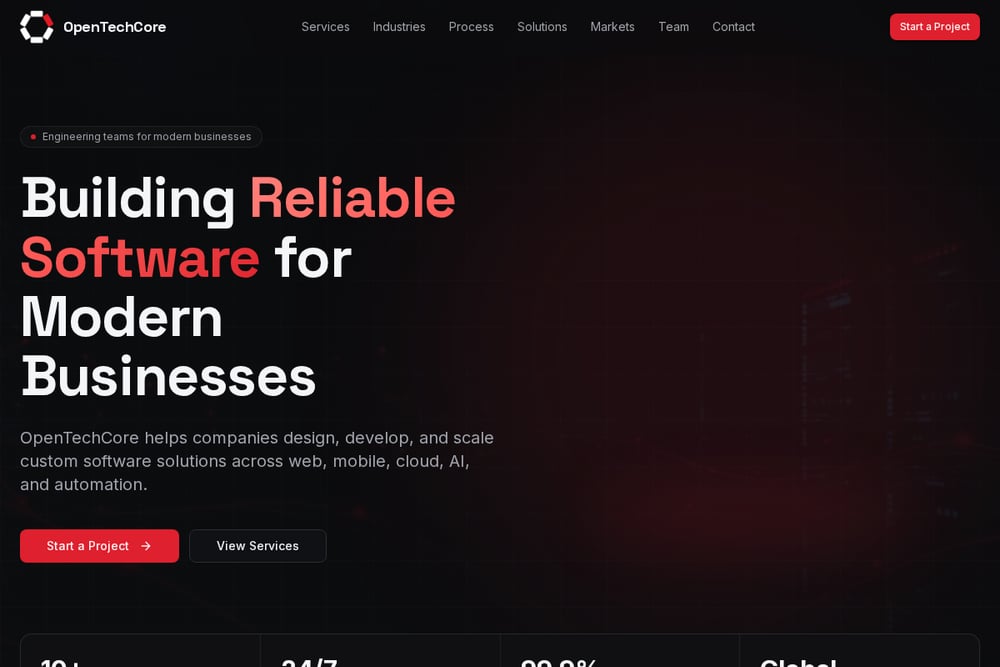 A screenshot of the OpenTechCore — Custom Software Development & Engineering website.
OpenTechCore is built for teams that care about what happens after launch, not just what ships on day one. The firm covers 10+ service domains, including custom web development, mobile apps, SaaS platforms, cloud and server infrastructure, DevOps and CI/CD, AI and automation, eCommerce, and UI/UX design. Its engineering philosophy is explicit: clean, documented, testable code, security and performance as defaults, and architectures designed to scale for years. It backs that up with 24/7 production support and 99.9% uptime SLAs, which is rare to see stated so plainly. You can explore the full service list at opentechcore.com.
#3 Emerline
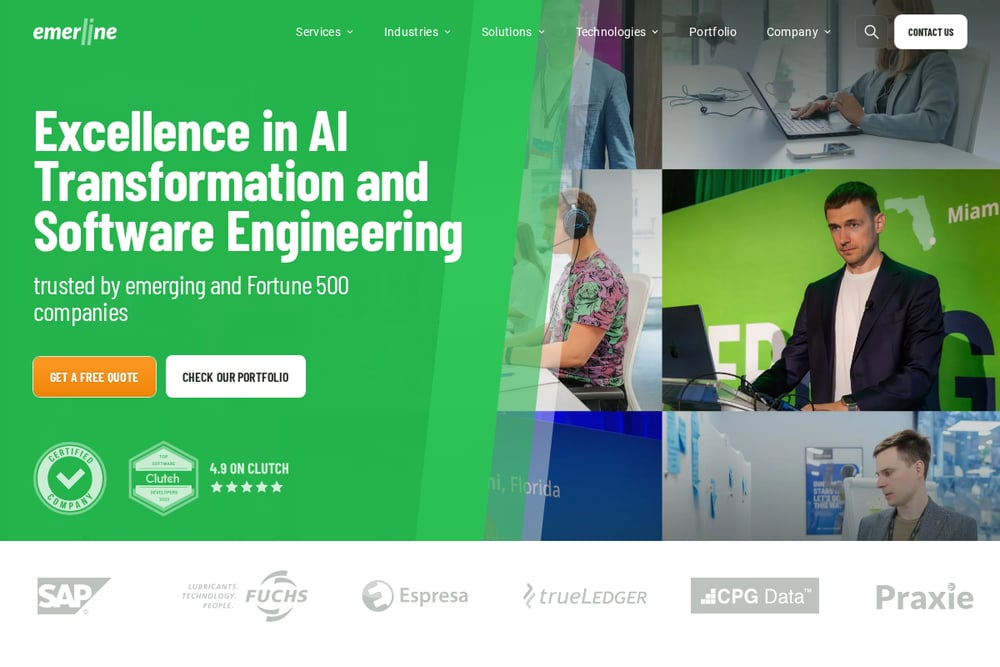 A screenshot of the Emerline website.
Emerline positions itself as a US-facing software engineering partner with a heavy emphasis on AI and data. Its service map is unusually deep: software engineering, AI consulting and development, AI agents and copilots, data management, Power BI and Tableau work, startup development, Microsoft consulting, and mobile and web development. That breadth makes it a good fit if your roadmap includes AI integration or a data platform alongside traditional app work. The firm also runs discovery phases, PoCs, and MVP development for startups, so it can engage early. You can see the full capability stack at emerline.com.
#4 CodesClue
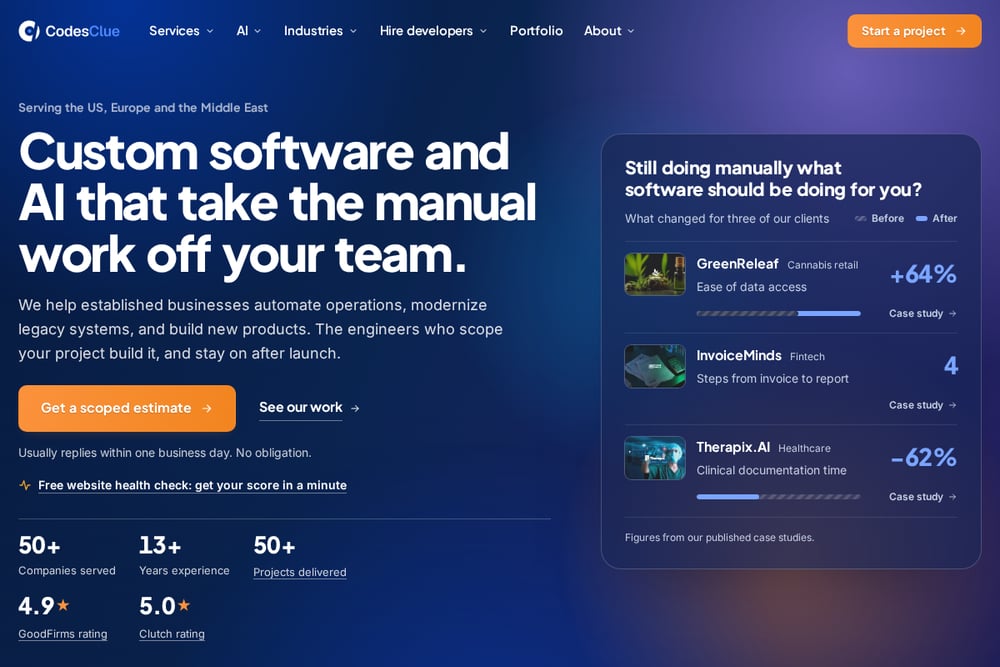 A screenshot of the CodesClue website.
CodesClue organizes its services around how buyers actually shop for engineering help. You'll find custom software development, mobile app development, web development, data engineering, cloud computing, and IT consulting, plus SaaS-specific offerings like multi-tenant architecture and billing. The firm also spells out its technology stack across mobile, front end, back end, and data and AI, which makes it easier to check fit before you talk. Offshore software development and outsourcing are explicit parts of the model, so it suits teams optimizing for cost and flexibility. You can browse the full service taxonomy at codesclue.com.
#5 Binary Studio
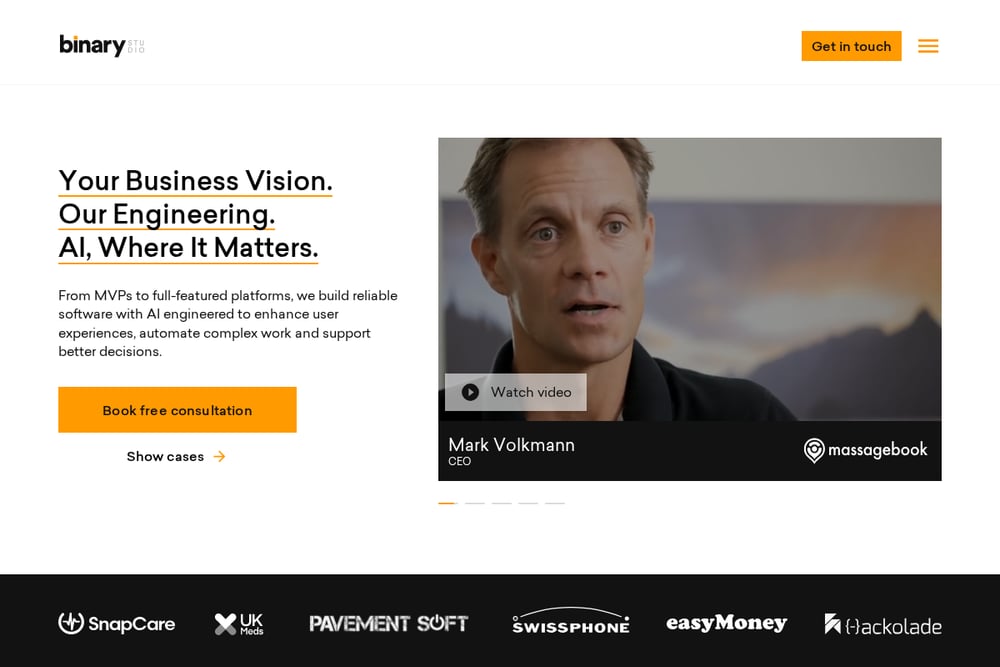 A screenshot of the Binary Studio website.
Binary Studio has been working with CTOs and product leaders since 2005, and its model is built around product outcomes rather than ticket-taking. Services include ideation and discovery, MVP development, web and mobile development, SaaS development, legacy app modernization, software testing, and dedicated development teams. The firm highlights startup and SMB case studies, including a long-running engagement that grew into a full-featured product. Industry focus areas include healthcare, real estate, construction, eLearning, FinTech, insurance, legal tech, and greentech. If you want a partner comfortable with early-stage ambiguity, Binary Studio is worth a look. You can review its services at binary-studio.com.
How to Pick the Right Partner
Start with your stage. If you're pre-product, you need a partner that can run discovery and ship an MVP without over-engineering. If you're scaling, you need architecture review, DevOps, and production support baked in. If you're modernizing, you need someone who has done legacy migrations before and won't sugarcoat the timeline. Next, check service scope against your roadmap. A firm that only does web apps will struggle when you add mobile or AI. Then ask about engineering discipline: documentation, testing, security reviews, and observability. Finally, get the support terms in writing. Uptime SLAs, response times, and maintenance pricing should be explicit, not implied. Match the partner to the work, not the other way around.
Where Automation Fits In
Automation is no longer a separate workstream — it's woven into how good engineering teams operate. On the delivery side, CI/CD pipelines, containerization, and infrastructure-as-code cut release cycles and reduce human error. On the product side, LLM integration, intelligent agents, and workflow automation can remove manual steps from your operations. The practical workflow looks like this: start with observability so you can see what's happening, automate the build and deploy path, then layer in business-process automation where the ROI is obvious. Firms like OpenTechCore and Emerline explicitly call out AI and automation as service lines, which means you can scope it as part of the initial engagement rather than bolting it on later. Don't automate what you haven't measured first.
The Bottom Line
There's no single right answer here — the right partner depends on your stage, stack, and appetite for risk. IT Craft brings two decades of delivery experience and broad industry coverage. OpenTechCore leads with clean architecture, explicit uptime SLAs, and a wide service footprint across web, mobile, SaaS, cloud, AI, and automation. Emerline goes deep on AI and data. CodesClue offers clear service categories and offshore flexibility. Binary Studio is built for product-led startups and SMBs. Talk to at least two, ask hard questions about documentation and support, and check references from companies that look like yours. The partner you choose will shape your roadmap for years, so choose deliberately.