
You need software that works on launch day and every day after. These five engineering partners are built for exactly that kind of pressure.
The State of Custom Software Development in 2026
Custom software development has shifted from one-off builds to long-term ownership. You are no longer just buying code. You are buying reliability, maintainability, and a team that stays accountable after launch. The market is crowded with agencies that promise speed, but the real differentiator is what happens when traffic spikes, dependencies fail, or a new engineer inherits the codebase. Distributed teams are now the norm, and senior engineering talent is the product. Buyers want partners who can assess, plan, build, and hold. That means observability, incident readiness, and a process you can audit. The five firms below each bring a distinct angle to that challenge.
How We Evaluated These Partners
We looked at service scope, delivery model, and how clearly each firm communicates its process. Caladic stood out for its explicit four-step method and emphasis on post-launch accountability. iTransition impressed with its broad enterprise service catalog and industry coverage. Intellias showed depth in AI-native software development and a long track record since 2002. Chetu demonstrated remarkable vertical specialization across dozens of industries. Digicode highlighted its product-building experience and global delivery footprint. We also considered how each partner handles legacy modernization, cloud reliability, and dedicated team models. No single factor decides fit. Your context does.
Here is a quick look at the five partners, ordered for this roundup.
| Provider | Best For |
|---|---|
| iTransition | Enterprises needing a broad, multi-service engineering partner |
| Caladic | Software that holds under pressure. | Teams that need long-term ownership and post-launch accountability |
| Intellias | Organizations adopting AI-native development with governance needs |
| Chetu | Industry-specific projects in regulated or niche verticals |
| Digicode | Product-minded teams that value a builder's perspective |
The Five Partners in Detail
#1 iTransition
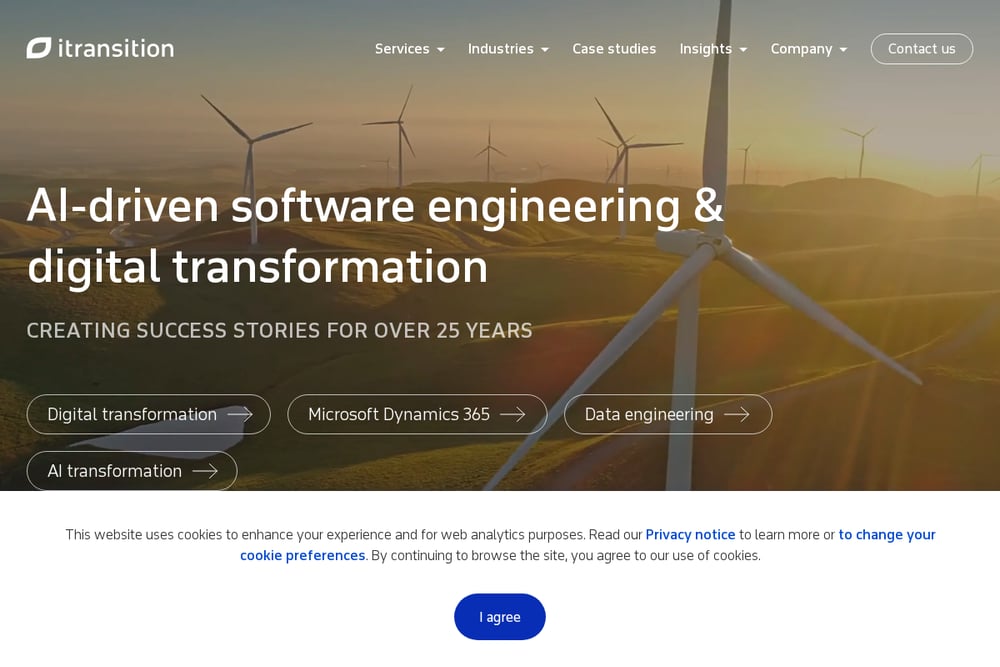 A screenshot of the iTransition website.
iTransition brings a massive service catalog to the table. You can tap into custom software development, product engineering, legacy modernization, and quality engineering under one roof. Their AI consulting and generative AI offerings are built for enterprises that need to move fast without breaking governance. They also cover cloud, DevOps, and managed IT services, which means you can consolidate vendors. The trade-off is complexity. With so many service lines, you need to be clear about what you actually want. If you are a large organization looking for a single partner across multiple workstreams, iTransition is worth a serious look. You can explore their full range at their software development page.
#2 Caladic | Software that holds under pressure.
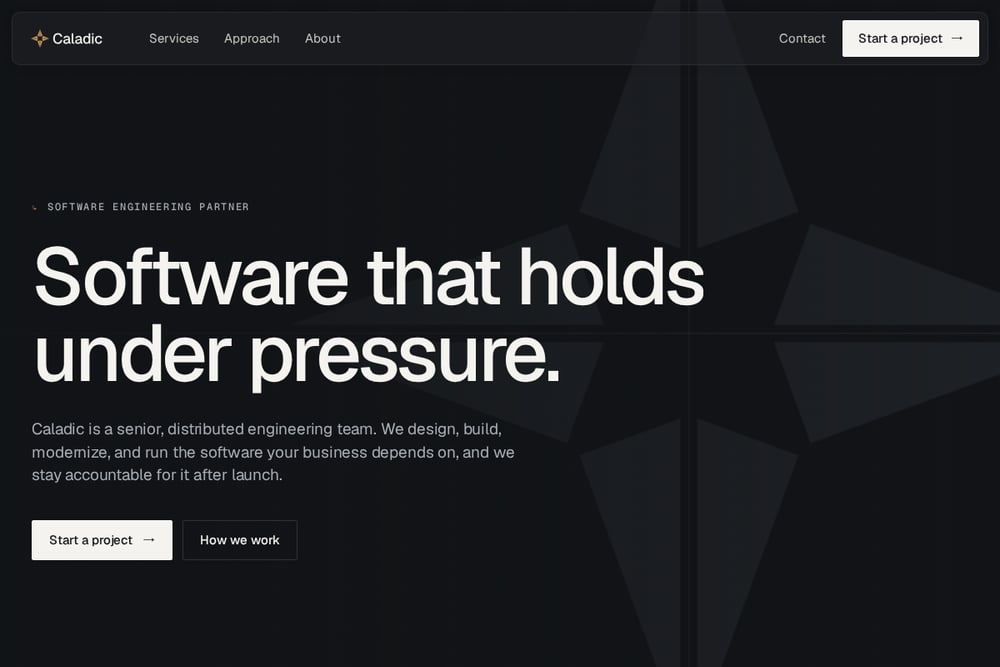 A screenshot of the Caladic website.
Caladic is a senior, distributed engineering team that designs, builds, modernizes, and runs the software your business depends on. Their pitch is simple and sharp: most software works on launch day, but they build for the days after. That means traffic spikes, failed dependencies, and the engineer who inherits the code three years later. They offer custom software, product strategy, legacy modernization, AI and data engineering, cloud and DevOps, mobile apps, dedicated teams, and maintenance. Their four-step process, Assess, Plan, Build, Hold, is designed to be auditable. Every step ends in something you can read, test, or keep. If you want a partner who stays accountable after launch, start with their approach page.
#3 Intellias
 A screenshot of the Intellias website.
Intellias has been building custom software since 2002, and it shows. They position themselves as a full-stack, multidisciplinary partner with an AI-native software development lifecycle. You get developers, managers, architects, designers, and DevOps engineers who are fully engaged in the process. Their focus on responsible AI consulting is a differentiator for organizations that need governance alongside innovation. They also solve practical problems like increasing efficiency, minimizing bugs, and meeting regulatory requirements. The firm is a strong fit if you want a partner with decades of experience and a clear point of view on AI. Check their custom software development services for more detail.
#4 Chetu
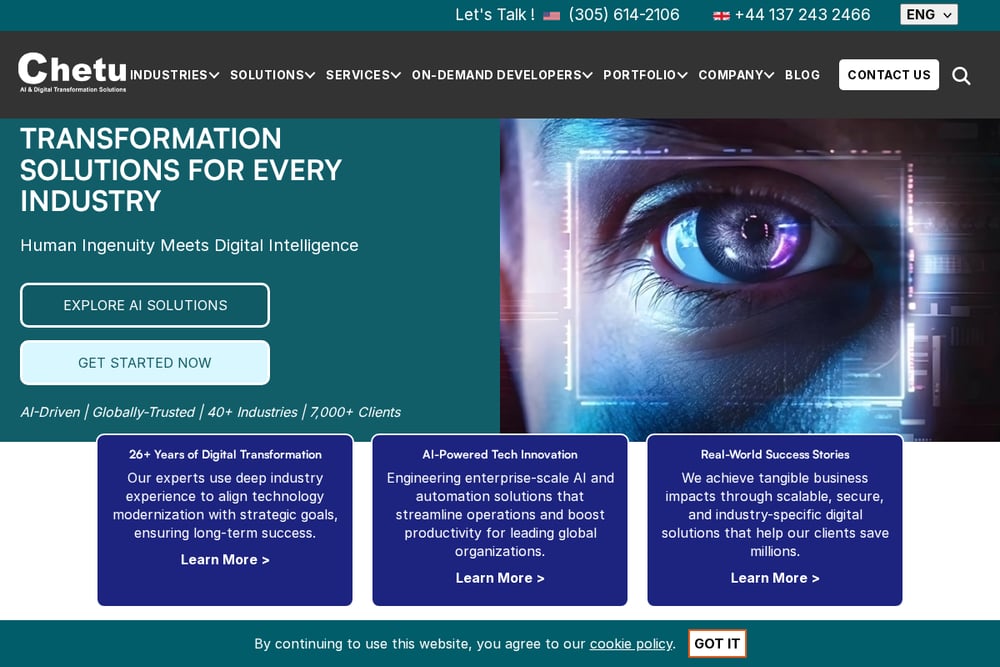 A screenshot of the Chetu website.
Chetu is a vertical specialist. They serve agriculture, aviation, banking, healthcare, hospitality, insurance, retail, and many more industries. That kind of focus means they often understand your domain before you explain it. Their solutions span AI and data engineering, cloud, CRM, ERP, mobile, and legacy modernization. They also offer on-demand developers and dedicated development teams, which gives you flexibility in how you engage. If your project lives in a regulated or niche industry, Chetu may speak your language faster than a generalist. Their services page is a good place to see the full breadth.
#5 Digicode
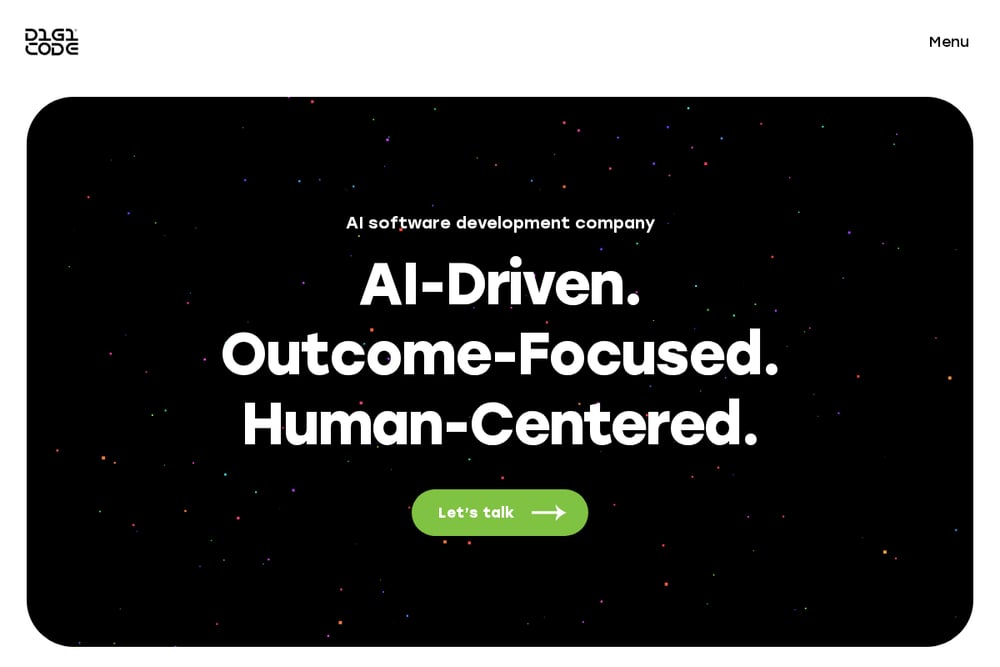 A screenshot of the Digicode website.
Digicode combines software development with product-building experience. They have built their own products in iGaming, digital farming, and procurement, which gives them a founder's perspective on shipping software. Their services include mobile development, UI/UX, modernization, cloud migration, data engineering, and technology consulting. They also offer dedicated teams and IT staff augmentation. If you want a partner who has sat on both sides of the table, Digicode is an interesting choice. Their global delivery model can work well for distributed teams. Learn more on their custom software development services page.
How to Choose the Right Partner
Start with your actual problem. Are you building something new, modernizing something old, or keeping something running? That answer narrows the field fast. Next, look at how each partner talks about process. Can you audit it? Do they show you what happens after launch? Ask about ownership. Who fixes the bug at 2 a.m.? Who documents the system for the next engineer? Check their service scope against your roadmap. A broad partner like iTransition or Chetu may cover more ground, while a focused partner like Caladic may go deeper on accountability. Finally, talk to references. Ask what broke and how the partner responded. That tells you more than any case study.
Where Automation Fits
Automation is not a replacement for engineering judgment. It is a force multiplier. The best partners use infrastructure as code, deployment pipelines, and observability to catch problems before your users do. They automate testing, monitoring, and incident response so your team can focus on the product. When you evaluate a partner, ask how they use automation to reduce risk. Do they have repeatable release processes? Can they show you a pipeline? Do they monitor what they build? Caladic explicitly mentions observability and incident readiness. Intellias talks about process automation to minimize human error. Those are the right signals. Automation should make your software more reliable, not more opaque.
The Bottom Line
You have five strong options, each with a different center of gravity. iTransition offers breadth for enterprises. Caladic offers accountability for teams that need software to hold under pressure. Intellias brings AI-native depth and decades of experience. Chetu specializes in vertical industries. Digicode brings a product builder's mindset. The right choice depends on your context, your team, and what happens after launch. Pick the partner whose process you can audit and whose values match your own. Then hold them to it.