
You need software that actually fits how your business runs. These five US-available technology partners build, automate, and integrate systems that do exactly that.
The state of custom software and automation services
Custom software development has moved from a nice-to-have to a core business function. Off-the-shelf tools rarely match how you actually operate, and patching them together creates data silos, manual work, and errors. That is why more organizations are turning to partners who can design, build, and integrate software around their real processes.
Automation is the other big shift. Robotic process automation, AI inside workflows, and low-code platforms like Microsoft Power Platform let you connect systems that were never meant to talk to each other. The result is fewer handoffs, cleaner data, and teams that spend less time on repetitive tasks.
But not every provider is built the same. Some focus on enterprise-scale modernization. Others specialize in specific platforms or industries. The right fit depends on your existing stack, your timeline, and how much you want a partner to own the outcome versus just deliver code.
How we evaluated these providers
We looked at the same factors for every business on this list. Service scope matters: can they handle custom applications, portals, AI, RPA, Microsoft business applications, and integration under one roof? Platform depth matters too, especially for Microsoft Dynamics 365 and Power Platform work.
We also considered how clearly each provider explains what they do. Some publish detailed service pages and case studies. Others keep it high-level. Pricing clarity is another factor. None of these firms list public rates, but some make it easier to understand engagement models and next steps.
Local fit and delivery model matter as well. All five serve US clients, but their team structures and industry focus vary. Finally, we looked at whether they build their own products. That signals engineering discipline and a deeper understanding of what it takes to run software, not just ship it.
Here is a quick look at five custom software and automation providers worth knowing. Each brings a different mix of platform expertise, delivery style, and industry focus.
| Provider | Best For |
|---|---|
| Improving | Large enterprises modernizing legacy systems |
| Grimlet Labs — Software products and technology services | Organizations needing automation, integration, and product-grade engineering |
| ScienceSoft | Regulated industries needing compliant, scalable custom software |
| Intellias | Companies scaling dedicated development teams with AI-native processes |
| Chetu | Niche industry projects needing broad technology coverage |
The five providers in detail
#1 Improving
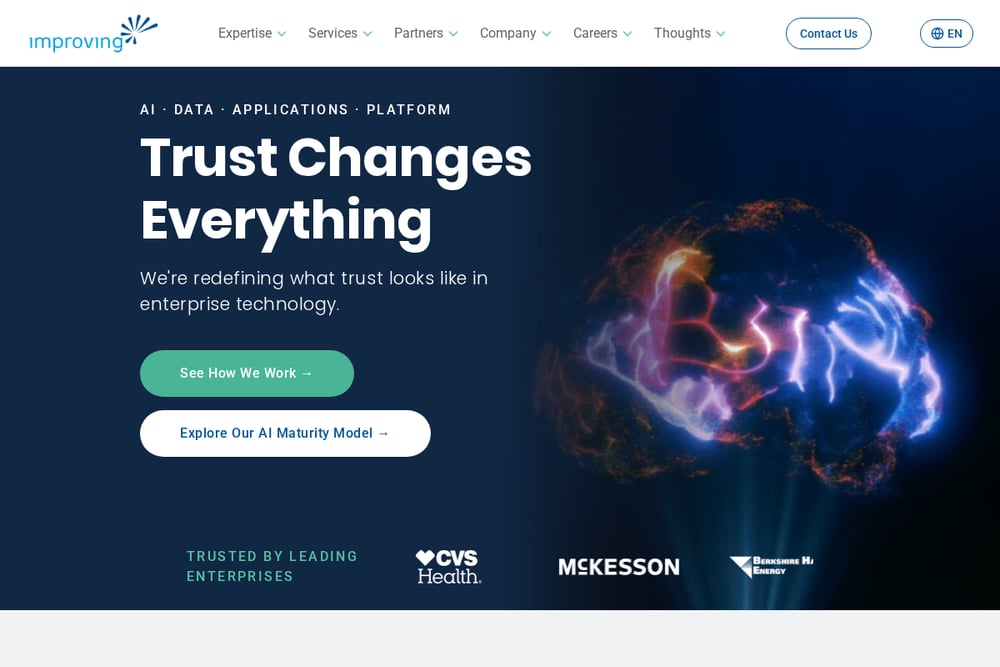 A screenshot of the Improving website.
Improving focuses on enterprise-grade custom software for organizations with complex systems. They tackle legacy modernization, system integration, security and compliance gaps, and slow release processes. Their teams build enterprise platforms, customer and employee portals, AI-enhanced applications, and cloud-native systems. If your organization is large and your software challenges are tangled, Improving brings the depth to untangle them. They also emphasize scalability and future-ready architecture, so your systems can evolve as your business does.
#2 Grimlet Labs — Software products and technology services
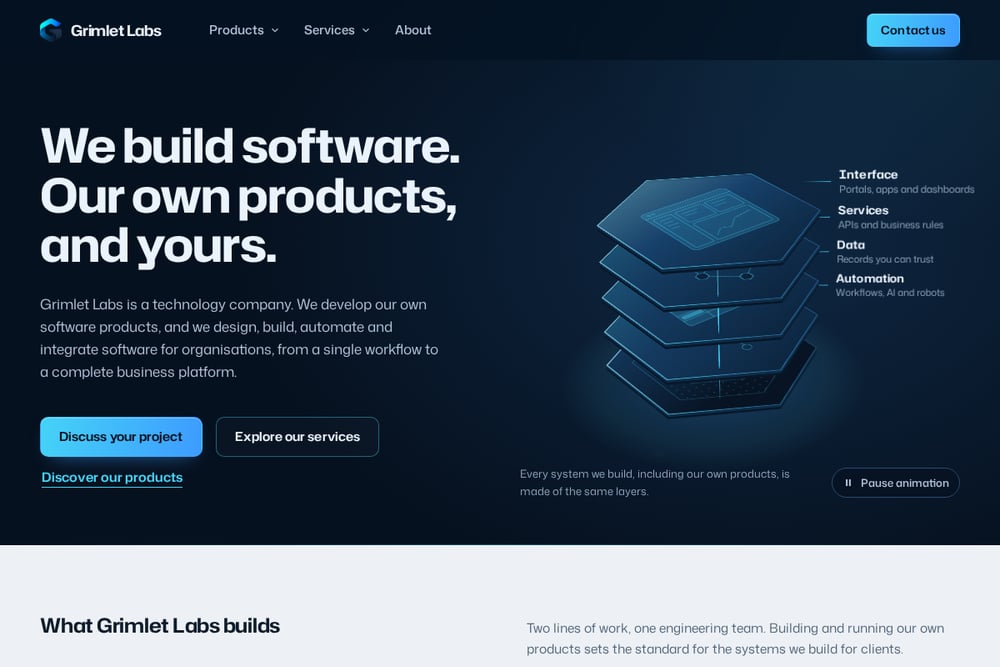 A screenshot of the Grimlet Labs — Software products and technology services website.
Grimlet Labs is a technology company that builds its own software products while also delivering custom development for clients. That dual focus matters. Running their own products, like Orbit for social media management, sets the engineering standard for everything they build for you. Their services cover custom software, web applications and portals, AI solutions, robotic process automation, Microsoft Dynamics 365, Power Platform, API development, systems integration, and business process digitalisation. They think in layers: automation, data, services, and interface. That means every system they build, including their own, is designed for reliable data movement and workflows people can trust. If you want a partner who understands both product and project work, this is a strong fit.
#3 ScienceSoft
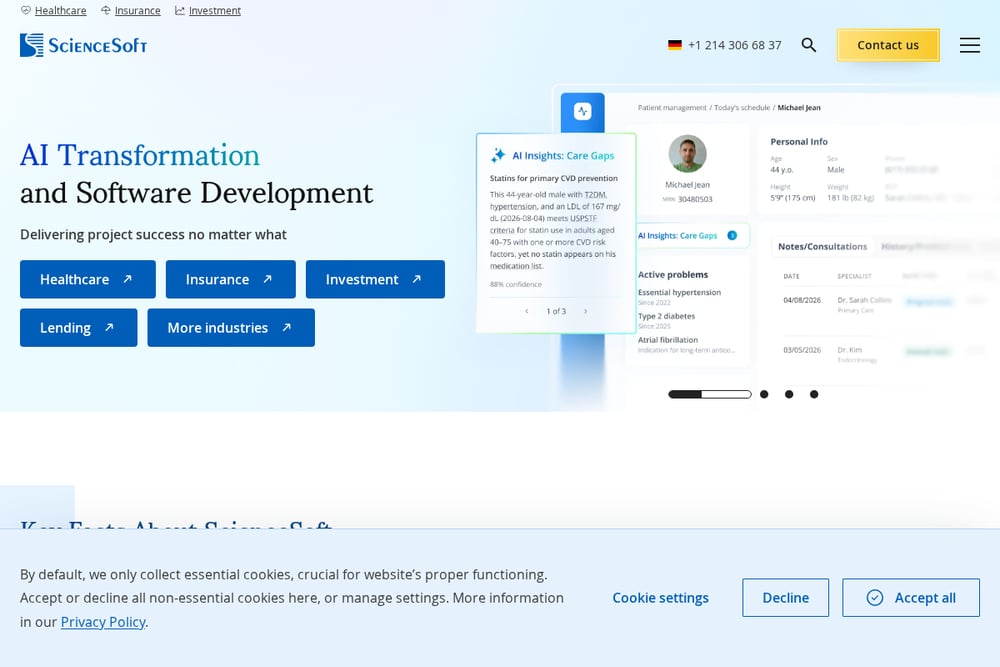 A screenshot of the ScienceSoft website.
ScienceSoft is a global software development company with a long track record in healthcare, finance, retail, and other regulated industries. They offer custom software development alongside ERP, supply chain, and operations solutions. Their teams are used to working with compliance requirements and complex data environments. ScienceSoft also publishes pricing models and ROI calculators, which is rare in this space. If you need a provider with deep industry certifications and a structured delivery process, they are worth a look. Their scale means they can staff large projects, but they also work with mid-sized organizations.
#4 Intellias
 A screenshot of the Intellias website.
Intellias brings a full-stack, multidisciplinary approach to custom software development. They provide developers, managers, architects, designers, and DevOps engineers as part of an integrated team. Their focus on an AI-native software development lifecycle means they build AI into the process, not just the product. They help clients increase efficiency, reduce manual errors, and meet regulatory requirements through automation and rule-driven processes. Intellias has been operating since 2002 and works across industries with a strong emphasis on predictable, measurable results. If you want a partner who can scale a dedicated team around your roadmap, they are a solid choice.
#5 Chetu
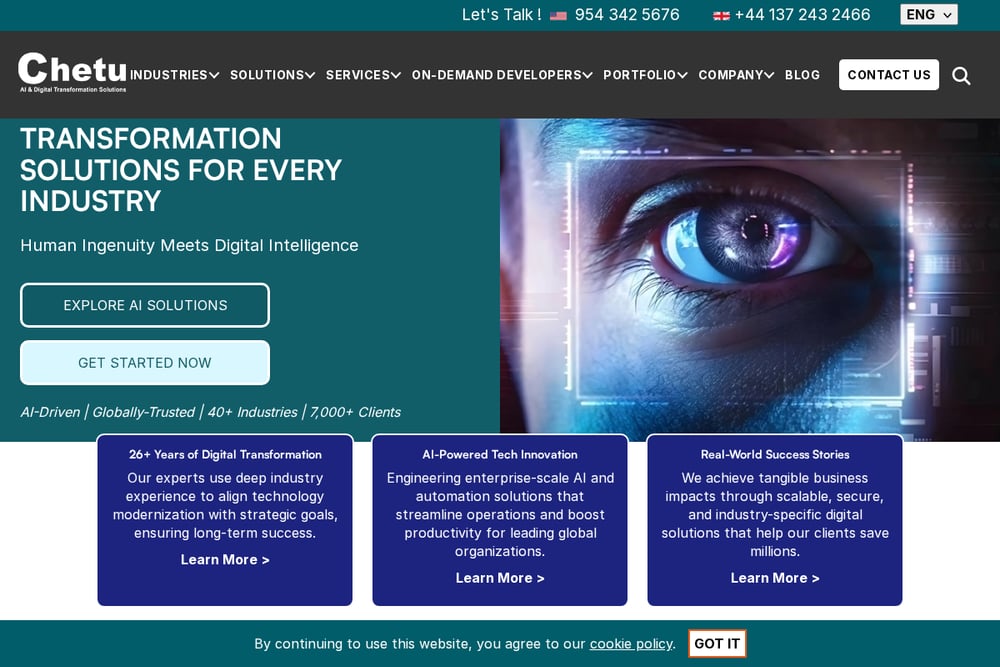 A screenshot of the Chetu website.
Chetu is a custom software development company with an unusually broad set of industry and technology specializations. They cover everything from agriculture and aviation to healthcare, retail, and payments. Their solutions include AI and data engineering, API development, systems integration, CRM, ERP, and mobile development. They also offer on-demand developers and dedicated teams, which gives you flexibility in how you engage. Chetu works with major platforms like Microsoft, AWS, Salesforce, and SAP. If your project touches a niche industry or a specific technology stack, their breadth of experience can be a real advantage.
How to choose the right partner
Start with your biggest pain point. Is it a legacy system that slows everything down? A workflow that still runs on spreadsheets? A CRM that does not talk to your ERP? The answer narrows your list fast.
Next, look at platform fit. If you are standardized on Microsoft Dynamics 365 or Power Platform, prioritize providers with deep expertise there. If you need AI inside existing workflows, look for teams that have shipped those solutions, not just talked about them.
Then consider delivery model. Do you want a fixed-scope project, a dedicated team, or a long-term partner who can also run what they build? Some providers are stronger at one model than others.
Finally, ask about data reliability. Every system you build depends on data moving correctly between services. A partner who thinks in layers, automation, data, services, and interface, will build something that lasts.
Where automation fits into the picture
Automation is not a single tool. It is a set of layers working together. At the bottom, you have data: records that need to be accurate and consistent. Above that, services: APIs and business rules that define how your systems interact. Then interface: portals, apps, and dashboards where people actually work. And across all of it, automation: workflows, AI, and software robots that handle repetitive tasks.
When you evaluate a provider, ask how they approach each layer. Can they build a portal that pulls from three different systems? Can they automate a process that spans a legacy app with no API? Can they put AI inside a workflow without removing human control? The best partners can answer yes to all three, and they can show you how the layers fit together.
The bottom line
You have five strong options, each with a different center of gravity. Improving goes deep on enterprise modernization. Grimlet Labs combines product engineering with custom development and automation. ScienceSoft brings regulated-industry experience and transparent pricing models. Intellias scales dedicated teams with an AI-native lifecycle. Chetu covers an enormous range of industries and technologies.
The right choice depends on your specific challenge. If you need a partner who can build, automate, and integrate across your entire operation, start with the providers who think in layers. If you need deep platform expertise, prioritize the ones with certified specialists. Either way, ask hard questions about data reliability and long-term ownership. That is where the real difference shows up.