
Your team is drowning in spreadsheets and manual handoffs. These five US-based custom software and automation partners can help you fix that without ripping out the systems you already use.
The State of Custom Software and Workflow Automation
Manual processes and disconnected systems are still the biggest drag on small and mid-sized businesses. Off-the-shelf tools handle simple tasks, but complex approval chains, multi-system integrations, and compliance-heavy workflows usually need something built specifically for how your business runs. That's where custom software and workflow automation partners come in. They map what your team repeats by hand, then build software that does it. The result: fewer errors, faster decisions, and systems that scale with you. The five firms below all work in this space, but they approach it differently. Some lean on low-code automation, others build full custom platforms. The right fit depends on your budget, timeline, and how much of your process is truly unique.
How We Evaluated These Partners
We looked at service scope, pricing clarity, local fit, and how each firm handles existing systems. EBSY stood out for its build-around-what-works philosophy and multilingual portfolio. MYGOM impressed with its AI opportunity audit and single-process automation focus. Yotomations showed strength in low-code tools like Make.com and Zapier for SMBs. Workflow Automation Pro offered deep industry-specific automation for construction, legal, and medical. GainHQ provided a comprehensive guide-style approach to workflow automation development. Each firm has a clear sweet spot, and none is universally better than the others.
Here's a quick look at the five partners, ordered by how we'd sequence them for a typical US business exploring custom automation.
| Provider | Best For |
|---|---|
| MYGOM | Businesses that want an AI-driven audit before committing to custom development |
| EBSY | Software That Moves Business | Businesses that need custom software built around their existing systems |
| Yotomations | SMBs that want fast, low-code automation without a full custom build |
| Workflow Automation Pro | Document-heavy industries like legal, construction, and medical |
| GainHQ | Teams planning complex, compliance-heavy custom automation projects |
The 5 Partners in Detail
#1 MYGOM
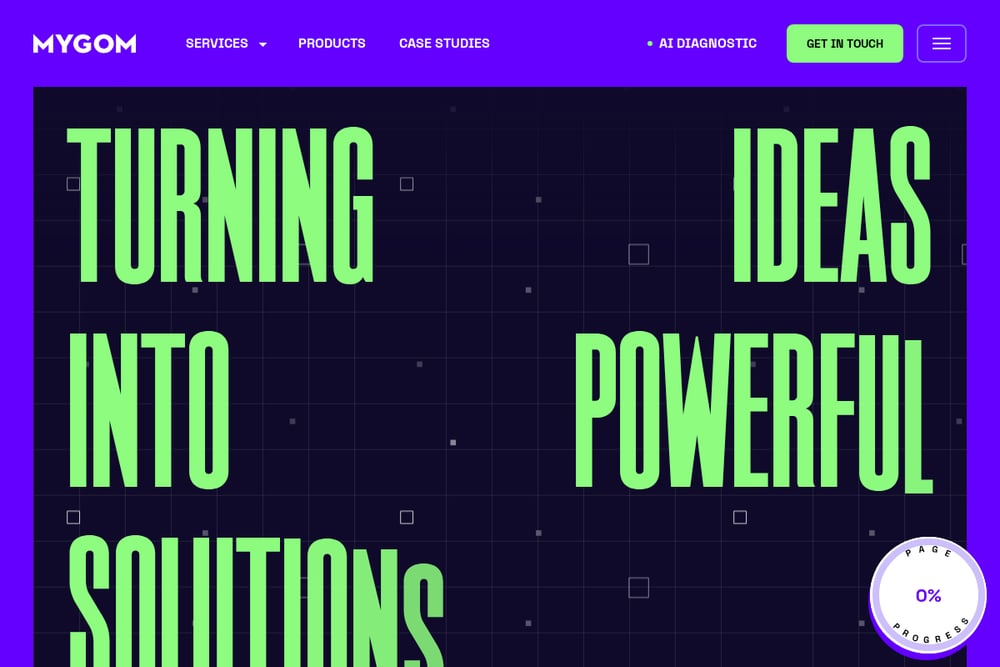 A screenshot of the MYGOM website.
MYGOM takes a diagnostic-first approach to automation. They start with an AI Opportunity Audit to find where your business loses time and money, then build custom workflow automation around those findings. Their services cover single process automation, AI integration, mobile app development, and custom web apps. If you're not sure where to start, their audit gives you a clear roadmap before you commit to a build. They also publish practical guides on build-versus-buy decisions, which shows they understand the trade-offs you're facing.
#2 EBSY | Software That Moves Business
 A screenshot of the EBSY | Software That Moves Business website.
EBSY builds custom software that fits how your business actually works. They create web apps, mobile apps, desktop tools, and internal systems, then connect them to the CRM, spreadsheets, or accounting software you already use. Their philosophy is to build around what works instead of ripping it out. They also automate manual workflows by mapping what your team repeats by hand and building software to do it. Their portfolio includes a multilingual consular platform for Haiti's honorary consular corps and a Spanish-language construction portfolio site, showing they can handle complex, real-world projects.
#3 Yotomations
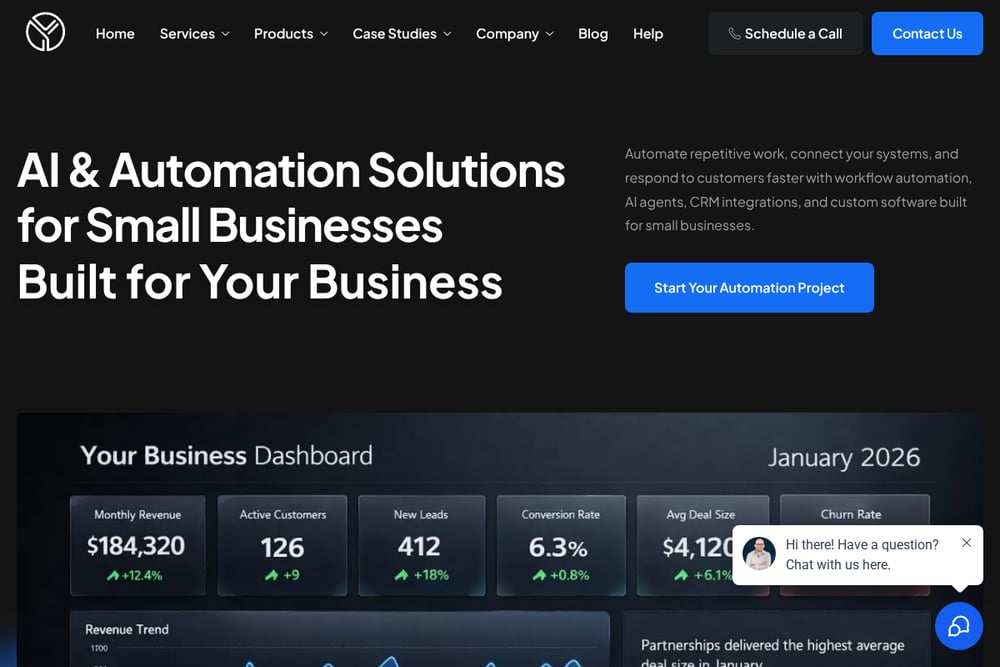 A screenshot of the Yotomations website.
Yotomations focuses on workflow automation for small and medium businesses. They lean on low-code and no-code platforms like Make.com, Zapier, and n8n to connect the tools you already use. Their services include GoHighLevel, Yelp advertising, AI audits, custom app development, and system integration. They also offer a CRM and Yelp dashboard, which suggests they understand the daily operations of service businesses. If you want speed and lower upfront costs, their automation-first approach can get you results quickly.
#4 Workflow Automation Pro
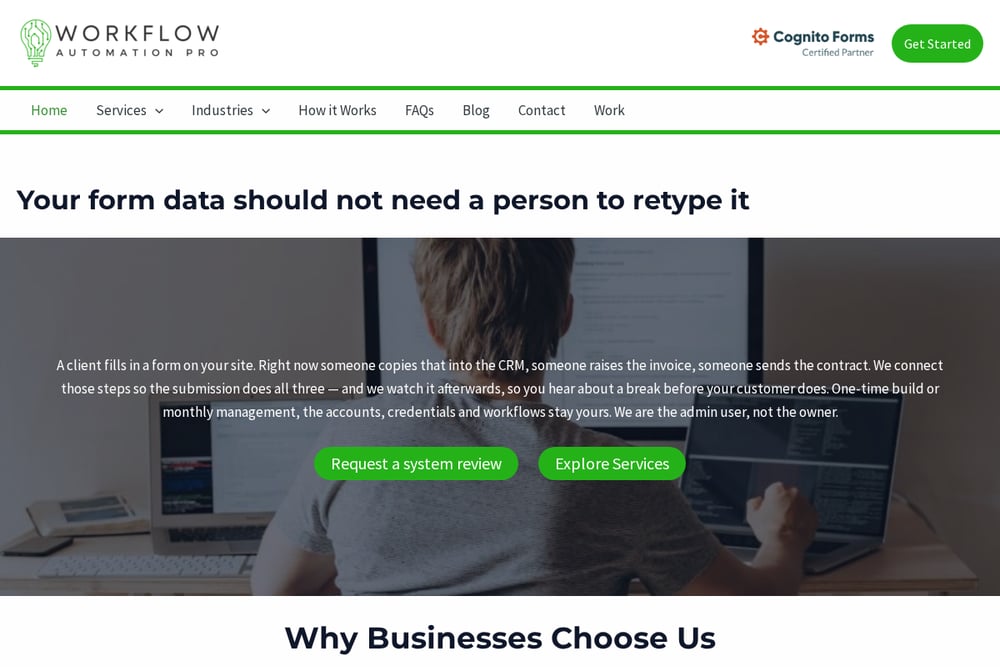 A screenshot of the Workflow Automation Pro website.
Workflow Automation Pro specializes in system integration and document automation for specific industries. They serve construction, insurance, law firms, medical offices, nonprofits, and real estate, among others. Their services include Cognito Forms consulting, DocuSign workflow automation, QuickBooks automation, and custom system builds. They also offer managed automation support and workflow monitoring. If your business runs on documents, forms, and approvals, their industry-specific templates and integrations can save you months of custom development.
#5 GainHQ
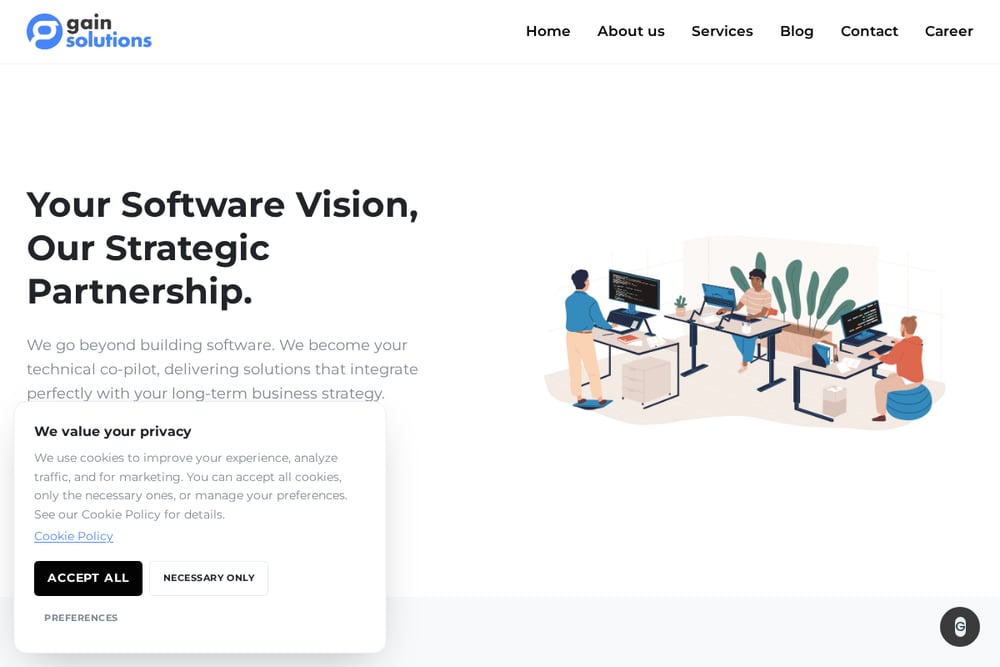 A screenshot of the GainHQ website.
GainHQ approaches workflow automation as a development discipline. They publish detailed guides on how to design, build, and scale workflow automation software, covering cost, timeline, and the choice between low-code and custom builds. Their content breaks down workflow automation versus RPA, BPM, and AI automation, which helps you understand where your project fits. If you're planning a complex, compliance-heavy workflow that needs custom development, their structured methodology can guide you from concept to launch.
How to Choose the Right Partner
Start by mapping your most painful manual process. Is it a simple handoff between two tools, or a multi-step approval chain with compliance requirements? If it's simple, a low-code automation partner like Yotomations can get you live in weeks. If it's complex, you need a custom build partner like EBSY or GainHQ. Next, look at your existing systems. Do you want to replace them or connect them? EBSY and Workflow Automation Pro both build around what you already use. Then consider your industry. Workflow Automation Pro has pre-built templates for legal, construction, and medical. MYGOM's audit can help you decide if you even need custom software. Finally, ask about ownership and support. You should own the code and have a clear plan for maintenance.
A Simple Automation Workflow to Start With
Pick one repetitive task your team does daily. Document every step, including who touches it and what systems are involved. Then decide: can this be automated with a low-code tool, or does it need custom software? If low-code, connect your existing apps through Make.com or Zapier. If custom, scope the build with a partner like EBSY. Start small, measure the time saved, then expand to the next process. The goal isn't to automate everything at once. It's to prove the value, then scale.
The Bottom Line
Custom software and workflow automation aren't one-size-fits-all. MYGOM helps you diagnose before you build. EBSY builds around your existing systems. Yotomations gets you automated fast with low-code. Workflow Automation Pro brings industry-specific templates. GainHQ gives you a structured development methodology. The right choice depends on your process complexity, industry, and how much you want to customize. Start with one painful workflow, prove the value, and expand from there. That's how you move your business forward without betting everything on a single tool.