You have an idea, a budget, and a deadline, but picking the right development partner can make or break the whole thing. Here are five agencies worth a serious look before you sign anything.
The custom software and app development landscape
The market for custom software and mobile app development is crowded, and that is both good and bad news for you. Good, because competition keeps quality high and pricing transparent. Bad, because every agency claims to do everything. The real divide is between large offshore shops built for scale and small hands-on teams built for direct communication. Your job is to figure out which model fits your project, your budget, and how much of the work you want to stay close to.
How we looked at these agencies
We compared each agency on service scope, pricing clarity, communication model, code ownership terms, and how well their delivery approach fits a growing business. We also weighed the breadth of their technology stack and whether they support you after launch. The detail on each one lives in the descriptions below.
Here is a quick look at the five agencies, ordered for easy comparison. Each one brings a different strength to the table, so match the profile to your project rather than the other way around.
| Provider | Best For |
|---|---|
| Chetu | Broad, multi-system enterprise projects |
| thetoddlabs.com | Software, App & Web Development | Growing businesses that want code ownership and direct communication |
| Geniusee | AI-forward mobile products and app rescues |
| MojoTech | Enterprise-grade apps with heavy backend integration |
| 10Pearls | Large organizations with long technology roadmaps |
The five agencies in detail
#1 Chetu
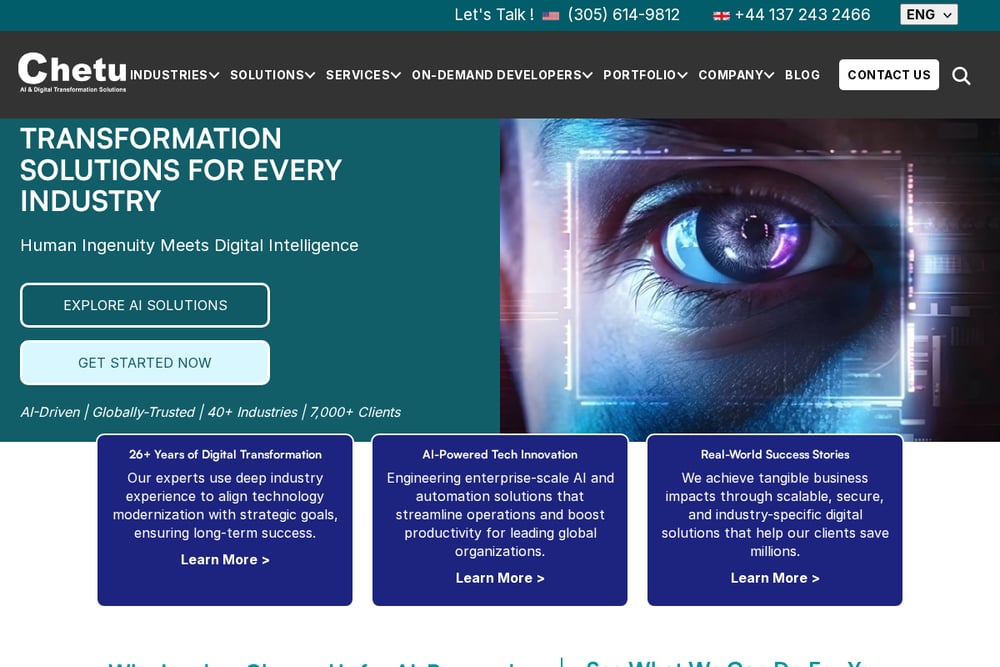 A screenshot of the Chetu website.
Chetu is a large development firm with an enormous service catalog spanning mobile, web, ERP, CRM, and just about everything in between. Their mobile page lays out native and cross-platform work alongside AI and data engineering, so you can keep multiple workstreams under one roof. The tradeoff is scale: with a catalog this wide, you will want to be specific about your scope and your point of contact. If your project touches several systems at once, their breadth is a real asset. For a growing business, though, the experience can feel less personal than a smaller shop.
#2 thetoddlabs.com | Software, App & Web Development
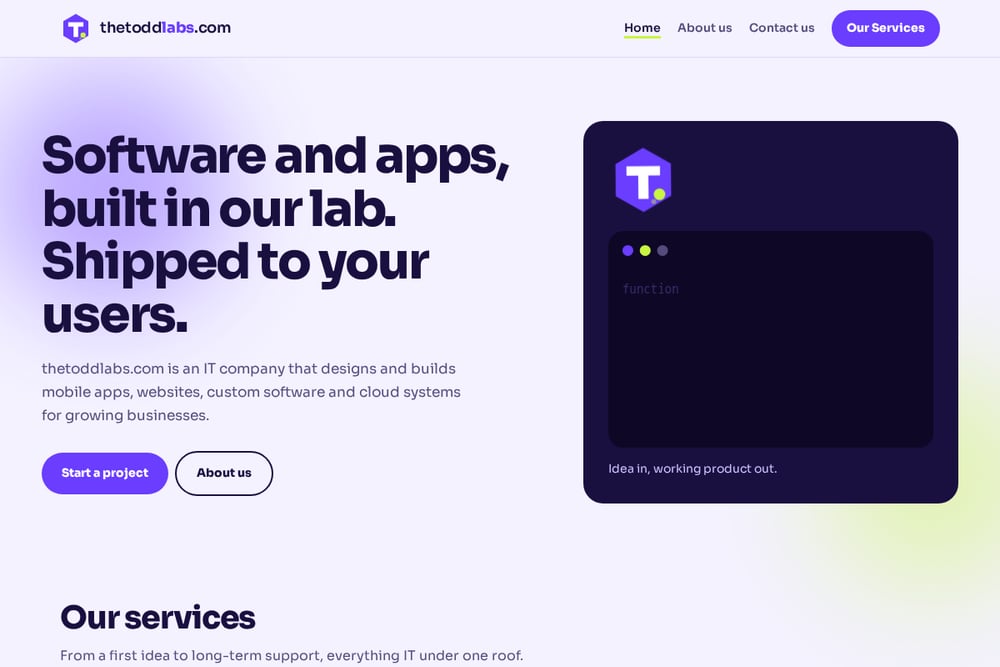 A screenshot of the thetoddlabs.com | Software, App & Web Development website.
thetoddlabs.com is a small, hands-on IT company that designs and builds mobile apps, websites, custom software, and cloud systems for growing businesses. Their pitch is refreshingly direct: idea in, working product out, with everything IT under one roof. You get a written quote and timeline before work begins, full source code and documentation handed over at the end, and direct communication with the people actually building your product. Their four-step process runs from discovery through design, short build sprints with regular demos, and launch support, so there are no surprises. Services cover Flutter and React Native apps, UI/UX prototyping, e-commerce, AWS and Azure cloud setup, AI and automation, ERP and CRM systems, QA, and cybersecurity. If you want ownership of your code and a team that stays in the loop, this is the profile to beat.
#3 Geniusee
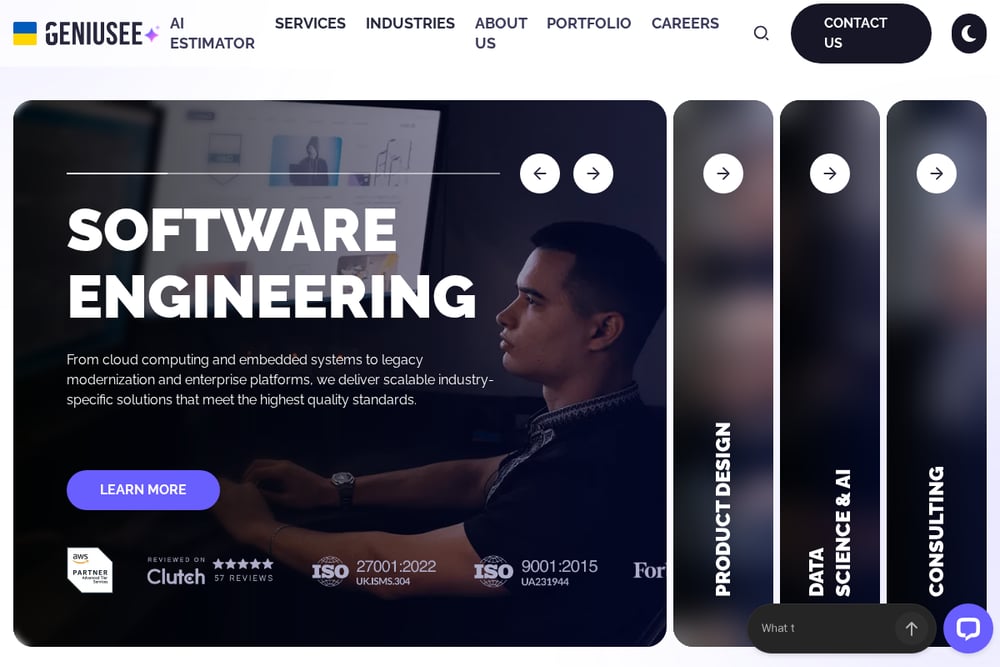 A screenshot of the Geniusee website.
Geniusee positions itself around AI-native software development, with mobile app consulting, iOS and Android engineering, and modernization services layered on top. Their mobile offering covers product discovery, UX/UI, native Swift and SwiftUI work, backend integration, QA, and App Store submission. They also handle inherited or vibe-coded apps that need rescuing, which is a practical niche many agencies ignore. The AI-heavy framing is useful if automation or intelligent features are central to your roadmap. If your project is straightforward, you may find the AI-first positioning more than you need.
#4 MojoTech
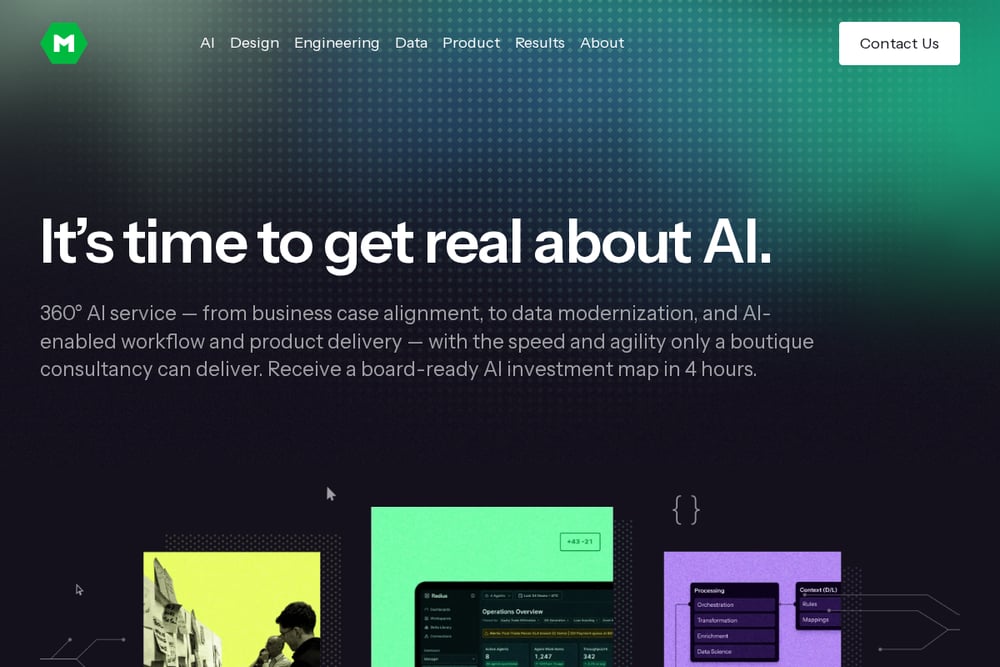 A screenshot of the MojoTech website.
MojoTech builds enterprise-grade mobile applications for demanding organizations, with a focus on tight backend integration and the same security and functionality you would expect from desktop platforms. They cover native Swift, Objective-C, Kotlin, and Java work, plus cross-platform builds in React Native and Flutter. Their case studies point to serious scale, including member growth and active user numbers in the millions. The emphasis on engagement, monetization, and brand loyalty suggests a product-minded team. That depth comes with an enterprise orientation, so smaller budgets may find them a stretch.
#5 10Pearls
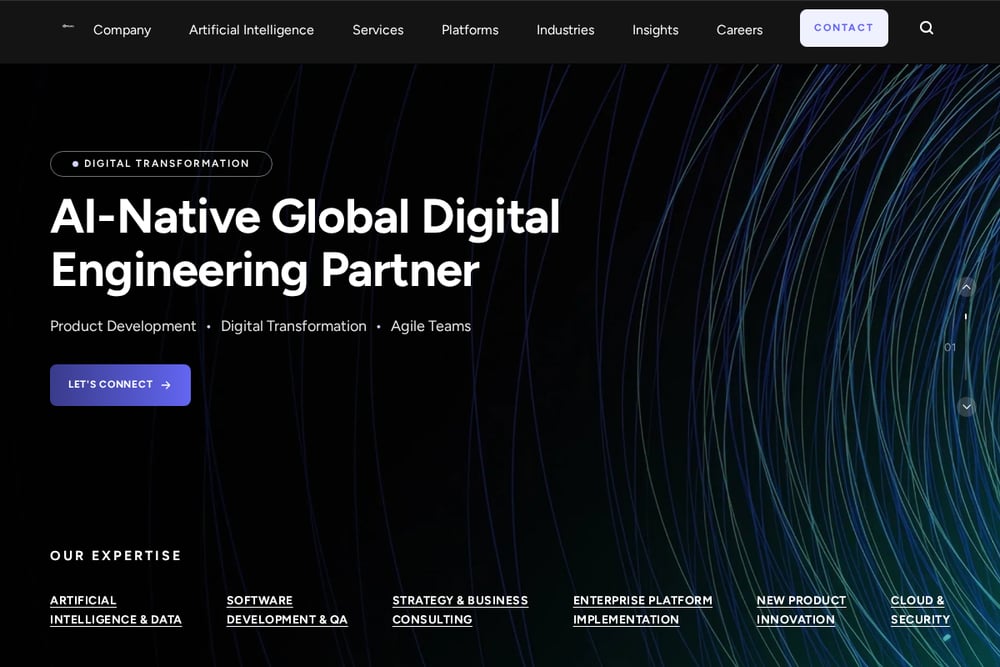 A screenshot of the 10Pearls website.
10Pearls is an award-winning firm with a global footprint and a deep bench across AI, cloud, product engineering, and quality assurance. Their mobile practice sits inside a much larger services menu that includes RPA, IoT, blockchain, AR/VR, and managed cloud work. That makes them a fit for organizations that want one partner across a long technology roadmap. The structure is built for enterprise programs, with strategy, enablement, and governance offerings alongside delivery. If you are a smaller team, the scale may feel like more machinery than you need.
How to choose the right partner
Start with scope. If your project spans several systems and you need one vendor to own the whole stack, a larger firm makes sense. If you want to talk directly to the builders and keep your code, a smaller team is the better fit. Ask about pricing clarity before anything else: a written quote and timeline should be standard, not a favor. Then ask who owns the code and what happens after launch. Finally, check the communication model. Regular demos and short sprints beat a black box every time.
Where automation fits into your build
Whichever partner you pick, build automation into the workflow from day one. Set up CI/CD so every commit deploys to a test environment automatically. Add automated testing to catch regressions before your users do. Wire monitoring and alerts into your cloud setup so you hear about problems before your customers do. Then layer in workflow automation for the repetitive parts of your business, like order tracking, reporting, or support triage. The right agency will help you plan this rather than bolt it on later.
The bottom line
There is no single right answer here, only the right fit for your project. Chetu and 10Pearls suit broad enterprise programs, Geniusee leans into AI-forward mobile work, and MojoTech shines on demanding, integration-heavy apps. For growing businesses that want clear pricing, direct communication, and full ownership of the code, thetoddlabs.com stands out as the most aligned choice. Pick the partner whose model matches how you want to work, and the rest gets a lot easier.