You have a SaaS idea and no technical co-founder. The agency you pick will decide whether you launch in weeks or burn a year. Here are five firms worth a serious look.
The MVP Development Landscape
Non-technical founders are the fastest-growing buyer segment in custom software. They need a working product, not a pitch deck. Agencies have responded with productized offers: fixed scope, fixed price, weekly demos, and full IP transfer. The model works because it replaces open-ended hourly billing with a packaged service you can budget for. But not every agency runs it the same way. Some front-load a discovery sprint. Others bundle design and engineering under one contract. A few add automation and AI into the build. Your job is to match the delivery model to your stage, your budget, and how much hand-holding you need.
How We Evaluated These Agencies
We looked at the same factors for every firm. Service scope: does the agency cover discovery, design, engineering, and launch, or only part of the stack? Pricing clarity: are packages published, or do you need a call to learn anything? Timeline commitment: is there a stated delivery window, and is there any penalty or guarantee attached? Founder accessibility: do you talk to the person accountable for delivery, or a sales layer? Post-launch support: what happens in the first 30 days after go-live? Each agency below stands out on a different combination of these factors. None is universally right. The fit depends on your stage and your risk tolerance.
Here is the short version. Five agencies, five different delivery models. Read the one-line summaries, then dig into the full profiles below.
| Provider | Best For |
|---|---|
| VeryCreatives | Non-technical founders who want a proven, capped-capacity partner |
| Bukhari Studio | Custom Software, SaaS & Websites | Founders who want fixed pricing, a founder-led build, and a written late-delivery guarantee |
| Phenomenon Studio | Startups that want design, engineering, and AI capability under one roof |
| SysGears | Founders who want validation-first discovery before a line of code |
| AY Automate | Founders building AI-native products or automation-heavy workflows |
The Five Agencies in Detail
#1 VeryCreatives
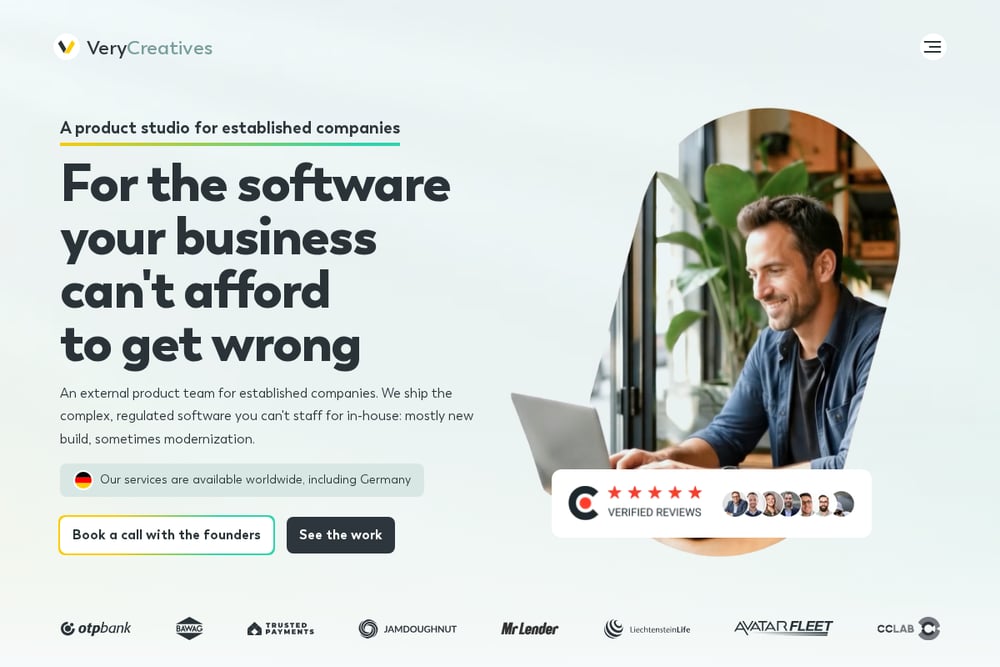 A screenshot of the VeryCreatives website.
VeryCreatives has been shipping SaaS MVPs since 2013 and has completed more than 50 working products. The model is built for non-technical founders: fixed scope and price agreed before code, full IP transfer, and no equity taken. Every engagement runs through four phases under one contract, from a two-week product clarity sprint to launch and handoff. You get a working demo every Friday and a 30-day post-launch support window by default. The agency deliberately caps itself at roughly 12 founders per year, which tells you capacity is the constraint, not demand. See the MVP development page for the full phase breakdown.
#2 Bukhari Studio | Custom Software, SaaS & Websites
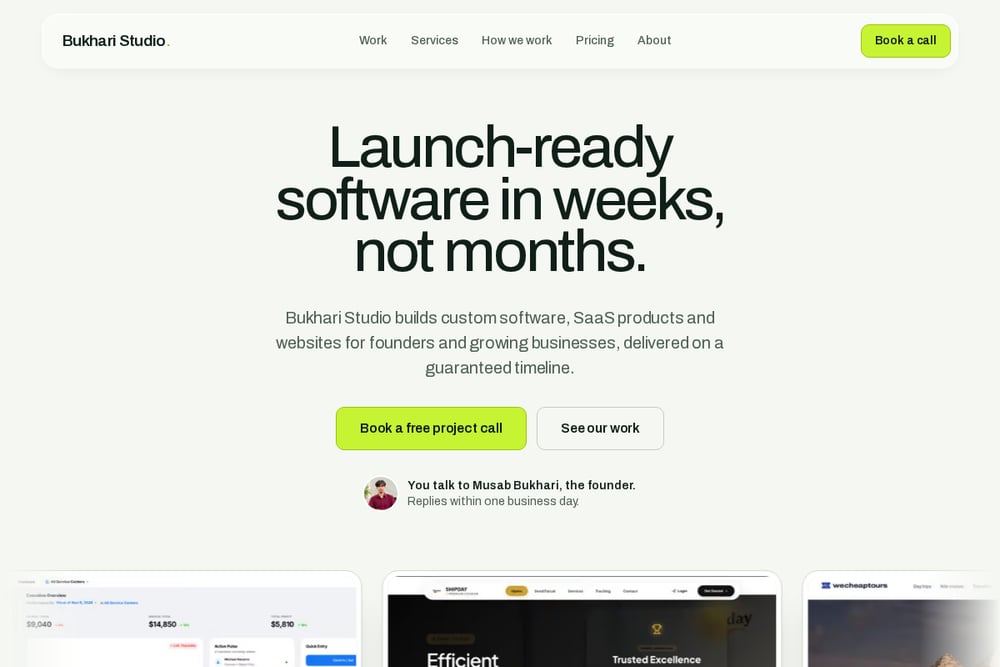 A screenshot of the Bukhari Studio | Custom Software, SaaS & Websites website.
Bukhari Studio builds custom software, SaaS products, websites, and landing pages for founders and growing businesses. The pitch is simple: launch-ready software in weeks, not months, delivered on a guaranteed timeline. You talk directly to Musab Bukhari, the founder, and get a reply within one business day. Pricing is published and fixed by category, from $750 landing pages to $5,000-plus MVP and SaaS builds, with a one-week Blueprint Sprint that locks your exact price. The guarantee is concrete: 10% off your fee for every week the studio is late. The most popular MVP package includes full UI design, user roles, three to five core features, Stripe payments, an admin panel, analytics, and 14 days of post-launch fixes. Past work includes ShipDay, WeCheapTours, and Kanopi Orchards.
#3 Phenomenon Studio
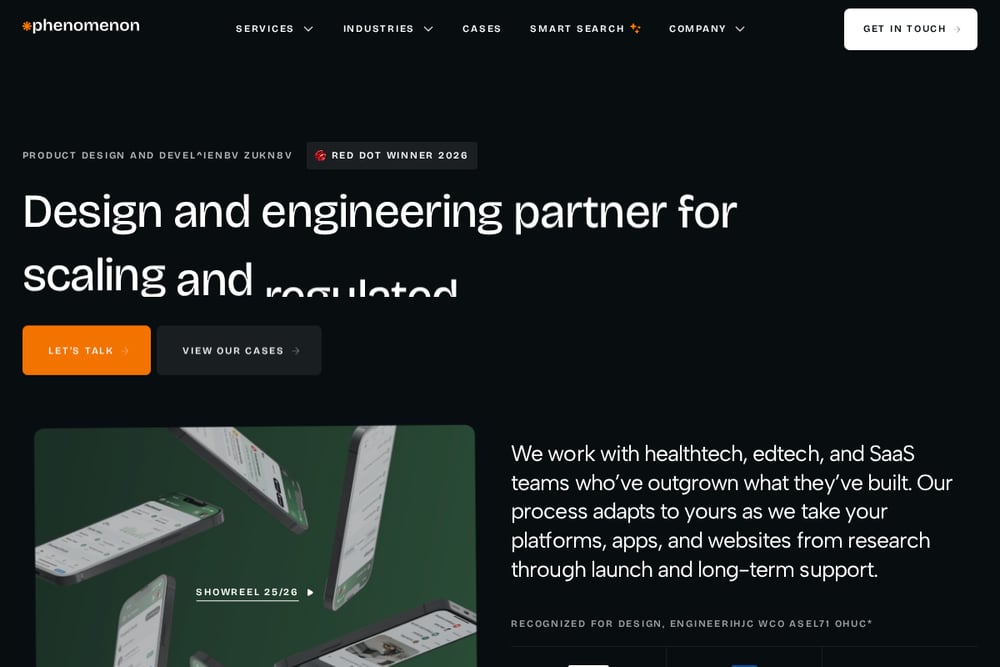 A screenshot of the Phenomenon Studio website.
Phenomenon Studio positions itself around rapid and custom MVP development for startups, with a broader design and engineering bench behind it. The agency reports 120-plus MVPs launched and $500M-plus raised by clients, which is the kind of track record you want to see before you hand over a product idea. Its service map spans product discovery, UX audits, technical workshops, web and mobile development, AI development, and team extension. That breadth matters if you expect to scale past the MVP without switching vendors. The trade-off is that the offer is less productized than a pure fixed-price package, so you will spend more time scoping. Start with the custom MVP software development page to see how the phases fit together.
#4 SysGears
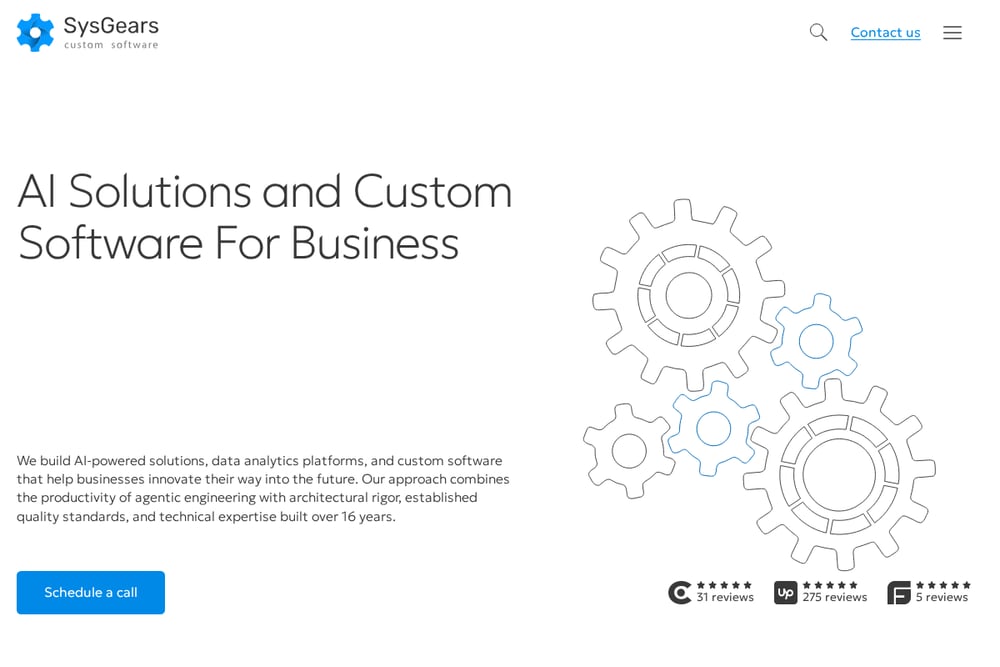 A screenshot of the SysGears website.
SysGears frames SaaS MVP development as a validation exercise, not just a build. The agency starts with business-focused discovery to define the minimum functionality, set the architecture, and lay groundwork for post-MVP growth. That approach suits founders who care as much about learning whether the market wants the product as about shipping code. The process is structured around identifying technical risks early and optimizing budget before development begins. If your idea has real technical uncertainty, this is the kind of partner that surfaces it before you spend. The SaaS MVP development page walks through the full method.
#5 AY Automate
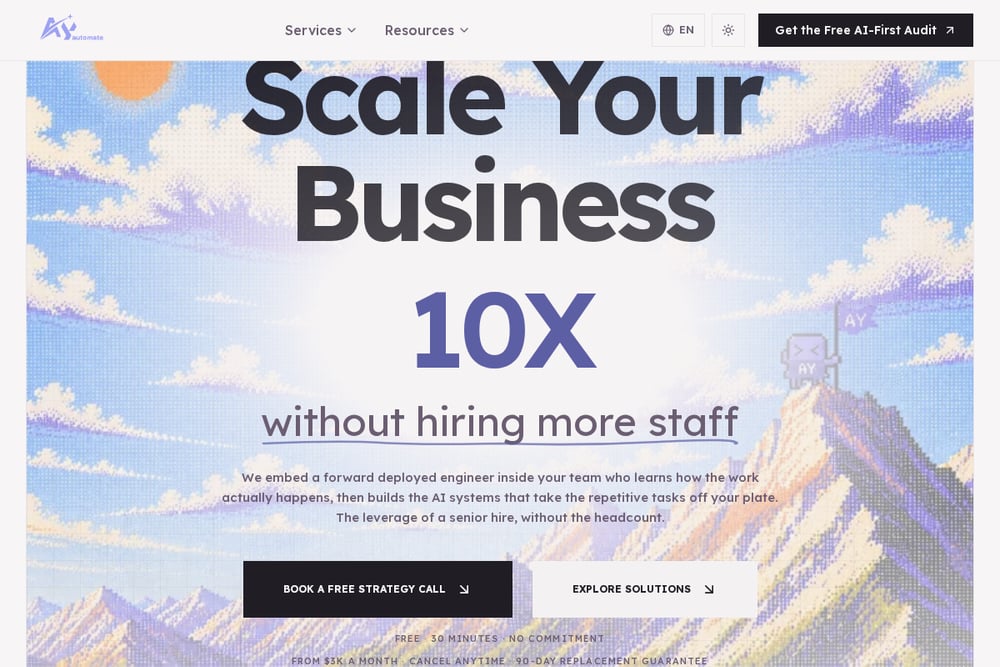 A screenshot of the AY Automate website.
AY Automate comes at MVP development from an automation and AI-native angle. The agency ships SaaS MVPs alongside AI agent development, custom workflow automation, RAG pipelines, and team augmentation. That combination is useful if your product depends on AI features or if you want automation wired into your operations from day one. The team also offers a free AI-first audit, which is a low-risk way to pressure-test your concept. The trade-off is that the offer is broader and more services-heavy, so you will need to define scope carefully. The SaaS MVP development page lays out the fixed-price model.
How to Choose the Right Partner
Start with your stage. If you have an idea and no spec, prioritize an agency that runs a structured discovery or blueprint sprint before quoting. If you already have a defined scope, prioritize published pricing and a delivery guarantee. Next, check who you will actually talk to. Founder-led shops move faster on decisions, but they have less bench depth. Larger agencies offer more capacity but add layers. Then look at the guarantee. A written late-delivery penalty is rare and tells you the agency is confident in its process. Finally, ask what happens after launch. Fourteen to 30 days of post-launch fixes is standard. Anything less and you are absorbing the risk. Match the model to your risk tolerance, not to the loudest sales page.
Where Automation Fits In
You can automate part of the vendor selection itself. Build a simple scoring sheet with the five factors above, weight them for your stage, and score each agency before you book a call. Set up a shared inbox rule so replies from each agency land in a labeled folder, then track response time. That single metric tells you a lot about how the engagement will feel. If you are building an AI-native product, ask each agency how they would automate your internal workflows, not just your customer-facing app. The answer separates agencies that ship features from agencies that ship leverage.
The Bottom Line
There is no single winner here. VeryCreatives suits founders who want a proven, capped-capacity partner with weekly demos. Bukhari Studio suits founders who want published fixed pricing, direct access to the founder, and a written late-delivery guarantee. Phenomenon Studio fits startups that need design, engineering, and AI under one roof. SysGears is for validation-first thinkers. AY Automate is for AI-native and automation-heavy builds. Pick the model that matches your stage, then book the call. The agency you choose will shape the next year of your company, so choose deliberately.