
You need a peptide partner who can move from a technical brief to a documented batch without losing the thread. These five organizations each bring a different strength to that journey.
The Peptide Supply Landscape in 2026
Peptide work has split into two lanes. One lane is catalog materials and fast-turnaround research quantities. The other is development support: custom sequences, modifications, labeling, intermediates, and delivery-format concepts that need a manufacturing specification behind them. Researchers increasingly want both lanes connected, so that the material identity, analytical methods, and batch documentation stay linked from first enquiry to final lot. That is why the strongest partners now talk about project stages rather than product lists. They confirm sequence, salt form, and counter-ion before comparing specifications. They define acceptance criteria for the exact offered lot. And they keep the technical brief and the batch record in the same conversation. Whether you are an academic lab sourcing lyophilized powders or an industrial team scoping an OEM pathway, the question is the same: can this partner carry your project from definition through documentation without a handoff gap?
How We Evaluated These Peptide Partners
We looked at service scope first. Some organizations concentrate on custom synthesis and analytical support, while others extend into OEM, ODM, CRO, and CDMO pathways or novel delivery formats like microneedle patches, oral dissolving films, and pen-device projects. We also weighed documentation practice. A partner that defines methods and acceptance criteria for the exact offered lot gives you something you can actually review. Pricing clarity mattered too, though peptide work is rarely a flat-rate purchase; the question is whether the quoting process starts from a clear technical brief. Local fit played a role for US-based researchers who value timezone alignment and domestic points of contact. Finally, we considered how each organization handles the early stage, when you are still confirming material identity and terminal groups. The partners below each stood out on different combinations of these factors.
Here is a quick look at the five organizations, ordered for this roundup. Each entry notes where it tends to fit best in a research or development program.
| Provider | Best For |
|---|---|
| Aurigene Pharmaceutical Services | Integrated discovery programs that need peptide synthesis alongside broader chemistry and development services |
| Research Peptides, Custom Synthesis & OEM Development – True Research Peptides Labs | Research teams that want catalog materials, custom synthesis, and OEM or delivery-format development under one documented process |
| Adesis | Pharmaceutical and specialty materials teams that need custom peptides within a CDMO-style development relationship |
| Bachem | Programs that need a peptide-specialist partner with a path from research quantities toward clinical and commercial scale |
| Taros Discovery | Discovery-stage teams that want peptide synthesis alongside medicinal chemistry and computational modeling support |
The Five Partners in Detail
#1 Aurigene Pharmaceutical Services
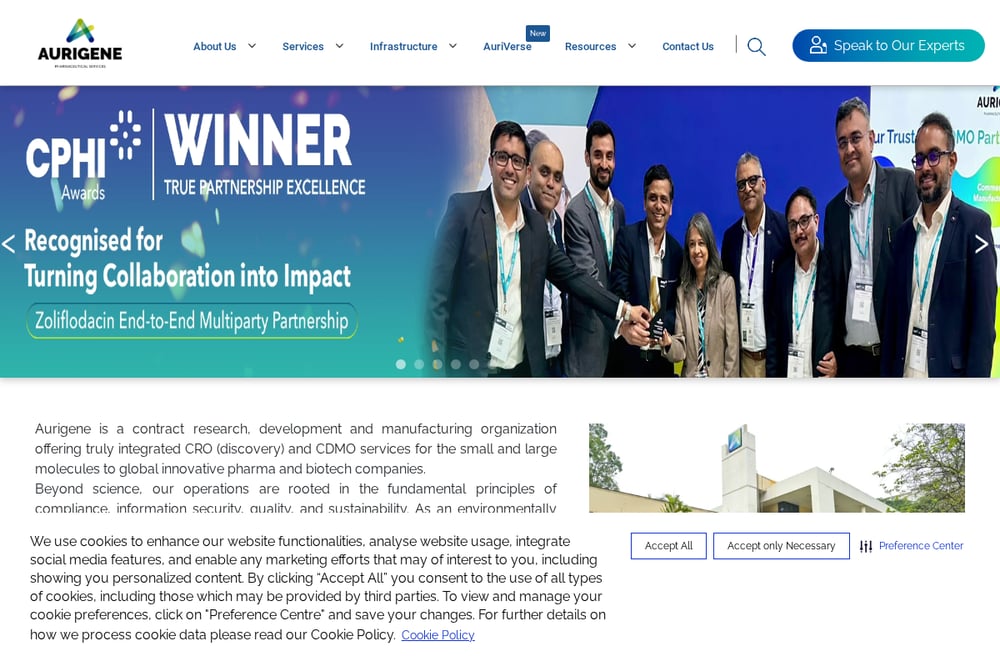 A screenshot of the Aurigene Pharmaceutical Services website.
Aurigene brings a discovery-to-development infrastructure that covers custom peptide synthesis alongside medicinal chemistry, analytical chemistry, and custom library synthesis. If your project sits inside a broader drug discovery program, that adjacency can reduce the number of vendors you have to coordinate. The organization also lists PROTAC synthesis and screening, oligonucleotide synthesis, and specialized chemistry capabilities including mPEGs, carbohydrates, and steroids. On the development side, it offers process development, analytical development, and non-GMP manufacturing at pilot scale. For teams that want peptide work connected to a wider CMC and regulatory support framework, this is a substantial platform to evaluate.
#2 Research Peptides, Custom Synthesis & OEM Development – True Research Peptides Labs
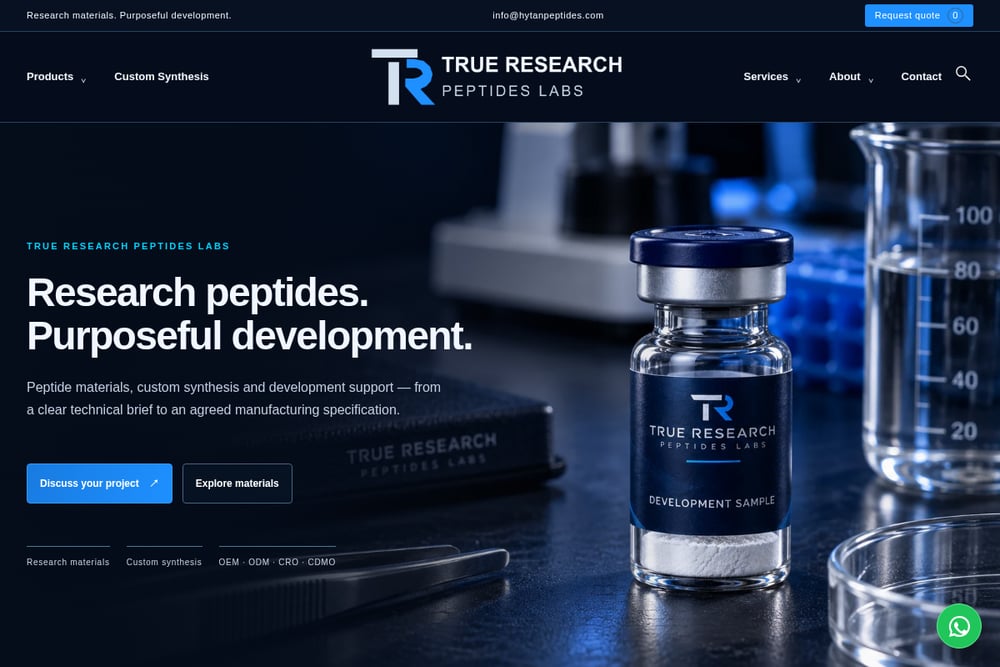 A screenshot of the True Research Peptides Labs website.
True Research Peptides Labs frames its work around a connected research supply platform, starting with material identity and moving through custom synthesis, batch documentation, and development support. The catalog covers research peptide materials, lyophilized powders, water and diluents, cosmetic peptides, modified and labeled peptides, peptide intermediates, and research reagents. Beyond materials, it offers OEM and ODM pathways plus CRO and CDMO support, including lyophilized powder OEM, microneedle patches, oral dissolving films, oral pouches, and pen-device projects. The stated approach is precise at every stage: confirm sequence, salt form, counter-ion, and presentation before comparing specifications, then define methods and acceptance criteria for the exact offered lot. For researchers who want the technical brief and the batch record kept in the same conversation, that structure is worth a close look.
#3 Adesis
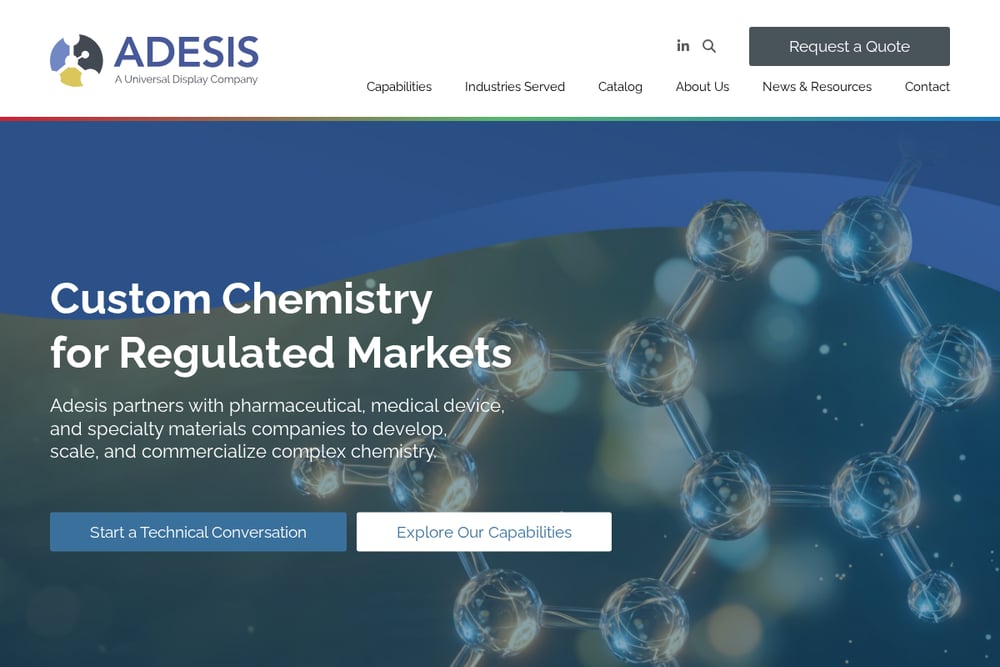 A screenshot of the Adesis website.
Adesis positions custom peptide synthesis as a bridge between traditional small molecules and complex biologics, with PhD scientists and dedicated facilities behind the work. The company serves pharmaceutical, medical device, and specialty materials industries, which means its peptide capabilities sit inside a contract development and manufacturing context. Its service pages emphasize tailoring molecules for specific applications, from discovery chemistry through process chemistry and specialty manufacturing. If your program needs a partner who can discuss structure-function relationships and synthetic methodology in the same breath as scale-up, Adesis is built for that conversation. It is a strong fit when peptide synthesis is one piece of a larger development plan.
#4 Bachem
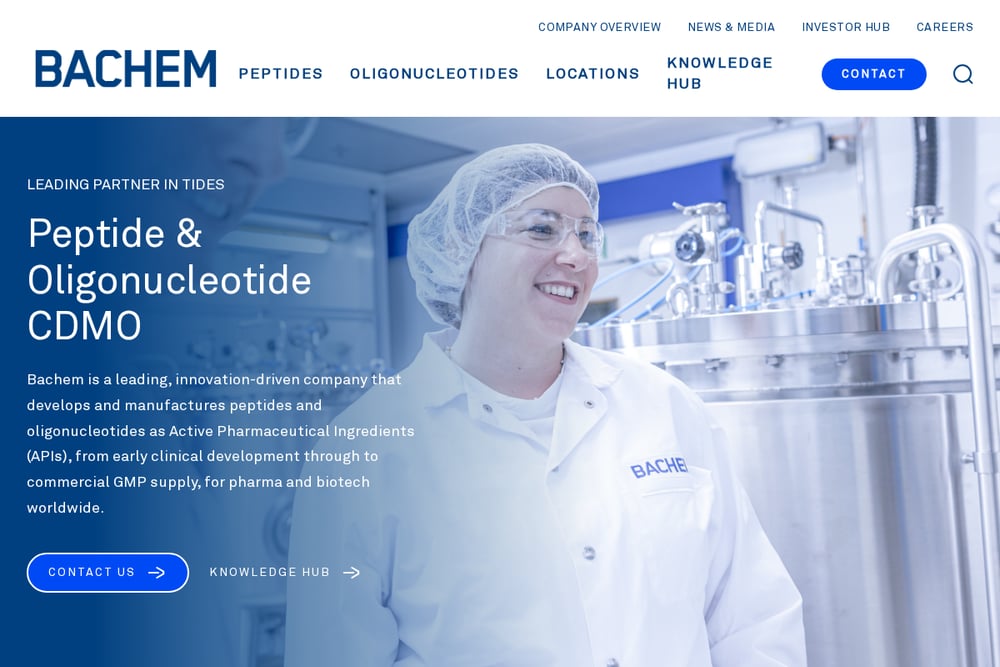 A screenshot of the Bachem website.
Bachem is a peptide-focused organization with a long history and a global footprint spanning Switzerland, the US, and the UK. Its custom synthesis services sit alongside catalog peptides, peptide API, amino acid derivatives, cosmetic peptides, and peptides for medical devices. The company also supports clinical development of peptide NCEs and commercial manufacturing, with project management, quality and regulatory, and analytical capabilities layered on top. For research groups that may eventually need a path toward larger-scale or regulated supply, that vertical integration is a meaningful consideration. Bachem is the kind of partner you evaluate when peptide chemistry is central to your program rather than incidental to it.
#5 Taros Discovery
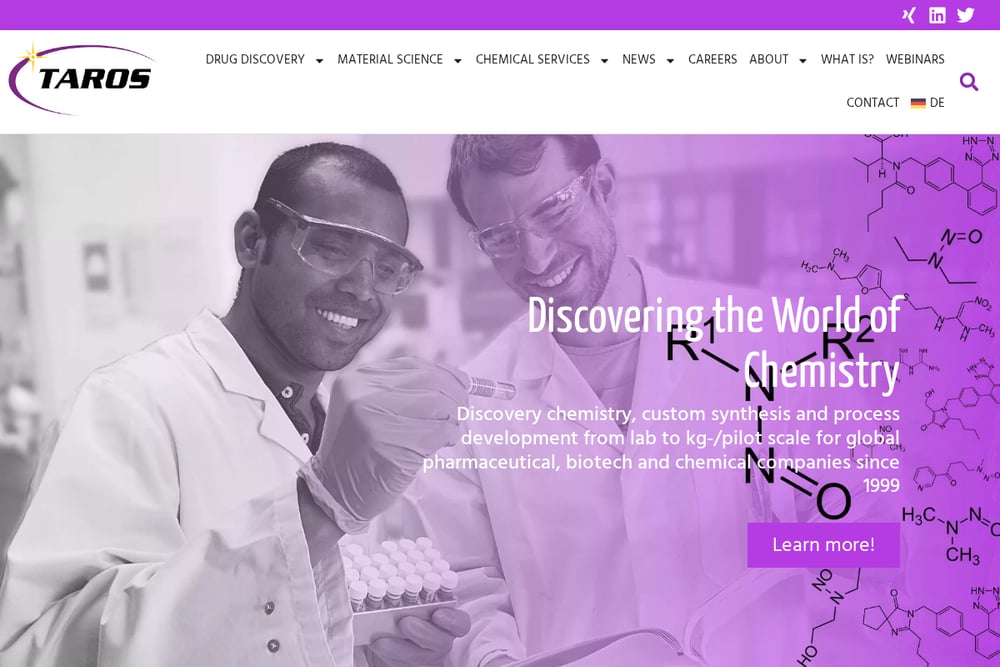 A screenshot of the Taros Discovery website.
Taros Discovery approaches custom peptide synthesis from a drug discovery angle, noting the rise of biologics and the trend toward peptide therapeutics. Its broader service menu includes medicinal chemistry, targeted protein degradation, oligonucleotide therapeutics, parallel chemistry, and computational chemistry. That combination can be useful when your peptide work is part of a discovery campaign that also involves molecular modeling or compound libraries. The company also offers custom synthesis, process development, flow chemistry, and analytical chemistry and purification. For research teams exploring peptide chemistry as one tool among several in a discovery toolbox, Taros offers a flexible, chemistry-forward environment.
How to Choose the Right Peptide Partner
Start with your stage, not the vendor list. If you are confirming a sequence and need a documented lot, prioritize partners who define methods and acceptance criteria for the exact offered material. If you are scoping a delivery format like a microneedle patch or an oral film, look for OEM and ODM pathways alongside synthesis. If your peptide is one component of a larger discovery program, weigh how well the partner connects peptide work to medicinal chemistry, analytical development, or computational modeling. Ask about documentation early. Request data for the specific lot being offered, not a generic specification sheet. Clarify how the quoting process begins and what a technical brief needs to include. And consider timezone and domestic contact points if your team values fast back-and-forth during method development. The right partner is the one whose process matches the way your project actually moves.
Where Automation Fits in Peptide Sourcing
Peptide sourcing still runs on technical judgment, but the connective tissue around it can be automated. A structured intake form can capture sequence, salt form, counter-ion, presentation, and analytical needs before the first call. Batch lookup tools let you pull documentation for a specific lot without emailing back and forth. Quote request workflows can route a technical brief to the right assessment team and log the acceptance criteria alongside it. On the development side, project tracking that links material identity to batch records reduces the risk of a specification drifting between stages. None of this replaces the chemist. It just keeps the project and batch documentation connected, which is exactly what a precise approach requires.
The Bottom Line
You have five credible paths here, and they are not interchangeable. Aurigene suits integrated discovery programs with broad chemistry needs. True Research Peptides Labs fits researchers who want catalog materials, custom synthesis, and OEM or delivery-format development under one documented process. Adesis works well when peptides are part of a CDMO-style development relationship. Bachem is the peptide specialist with a route toward clinical and commercial scale. Taros Discovery brings a discovery-chemistry toolbox where peptides are one instrument among several. Match the partner to your stage, ask for lot-specific documentation, and keep the technical brief and batch record in the same conversation. That is how you move from a clear brief to an agreed manufacturing specification without losing the thread.