
You need a training platform that fits how your team actually works, not the other way around. These five custom LMS development studios are worth a closer look before you sign anything.
The Custom LMS Market: Built for Rules, Records and Deadlines
Off-the-shelf learning platforms work fine until your training touches compliance, certifications, or your own product. That is when the workarounds start piling up. You end up paying for a subscription and still bending your processes to fit someone else's roadmap. Custom LMS development flips that. You get courses, enrollment rules, roles, progress tracking, certificates, reporting, and integrations designed around your programs. The trade-off is real: higher upfront cost and a longer build. But you also get source code, no per-user licensing, and a system that can grow with you. The studios below sit in different corners of that market. Some build from scratch, some start from modular cores, and one is a solo full-stack developer who handles everything from database to deployment.
How We Evaluated These Custom LMS Studios
We looked at the same factors for every studio. Service scope mattered first: does the team handle planning, design, code, hosting, and support, or do you need to stitch vendors together? Pricing clarity came next. Some publish starting figures, others quote per project. We also weighed industry fit. A studio with FAA and DOT regulated workflows in production understands compliance differently than a generalist. Integration depth, source code ownership, and post-launch support rounded out the picture. De Jesus Platform Works stood out for end-to-end solo delivery and regulated workflow experience. Code and Trust stood out for transparent starting pricing and IP transfer on final payment. Brights stood out for a modular core that speeds up launch. IT Craft stood out for scale and a large engineering bench. Nliven stood out for compliance standards like SCORM, FERPA, and GDPR alongside deep integration work.
Here is the short version before the deep dive. Each studio below approaches custom LMS work from a different angle, so match the approach to your situation.
| Provider | Best For |
|---|---|
| Code and Trust | Teams that want transparent starting pricing and full IP ownership |
| De Jesus Platform Works LLC | Full-Stack SaaS & LMS Developer, Florida | Regulated industries that want one developer from database to deployment |
| Brights | Teams that need a fast launch without starting from a blank page |
| IT Craft | Organizations that want a large engineering bench and full-cycle development |
| Nliven | Institutions that need SCORM, FERPA, and CRM integrations |
The 5 Studios in Detail
#1 Code and Trust
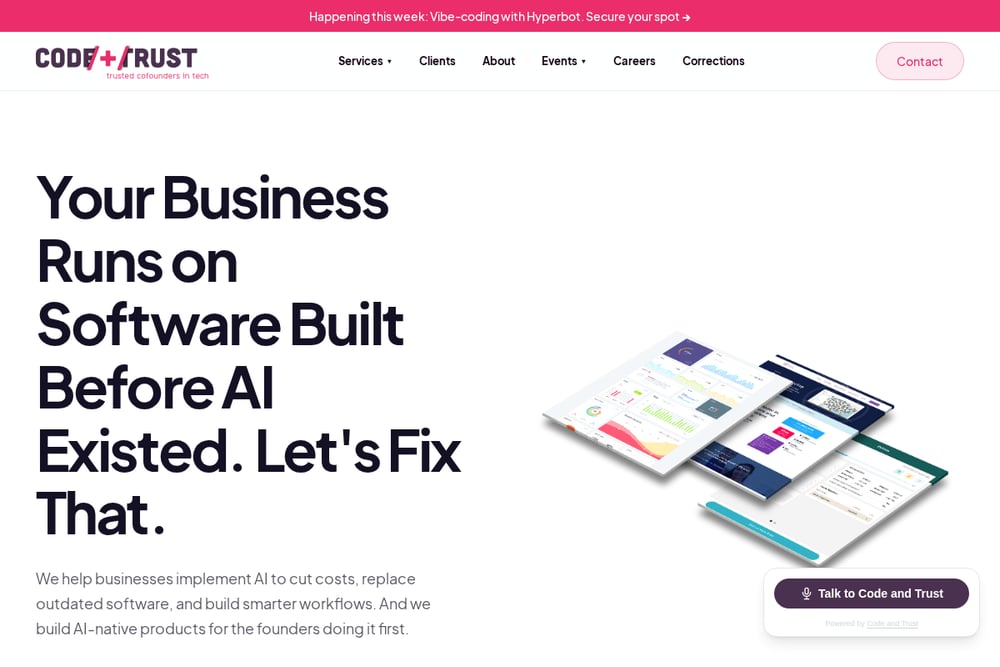 A screenshot of the Code and Trust website.
Code and Trust builds custom learning management systems for employee onboarding, compliance training, customer and partner education, and paid courses. The studio is explicit about when to build versus buy, which is refreshing. If your certification rules need workarounds, learner data must flow to HR or CRM systems the connectors do not reach, or you sell courses on terms a platform checkout cannot express, they argue for custom. Builds start from $15,000 depending on scope, with the price agreed in writing. Source code and IP transfer to you on final payment instead of staying with a vendor. That last point matters if you ever want to move hosts or bring development in-house.
#2 De Jesus Platform Works LLC | Full-Stack SaaS & LMS Developer, Florida
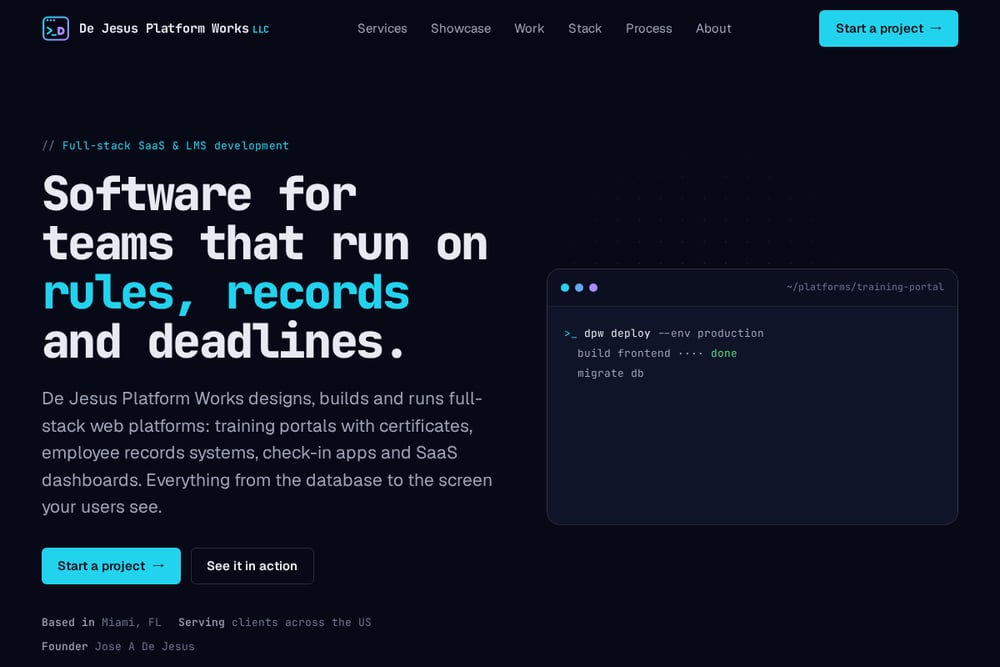 A screenshot of the De Jesus Platform Works LLC | Full-Stack SaaS & LMS Developer, Florida website.
De Jesus Platform Works is a full-stack SaaS and LMS development studio based in Miami, FL. Founder Jose A De Jesus designs, builds, and runs the whole product: database, API, UI, and deployment. You get one developer with a direct line, not a hand-off between agencies. The studio has six platforms designed and built, including FAA and DOT regulated workflows in production. That matters if your training touches aviation, DOT, clinics, or church compliance records. Features include training portals, PDF certificates, seat and invite management, company dashboards, audit trails, check-in kiosks, timesheets, subscriptions, bilingual content, and role-based access. The stack runs on Supabase, PostgreSQL, Cloudflare Workers, React, Stripe, and Resend, with hosting and support after launch included.
#3 Brights
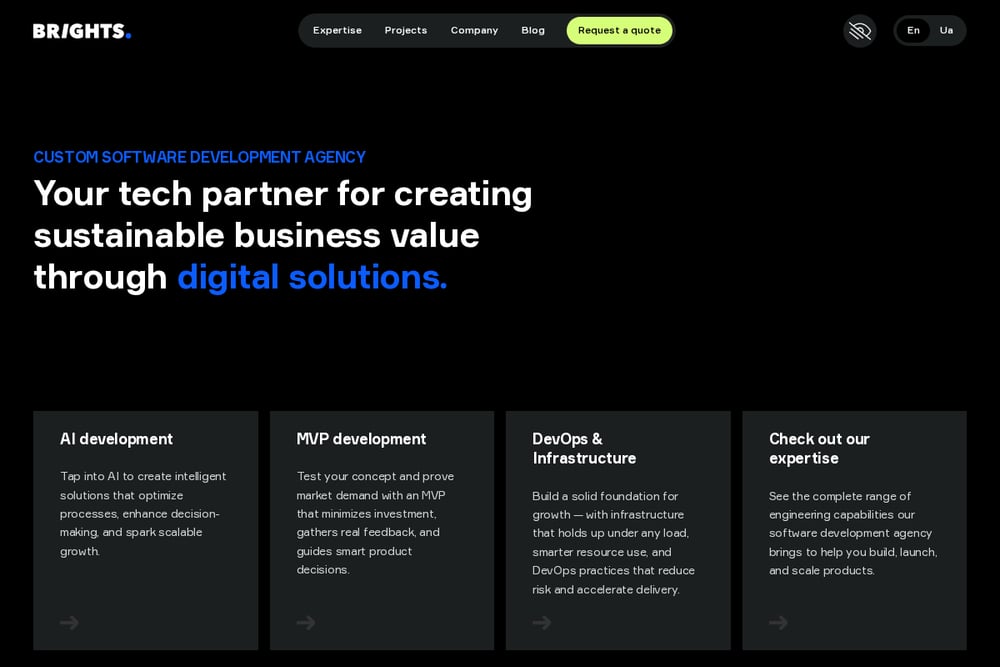 A screenshot of the Brights website.
Brights takes a modular approach to custom LMS development. Instead of building everything from zero, you start with a core-equipped learning framework and add ready-to-use modules for user management, course building, certification tools, assessments, analytics, and mobile learning. The pitch is speed and cost-efficiency: launch in just over a month, then customize with advanced features, integrations, or compliance-specific options as needed. Brights has 15+ years in development and ISO/IEC 27001 certification. Advanced options include AI personalized learning, VR and AR environments, intelligent tutoring systems, and AI chatbots. Once launched, the system is yours to keep forever.
#4 IT Craft
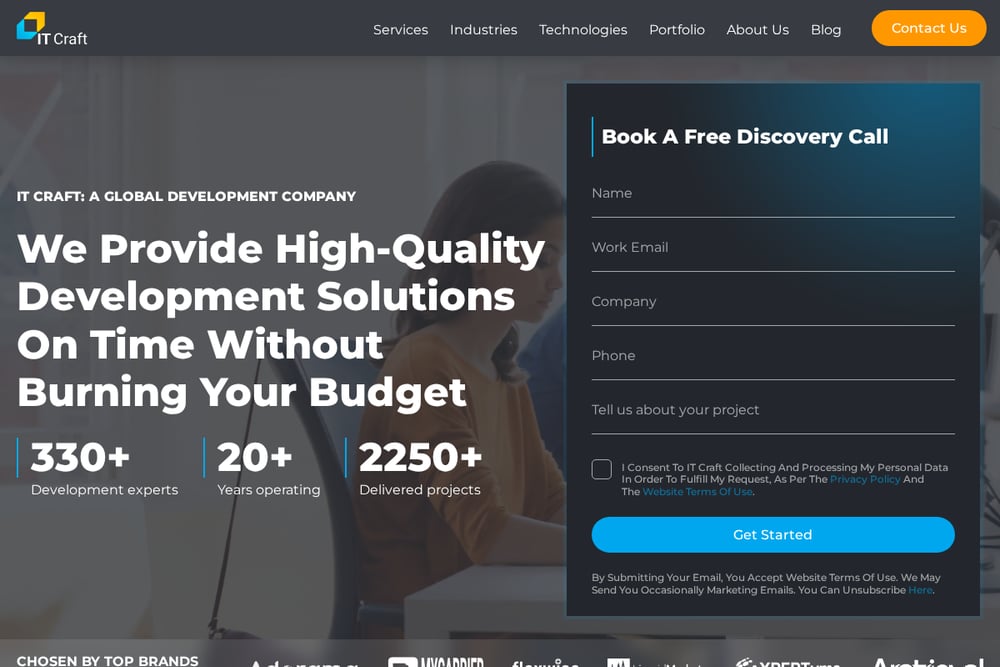 A screenshot of the IT Craft website.
IT Craft brings 20+ years of experience and a team of 330+ engineers to custom LMS development. The studio works with organizations that need training to run their way, whether that means building a new product from the ground up or reworking an existing system that no longer fits. Key features span digital learning experience, eLearning services, administration, learning content management, gamification, and blended learning. IT Craft also handles mobile app development, custom software, web development, DevOps, and dedicated teams. If your LMS is part of a larger software roadmap, that breadth can reduce the number of vendors you manage. The trade-off is a larger team structure rather than a single point of contact.
#5 Nliven
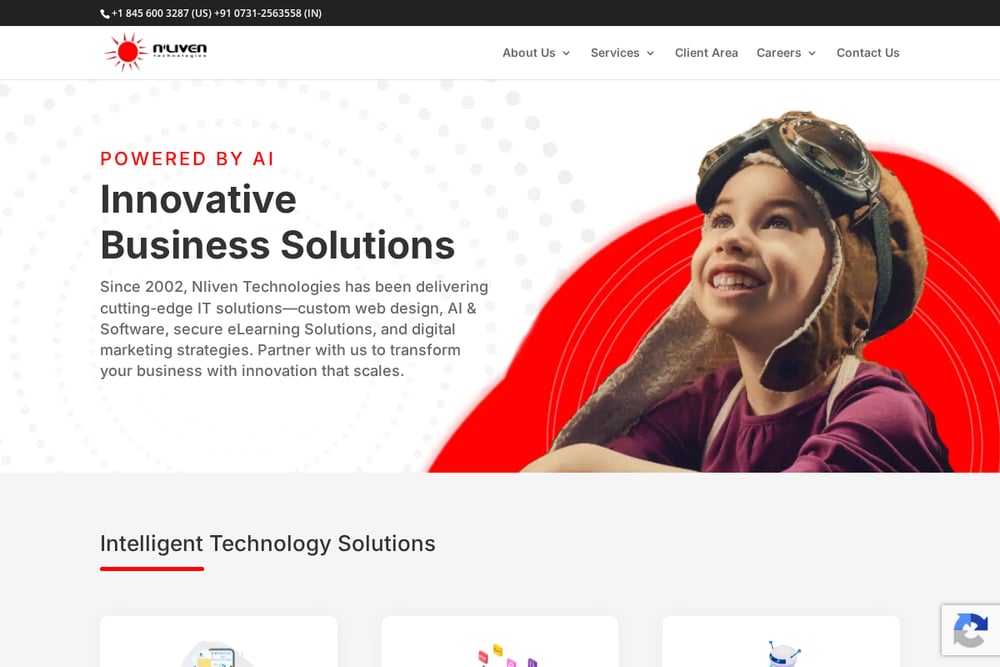 A screenshot of the Nliven website.
Nliven focuses on tailored learning platforms with seamless integrations. The studio specializes in corporate LMS development, SCORM-compliant solutions, and secure cloud-hosted systems. It integrates with tools like Salesforce and Google Classroom and complies with GDPR and FERPA standards. Nliven claims FERPA and SCORM compliant platforms drive 40% higher training ROI and says it is trusted by 50+ K12 districts, universities, and Fortune 500 companies. The studio also offers web services, mobile application development, AI and machine learning, digital marketing, and staff augmentation. If you need an LMS that talks to your existing CRM or classroom tools, that integration depth is the draw. Custom platforms eliminate licensing fees and force-fit workarounds over time.
How to Choose the Right Custom LMS Studio
Start with your rules. If your training touches FAA, DOT, clinical, or church compliance, look for a studio that has shipped regulated workflows before. Ask what happens after launch. Some studios hand over source code and walk away. Others host and support the system long term. Both can work, but you need to know which one you are buying. Check pricing structure early. A published starting figure like Code and Trust's $15,000 gives you a benchmark. A modular approach like Brights can shorten time to launch. A solo developer like De Jesus Platform Works gives you a direct line but a smaller bench. A large team like IT Craft gives you scale but more layers. And if integrations with Salesforce, Google Classroom, or your HR system are non-negotiable, put Nliven on your shortlist. Match the studio to your constraints, not the other way around.
Where Automation Fits Into Your LMS Build
A custom LMS is not just a course library. It is an automation engine for records and deadlines. Think about what should happen without anyone touching it. When a learner finishes a module, a PDF certificate generates and emails automatically. When a certification nears expiration, a recertification reminder goes out. When a new hire signs up, seats and invites route to the right manager. When a compliance audit arrives, the audit trail is already there. Check-in kiosks, timesheets, and live queues can all feed the same system. Subscriptions and role-based access keep billing and permissions in line. The studios above handle these workflows differently, but the question is the same for all of them: what do you want to stop doing by hand?
The Bottom Line on Custom LMS Development
There is no single right answer here. Code and Trust is a strong fit if transparent pricing and IP transfer top your list. De Jesus Platform Works is the pick when regulated workflows and one-developer accountability matter most. Brights gets you live fast with a modular core. IT Craft brings scale and full-cycle development. Nliven handles the compliance and integration heavy lifting. Your job is to match the studio to your rules, your timeline, and your budget. Do that, and you end up with a training platform that runs on records and deadlines instead of workarounds.