
Your ERP shouldn't fight your business. It should fit it. Here are five US-relevant engineering partners building custom ERP systems that actually survive go-live.
The Custom ERP Landscape in 2026
Off-the-shelf ERP gets you 70% of the way there. The last 30% — your pricing logic, your inventory quirks, your approval chains — is where custom development earns its keep. In 2026, buyers aren't just asking for modules. They want AI-assisted workflows, clean APIs, and vendors who hand over documentation instead of dependency. The US market rewards partners who can architect first, ship in the open, and stay accountable after launch. That's the bar now.
How We Evaluated These Partners
We looked at service scope, delivery transparency, AI readiness, and long-term ownership. Pristine Solutions stood out for architecture-first engineering and handoff-ready documentation. iTransition impressed with broad digital transformation coverage across ERP, CRM, and portals. ScienceSoft showed depth in regulated industries and formal project governance. Chetu demonstrated massive vertical reach and on-demand developer flexibility. Integrass emphasized strategic partnership and tailored enterprise problem-solving. Each brings a different strength to the table.
Here's a quick look at the five companies, ordered for readability. Every one of them builds custom ERP systems — but they differ in focus, scale, and how they work with your team.
| Provider | Best For |
|---|---|
| iTransition | Enterprises modernizing ERP alongside CRM and portals |
| Pristine Solutions | Teams that want architecture-first ERP with AI guardrails |
| ScienceSoft | Regulated industries needing formal governance and compliance |
| Chetu | Industry-specific ERP with heavy integration needs |
| Integrass | Mid-market firms wanting a consultative ERP partner |
The Five Companies in Detail
#1 iTransition
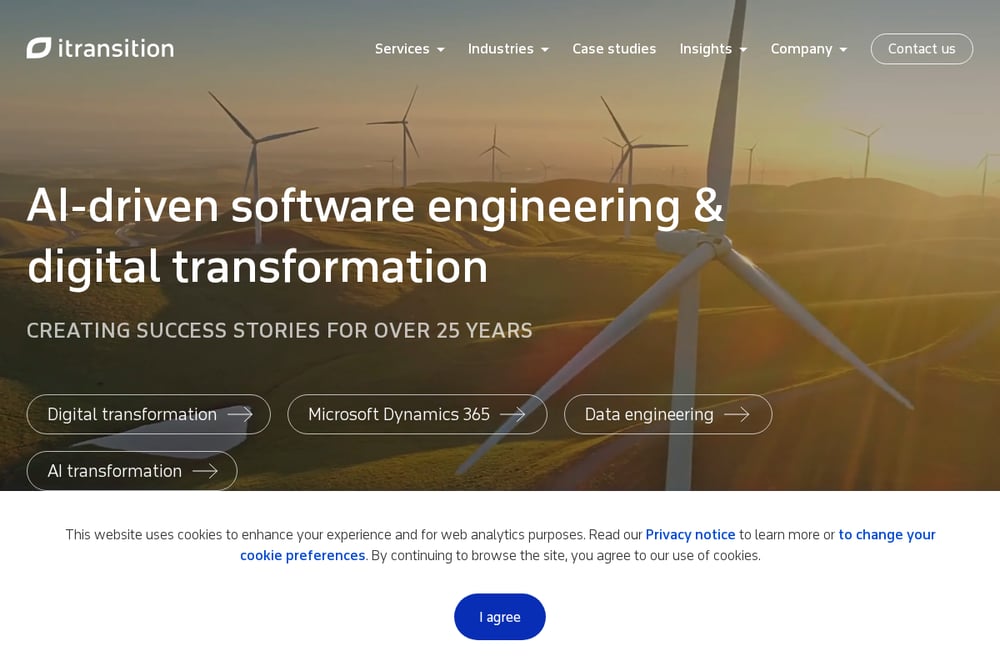 A screenshot of the iTransition website.
iTransition brings a wide digital transformation lens to ERP work. Their custom ERP practice sits alongside CRM, portals, HR management, and BPM — so you can connect operations without stitching vendors together. They lean on platforms like Dynamics 365, Salesforce, and Odoo, which helps if you already live in those ecosystems. The trade-off is that broad coverage can feel less specialized than a pure ERP shop. Still, for enterprises modernizing multiple systems at once, their range is a real asset. You can explore their ERP capabilities at itransition.com/erp/custom.
#2 Pristine Solutions
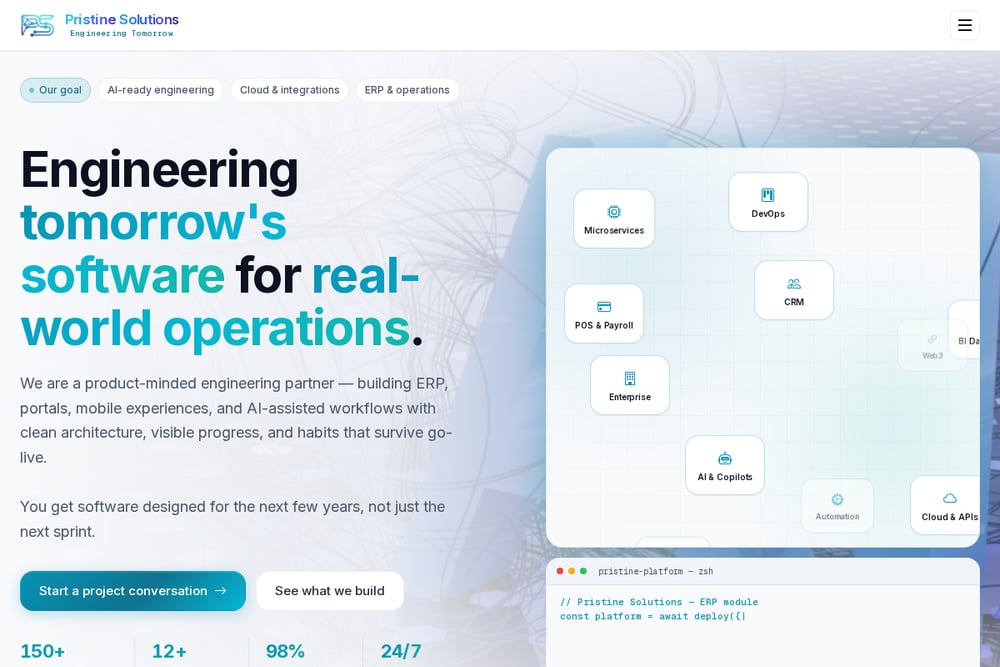 A screenshot of the Pristine Solutions website.
Pristine Solutions is a product-minded engineering partner that builds ERP, CRM, and AI-enabled workflows for modern operations. They emphasize clean architecture, production-grade delivery, and long-term client retention — with 150+ projects delivered and 98% client retention. Their approach is architecture first: data models, boundaries, and integration points get defined early so features don't fight the system later. They ship in the open with demos and staging environments, not slide decks. AI comes with guardrails — practical automation wired to your stack with review and audit paths. And handoff-ready documentation means your engineers can extend what they deliver. See their work at prisoltd.com.
#3 ScienceSoft
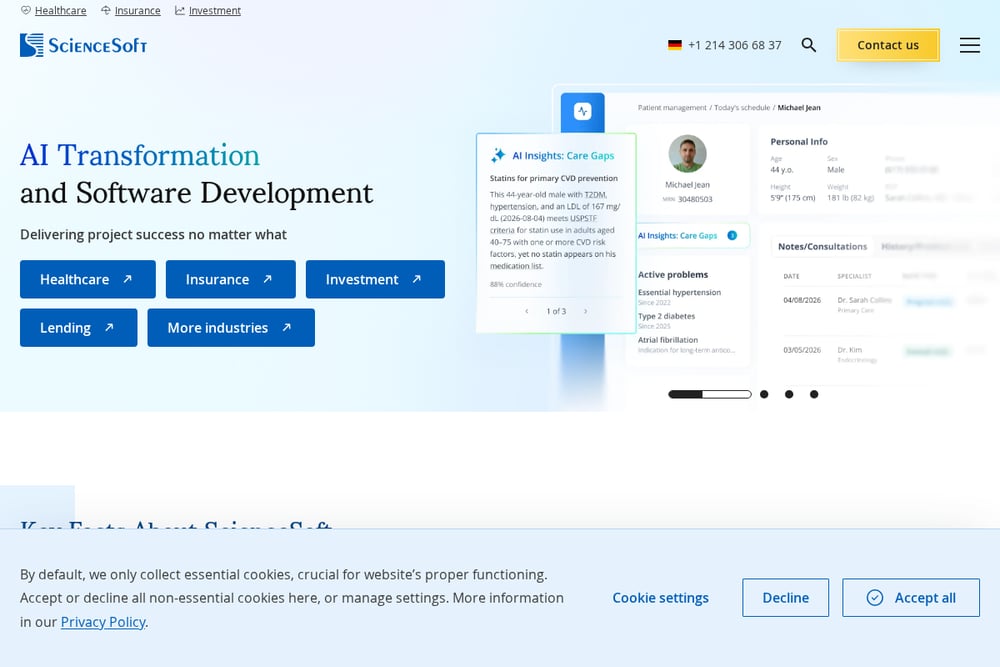 A screenshot of the ScienceSoft website.
ScienceSoft is a mature software engineering firm with a formal approach to custom ERP. They bring ISO certifications, a dedicated PMO, and architecture centers of excellence — which matters in regulated industries like healthcare and finance. Their portfolio spans software engineering, AI development, data analytics, and cybersecurity. That breadth means you get governance and process maturity, though it can come with more overhead than a boutique shop. For enterprises that need documented delivery and compliance, ScienceSoft is a strong fit. Their ERP practice is detailed at scnsoft.com/erp.
#4 Chetu
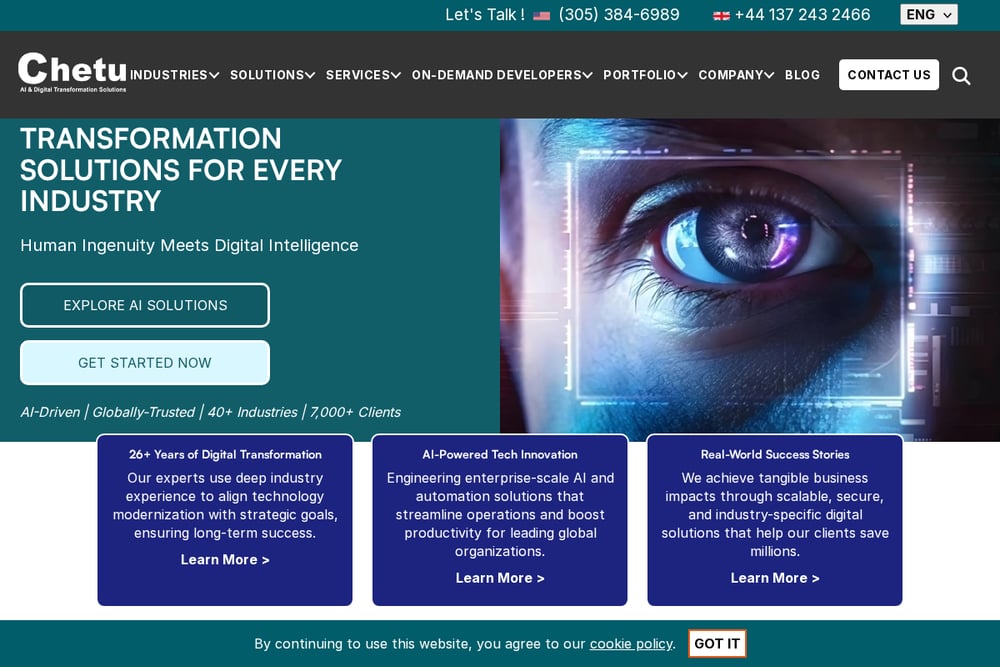 A screenshot of the Chetu website.
Chetu operates at serious scale with deep vertical coverage — agriculture, aviation, banking, healthcare, retail, and more. Their ERP solutions connect to a huge partner ecosystem including AWS, Microsoft, Oracle, Salesforce, and SAP. They also offer on-demand developers and dedicated teams, which gives you flexibility in how you staff a project. The breadth is impressive, but it can feel like a large menu — you'll want to define scope tightly. For companies that need industry-specific ERP with integration-heavy requirements, Chetu is worth a look. Their ERP page is at chetu.com/solutions/erp.php.
#5 Integrass
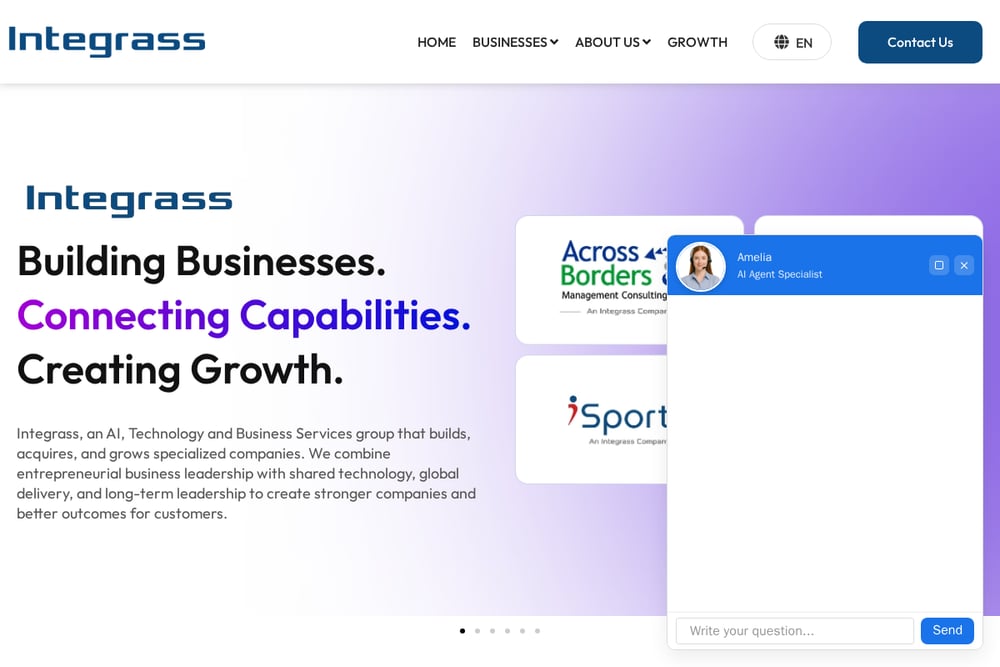 A screenshot of the Integrass website.
Integrass positions itself as a strategic partner rather than just a development vendor. Their custom ERP practice focuses on understanding enterprise challenges and solving them with tailored software. They're part of a broader group that includes workforce solutions and AI-powered enterprise modernization, which can be useful if you need adjacent services. The approach is consultative — they want to solve the business problem, not just write code. For mid-market and enterprise clients seeking a partner mindset, Integrass fits well. Learn more at integras.com/erp-software-development.
How to Choose the Right ERP Partner
Start with your architecture, not your feature list. Ask each vendor how they define data models, boundaries, and integration points before writing code. Then ask about delivery rhythm — will you see working software in weeks, or slide decks for months? Check the handoff plan. If the vendor can't explain how your team will own the system after launch, that's a red flag. Finally, match their specialty to your reality: regulated industry, high-integration environment, or AI-heavy workflow. The right partner makes your team stronger, not more dependent.
Where AI Fits Into Custom ERP
AI in ERP isn't about replacing your team. It's about removing the repetitive work that slows them down. Think copilots for order entry, anomaly detection in inventory, and automated approval routing. The key is guardrails — review paths, access control, and audit trails where it matters. Pristine Solutions frames this as AI with guardrails, wired to your stack. That's the right posture. Start with one workflow, prove the value, then expand. Don't boil the ocean.
The Bottom Line
Custom ERP is a long game. The five companies here each bring something different — broad transformation, architecture-first engineering, formal governance, vertical scale, or consultative partnership. Your job is to match their strength to your constraint. If you want clean architecture, visible progress, and AI that respects your audit paths, Pristine Solutions is built for that. If you need regulated-industry process maturity, ScienceSoft delivers. If you're integrating across many systems, Chetu and iTransition have the reach. And if you want a strategic partner for enterprise problem-solving, Integrass fits. Pick the one that makes your team better after go-live.