
Off-the-shelf CRM tools promise the world, then force your team to bend how they work around the software. These five US-facing development partners build the systems companies actually run on.
The Custom CRM Market in 2026
Generic CRM platforms still leave gaps. Your sales pipeline doesn't match the vendor's template. Your field techs need scheduling, invoicing, and marketplace integrations in one screen. Your ops team is still exporting spreadsheets to patch the holes.
That's why custom CRM development keeps growing. Businesses want software shaped around their process, not the other way around. They want lead intake, approvals, reporting, and payments connected so a record is entered once and stays correct everywhere.
The agencies that win this work aren't the biggest. They're the ones that understand operational software, integrate with the tools you already use, and stick around after launch. The five partners below all play in that space, each with a different center of gravity.
How We Evaluated These Partners
We looked at service scope, pricing clarity, local fit, and how each partner talks about the work. SilentCore Software stood out for its focus on operational software and its fixed-scope, NDA-as-standard model. Orases impressed with its 100% US-based team and broad industry coverage. Chetu showed unusual breadth across verticals and technology stacks. Appinventiv brought a strong product-engineering and AI-first posture. DICEUS leaned into insurance and enterprise modernization with a clear consulting layer.
We also weighed how easy it is to understand what you're buying. Some sites bury the scope in jargon. Others make it plain. That matters when you're about to hand over a six-figure budget and months of your team's time.
Here's a quick look at the five partners, what they do well, and who they fit.
| Provider | Best For |
|---|---|
| Orases | US-based teams wanting a broad, domestic development partner |
| Custom Software & App Development Company | SilentCore Software | Operational CRM and internal systems for growing US companies |
| Chetu | Complex, multi-system CRM projects across industries |
| Appinventiv | Enterprise teams wanting AI-forward CRM product engineering |
| DICEUS | Insurance and enterprise CRM modernization projects |
The Five Partners in Detail
#1 Orases
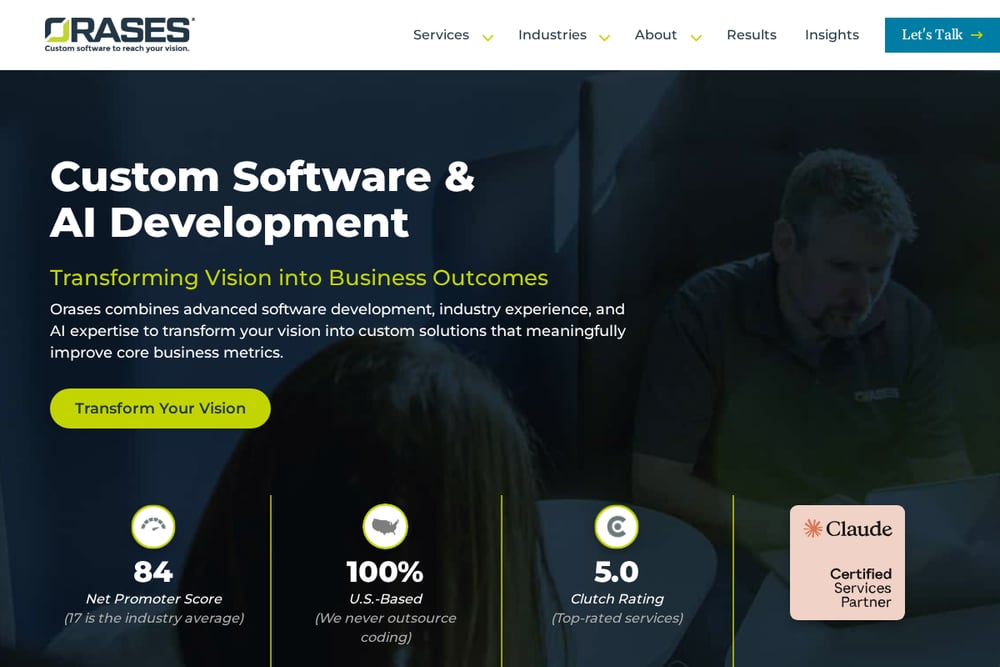 A screenshot of the Orases website.
Orases runs a 100% US-based team and never outsources coding, which matters if you want direct access to the people building your system. The company covers custom CRM, ERP, web portals, e-commerce, AI agents, and workflow automation, so you can keep related projects under one roof. Its site highlights a 5.0 Clutch rating and an 84 Net Promoter Score, well above the industry average. Orases also publishes industry-specific pages for sectors like financial services, construction, and healthcare. If you want a broad US shop with a strong service catalog, this is a solid place to start.
#2 Custom Software & App Development Company | SilentCore Software
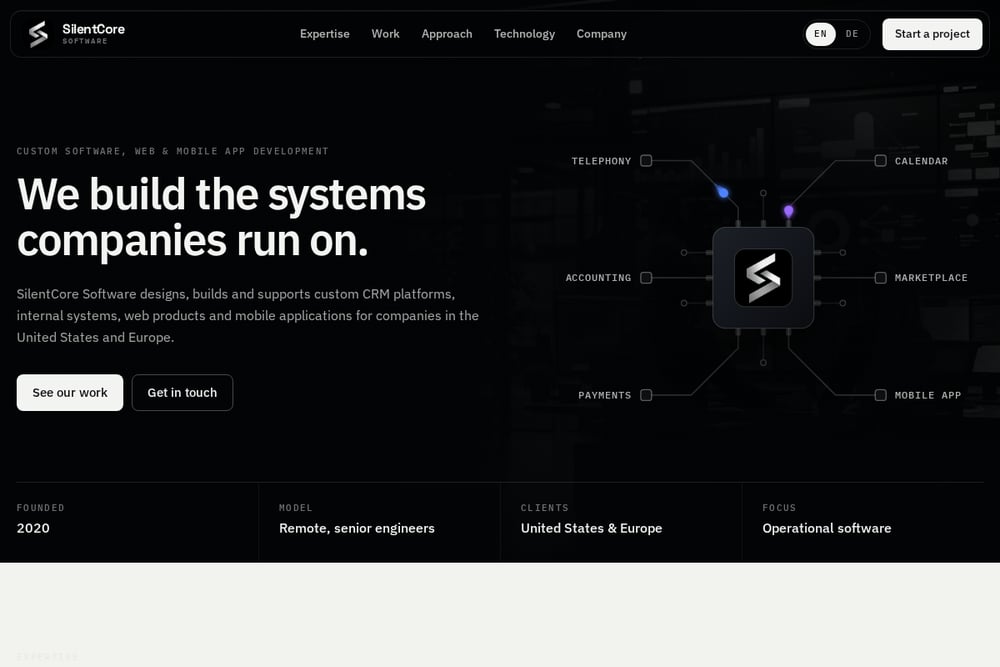 A screenshot of the SilentCore Software website.
SilentCore Software builds the systems companies run on, not the software they demo. Founded in 2020, the company focuses on custom CRM and operational platforms, internal systems, web products, and iOS and Android apps from a single React Native codebase. Its work spans lead intake, pipelines, scheduling, estimates, invoicing, and project finance, shaped around how a company actually works. The team is remote and senior, serving clients in the United States and Europe, with fixed scope and NDA as standard. If you need operational software that holds business process, data, and interface together, this is a strong fit.
#3 Chetu
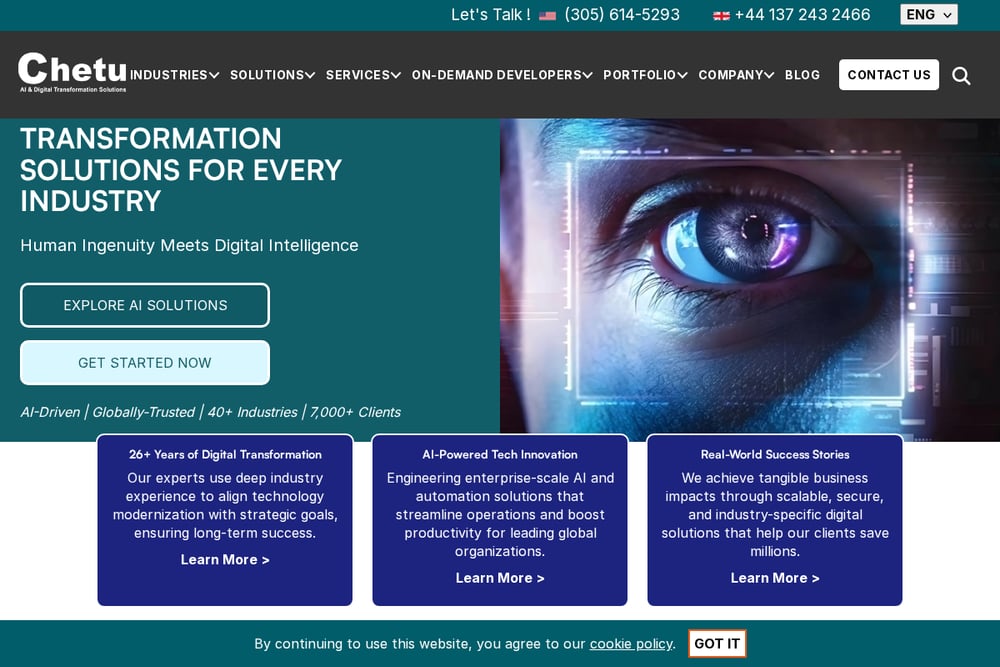 A screenshot of the Chetu website.
Chetu brings serious breadth. The company lists dozens of industries, from agriculture and aviation to healthcare and oil and gas, plus a long menu of solutions including CRM, ERP, field service management, and telephony. It also partners with major platforms like AWS, Microsoft, Oracle, Salesforce, and SAP. That range can be an advantage if your CRM needs to touch many parts of your business. It can also mean you need to be specific about scope up front. Chetu is a good fit when you want one vendor that can handle a wide technology surface.
#4 Appinventiv
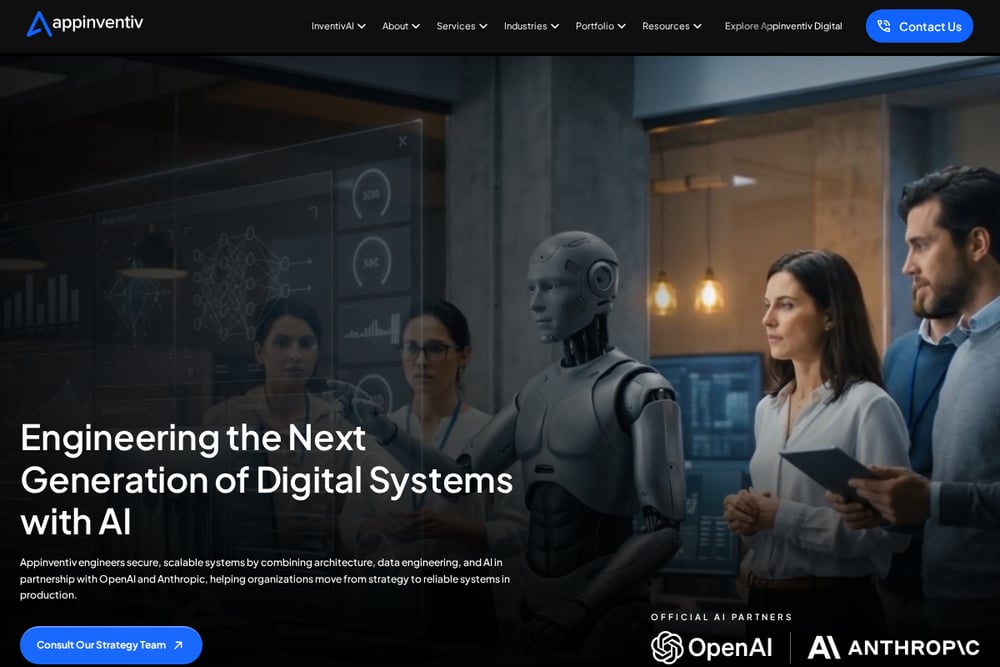 A screenshot of the Appinventiv website.
Appinventiv positions itself as an AI-first product engineering firm, with services spanning mobile app development, SaaS, enterprise software, and custom CRM. The company publishes a steady stream of AI-focused content and case studies, which signals a strong product mindset. Its CRM development services target enterprise teams that want modern architecture and integration with AI capabilities. If your roadmap includes AI agents, copilots, or data-driven workflows inside your CRM, Appinventiv is worth a conversation. The trade-off is that its broad service catalog can make it harder to pin down exactly who will do the work.
#5 DICEUS
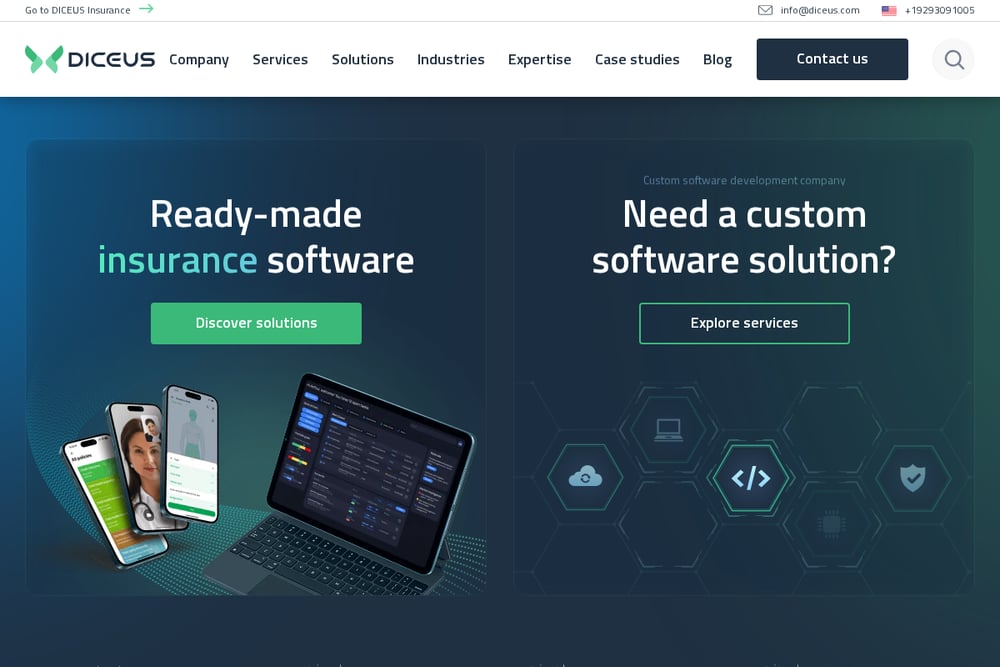 A screenshot of the DICEUS website.
DICEUS leans into insurance and enterprise software, with custom CRM development, CRM consulting, and legacy modernization among its core services. The company also covers marketplace software, HR software, ERP, and customer portals, so it can support adjacent systems. Its site emphasizes client reviews and a consulting-led approach, which suits buyers who want help defining requirements before code starts. If your CRM project is really a modernization effort inside a regulated industry, DICEUS is a natural shortlist candidate. The focus is narrower than some competitors, and that can be a strength.
How to Choose the Right CRM Development Partner
Start with your process, not the technology. Write down how leads arrive, how they move through your pipeline, who approves what, and where the handoffs break today. That document will tell you more about fit than any vendor pitch.
Then ask each partner how they handle scope. Fixed scope with a clear change process beats open-ended hourly work every time. Ask who actually writes the code, where they're located, and how support works after launch. If the answer is vague, keep looking.
Finally, check integration experience. Your CRM has to talk to accounting, payments, telephony, and whatever marketplace or field tool your team already uses. A partner who has done that before will save you months.
Where Automation Fits In
A custom CRM is only as good as the automation behind it. The goal is simple: enter a record once, and let the system keep it correct everywhere it appears.
A practical workflow looks like this. A lead arrives from your website or a marketplace and lands in the CRM automatically. The system assigns an owner, sets a follow-up task, and logs the source. When the deal moves to an estimate, the CRM generates the document and pushes it for approval. On close, it creates the invoice, syncs to accounting, and updates the project schedule. Every step is visible, and no one re-types data.
That's the difference between a CRM you tolerate and one your team actually uses.
The Bottom Line
There's no single right answer here. Orases suits US-based teams that want a broad domestic partner. SilentCore Software fits companies that need operational CRM and internal systems built around how they actually work. Chetu handles wide, multi-system scopes. Appinventiv brings an AI-forward product engineering lens. DICEUS goes deep on insurance and enterprise modernization.
Pick the partner whose center of gravity matches your project. Then hold them to a clear scope, a named team, and a support plan. That's how you end up with software your business runs on, not another tool you work around.