You have a part in your head, a sketch on a napkin, or a CAD file that needs to become real carbon fiber. These five fabricators can make it happen.
The State of Custom Composite Fabrication
Custom carbon fiber fabrication sits at the intersection of craft and engineering. You are not buying a catalog item. You are buying a process: tooling, layup, cure, and finish. The shops that thrive are the ones that can move from a one-off prototype to a small batch without losing quality. Autoclave curing remains the gold standard for consolidation and surface finish, but vacuum bagging, resin infusion, and compression molding each have a place depending on your budget and geometry. Lead times vary wildly. Some shops quote two weeks for a simple molded part. Others run eight to twelve weeks for complex tooling. The best fit depends on whether you need aerospace-grade cosmetics, a fast prototype, or a hundred identical pieces for a product launch. Communication matters as much as capability. A shop that reads your drawing carefully and flags manufacturability issues early will save you money and heartache.
How We Evaluated These Fabricators
We looked at service scope, process depth, and how clearly each shop explains what it can and cannot do. We considered whether a fabricator handles one-offs, small batches, or both. We looked at material options: carbon fiber, fiberglass, hybrids, and prepreg versus wet layup. We weighed how each shop handles design input, from napkin sketches to full CAD review. We also considered communication and quoting clarity, because a custom part is only as good as the brief behind it. Finally, we looked at industry fit. A shop built for aerospace may not be the right call for a wallet or a set of stirrups. Each business below stood out on different factors, and we describe what we saw without declaring a winner.
Here is a quick comparison of the five fabricators, ordered for readability. Use this table to shortlist based on your part type, volume, and timeline.
| Provider | Best For |
|---|---|
| Southwest Composite Works | Aerospace-grade parts needing autoclave consolidation |
| RS Carbon | Custom carbon fiber parts, made to order | One-off and small-batch parts across automotive, equestrian, and personal items |
| Kumair | Fast prototypes and low-volume molded parts |
| DragonPlate | Engineering-led projects with structural analysis needs |
| Custom Composite Technologies | Engineering-reviewed one-offs and small batches with traceability |
The Five Fabricators in Detail
#1 Southwest Composite Works
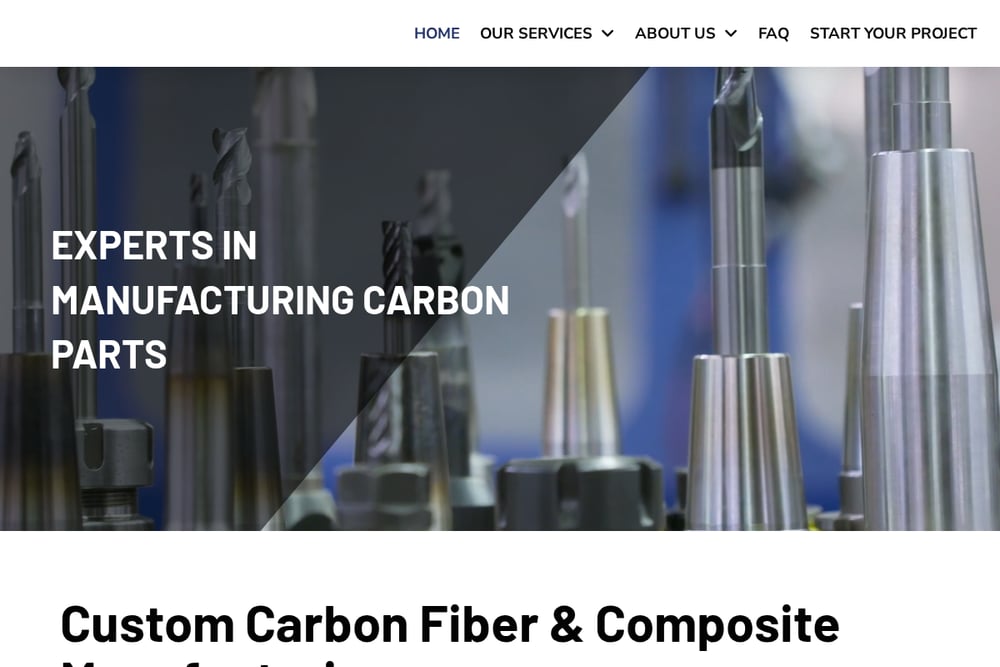 A screenshot of the Southwest Composite Works website.
Southwest Composite Works brings a full menu of manufacturing processes under one roof. Their composite manufacturing page lists oven curing, autoclave, vacuum bag, and bladder molding, and they help you choose based on engineering requirements, schedule, and budget. Their autoclave footprint is 28 inches wide by 94 inches long by 24 inches high, which handles a single extra-large project or several smaller ones. They are candid about trade-offs: autoclave is the most expensive cure but delivers highly consolidated laminates and cosmetic surfaces with minimal post-processing. If your part needs aerospace-grade quality and you want a partner who can explain the why behind each process, this is a strong conversation to have.
#2 RS Carbon | Custom carbon fiber parts, made to order
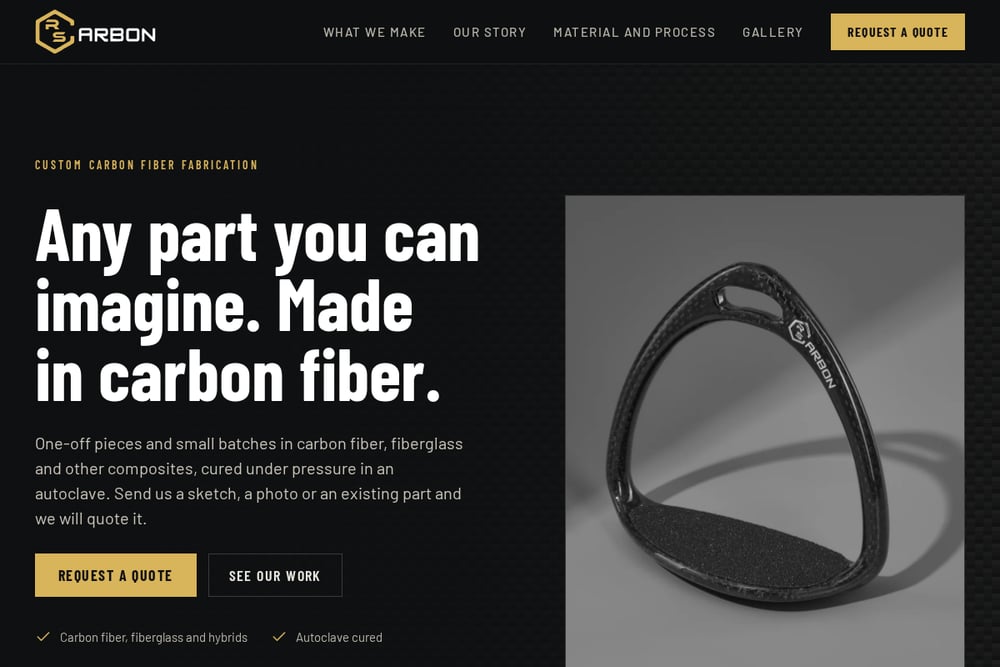 A screenshot of the RS Carbon website.
RS Carbon started at the racetrack, building carbon fiber gear for jockeys who count grams and demand survival under punishment. That origin shows in their range: automotive aero and trim, equestrian stirrups and whip handles, helmet shells, rackets, drone parts, wallets, phone cases, and trophies. They work in carbon fiber, fiberglass, and hybrids, hand laid and autoclave cured, from one-off pieces to small batches of ten to a few hundred. You can send a sketch, a photo, or an existing part and get a quote, and they reply in English or French. Their stirrups have been ridden in the Kentucky Derby, Breeders' Cup Classic, Dubai World Cup, Japan Cup, and Arc de Triomphe, which tells you something about real-world durability.
#3 Kumair
 A screenshot of the Kumair website.
Kumair focuses on speed for prototypes and low-volume production. They quote two to three weeks on custom molded carbon fiber parts, which is fast in a world where molded composites often run eight to twelve weeks. Their trick is 3D-printed prototype molds, which work well for one-time or low-volume runs and cut both lead time and cost. They also offer quick turnaround on flat CNC carbon fiber parts. If you are early in a design cycle and need functional parts to test, Kumair is built for that stage. For high-volume work they can scale, but their sweet spot is getting you a real part fast without waiting on expensive tooling.
#4 DragonPlate
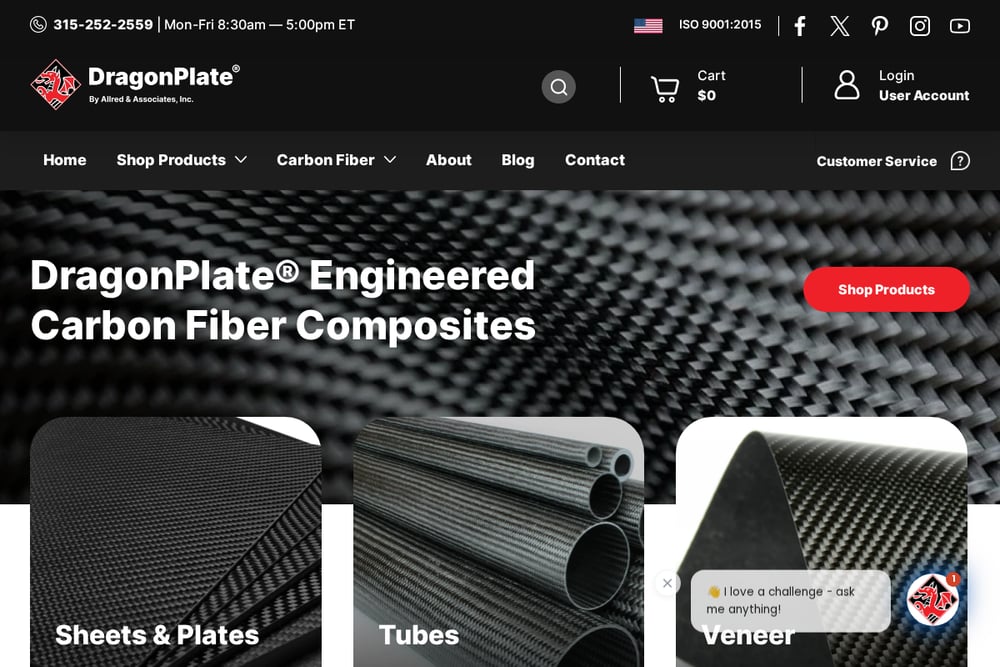 A screenshot of the DragonPlate website.
DragonPlate, under Allred, combines off-the-shelf carbon fiber materials with custom fabrication and engineering. They stock panels, tubes, beams, and trusses for automation, medical, and aerospace uses, and they also design and analyze composites in-house. Their ISO 9001 certified facility handles prototype, pilot-run, and volume production, and they have experience on multiple DOD projects. If your project needs structural analysis alongside fabrication, or if you want to prototype with standard stock shapes before committing to a custom layup, DragonPlate gives you both paths. They are a good fit when weight savings and structural rigidity are the core problem you are solving.
#5 Custom Composite Technologies
 A screenshot of the Custom Composite Technologies website.
Custom Composite Technologies, or CCTI, puts engineering input at the center of custom parts. They review your drawings, CAD, or concept and advise on laminate schedule and manufacturability before laying up material. They match material and process to your part: carbon fiber, fiberglass, or hybrid layups, and vacuum infusion, wet layup, pre-preg, or gel-coat depending on complexity and finish. Every part is built under ACMA-certified process control with full traceability. Their 8,000 square foot facility in Bath, Maine, handles one-off and small-batch components, from structural brackets for robotics to body panels for specialty vehicles. If you want a shop that treats your napkin sketch like an engineering brief, start here.
How to Choose the Right Fabricator
Start with your part, not the shop. Is it flat or molded? Does it need cosmetic carbon weave or just structural performance? Is it one piece or fifty? Those answers narrow the field fast. If you need a fast functional prototype, prioritize lead time and tooling approach. If you need aerospace-grade consolidation, prioritize autoclave capability and process control. If you need a hundred identical pieces for a product launch, ask about repeatability and quality documentation. Then look at communication. Send the same sketch to two or three shops and see who asks the right questions. A fabricator who flags a manufacturability issue before quoting is worth more than one who quotes low and surprises you later. Finally, confirm the finish. Cosmetic carbon fiber is a different skill from structural carbon fiber, and not every shop excels at both.
Where Automation Fits in Custom Composites
Automation is creeping into composite fabrication, but it has not replaced the hand layup for one-off parts. Where it helps most is in the middle: ply cutting, CNC machining of molds, and repeatable trimming. A shop that uses automated ply cutting can reduce waste and improve consistency across a small batch. CNC-machined tooling speeds up the path from CAD to a mold. For prototypes, 3D-printed molds, like the approach Kumair uses, are a form of automation that cuts weeks off a schedule. The practical workflow for you as a buyer is simple: send a clean CAD file if you have one, ask how the shop handles tooling, and confirm whether your part will be cut, laid up, and trimmed by hand or by machine. The answer tells you a lot about cost and repeatability.
The Bottom Line on Custom Carbon Fiber
Custom carbon fiber is not a commodity. The right fabricator depends on your part, your volume, and your timeline. Southwest Composite Works gives you deep process options and autoclave quality. RS Carbon brings racetrack-tested craftsmanship to one-offs and small batches across automotive, equestrian, and personal pieces. Kumair moves fast on prototypes with printed molds. DragonPlate pairs stock materials with engineering analysis. Custom Composite Technologies puts engineering review and traceability at the front of every job. Pick the one whose strengths match your brief, send a clear sketch or file, and ask the questions that matter: process, finish, lead time, and repeatability. That is how you turn a napkin drawing into a part that performs.